


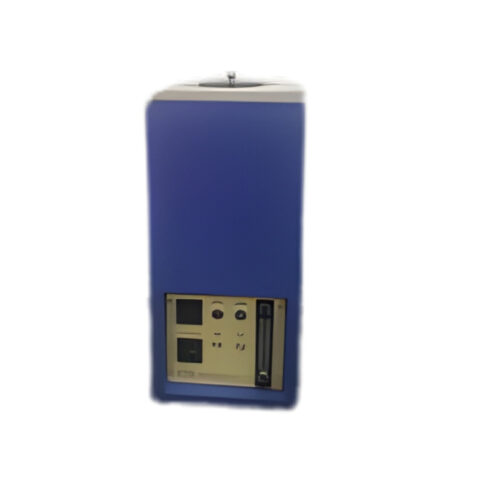
CONSTANT TEMP BATH
Technical Specifications
-
Temperature Range: Ambient +5°C to 100°C (water bath) / up to 200°C (oil bath models)
-
Temperature Accuracy: ±0.1°C to ±0.5°C
-
Temperature Uniformity: ±0.2°C
-
Controller Type: Digital PID microprocessor controller
-
Display: LED / LCD digital temperature display
-
Heating System: Stainless steel immersion heater
-
Tank Material: SS 304 / SS 316 stainless steel inner chamber
-
Outer Body: Powder-coated MS / Stainless steel
-
Insulation: High-density thermal insulation
-
Circulation: Built-in circulation pump for uniform temperature (in advanced models)
-
Capacity: 5L, 10L, 20L, 30L, 50L or custom sizes
-
Stirring Option: Magnetic / mechanical stirring (optional)
-
Safety Features: Over-temperature cut-off, dry-run protection
-
Power Supply: 220–240V AC, 50 Hz, Single phase
-
Optional Features: External circulation, programmable controller, timer, RS-232/USB output
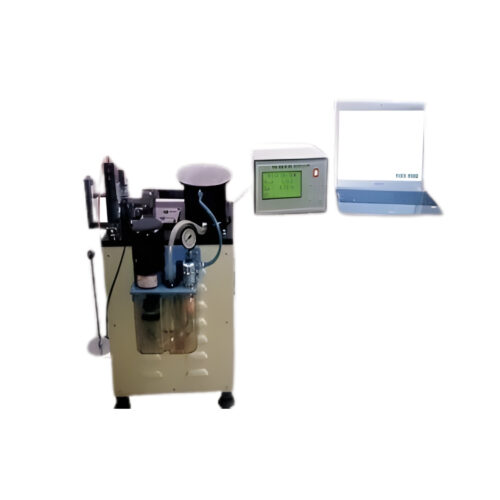
PIN ON DISC WEAR TESTING MACHINE
Technical Specifications (Typical)
-
Test Type: Dry / Lubricated sliding wear test
-
Principle: Pin-on-disc tribological method
-
Disc Diameter: 100–165 mm (customizable)
-
Disc Material: Hardened alloy steel (or as required)
-
Speed Range: 100 – 2000 RPM (variable)
-
Load Range: 5 N to 200 N (dead weight or lever loading system)
-
Wear Track Radius: Adjustable
-
Friction Force Measurement: Strain gauge / load cell based
-
Coefficient of Friction Display: Digital real-time display
-
Wear Measurement: Linear displacement sensor / LVDT
-
Motor: Variable speed DC / AC motor with controller
-
Data Display: Digital display / Computerized interface (optional)
-
Data Output: USB / Software-based data logging (optional)
-
Power Supply: 220–240V AC, 50 Hz
-
Safety Features: Guard cover, overload protection
-
Standards Compliance: ASTM G99 / ISO 7148 (or equivalent)
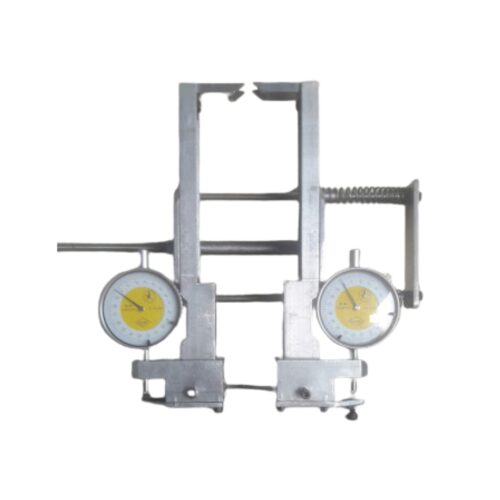
MECHANICAL EXTENSOMETER
Technical Specifications
-
Measurement Type: Linear elongation / strain measurement
-
Gauge Length Options: 25 mm, 50 mm, 100 mm, 200 mm (customizable)
-
Measuring Range: 0–5 mm / 0–10 mm (model dependent)
-
Least Count / Resolution: Up to 0.001 mm (with dial indicator)
-
Accuracy: ±0.5% or better
-
Output Type: Mechanical dial reading
-
Mounting: Knife-edge or clip-on attachment
-
Frame Material: Hardened steel / aluminum alloy
-
Contact Points: Replaceable knife edges
-
Compatibility: Universal Testing Machines (UTM), Tensile Testing Machines
-
Operation: Manual
-
Power Requirement: Not required
-
Application Standards: ASTM / ISO compliant models available

SPRING-LOAD-TESTING MACHINE
Technical Specifications
-
Load Capacity: 50 N to 50 kN (or higher for heavy-duty models)
-
Accuracy: ±0.5% to ±1% FS
-
Resolution: 0.01 N or better
-
Deflection Measurement: 0.001 mm resolution
-
Test Speed: Variable / programmable
-
Stroke Length: 100–500 mm typical
-
Power Supply: 220V AC / 50 Hz
-
Display: Digital / Touchscreen / PC software
-
Frame Type: Bench-top or floor-standing

UNIVERSAL-TESTING-MACHINE
Technical Specifications
Load Capacity Range
-
From: 1 kN to 2000 kN (or higher depending on model)
-
Common ranges: 10 kN, 50 kN, 100 kN, 200 kN, 600 kN, 1000 kN
Machine Types
-
Electromechanical UTM
-
Servo Hydraulic UTM
-
Computerized / Digital UTM
Control Modes
-
Load control
-
Displacement control
-
Strain control
-
Pace rate control
Accuracy
-
Load accuracy: ±0.5% to ±1% of indicated load
-
Class 0.5 / Class 1 as per ISO standards
Load Measurement
-
High precision load cell
-
Multiple load cell options
Crosshead Travel
-
Typically 600–1200 mm (model dependent)
Speed Range
-
Very low to high test speeds
-
Example: 0.001 to 500 mm/min
Data Acquisition
-
Real-time force vs displacement curve
-
Stress–strain graph generation
-
PC based software with test reports
Safety Features
-
Overload protection
-
Emergency stop
-
Limit switches
-
Safety guards
Standards Compliance
-
ASTM
-
ISO
-
IS
-
EN
-
DIN
Common Tests Performed
-
Tensile test
-
Compression test
-
Flexural test
-
Shear test
-
Peel test
-
Tear test
-
Bend test
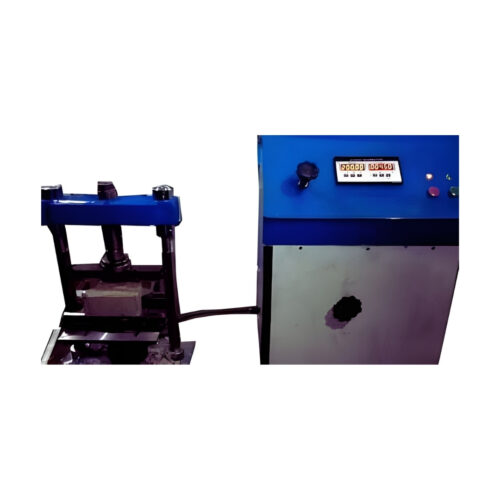
TENSILE SPLITTING TESTING MACHINE
Technical Specifications
-
Load Capacity: 100 kN – 2000 kN (depending on model)
-
Suitable Specimen: Concrete cylinders / rock cores
-
Specimen Size:
-
Diameter: 50 mm – 150 mm
-
Length: 100 mm – 300 mm
-
-
Loading Method: Hydraulic / Servo-controlled
-
Control Mode: Manual / Digital / Computerized
-
Load Measurement: Digital load cell
-
Accuracy: ±1% of indicated load
-
Display: Digital controller / PC software interface
-
Loading Rate Control: Adjustable pace rate
-
Compression Platens: Hardened steel with strip loading fixtures
-
Safety Features: Overload protection, emergency stop
-
Data Output: USB / Software report / Printer option
-
Power Supply: 220V / 50Hz
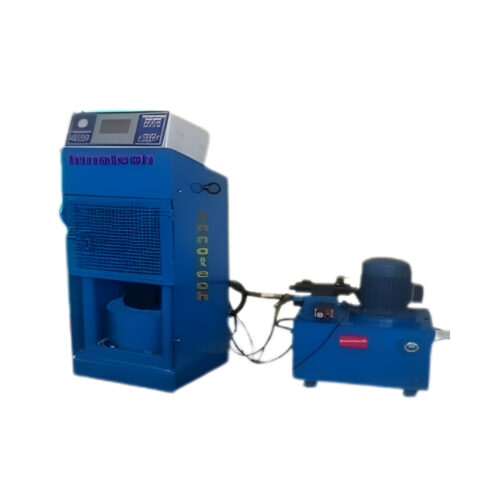
FLEXURAL STRENGTH TESTING MACHINE
Technical Specifications
Load Capacity
-
Range: 10 kN to 300 kN
-
Suitable for concrete beams, tiles, blocks, polymers, composites
Loading Type
-
Three-point bending
-
Four-point bending
Control System
-
Manual / Motorized / Servo-controlled
-
Pace rate control available
-
Closed-loop feedback system (in advanced models)
Display
-
Digital load indicator
-
Touchscreen controller (computerized models)
-
Real-time load vs deflection graph
Accuracy
-
±1% or better of indicated load
-
Calibrated load cell system
Loading Rate
-
Adjustable loading rate
-
Standard compliant loading speed control
Test Span Adjustment
-
Adjustable support span
-
Roller support fixtures
Drive Mechanism
-
Hydraulic power pack or electromechanical screw drive
-
Servo motor (in advanced systems)
Data Output
-
Software-based data acquisition
-
Test reports generation
-
USB / PC connectivity
-
Automatic peak load capture
Safety Features
-
Overload protection
-
Emergency stop
-
Limit switches
-
Guard enclosure
Standards Compliance
-
ASTM C78 / ASTM D790
-
IS 516
-
ISO standards for flexural testing

SAMPLE CUTTING PRESS
Technical Specifications
-
Operation Type: Manual / Hydraulic / Pneumatic
-
Capacity: 5 kN – 50 kN (or higher as per model)
-
Cutting Force Control: Lever / Hydraulic hand pump / Air pressure
-
Stroke Length: Adjustable stroke
-
Working Table: Hardened steel or aluminum base plate
-
Die Holder: Quick-change die holder
-
Cutting Area: Approx. 150 × 150 mm to 300 × 300 mm
-
Pressure Indication: Pressure gauge (for hydraulic/pneumatic models)
-
Frame Construction: Heavy-duty steel frame
-
Safety Features: Safety guard / Two-hand operation (model dependent)
-
Power Supply: Not required (manual) / 230V AC (motorized hydraulic)
-
Applications: Rubber, plastic sheets, foam, leather, paperboard, textile samples
AGEING OVEN
Technical Specifications
Construction
-
Double-walled insulated chamber
-
Inner chamber made of Stainless Steel (SS 304 / SS 316)
-
Outer body made of powder-coated mild steel
-
High-density mineral wool / glass wool insulation
Temperature Range
-
Ambient +10°C to 200°C / 250°C / 300°C (model dependent)
Temperature Control
-
Digital PID temperature controller
-
Microprocessor based control system
-
High accuracy temperature regulation (±1°C to ±2°C)
Heating System
-
Heavy-duty tubular air heaters
-
Fast heating with uniform air circulation
Air Circulation
-
Forced air convection with motorized blower
-
Uniform temperature distribution throughout chamber
Display
-
Digital temperature display (PV & SV)
-
LED / LCD display panel
Accuracy
-
Temperature uniformity: ±2°C or better
-
Resolution: 0.1°C / 1°C
Safety Features
-
Over-temperature safety cut-off
-
Thermal fuse protection
-
Alarm for temperature deviation
Timer
-
Built-in digital timer (optional / standard)
-
Programmable ageing cycles
Power Supply
-
220–240V AC, Single phase, 50 Hz
-
3-phase option for larger models
Chamber Size
-
Available in multiple capacities
-
Custom sizes available
Optional Features
-
Programmable controller
-
Data logging
-
USB / PC interface
-
Observation window
-
Rotating shelves (for cable ageing tests)

LOAD TESTING MACHINE
Technical Specifications
-
Load Capacity Range: 50 kN to 5000 kN (customizable)
-
Type: Hydraulic / Electro-Mechanical
-
Control Mode: Manual / Semi-Automatic / Computerized
-
Load Measurement: Digital Load Cell / Pressure Sensor
-
Accuracy: ±1% or better
-
Display: Digital indicator / Computer software display
-
Resolution: High resolution load reading
-
Loading Rate Control: Adjustable
-
Frame Construction: Heavy-duty steel frame
-
Power Supply: 220V / 415V AC
-
Hydraulic System: Motorized hydraulic power pack
-
Data Output: USB / RS232 / Software-based reporting (computerized models)
-
Safety Features: Overload protection, emergency stop
-
Test Modes: Compression / Tension / Flexural (depending on model)
-
Standards Compliance: IS / ASTM / BS / EN standards (model dependent)
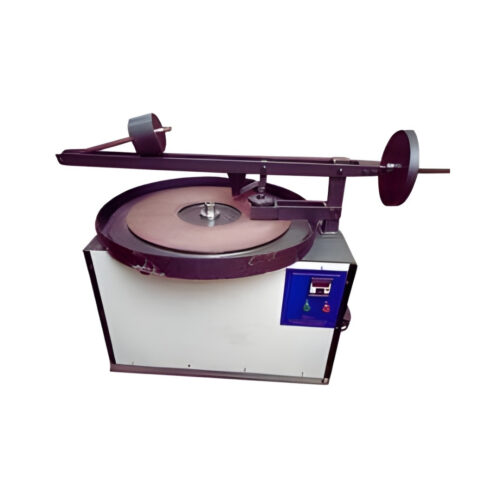
TILE ABRASION TESTING MACHINE
🔧 Technical Specifications
| Parameter | Typical Value / Range |
|---|---|
| Test Standard Compliance | ISO 10545-6, ASTM C1027, EN 15468 |
| Test Type | Abrasion / Wear Resistance Test |
| Abrasive Medium | Silicon carbide paper / abrasive wheels |
| Number of Specimen Holders | 1–4 (varies by model) |
| Load Weight | Adjustable, typically up to 5000 g |
| Abrasion Head Movement | Reciprocating / Rotary |
| Stroke Length | ~100–200 mm (model dependent) |
| Speed of Movement | ~60–70 strokes per minute |
| Counter / Timer | Digital display with preset counts |
| Display | LED / LCD for speed, count, timer |
| Power Supply | AC 220–240 V, 50/60 Hz |
| Machine Body | Mild steel with powder coating |
| Dimensions (L×W×H) | Approx. 600×450×800 mm |
| Weight | ~50–100 kg (depending on configuration) |

TILE ABRASION TESTING MACHINE
Technical Specifications
| Feature | Specification / Option |
|---|---|
| Model Type | Single-head / Dual-head abrasion tester |
| Test Standard Compliance | ISO 10545-7, EN 14157, ASTM C1243, DIN standards |
| Number of Abrasive Heads | 1 or 2 heads |
| Turntable Diameter | ~300–400 mm (industry varies) |
| Speed Control | Variable speed (e.g., 50–150 rpm) |
| Load Weights | Calibrated weights (typically up to 1,000 g or more per head) |
| Abrasive Medium | Standard abrasive wheels/discs or sand/rubber pads |
| Test Cycle Timer | Digital timer, programmable up to several hours |
| Display | Digital/LED display for time, speed, and test status |
| Power Supply | 220–240 V AC, 50/60 Hz (or 110 V option) |
| Frame Material | Sturdy mild steel / powder-coated structure |
| Sample Size Accommodation | Large enough platform to hold standard tiles (e.g., up to 300 × 300 mm or larger) |
| Safety Features | Emergency stop, protective covers |
| Control Mode | Manual / semi-automatic / PLC touch screen (depending on model) |
| Data Output | Manual recording or digital export (optional) |
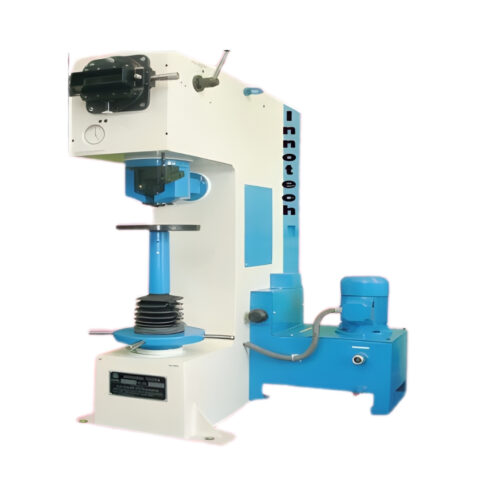

OPTICAL BRINELL HARDNESS TESTER
Technical Specifications
-
Hardness Scale: Brinell (HBW / HBS)
-
Test Loads: 62.5 kgf, 100 kgf, 187.5 kgf, 250 kgf, 500 kgf, 750 kgf, 1000 kgf, 3000 kgf
-
Indenter Type:
-
Tungsten Carbide Ball
-
Hardened Steel Ball
-
-
Ball Diameters: 2.5 mm, 5 mm, 10 mm
-
Optical System:
-
Built-in measuring microscope or digital optical system
-
Magnification: 20× / 40× (model dependent)
-
-
Measurement Method: Manual or digital optical indentation measurement
-
Load Application: Dead-weight or hydraulic system
-
Dwell Time: Adjustable (typically 10–30 seconds)
-
Accuracy: Conforms to ASTM E10 / ISO 6506 standards
-
Specimen Height (Max): 200–300 mm (model dependent)
-
Throat Depth: 150–200 mm (model dependent)
-
Resolution: Up to 0.01 mm indentation measurement
-
Power Supply: 220–240 V AC, 50 Hz
-
Display:
-
Optical scale (manual models)
-
Digital display/software output (advanced models)
-
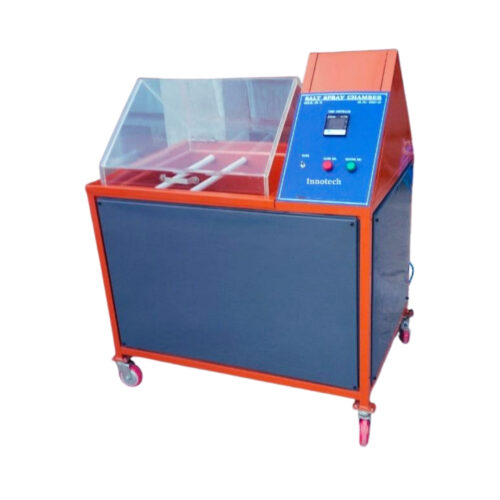
SALT SPRAY CHAMBER
Technical Specifications
-
Test Method: Neutral Salt Spray (NSS)
-
Chamber Material: Fiber Reinforced Plastic (FRP) / PVC / Polypropylene
-
Standard Compliance:
-
ASTM B117
-
ISO 9227
-
JIS Z 2371
-
DIN 50021
-
-
Salt Solution: 5% NaCl (by weight)
-
pH Range: 6.5 to 7.2 (at 35°C)
-
Chamber Temperature: 35°C ± 1°C
-
Saturation Tower Temperature: 47°C ± 1°C
-
Spray Collection Rate: 1.0 – 2.0 ml/hr per 80 cm²
-
Air Pressure: 1.0 – 1.5 kg/cm²
-
Control System: Digital PID Controller / PLC Touch Screen (optional)
-
Timer: Programmable digital timer (0–9999 hrs)
-
Specimen Holder: Adjustable non-metallic racks
-
Safety Features: Low water level cut-off, overload protection, alarm system
-
Power Supply: 220–240 V AC, 50 Hz (single phase)
-
Available Chamber Sizes: 60L, 90L, 120L, 200L, 400L, 600L (customizable)
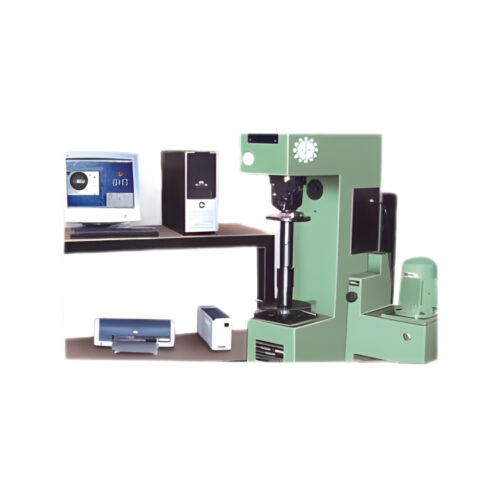
COMPUTERIZED BRINELL HARDNESS TESTER
Technical Specifications
-
Testing Method: Brinell Hardness (HB / HBW)
-
Load Range: 62.5 kgf to 3000 kgf (selectable as per model)
-
Load Application: Closed-loop servo motor / hydraulic with electronic control
-
Indenter: Tungsten Carbide Ball (Ø 1 mm, 2.5 mm, 5 mm, 10 mm)
-
Dwell Time: Programmable (1–99 seconds)
-
Measurement System: Digital optical system with CCD camera
-
Accuracy: Conforms to ASTM E10 / ISO 6506
-
Resolution: 0.01 HB
-
Display: PC-based software interface
-
Data Output: USB / LAN / Printer connectivity
-
Software Features:
-
Automatic indentation measurement
-
Statistical analysis
-
Test history storage
-
Report generation
-
-
Power Supply: 230V AC, 50 Hz
-
Standards Compliance: ASTM E10, ISO 6506, IS 1500
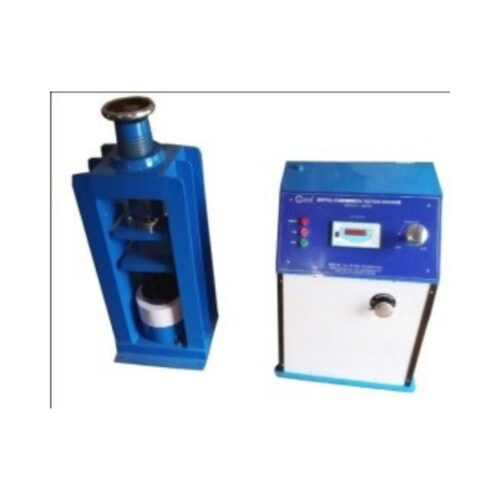
COMPRESSION TESTING MACHINE
Technical Specifications
-
Capacity Range:
50 Ton / 100 Ton / 200 Ton / 300 Ton / 500 Ton / 2000 kN -
Load Measurement:
Digital load indicator / Computerized data acquisition system -
Load Accuracy:
±1% of indicated load (Class 1) -
Loading Method:
Hydraulic compression with controlled pace rate -
Pace Rate Control:
Manual / Semi-automatic / Fully automatic -
Platen Size:
200 × 200 mm / 300 × 300 mm / Customizable -
Maximum Piston Stroke:
50 – 100 mm -
Frame Construction:
Heavy-duty welded steel frame with high rigidity -
Power Supply:
230V AC, Single Phase / 415V AC, Three Phase -
Hydraulic Pressure:
High-pressure axial piston pump -
Standards Compliance:
IS:14858, IS:516, ASTM C39, ASTM C109, BS EN standards -
Safety Features:
Overload protection, pressure relief valve, emergency stop
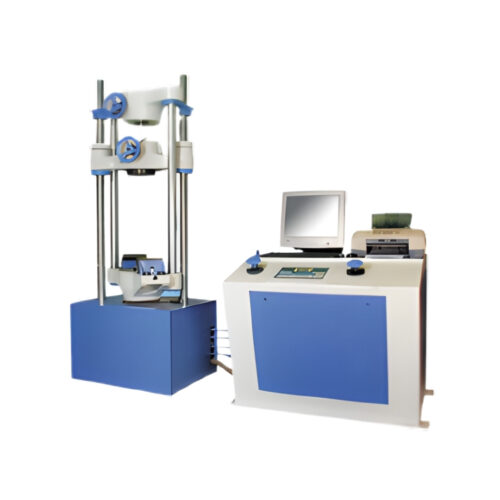
COMPUTERIZED HYDRAULIC UNIVERSAL TESTING MACHINE
Technical Specifications
Capacity Range
-
100 kN to 2000 kN (10 Ton to 200 Ton or higher)
Load Frame
-
Four-column or two-column rigid steel frame
-
High stiffness for accurate testing
Loading System
-
Hydraulic power pack with servo or proportional valve
-
Smooth and controlled load application
Control Mode
-
Computerized closed-loop control
-
Load, displacement, and strain control
Load Measurement
-
High-precision load cell or hydraulic pressure transducer
-
Accuracy: ±1% or better of indicated load
Crosshead Travel
-
Up to 300–500 mm (customizable)
Grips & Fixtures
-
Hydraulic wedge grips for tensile testing
-
Compression platens, bending fixtures, shear tools
Software Features
-
Real-time load vs displacement / stress-strain curves
-
Automatic calculation of UTS, yield strength, elongation
-
Test standard library (ASTM, ISO, BIS)
-
Test data storage, export, and printing
Display & Interface
-
PC-based system with LCD/LED monitor
-
Digital indicators for load, displacement, and extension
Power Supply
-
415V AC, 3 Phase, 50 Hz
Safety Features
-
Overload protection
-
Emergency stop button
-
Hydraulic pressure relief valve
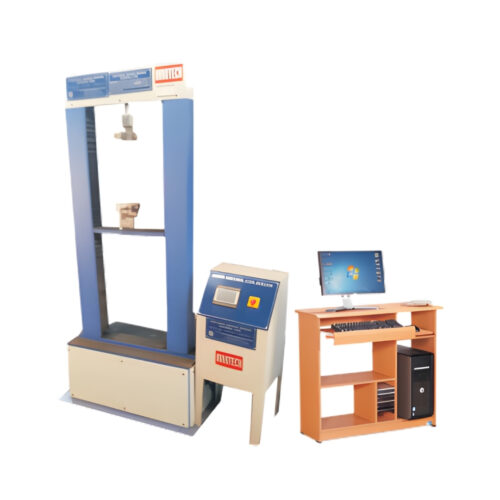
COMPUTERIZED TENSILE TESTING MACHINE
Technical Specifications (Typical)
-
Capacity Range: 1 kN to 1000 kN (or higher on request)
-
Drive System: Servo motor / AC variable frequency drive / Hydraulic (as per model)
-
Load Measurement: High-precision strain gauge load cell
-
Accuracy: ±1% or better of indicated load
-
Crosshead Speed: 0.01 to 500 mm/min (programmable)
-
Speed Accuracy: ±1%
-
Stroke Length: 800 – 1200 mm (customizable)
-
Grips: Wedge, pneumatic, hydraulic, compression platens, bending fixtures
-
Control Mode: Load, displacement, and strain control
-
Software: PC-based testing software with graph plotting, test methods, and report generation
-
Data Output: Load vs extension, stress vs strain curves
-
Safety Features: Overload protection, limit switches, emergency stop
-
Power Supply: 230V / 415V AC, 50 Hz
-
Standards Compliance: ASTM E8, ASTM A370, ISO 6892, BIS standards
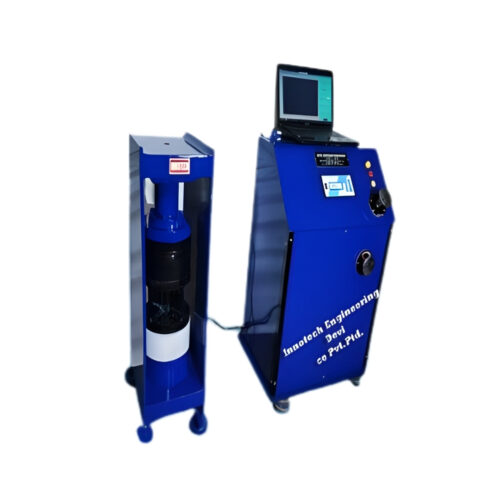
COMPUTERIZED COMPRESSION TESTING MACHINE
Technical Specifications (Typical)
(Specifications can be customized as per capacity and standards)
-
Capacity: 500 kN / 1000 kN / 2000 kN / 3000 kN
-
Load Measurement: High-accuracy load cell / Pressure transducer
-
Accuracy Class: ±1% of indicated load (Class 1)
-
Load Frame: Heavy-duty welded steel frame
-
Platen Size:
-
Upper Platen: Hardened & polished
-
Lower Platen: Spherically seated
-
-
Ram Stroke: 50–100 mm
-
Loading Control:
-
Automatic pace rate control
-
Manual / Computerized operation
-
-
Display:
-
Computer interface with testing software
-
Real-time load, stress, and displacement display
-
-
Software Features:
-
Test method selection
-
Automatic peak load detection
-
Graph plotting (Load vs Time / Stress vs Time)
-
Test report generation
-
Data storage & export (PDF/Excel)
-
-
Power Supply: 415V / 50 Hz / 3 Phase (or 230V single phase)
-
Standards Compliance: IS 516, IS 4031, ASTM C39, BS EN standards
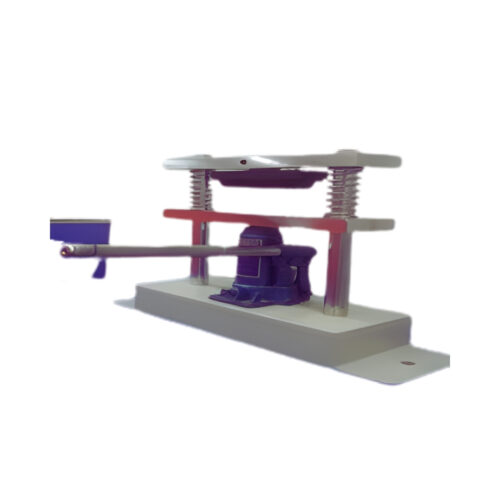
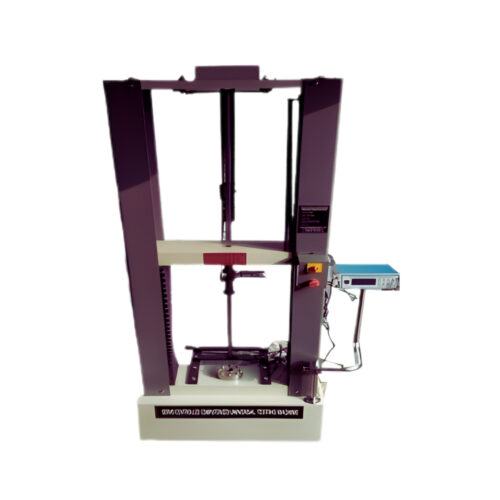
SERVO CONTROLLED UTM
📊 Typical Technical Parameters
(Specifications vary by model & capacity: 100 kN–2000 kN or more)
| Parameter | Typical Range / Value |
|---|---|
| Load Capacity | 100 kN, 200 kN, 400 kN, 600 kN, 1000 kN, 2000 kN etc. |
| Load Accuracy | ±1 % or better |
| Test Speed | 0.001 to 500 mm/min (configurable) |
| Position Resolution | 0.01 mm or better |
| Control Modes | Load, strain/elongation, displacement, hold |
| Measurement Feedback | Load cell, encoder/extensometer |
| Data Output | Real-time graph, exportable results |
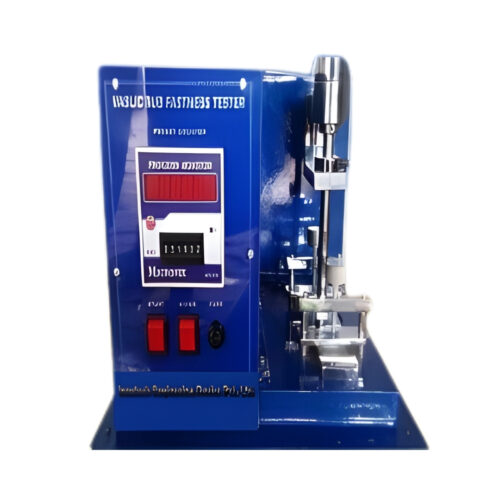
VASLIC RUB FASTNESS TESTER
Technical Overview
✔ Test Principle:
-
A wool felt rubbing pad (dry or wet) repeatedly rubs the sample surface under a specified pressure and stroke.
-
After a set number of cycles, color transfer and surface changes are assessed visually, typically using a grey scale for staining and color change.
✔ Typical Specifications
-
Rubbing Head Area: ~15 mm × 15 mm
-
Rubbing Speed: ~40 ± 2 cycles per minute
-
Rubbing Stroke: ~35–40 mm
-
Weight (Pressure): ~500 g finger + optional 500 g additional weight (total ~1000 g)
-
Sample Size: ~120 × 20 mm
-
Sample Tension Range: ~0–20 %
-
Power Supply: ~AC 220 V 50/60 Hz
-
Automatic Cycle Counter: Digital or mechanical with automatic stop upon reaching preset cycles
✔ Testing Conditions:
-
Dry rubbing
-
Wet rubbing (sample and/or felt soaked as per standard procedures)
✔ Compliance Standards:
Common standards this tester supports:
-
ISO 11640 – Colour fastness to rubbing (leather)
-
DIN 4843 – Leather colour fastness
-
SATRA TM173 / TM177 – Rubbing fastness methods
-
EN ISO 20344:7.3 – Footwear upper and lining tests
-
ISO 17700 Method A – Footwear material colour fastness
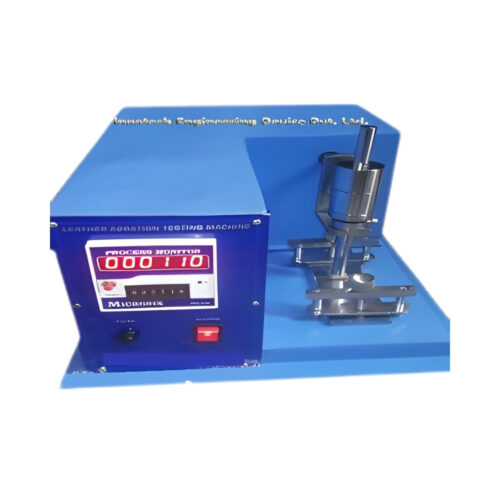
LEATHER ABRASION TEST MACHINE
Technical Specifications
| Parameter | Specification |
|---|---|
| Test Method | Martindale / Rotary Abrasion |
| Abrading Motion | Lissajous / Circular Motion |
| Test Stations | 4 / 6 / 8 (Optional) |
| Load Range | 9 kPa / 12 kPa (Standard Loads) |
| Abrasive Medium | Standard Wool Fabric / Sandpaper |
| Counter | Digital Preset Counter (0–99,999 Cycles) |
| Speed | 20–70 RPM (Adjustable) |
| Specimen Size | Ø38 mm / Ø140 mm |
| Pressure Application | Dead Weight System |
| Display | Digital LED / LCD |
| Control System | Microprocessor / PLC Based |
| Power Supply | 230V AC, 50 Hz |
| Safety Features | Emergency Stop, Overload Protection |
| Construction | Heavy-duty MS Frame with Powder Coating |
Salient Features
-
Accurate simulation of real wear conditions
-
Digital cycle counter with auto-stop function
-
Multiple test stations for higher productivity
-
User-friendly operation and low maintenance
-
Conforms to international testing standards
-
Rugged construction for continuous laboratory use
Applicable Standards
-
ISO 12947
-
ASTM D4966
-
BS 3424
-
DIN 53863
-
IUP 20 / IUP 60 (Leather Testing)
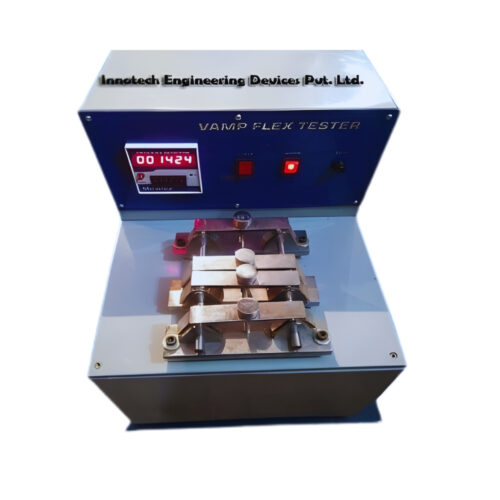
VAMP FLEX TESTER
Technical Specifications
-
Type: Motorized / Digital Vamp Flex Tester
-
Test Method: Repeated flexing of vamp specimens
-
Flexing Angle: Adjustable (typically 30°–90° or as per standard)
-
Number of Test Stations: 2 / 4 / 6 stations (optional)
-
Flexing Speed: Adjustable (e.g., 100 ± 5 cycles/min)
-
Cycle Counter: Digital presettable counter with auto-stop
-
Specimen Clamping: Adjustable clamps for different material thickness
-
Drive System: AC motor with gearbox
-
Control Panel: Digital controller with cycle display
-
Power Supply: 220–240 V AC, 50 Hz (Single Phase)
-
Safety Features: Protective cover, emergency stop
-
Construction: Rigid MS frame with corrosion-resistant coating
-
Standards Compliance:
-
SATRA TM 25
-
ISO 5402-1
-
IS / ASTM (as applicable)
-
Applications
-
Footwear quality testing
-
Leather and synthetic material testing
-
Rubber and polymer fatigue testing
-
Research & development laboratories
-
Shoe manufacturing quality control
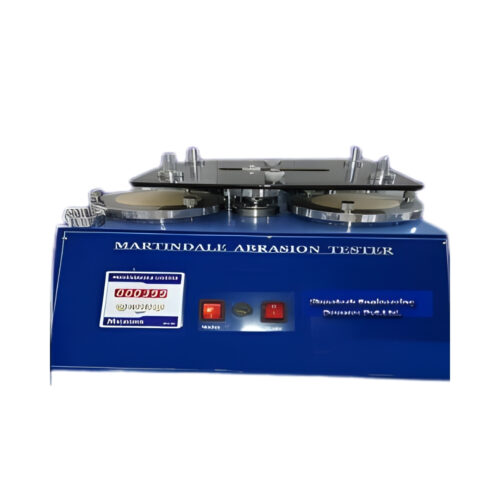
MARTINDALE ABRASION TESTER
Technical Specifications
-
Test Method: Martindale Abrasion & Pilling Method
-
Motion: Lissajous figure (multi-directional rubbing)
-
Number of Test Stations: 4 / 6 / 8 / 9 / 12 / 16 stations (optional)
-
Specimen Diameter: 38 mm or 140 mm (as per standard)
-
Abrasive Medium: Standard wool fabric / sandpaper
-
Applied Pressure:
-
9 kPa (Light fabrics)
-
12 kPa (Workwear, upholstery)
-
-
Counter Range: 0 – 99,999 cycles (digital presettable)
-
Drive System: Precision motor with gearbox
-
Control System: Microprocessor / Digital controller
-
Display: LCD / LED digital display
-
Auto Stop: Yes, at preset cycles
-
Power Supply: 220–240 V AC, 50 Hz
-
Standards Compliance:
-
ISO 12947
-
ASTM D4966
-
BS 3424
-
EN 530
-
GB/T 21196
-
Applications
-
Abrasion resistance testing of woven & knitted fabrics
-
Pilling resistance evaluation
-
Upholstery and automotive textile testing
-
Carpet and floor covering testing
-
Quality control and R&D
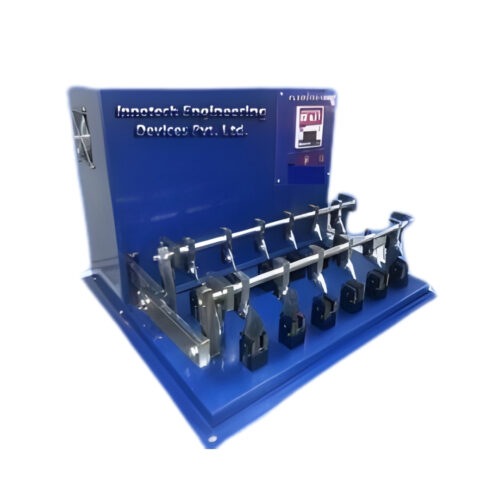
FLEXO- METER
Technical Specifications
-
Measuring Principle: Cantilever bending method
-
Test Parameter: Bending length / Stiffness
-
Specimen Width: Typically 25 mm (as per standards)
-
Specimen Length: Adjustable
-
Measurement Range: Suitable for low to high stiffness materials
-
Scale Type: Direct reading scale / Graduated scale
-
Accuracy: High precision with repeatable results
-
Operation: Manual / Semi-automatic (model dependent)
-
Construction: Rigid metal body with corrosion-resistant finish
-
Clamping System: Precision specimen holder for accurate positioning
-
Standards Compliance:
-
ISO 2493
-
TAPPI T489
-
BS 3748
-
Applications
-
Paper & Paperboard testing
-
Packaging material evaluation
-
Carton & corrugated box testing
-
Printing & publishing industry
-
Quality control & R&D laboratories
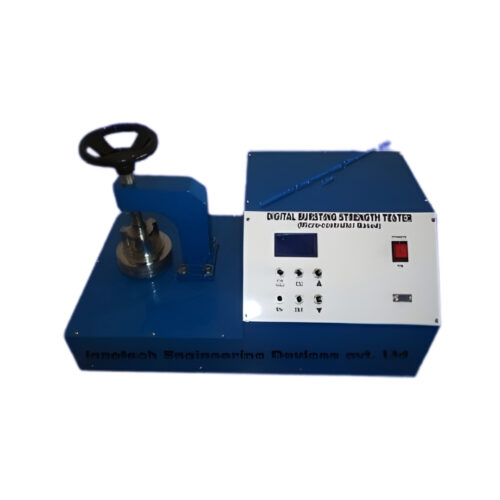
DIGITAL BURSTING STRENGTH TESTER
Technical Specifications
-
Measurement Range: 0–100 kg/cm² / 0–1000 kPa (customizable)
-
Display: High-resolution digital LCD / LED display
-
Accuracy: ±1% of full scale
-
Pressure System: Hydraulic pressure with rubber diaphragm
-
Clamping Method: Manual / Pneumatic clamping (optional)
-
Specimen Diameter: As per standard (e.g., 30.5 mm / 50 mm)
-
Pressure Application Rate: Adjustable, as per standard requirements
-
Control System: Microprocessor-based digital controller
-
Peak Hold Function: Yes (maximum burst value capture)
-
Units Displayed: kg/cm², kPa, PSI (selectable)
-
Power Supply: 220–240 V AC, 50 Hz
-
Standards Compliance:
-
IS: 1060
-
TAPPI T403
-
ISO 2758 / ISO 2759
-
ASTM D3786 / ASTM D3787
-
-
Optional Features:
-
Computer interface (RS-232 / USB)
-
Bursting index calculation
-
Data storage & printer output
-
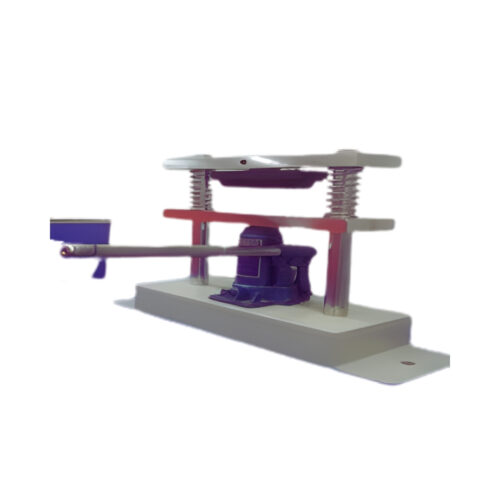
SAMPLE CUTTING PRESS
Technical Specifications
(Specifications may vary by model and capacity)
-
Type: Hydraulic / Pneumatic / Manual Sample Cutting Press
-
Capacity: 5 Ton / 10 Ton / 20 Ton / 25 Ton / 30 Ton (or as required)
-
Pressing Area: 300 × 300 mm to 500 × 500 mm
-
Daylight Gap: 100 – 250 mm
-
Ram Stroke: Adjustable
-
Pressure Control: Manual / Digital Pressure Gauge
-
Operation Mode: Push Button / Foot Switch / Dual Hand Safety Control
-
Cutting Accuracy: High repeatability with clean edges
-
Platen Material: Hardened Steel / EN-grade Steel
-
Frame Construction: Heavy-duty welded steel frame
-
Power Supply: 230V / 415V AC, 50 Hz
-
Safety Features: Emergency stop, overload protection, safety guard
-
Standards Compliance: ASTM, ISO, IS, DIN, BS
Applications
-
Rubber and plastic testing laboratories
-
Automotive and aerospace material testing
-
Textile and leather industries
-
Packaging and polymer testing
-
Quality control and R&D labs
Key Features
-
Uniform cutting pressure
-
Rugged and vibration-free structure
-
Easy die replacement
-
Low maintenance operation
-
High operator safety
-
Suitable for standard and custom dies
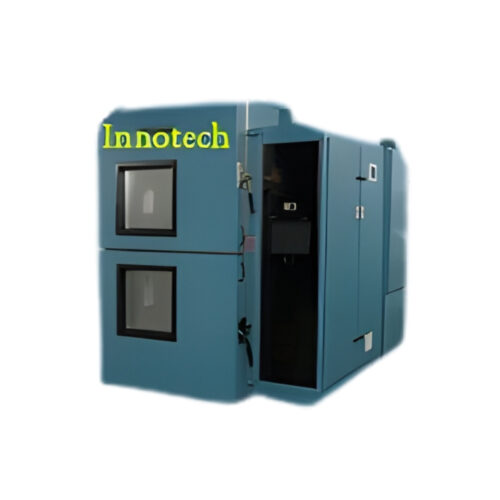
HOT AND COLD CHAMBER
Key Features
-
Wide temperature range (e.g. -70°C to +180°C)
-
High accuracy digital temperature controller
-
Uniform temperature distribution
-
Fast heating and cooling rates
-
Programmable temperature cycling
-
Stainless steel inner chamber
-
Heavy-duty thermal insulation
-
Over-temperature safety protection
-
Optional humidity control (Hot & Cold + Humidity Chamber)
-
Data logging and PC connectivity (optional)
Applications
-
Thermal shock testing
-
Temperature cycling tests
-
Product reliability testing
-
Material aging and stability testing
-
Electronic component testing
-
Automotive parts validation
-
Plastic and rubber testing
-
Battery and semiconductor testing
-
Quality control and R&D testing
Typical Technical Specifications
-
Temperature Range: -40°C / -70°C to +150°C / +180°C
-
Accuracy: ±0.5°C
-
Uniformity: ±2°C
-
Controller: Digital PID / Touch screen PLC
-
Inner Chamber Material: SS 304
-
Outer Body: Powder-coated MS
-
Power Supply: 230V / 415V AC
Standards Supported
-
IEC
-
ASTM
-
ISO
-
MIL-STD
-
JIS
-
IS standards
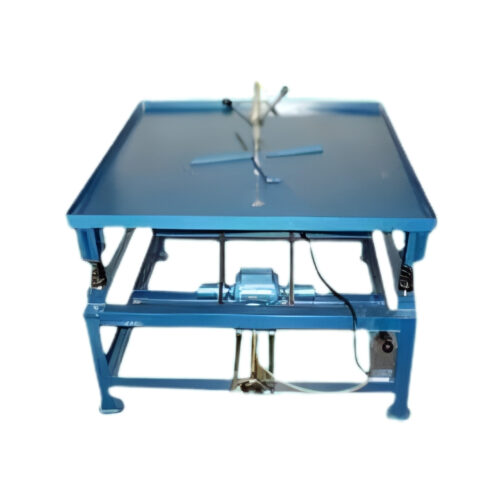
VIBRATING TABLE
Key Features
-
Heavy-duty fabricated steel construction
-
Adjustable vibration frequency and amplitude
-
Uniform vibration across table surface
-
Low noise and energy-efficient operation
-
Anti-vibration mounts for floor protection
-
Manual / digital / PLC control options
-
Maintenance-free vibrator motor
-
Custom table size and load capacity available
Applications
-
Concrete cube and block compaction
-
Precast concrete products
-
Foundry sand compaction
-
Laboratory material testing
-
Pharmaceutical and chemical compaction
-
Packaging and container settling
-
Soil and aggregate testing
Technical Specifications (Typical)
-
Table Size: Customizable
-
Load Capacity: 50 kg to 2000 kg (or higher)
-
Vibration Frequency: 0–6000 vibrations/min
-
Amplitude: Adjustable
-
Motor Type: Unbalanced / Electromagnetic
-
Power Supply: 230V / 415V, 50 Hz
-
Control: Manual / Digital / PLC
-
Mounting: Spring or rubber isolation
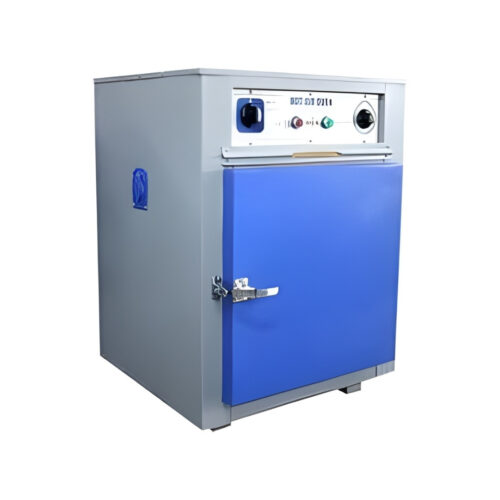
HOT AIR OVEN
Key Features
-
Uniform temperature distribution
-
Stainless steel inner chamber
-
PID / Digital temperature controller
-
Adjustable temperature range (typically 50°C to 250°C / 300°C)
-
Forced air circulation system
-
Double-walled construction with thermal insulation
-
Over-temperature safety cut-off
-
Adjustable shelves
-
Energy-efficient heating elements
Working Principle
Electric heating elements produce heat → blower fan circulates hot air → uniform temperature is maintained inside the chamber → samples are dried or sterilized effectively.
Applications
-
Drying glassware and laboratory instruments
-
Sterilization of metal tools and equipment
-
Heat treatment of materials
-
Moisture removal from samples
-
Pharmaceutical testing
-
Food processing laboratories
-
Industrial component drying
Technical Specifications (Typical)
-
Temperature Range: Ambient +10°C to 250°C
-
Temperature Accuracy: ±1°C
-
Chamber Material: SS 304 / SS 316
-
Outer Body: Powder-coated MS
-
Control System: Microprocessor / Digital PID
-
Power Supply: 220–230V AC, 50Hz
Advantages
-
Reliable and consistent heating
-
Low maintenance
-
Uniform air circulation
-
Long service life
-
Suitable for continuous operation

DIN ABRASION TESTER
Key Features
-
Conforms to DIN 53516 / ISO 4649 / ASTM D5963
-
Precision abrasive drum with uniform speed
-
Constant load application mechanism
-
Digital revolution counter
-
Sliding distance control
-
Specimen holder with angular adjustment
-
High accuracy and repeatability
-
Rugged, vibration-free construction
-
Easy specimen mounting and removal
Technical Specifications (Typical)
-
Drum Diameter: ~150 mm
-
Drum Speed: 40 ± 1 rpm
-
Abrasive Paper: Grit 60 (as per DIN)
-
Normal Load: 10 N
-
Sliding Distance: 40 m (standard)
-
Specimen Size: Ø16 mm × 6–15 mm thickness
-
Display: Digital / LCD
-
Power Supply: 220–240 V AC, 50 Hz
Applications
-
Rubber and elastomer industries
-
Tyre and automotive components
-
Conveyor belts and hoses
-
Footwear and sole materials
-
PU and polymer products
-
Quality control and R&D laboratories
Advantages
-
Reliable abrasion resistance evaluation
-
Standard-compliant testing
-
Consistent and repeatable results
-
Low maintenance
-
User-friendly operation
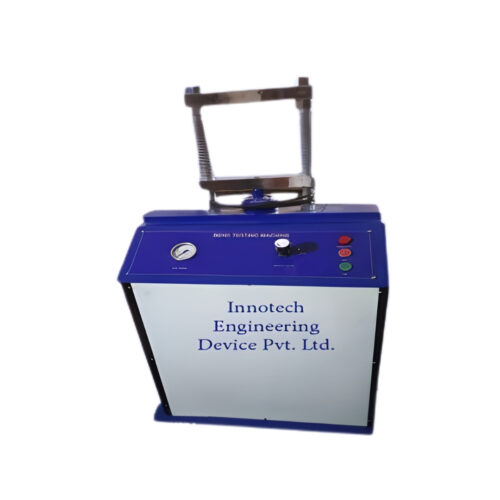
HYDRAULIC BEND TESTING MACHINE
Key Features
-
Heavy-duty hydraulic loading system
-
Rigid steel frame construction
-
Smooth and controlled bending operation
-
Hardened bending rollers and mandrels
-
Digital load indicator / PLC touch screen (optional)
-
Manual / semi-automatic operation
-
Low maintenance and long service life
-
Safety valves and overload protection
-
Compact and floor-mounted design
Applications
-
TMT bar bend and rebend testing
-
Weld joint bend testing
-
Structural steel quality verification
-
Pipe and tube bend testing
-
Research & development laboratories
-
Educational and training institutes
Standards Compliance
-
IS 1599
-
IS 1786
-
ASTM A370
-
ISO 15630
-
EN standards
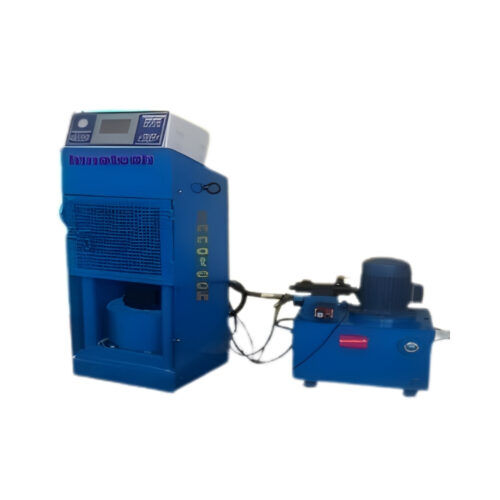
CTM WITH PACE CONTROL
Key Features
-
Pace Control System – Maintains constant loading rate
-
Microprocessor / PLC Based Control
-
Closed-Loop Servo Control
-
Digital Load & Extension Measurement
-
High Accuracy Load Cell (±1% or better)
-
Automatic Load Holding & Unloading
-
Overload Protection
-
Emergency Stop Switch
-
Data Acquisition Software (PC Based)
-
Real-Time Load vs Elongation Graph
-
USB / Ethernet Interface
Technical Specifications (Typical)
-
Capacity: 100 kN, 200 kN, 300 kN (customizable)
-
Pace Rate: Programmable (kN/sec or mm/min)
-
Load Resolution: 1/10000 of capacity
-
Crosshead Speed: Variable with pace control
-
Power Supply: 230V AC, 50 Hz
-
Frame Type: Rigid 2-Column / 4-Column Structure
Pace Control Description
-
Automatically controls rate of loading during tensile test
-
Conforms to IS, ASTM, ISO, BS standards
-
Ensures uniform stress application on specimen
-
Ideal for concrete, steel, rebar, wire, fasteners testing
Applications
-
Tensile testing of metal rods, bars, wires
-
Testing of rebars as per IS 1786
-
Quality control laboratories
-
R&D and material testing labs
-
Educational institutions
-
Construction & infrastructure projects
Standards Compliance
-
IS 1828
-
ASTM E8 / E9
-
ISO 6892
-
BS Standards
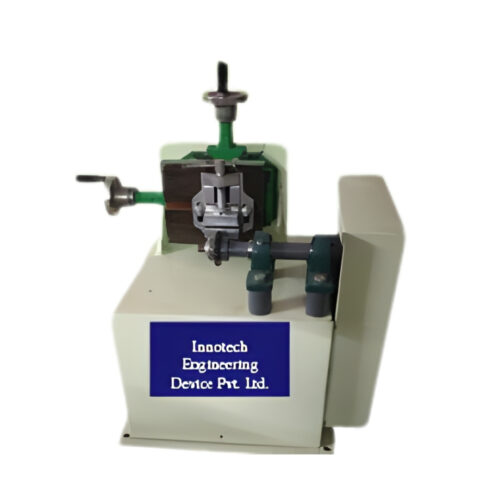
MOTORIZED KNOTCH CUTTER
Key Features
-
Motorized operation for uniform and precise notch cutting
-
High-accuracy linear slide mechanism
-
Interchangeable cutters for V-notch and U-notch
-
Rigid body construction for vibration-free operation
-
Adjustable cutting depth and feed
-
Safety cover for operator protection
-
Suitable for metals, plastics, and composite specimens
Technical Specifications (Typical)
-
Notch Types: V-notch (45°), U-notch (2 mm radius)
-
Specimen Size: As per ASTM / ISO standards
-
Motor: Single phase / Three phase AC motor
-
Cutting Accuracy: ±0.01 mm
-
Standards Compliance: ASTM E23, ISO 148, IS 1757
-
Operation: Bench-mounted, motor-driven
Applications
-
Impact test specimen preparation
-
Quality control laboratories
-
Metallurgical testing labs
-
Plastic and polymer testing
-
Research & development centers
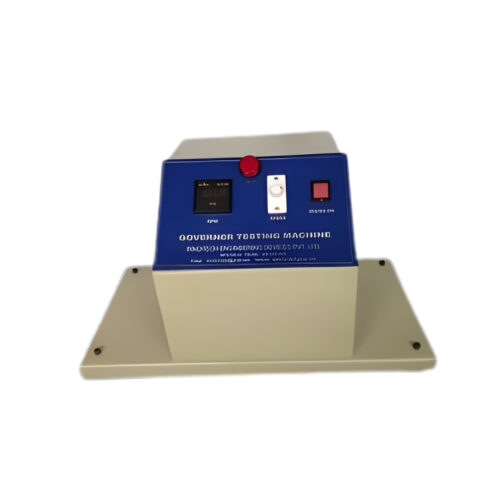
GOVERNOR TESTING MACHINE
Main Functions
-
Testing of centrifugal governors
-
Measurement of speed vs lift characteristics
-
Determination of controlling force
-
Study of stability and sensitiveness
-
Calibration of mechanical governors
Construction & Components
-
Rigid MS fabricated frame
-
Variable speed electric motor with controller
-
Vertical spindle with governor mounting arrangement
-
Precision RPM measuring system (digital tachometer / encoder)
-
Sleeve lift measurement using dial gauge / LVDT
-
Load application mechanism (weights / spring system)
-
Safety guard enclosure
-
Digital display / DAQ system (optional)
Typical Technical Specifications
-
Speed Range: 0 – 6000 RPM (customizable)
-
Speed Control: VFD / Servo drive
-
RPM Accuracy: ±0.5%
-
Lift Measurement Range: 0 – 25 mm
-
Lift Accuracy: 0.01 mm
-
Power Supply: 230V / 415V AC
-
Mounting Type: Vertical
-
Data Output: Digital display / PC interface (optional)
Types of Governors Tested
-
Watt Governor
-
Porter Governor
-
Proell Governor
-
Hartnell Governor
-
Wilson-Hartnell Governor
Applications
-
Mechanical engineering laboratories
-
Polytechnic & engineering colleges
-
R&D centers
-
Industrial training institutes
-
Governor calibration workshops

PLASTIC IMPACT TESTER
Types of Plastic Impact Testers
-
Izod Impact Tester
-
Charpy Impact Tester
-
Combined Izod & Charpy Impact Tester
-
Pendulum Type Impact Tester
-
Digital / Computerized Impact Tester
Applications
-
Thermoplastics and thermosetting plastics
-
PVC, PE, PP, ABS, Nylon, Polycarbonate
-
Plastic sheets, molded components
-
Automotive plastic parts
-
Electrical & electronic plastic components
Technical Specifications (Typical)
-
Impact Energy Range: 1 J, 2.75 J, 5.5 J, 11 J, 22 J
-
Pendulum Capacity: Up to 25 Joules
-
Display Type: Analog / Digital / Computerized
-
Test Method: Izod / Charpy
-
Resolution: 0.01 J
-
Specimen Size: As per ASTM / ISO standards
-
Clamp Type: Vice-type specimen clamp
-
Machine Body: Heavy-duty cast iron / steel frame
-
Safety Guard: Full protective enclosure
Standards Supported
-
ASTM D256
-
ISO 180
-
ISO 179
-
BS EN standards
Salient Features
-
High accuracy pendulum mechanism
-
Easy pendulum change for multiple energy ranges
-
Digital energy loss calculation
-
User-friendly operation
-
Robust and vibration-free construction
-
Calibration certificate traceable to national standards
Accessories (Optional)
-
Notching machine for plastic specimens
-
Extra pendulums (different energy ranges)
-
Computerized data acquisition software
-
Safety enclosure
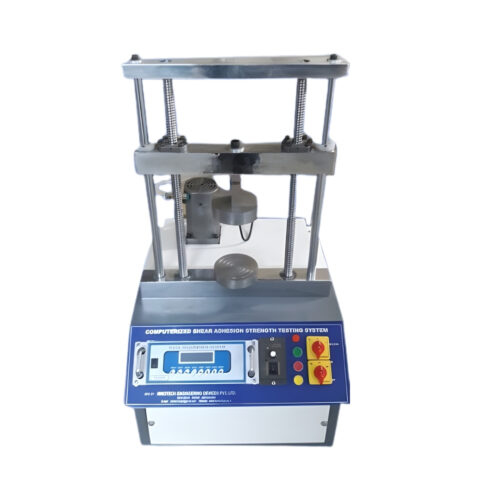
COMPUTERIZED SPRING TESTING MACHINE
Key Functions
-
Load–Deflection Testing
-
Spring Rate (k) Calculation
-
Compression / Tension Testing
-
Cycle (Fatigue) Testing (optional)
-
Free Length & Solid Height Measurement
Types of Springs Tested
-
Compression springs
-
Tension (extension) springs
-
Torsion springs
-
Disc (Belleville) springs
Main Components
-
High-precision Load Cell
-
Servo / Stepper Motor Drive
-
Ball Screw & Linear Guide System
-
Computer with Testing Software
-
Digital Displacement Encoder
-
Safety Enclosure & Limit Switches
Typical Specifications (Indicative)
-
Capacity: 10 N to 50 kN (customizable)
-
Accuracy: ±0.5%
-
Stroke Length: 100–500 mm
-
Speed Range: 0.1–500 mm/min
-
Data Output: Load–deflection curve, test reports (PDF/Excel)
Software Features
-
Real-time load vs deflection graph
-
Automatic spring constant calculation
-
Test method storage
-
Pass/Fail limits
-
Data export & printer support
Standards Supported
-
IS, ASTM, DIN, JIS, ISO
-
Automotive & industrial spring standards
Applications
-
Automotive spring manufacturers
-
Electrical & electronics industry
-
Aerospace components
-
R&D laboratories
-
Incoming and final inspection
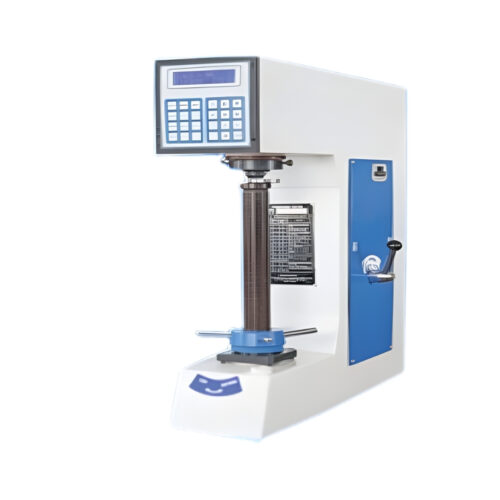
DIGITAL HARDNESS TESTING MACHINE
Common Types
-
Digital Rockwell Hardness Testing Machine
-
Digital Brinell Hardness Testing Machine
-
Digital Vickers Hardness Testing Machine
-
Portable Digital Hardness Tester (Leeb type)
Key Features
-
Digital LCD/LED display
-
Automatic load application & dwell time
-
High accuracy & repeatability
-
Direct hardness value display (HRC, HRB, HB, HV, etc.)
-
Data storage & USB/PC connectivity (optional)
-
Conforms to ASTM / ISO / IS standards
Typical Applications
-
Quality control labs
-
Heat treatment shops
-
Foundries & forging units
-
R&D laboratories
-
Engineering colleges & testing labs

COMPUTERIZED TENSILE TESTING MACHINE
A Computerized Tensile Testing Machine (CTTM) is used to measure the mechanical properties of materials by applying a controlled tensile (pulling) load and recording the response digitally.
What it does
It determines properties such as:
-
Tensile strength
-
Yield strength
-
Elongation (%)
-
Reduction in area
-
Young’s modulus (with extensometer)
All results are captured, displayed, and stored via computer-based data acquisition software.
Main components
-
Loading Frame
-
Rigid two- or four-column structure
-
Driven by servo motor / AC motor / hydraulic system
-
-
Grips & Fixtures
-
Wedge grips (manual or hydraulic)
-
Suitable for flat, round, wire, or threaded specimens
-
-
Load Cell
-
High-accuracy force measurement (typically Class 1 or better)
-
-
Crosshead & Drive System
-
Precise speed control for strain-rate–dependent tests
-
-
Extensometer (optional but recommended)
-
For accurate strain and modulus measurement
-
-
Computer & Testing Software
-
Real-time load–elongation / stress–strain curves
-
Automatic calculation of results
-
Report generation and data export
-
Typical capacities
-
1 kN – 100 kN → plastics, rubber, wires, thin metals
-
100 kN – 600 kN → structural steel, rebars, plates
-
Higher capacities available in hydraulic models
Materials tested
-
Metals (steel, aluminum, copper, rebars)
-
Plastics & polymers
-
Rubber & elastomers
-
Wires, cables, fasteners
-
Composites and sheets
Standards supported
-
ASTM: A370, E8, D638, D412
-
ISO: 6892, 527
-
IS: 1608, 1828
-
BS / DIN standards (as required)
Key advantages
-
High accuracy and repeatability
-
Fully automated testing & reporting
-
Easy calibration and compliance
-
Suitable for R&D, QA/QC, and production labs
Optional features
-
Video extensometer
-
Temperature chamber (hot/cold testing)
-
Automatic hydraulic grips
-
Networked data storage
-
Customized test methods
If you want, I can help you with:
-
Technical specifications for a particular capacity
-
Comparison: electromechanical vs hydraulic
-
Tender / purchase specification
-
Brochure-style product description
-
Price range in India
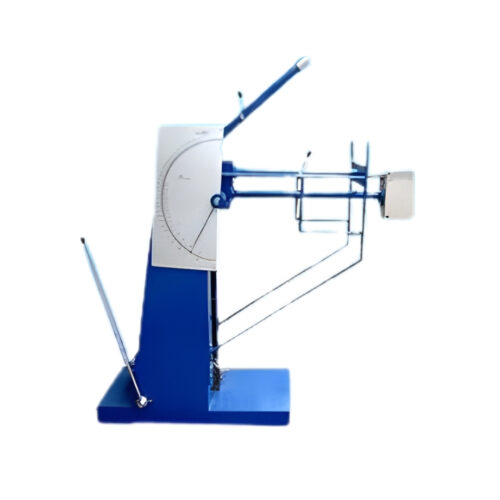
IZOD IMPACT TESTING MACHINE
📌 What an Izod Impact Testing Machine Is
An Izod impact testing machine is a pendulum-based impact resistance tester used to determine how much energy a material absorbs when impacted suddenly — a measure of the material’s toughness. In the test:
-
A notched specimen (usually plastic or metal) is held vertically in a clamp.
-
A pendulum hammer is raised to a fixed height and then released.
-
It swings down and strikes the specimen, breaking it.
-
The energy absorbed in breaking the specimen is measured from how far the pendulum swings after impact.
Standards: Many machines conform to internationally recognized standards such as ASTM D256 (Izod methods) and ISO 180 (plastic impact testing).
🧪 Why It’s Used
-
Material toughness assessment: Determines how materials behave under sudden shock loading.
-
Quality control: Ensures consistency and safety for products experiencing impacts in real use.
-
R&D: Helps in material selection and design validation in industries like plastics, automotive, aerospace, and consumer products.
🧠 Key Features to Look For
-
Energy range: Typically from a few joules up to several dozen joules depending on material and application.
-
Display: Analog dial or digital interface with read-out.
-
Automatic data handling: USB/PC connectivity on digital models.
-
Dual test capability: Some models support both Izod and Charpy tests.
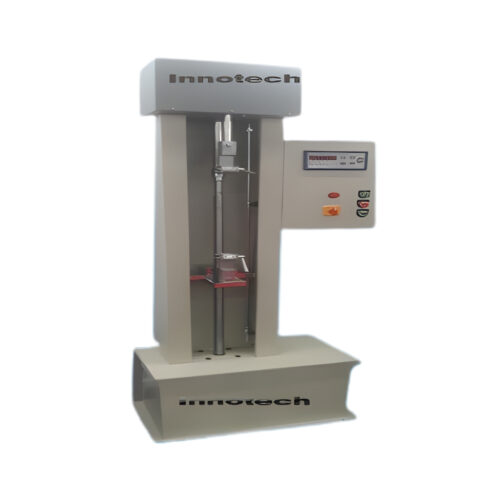
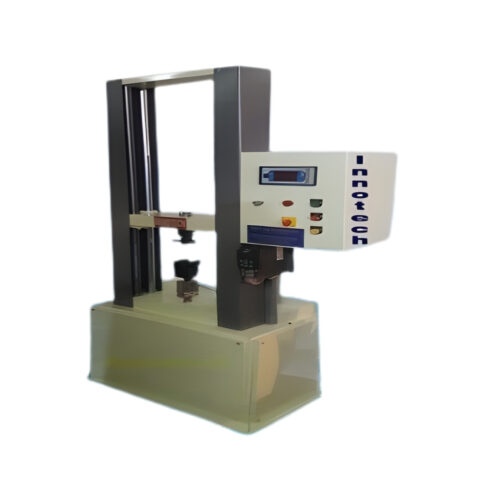
DIGITAL TENSILE TESTING MACHINE
What Is a Digital Tensile Testing Machine?
A Digital Tensile Testing Machine is an electromechanical device used to measure how materials behave under tension — that is, how much force they can withstand before they stretch or break. It digitally records key parameters like force, elongation, and strength, and displays these on a screen or computer interface for analysis.
🧪 How It Works
-
Specimen Mounting
A sample (metal, plastic, rubber, textile, etc.) is gripped between the machine’s upper and lower fixtures. -
Tension Application
The machine pulls the specimen apart at a controlled speed using a motor and crosshead mechanism. -
Data Capture
As tension increases, digital sensors (usually load cells) record force versus elongation. Modern machines often interface with software for real-time graphs and data export. -
Failure & Analysis
Testing continues until the material breaks. The machine then reports properties such asultimate tensile strength, yield strength, elongation, and modulus of elasticity.
📊 Typical Features
✅ Digital & Computerized Readouts
-
Real-time display of force, displacement, and elongation.
-
Many machines provide computer interfaces for storing and analyzing test results.
✅ Precision Sensors
-
High-sensitivity load cells and digital encoders ensure accurate measurements.
✅ Safety & Protection
-
Limit switches and overload protection safeguard both the specimen and the machine.
✅ Variable Speed Control
-
Test speeds can often be varied based on material type and test standards.
✅ Standards Compliance
-
Machines can be designed to meet ASTM, ISO, and IS standards depending on industry requirements.
🏭 Common Applications
Digital tensile testers are used in:
-
Industrial quality control (metals, plastics, elastomers)
-
R&D laboratories (new materials, composites)
-
Automotive & aerospace sectors (ensuring material safety)
-
Textile and packaging industries (fiber and film testing)
-
Educational and research institutions
🔍 What Results You Get
After a test, you typically get:
| Property | Meaning |
|---|---|
| Tensile Strength | Highest stress the material withstands before breaking |
| Yield Strength | Stress at which material begins to deform permanently |
| Elongation at Break | How much the material stretched before breaking |
| Modulus of Elasticity | Material stiffness measured from stress-strain data |
🛠 Buying Considerations
If you’re looking to purchase one:
-
Load Capacity: Choose based on maximum force you need to test (e.g., 500 N vs. 5000 kgf).
-
Display Type: Digital panel vs. computer-integrated software.
-
Accuracy & Standards: Verify compliance with relevant testing standards (ASTM, ISO, etc.).
-
Accessories: Special grips or fixtures for different materials enhance flexibility.
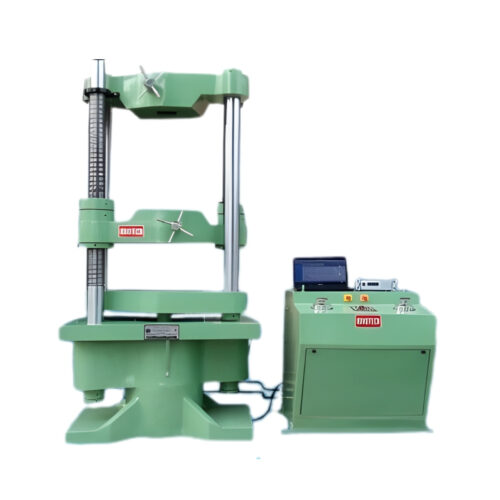
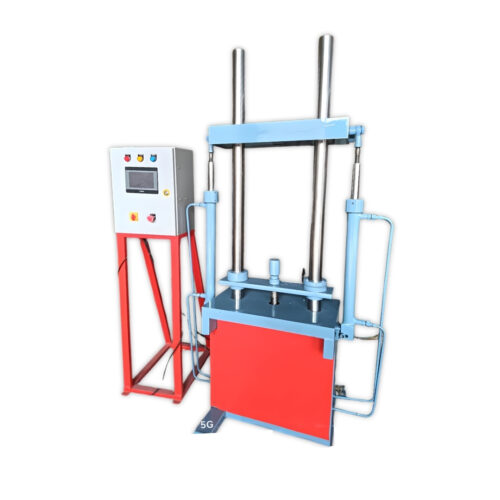
DIGITAL INSULATOR LOAD TESTING MACHINE
⚙️ Typical Specifications
(Can vary by manufacturer and capacity)
-
Load Capacity:
-
10 kN to 500 kN (1–50 Ton)
-
Higher capacities available on request
-
-
Loading Type:
-
Tensile (most common)
-
Compression (optional)
-
-
Load Measurement:
-
High-accuracy digital load cell
-
-
Accuracy:
-
±1% or better
-
-
Display:
-
Digital controller showing load, peak load, and hold time
-
-
Control Mode:
-
Manual / semi-automatic / fully automatic
-
-
Loading Rate:
-
Adjustable as per IS/IEC standards
-
-
Frame Type:
-
Rigid steel fabricated or 4-column structure
-
-
Power Supply:
-
230V AC, 50 Hz (India standard)
-
🧪 Tests Performed
-
Mechanical Failing Load Test
-
Proof Load Test
-
Routine Load Test
-
Sustained Load Test
-
Breaking Load Test
📜 Applicable Standards
-
IS 731 / IS 2544
-
IEC 60383 / IEC 61109
-
ASTM standards (where applicable)
🖥️ Optional Features
-
PC interface with software
-
Load vs time graph
-
Data logging & report generation
-
Hydraulic power pack with proportional valve
-
Safety enclosure & overload protection
🏭 Construction Highlights
-
Heavy-duty hydraulic cylinder
-
Precision servo or hand-operated hydraulic system
-
Self-aligning grips to avoid bending stresses
-
Corrosion-resistant fixtures for outdoor insulators
If you want, I can help you with:
-
Technical specification for tender
-
Comparison with UTM
-
Budgetary price range (India)
-
Customized capacity selection
-
Datasheet or catalogue format
Universal Testing Machine
TECHNICAL SPECIFICATIONS OF THE 25KN
1. Load Frame
- Frame rated : 25kN in tension / Compression and 100Nm Torsion.
- Minimum stiffness 250 kN/mm, precision aligned load frame with fixed lower platen and adjustable upper crosshead.
- Column clearance: 400mm to 700mm.
- The top cross head movement is hydraulically operated using declamp cylinder to position it with different grips and specimen length before starting the test.
- Touch screen operated tablet for basic operations of the machine – switching the power pack On/Off, Clamp and De-Clamp of the top cross head, Moving the crosshead up and down, moving actuator up and down to mount the specimen.
- Top crosshead must have provision to mount servo hydraulic actuator on it.
2. Fatigue rated actuator assembly
- Linear dynamic/static capacity: ±25kN.
- Minimum Stroke length: ± 25mm with resolution of 1μm
- Including anti-rotation assembly.
- Servo valves of suitable rating and accumulators of suitable capacity.
- Operating at 210 bar pressure.
3. Torsion actuator assembly
- Capacity: Upto 100Nm.
- Rotation: 360° full rotation.
4. Axial Torsion Load Cell:
- ± 25kN 100Nm Dynamic Capacity Axial Torsion Load Cell
- Accuracy: ISO7500-1 Class 0.5 (0.5% of indicated load)
- 150% Safe over Load Capacity without mechanical damage
- 350 Ohm or higher resistance Strain Bridge design
- Fatigue Life: 10^9
5. Hydraulic Power Pack
- Hydraulic power pack of sufficient capacity 10LPM to run the system continuously will be provide.
- Proper size of accumulators will be incorporated to avoid jerks/pressure transients in the event of power failure.
- All safety provisions, pressure indicators, temperature indicators, relays will be incorporated.
- Hydraulic oil of sufficient quantity for the use of hydraulic power pack will be provide.
- Maximum working noise of 65 dB.
- System will be self-cooled, external cooling unit not accept.
- Variable frequency drive based control hardware to achieve energy efficient flow control.
- Touch screen based tablet is use for power pack operation.
- All the safety interlocks on the power pack to be monitored on the touch screen panel
6. Digital Servo Controller
- 2 channel of digital encoder input.
- Up to 8 channels of conditioned analog inputs with suitable signal conditioners
- 2 channel of load cell input
- channel of strain-bridge extensometer/crack-opening displacementgage input
- Spare Channels
- channel of digital servo-control with loop update frequency of the 6 kHz
- Digital I/O / Logic drive and sense lines.
- Synchronized data acquisition into host computer at 6 kHz.
- Channels of 32-bit digital encoder.
- Channels of 24-bit analog feedback.
- Channel of Set Point.
- Channels servo-output for monitoring
- 8 Bits of digital I/O status for time tagged device sense and control at 1kHz data acquisition rate.
- User settable software safety limit interlocks on upper and lower limit on each of 2+8 feedback channels with individual option of Stop/Hold/Trip
- Servo control of actuator with user settable/programmable.
- Mode control (Load, Stroke, Strain).
- Real-time automatic adaptive servo-gain adjustment to account for system stiffness variation as a function of specimen stiffness.
- Static ramping of Load / displacement/ strain with independently settable ramp rate.
- Cyclic loading with ramp/sine waveform and user settable mean, amplitude and phase at frequency of up to 50 Hz and restricted as per the actuator performance curve, with 2% accuracy in loading through adaptive control.
- Provision for multi-step static and cyclic loading, with provision to switch control mode.
- User settable error limit on servo-control with option of Stop/Trip.
- Host computer with Windows 11 or higher version of operating system and suitable application software for ease of performing tests under specified conditions with provision for report generation by way of multiple worksheet XL-tables including raw data arranged suitably as columns for individual channels.
- One Hardwired E-Stops, located on the frame for easy access.
- UPS to guarantee safe shut down and unloading in the event of power failure.
- OEM built software application for remote health monitoring must be available. For security purposes third party applications or screen sharing applications are not permitted. Same software must have provision to be upgraded for remote test monitoring with camera.
7. Grips and Accessories for Room Temperature Applications Tensile.
- Room temperature :25kN Hydraulic Wedge Grip.
- Load Capacity :25kN.
- The grips included wedge inserts for flat and round specimens.
- The flat wedges have provision to accommodate specimens of 0-10mm thickness and round specimens of diameter 3-9mm .
- Variable grip pressure based on the test samples: The variable grip pressure must be freely selectable by the user for optimum selection of gripping pressure for the same. Provision for the selection of gripping pressure via the remote control must also be there for safety.
- Axial Extensometer for Tensile Test Applications.
- Gauge length: 12.5 mm.
- Measuring range: +6.25/-3.1 mm.
- Accuracy: ± 0.5% as per ASTM E83
- Excitation: 5 to 10 VDC
- Sensitivity: 2 to 4 mv/V
- Full bridge, 350 ohms strain gauged design.
- Compression Platens.
- Diameter 60mm platens with spherical seat for self alignment.
- Rated for room temperature operation.
- Room temperature 3 Point bend fixture.
- Load Capacity :25kN.
- Roller diameter :5mm.
- Bottom adjustable Span : 30mm - 150mm.
- Support blocks to meet ASTM D790.
- Tensile and Compression Testing Software (As per ASTM E8 and ASTM E9)
- Software to perform Tensile and Compression test. The user interface contains specimen description, loading parameters, pump controls, test run/stop, graph display, numeric readouts of multiple relevant test parameters.
- Tests can be done in stroke or strain control.
- Online graphs of stress vs. strain and load vs. displacement.
- Option to save the test profiles.
- Auto data acquisition settings.
- Option to view multiple test graphs in one plot.g. Option to run test in dual rate.
- Option to remove the extensometer and continue the test in stroke control.
- Option to stop the test after specified percentage load drop.
- Limit settings on stroke, strain and load channels.
- Offline post processing program to analyse the results in MS Excel.
- Basic Application Software.
- Performs Fatigue Test, Static or Monotonic test, Axial Torsion Test, Multistep programming and Time History (Custom Waveform) generation.
- Test can be done in Stroke, Load and COD/Extensometer control modes
- Display meters for current readouts, max-min readouts, peak valley readouts, set point and cycle counters. Display of time history graph and X-Y plots.
- Muti-channel option available.
- Option to program safety interlock for load, displacement and COD/Extensometer.
- Data recording collects time and/or peak-valley data to binary formats. Data is then exported to MS Excel/text format where report generation and graphs are available with play back option.
- Data reduction options available in real time data logging and also during data exporting.
- Application must allow for testing in axial torsion mode
- Software must be upgradable with module for testing Biomedical implants with preset tests to various ASTM standards like ASTM F1717, ASTM F543, ISO 7206-4 etc.
- Host computer system - Test work station.
- Display: 24 inch LCD monitor
- Processor: Intel Core i5.
- RAM: 16GB DDR4 non-ECC Memory.
- Storage: 3.5 inch 500 GB SSD
- Drive: 8x DVD+/-RW 9.5mm Optical Disk Drive
- Operating System: Windows 10 Pro English
- Wired Mouse and Keyboard.
- 3000 VA with 30mons battery backup
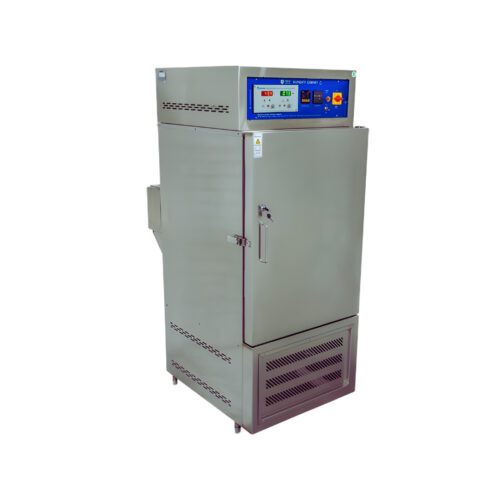
Environmental Test Chamber
Features of Humidity/Conditioning Test Chambers Deluxe Model
- Alarm system with buzz sound at the test end process
- Temperature sensing through PT-100 sensor
- Highly accurate test results under uniform temperatures and humidity levels in the chamber
- Digital Control for Humidity and Temperature
- High Grade-imported puff insulation
- Maximum Thermal Efficiency by insulation means.
- SSR based heaters
- Digital Preset timer with LED Display
- In-built Auto tuning function
- Water Level Indicator
- Equipped with rapid air circulation German imported fan for uniform and homogenous heating, cooling, humidity, de-humidity
- inside the chamber
- Inbuilt Calibration feature with reference to master PID controller
- Setting to RTD PT-100 sensor through advanced PID controller
- Auto stop feature to stop the machine at a set time
- Time totalizer to calculate the no. of Hours run by the instrument
- Reservoir water tank auto refilling (Float value arrangement)
Technical specifications
- Capacity: 150 litres
- Display: LED (Digital)
- Accuracy: Temp. ± 2ºC / Humidity ± 5%
- Least Count/Resolution Temp / Humidity: 0.1ºC / 1%
- Power: 15A, 220V , Single phase, 50 Hz
- Temperature Range: 15ºC to 60ºC
- Humidity Range: upto to 95% RH
- Timer: 999Hr (Changeable to Min. as per request)
- Water Level Low: Alarm output
- No. of Sample racks: 2
- Handle: Yes
- Wet Heater: 1 Kw, 1 no.
- Dry Heater: 500 Watt, 1 no.
- Temperature Sensor: 1 (PT-100)
- Humidity Sensor: 1 (RH)
- Movement Castor: Wheels
- Material: Stainless Steel (Inner & outer body)
- Finish: Stainless Steel combination finish for corrosion resistant
- Dimensions: Inner : 455 x 455 x 710 mm & Outer : 660 x 930 x 1515 mm
Endurance Testing Machine
Universal Testing systems for medical testing with all accessories compressive Tensile bending and Torsion test
| Type Of Testing Machines | Bending testing and Tensile Testing |
| Automation Grade | Automatic |
| Material | Stiffness |
| Display Type | Digital |
| Product Type | Univesal Testing machine |
| Availability | Customise |
-
- More than 140 Years of Experience of manufacturing world class technology directly from Japan.
- More than 100 Years of Experience of manufacturing Mechanical Testing products.
- 1000s of leading customers in various segment/zones using Shimadzu products with full trust and confidence.
- We respect the business ethics and maintain transparency in all our dealings.
- We provide products at reasonable rates keeping in mind our clients budgetary constraints.
- We are associated with dependable logistic partners for timely delivery of products.
- We accept payments via several modes.
- We pack all the equipment in safe packaging material for avoiding and kind of mechanical damage during transportation.
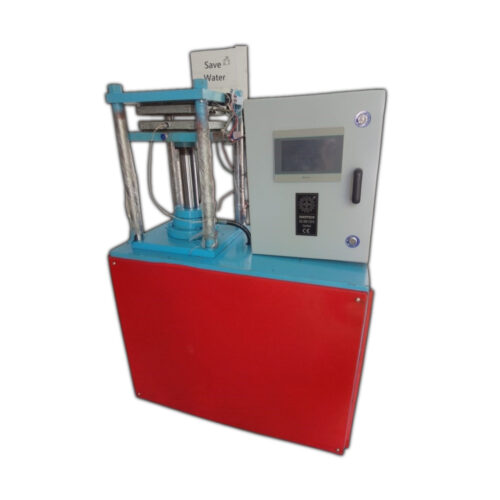
Hydraulic Heating Press
| Capacity | upto 10 tons |
| Country of Origin | Made in India |
| Cylinder Capacity | 10 Tons maximum (hydraulic power unit) |
| Piston Stroke | Maximum 50mm |
| Max Pressure | 200 barst |
| Loading Type | Vertical up |
| Daylight | 120 mm (distance between punch and die) |
- VBCC's Manual Press stands out as a versatile and user-friendly tool designed to cater to various precision pressing and forming operations. Crafted with a focus on ease of use and reliability, this press finds its niche in laboratories and small-scale industrial settings where hands-on control and precision are paramount.
- This manual press is engineered to facilitate a range of tasks, including sample preparation, material compaction, and shaping operations. Its straightforward operation, coupled with robust construction, ensures that users can exert controlled force with precision, making it an indispensable tool in scenarios that require a hands-on approach.
- One of the key features of VBCC's Manual Press is its adaptability to different applications. Its design allows for flexibility in accommodating diverse materials and shapes, making it suitable for a wide array of pressing requirements. Whether in a laboratory setting conducting experiments or in an industrial environment working on small-scale production, this press delivers reliable and efficient performance.
- The user-friendly nature of the VBCC Manual Press makes it accessible to both seasoned professionals and those new to the field. Its intuitive design streamlines the pressing process, minimizing the learning curve and maximizing productivity. This ease of use, combined with the press's robust construction, ensures longevity and consistent performance over time.
- In summary, the VBCC Manual Press is not just a tool; it's a solution for precision pressing needs. From its adaptability to its user-friendly design, this manual press contributes to the success of various pressing applications, making it an invaluable asset for researchers, engineers, and professionals working in fields that demand precision and reliability.