



Endurance Testing Machine
Universal Testing systems for medical testing with
all accessories compressive Tensile bending and Torsion test
| Type Of Testing Machines | Bending testing and Tensile Testing |
| Automation Grade | Automatic |
| Material | Stiffness |
| Display Type | Digital |
| Product Type | Univesal Testing machine |
| Availability | Customise |
-
- More than 140 Years of Experience of manufacturing world class technology directly from Japan.
- More than 100 Years of Experience of manufacturing Mechanical Testing products.
- 1000s of leading customers in various segment/zones using Shimadzu products with full trust and confidence.
- We respect the business ethics and maintain transparency in all our dealings.
- We provide products at reasonable rates keeping in mind our clients budgetary constraints.
- We are associated with dependable logistic partners for timely delivery of products.
- We accept payments via several modes.
- We pack all the equipment in safe packaging material for avoiding and kind of mechanical damage during transportation.
About Endurance Testing Machine
We have been serving our respected clients since 1995 by manufacturing and supplying excellent quality Endurance Testing Machine. It is engineered and fabricated at our state-of-the-art facility using premium quality materials and latest innovative techniques under stern guidance and supervision of deft professionals. This machine is extensively used in various industries to check the endurance and tensile strength of products. Prior to dispatch, this Endurance Testing Machine is duly tested on well defined quality parameters to ensure that our clients get a flawless range of products.
Related products
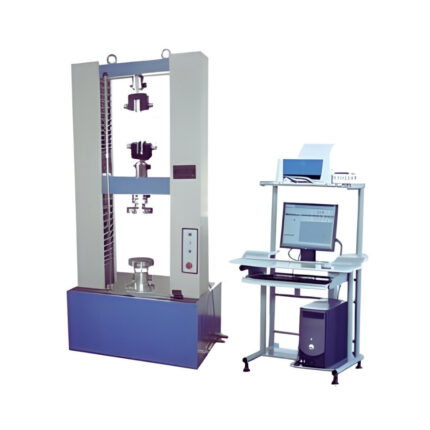
UNIVERSAL-TESTING-MACHINE
Technical Specifications
Load Capacity Range
-
From: 1 kN to 2000 kN (or higher depending on model)
-
Common ranges: 10 kN, 50 kN, 100 kN, 200 kN, 600 kN, 1000 kN
Machine Types
-
Electromechanical UTM
-
Servo Hydraulic UTM
-
Computerized / Digital UTM
Control Modes
-
Load control
-
Displacement control
-
Strain control
-
Pace rate control
Accuracy
-
Load accuracy: ±0.5% to ±1% of indicated load
-
Class 0.5 / Class 1 as per ISO standards
Load Measurement
-
High precision load cell
-
Multiple load cell options
Crosshead Travel
-
Typically 600–1200 mm (model dependent)
Speed Range
-
Very low to high test speeds
-
Example: 0.001 to 500 mm/min
Data Acquisition
-
Real-time force vs displacement curve
-
Stress–strain graph generation
-
PC based software with test reports
Safety Features
-
Overload protection
-
Emergency stop
-
Limit switches
-
Safety guards
Standards Compliance
-
ASTM
-
ISO
-
IS
-
EN
-
DIN
Common Tests Performed
-
Tensile test
-
Compression test
-
Flexural test
-
Shear test
-
Peel test
-
Tear test
-
Bend test

LOAD TESTING MACHINE
Technical Specifications
-
Load Capacity Range: 50 kN to 5000 kN (customizable)
-
Type: Hydraulic / Electro-Mechanical
-
Control Mode: Manual / Semi-Automatic / Computerized
-
Load Measurement: Digital Load Cell / Pressure Sensor
-
Accuracy: ±1% or better
-
Display: Digital indicator / Computer software display
-
Resolution: High resolution load reading
-
Loading Rate Control: Adjustable
-
Frame Construction: Heavy-duty steel frame
-
Power Supply: 220V / 415V AC
-
Hydraulic System: Motorized hydraulic power pack
-
Data Output: USB / RS232 / Software-based reporting (computerized models)
-
Safety Features: Overload protection, emergency stop
-
Test Modes: Compression / Tension / Flexural (depending on model)
-
Standards Compliance: IS / ASTM / BS / EN standards (model dependent)
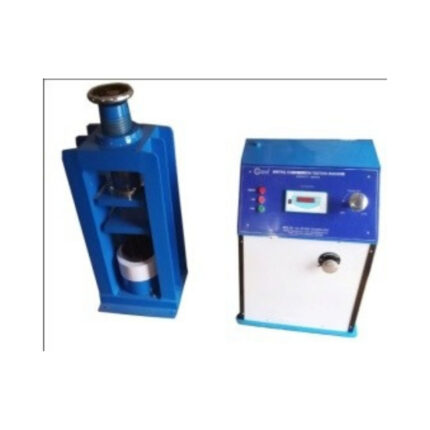
COMPRESSION TESTING MACHINE
Technical Specifications
-
Capacity Range:
50 Ton / 100 Ton / 200 Ton / 300 Ton / 500 Ton / 2000 kN -
Load Measurement:
Digital load indicator / Computerized data acquisition system -
Load Accuracy:
±1% of indicated load (Class 1) -
Loading Method:
Hydraulic compression with controlled pace rate -
Pace Rate Control:
Manual / Semi-automatic / Fully automatic -
Platen Size:
200 × 200 mm / 300 × 300 mm / Customizable -
Maximum Piston Stroke:
50 – 100 mm -
Frame Construction:
Heavy-duty welded steel frame with high rigidity -
Power Supply:
230V AC, Single Phase / 415V AC, Three Phase -
Hydraulic Pressure:
High-pressure axial piston pump -
Standards Compliance:
IS:14858, IS:516, ASTM C39, ASTM C109, BS EN standards -
Safety Features:
Overload protection, pressure relief valve, emergency stop
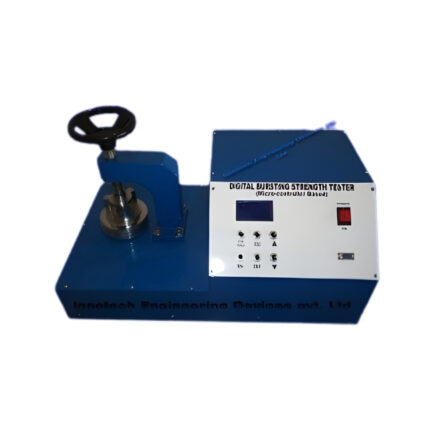
DIGITAL BURSTING STRENGTH TESTER
Technical Specifications
-
Measurement Range: 0–100 kg/cm² / 0–1000 kPa (customizable)
-
Display: High-resolution digital LCD / LED display
-
Accuracy: ±1% of full scale
-
Pressure System: Hydraulic pressure with rubber diaphragm
-
Clamping Method: Manual / Pneumatic clamping (optional)
-
Specimen Diameter: As per standard (e.g., 30.5 mm / 50 mm)
-
Pressure Application Rate: Adjustable, as per standard requirements
-
Control System: Microprocessor-based digital controller
-
Peak Hold Function: Yes (maximum burst value capture)
-
Units Displayed: kg/cm², kPa, PSI (selectable)
-
Power Supply: 220–240 V AC, 50 Hz
-
Standards Compliance:
-
IS: 1060
-
TAPPI T403
-
ISO 2758 / ISO 2759
-
ASTM D3786 / ASTM D3787
-
-
Optional Features:
-
Computer interface (RS-232 / USB)
-
Bursting index calculation
-
Data storage & printer output
-

SAMPLE CUTTING PRESS
Technical Specifications
(Specifications may vary by model and capacity)
-
Type: Hydraulic / Pneumatic / Manual Sample Cutting Press
-
Capacity: 5 Ton / 10 Ton / 20 Ton / 25 Ton / 30 Ton (or as required)
-
Pressing Area: 300 × 300 mm to 500 × 500 mm
-
Daylight Gap: 100 – 250 mm
-
Ram Stroke: Adjustable
-
Pressure Control: Manual / Digital Pressure Gauge
-
Operation Mode: Push Button / Foot Switch / Dual Hand Safety Control
-
Cutting Accuracy: High repeatability with clean edges
-
Platen Material: Hardened Steel / EN-grade Steel
-
Frame Construction: Heavy-duty welded steel frame
-
Power Supply: 230V / 415V AC, 50 Hz
-
Safety Features: Emergency stop, overload protection, safety guard
-
Standards Compliance: ASTM, ISO, IS, DIN, BS
Applications
-
Rubber and plastic testing laboratories
-
Automotive and aerospace material testing
-
Textile and leather industries
-
Packaging and polymer testing
-
Quality control and R&D labs
Key Features
-
Uniform cutting pressure
-
Rugged and vibration-free structure
-
Easy die replacement
-
Low maintenance operation
-
High operator safety
-
Suitable for standard and custom dies
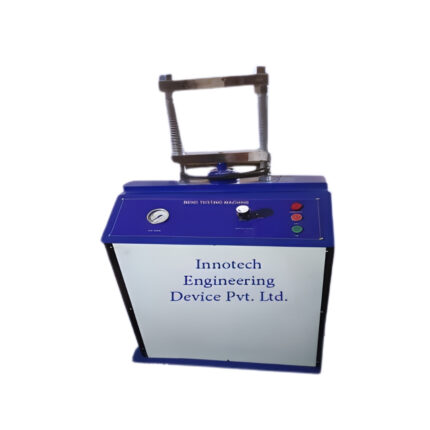
HYDRAULIC BEND TESTING MACHINE
Key Features
-
Heavy-duty hydraulic loading system
-
Rigid steel frame construction
-
Smooth and controlled bending operation
-
Hardened bending rollers and mandrels
-
Digital load indicator / PLC touch screen (optional)
-
Manual / semi-automatic operation
-
Low maintenance and long service life
-
Safety valves and overload protection
-
Compact and floor-mounted design
Applications
-
TMT bar bend and rebend testing
-
Weld joint bend testing
-
Structural steel quality verification
-
Pipe and tube bend testing
-
Research & development laboratories
-
Educational and training institutes
Standards Compliance
-
IS 1599
-
IS 1786
-
ASTM A370
-
ISO 15630
-
EN standards

GOVERNOR TESTING MACHINE
Main Functions
-
Testing of centrifugal governors
-
Measurement of speed vs lift characteristics
-
Determination of controlling force
-
Study of stability and sensitiveness
-
Calibration of mechanical governors
Construction & Components
-
Rigid MS fabricated frame
-
Variable speed electric motor with controller
-
Vertical spindle with governor mounting arrangement
-
Precision RPM measuring system (digital tachometer / encoder)
-
Sleeve lift measurement using dial gauge / LVDT
-
Load application mechanism (weights / spring system)
-
Safety guard enclosure
-
Digital display / DAQ system (optional)
Typical Technical Specifications
-
Speed Range: 0 – 6000 RPM (customizable)
-
Speed Control: VFD / Servo drive
-
RPM Accuracy: ±0.5%
-
Lift Measurement Range: 0 – 25 mm
-
Lift Accuracy: 0.01 mm
-
Power Supply: 230V / 415V AC
-
Mounting Type: Vertical
-
Data Output: Digital display / PC interface (optional)
Types of Governors Tested
-
Watt Governor
-
Porter Governor
-
Proell Governor
-
Hartnell Governor
-
Wilson-Hartnell Governor
Applications
-
Mechanical engineering laboratories
-
Polytechnic & engineering colleges
-
R&D centers
-
Industrial training institutes
-
Governor calibration workshops
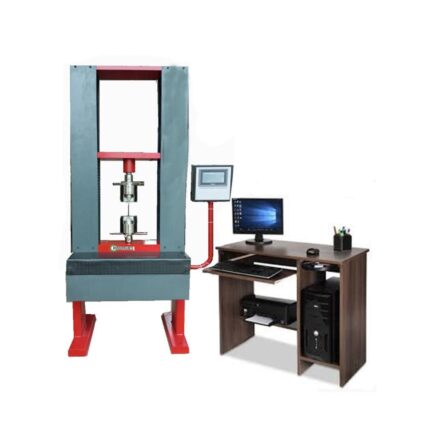
COMPUTERIZED TENSILE TESTING MACHINE
A Computerized Tensile Testing Machine (CTTM) is used to measure the mechanical properties of materials by applying a controlled tensile (pulling) load and recording the response digitally.
What it does
It determines properties such as:
-
Tensile strength
-
Yield strength
-
Elongation (%)
-
Reduction in area
-
Young’s modulus (with extensometer)
All results are captured, displayed, and stored via computer-based data acquisition software.
Main components
-
Loading Frame
-
Rigid two- or four-column structure
-
Driven by servo motor / AC motor / hydraulic system
-
-
Grips & Fixtures
-
Wedge grips (manual or hydraulic)
-
Suitable for flat, round, wire, or threaded specimens
-
-
Load Cell
-
High-accuracy force measurement (typically Class 1 or better)
-
-
Crosshead & Drive System
-
Precise speed control for strain-rate–dependent tests
-
-
Extensometer (optional but recommended)
-
For accurate strain and modulus measurement
-
-
Computer & Testing Software
-
Real-time load–elongation / stress–strain curves
-
Automatic calculation of results
-
Report generation and data export
-
Typical capacities
-
1 kN – 100 kN → plastics, rubber, wires, thin metals
-
100 kN – 600 kN → structural steel, rebars, plates
-
Higher capacities available in hydraulic models
Materials tested
-
Metals (steel, aluminum, copper, rebars)
-
Plastics & polymers
-
Rubber & elastomers
-
Wires, cables, fasteners
-
Composites and sheets
Standards supported
-
ASTM: A370, E8, D638, D412
-
ISO: 6892, 527
-
IS: 1608, 1828
-
BS / DIN standards (as required)
Key advantages
-
High accuracy and repeatability
-
Fully automated testing & reporting
-
Easy calibration and compliance
-
Suitable for R&D, QA/QC, and production labs
Optional features
-
Video extensometer
-
Temperature chamber (hot/cold testing)
-
Automatic hydraulic grips
-
Networked data storage
-
Customized test methods
If you want, I can help you with:
-
Technical specifications for a particular capacity
-
Comparison: electromechanical vs hydraulic
-
Tender / purchase specification
-
Brochure-style product description
-
Price range in India
Reviews
There are no reviews yet.