

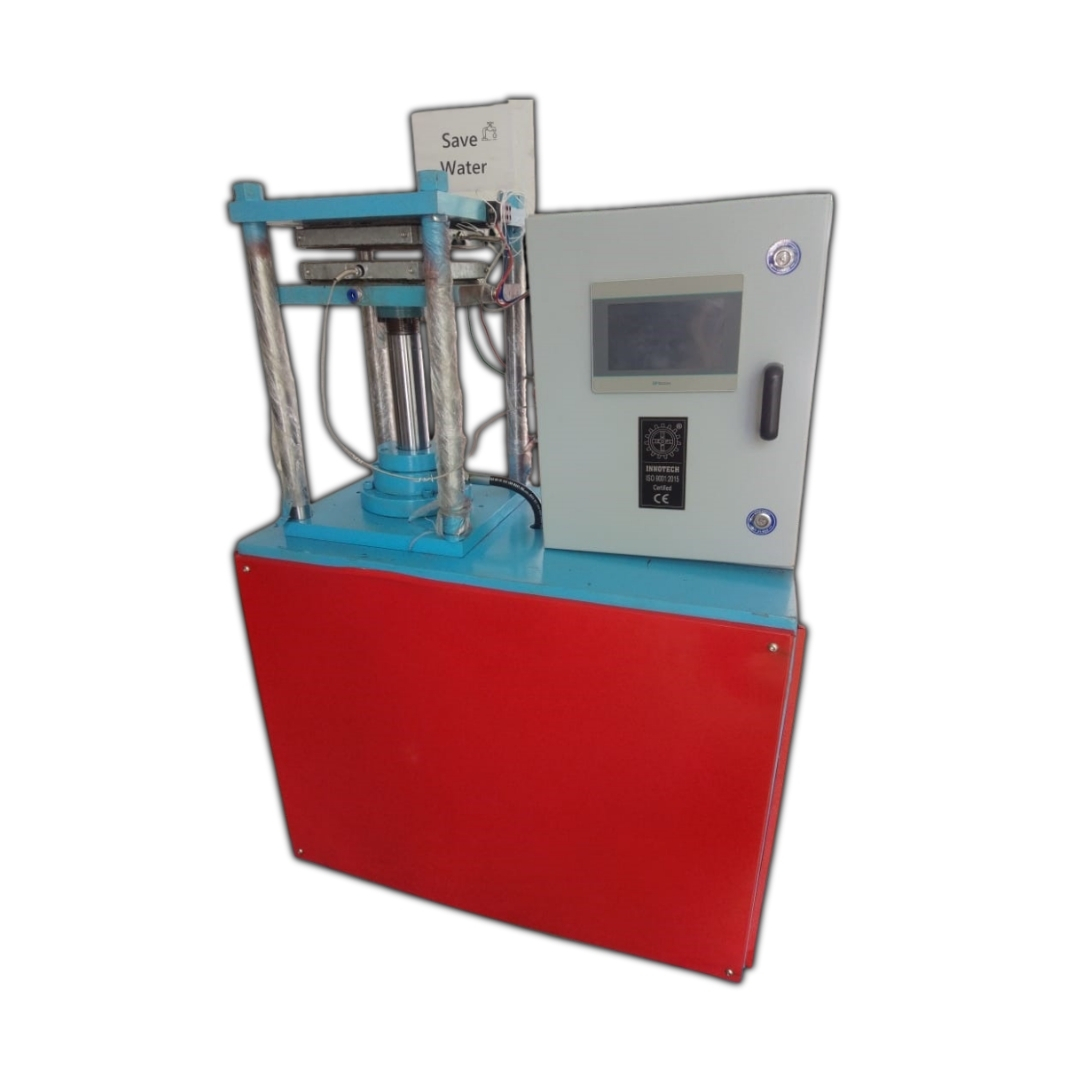
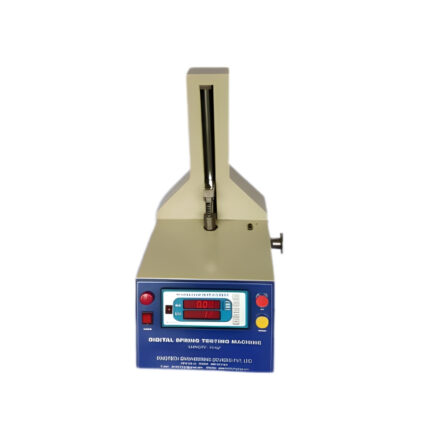
Hydraulic Heating Press
Product Details:
| Capacity | upto 10 tons |
| Country of Origin | Made in India |
| Cylinder Capacity | 10 Tons maximum (hydraulic power unit) |
| Piston Stroke | Maximum 50mm |
| Max Pressure | 200 barst |
| Loading Type | Vertical up |
| Daylight | 120 mm (distance between punch and die) |
- VBCC’s Manual Press stands out as a versatile and user-friendly tool designed to cater to various precision pressing and forming operations. Crafted with a focus on ease of use and reliability, this press finds its niche in laboratories and small-scale industrial settings where hands-on control and precision are paramount.
- This manual press is engineered to facilitate a range of tasks, including sample preparation, material compaction, and shaping operations. Its straightforward operation, coupled with robust construction, ensures that users can exert controlled force with precision, making it an indispensable tool in scenarios that require a hands-on approach.
- One of the key features of VBCC’s Manual Press is its adaptability to different applications. Its design allows for flexibility in accommodating diverse materials and shapes, making it suitable for a wide array of pressing requirements. Whether in a laboratory setting conducting experiments or in an industrial environment working on small-scale production, this press delivers reliable and efficient performance.
- The user-friendly nature of the VBCC Manual Press makes it accessible to both seasoned professionals and those new to the field. Its intuitive design streamlines the pressing process, minimizing the learning curve and maximizing productivity. This ease of use, combined with the press’s robust construction, ensures longevity and consistent performance over time.
- In summary, the VBCC Manual Press is not just a tool; it’s a solution for precision pressing needs. From its adaptability to its user-friendly design, this manual press contributes to the success of various pressing applications, making it an invaluable asset for researchers, engineers, and professionals working in fields that demand precision and reliability.
Related products
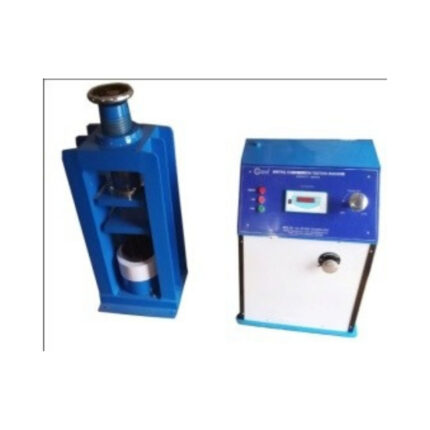
COMPRESSION TESTING MACHINE
Technical Specifications
-
Capacity Range:
50 Ton / 100 Ton / 200 Ton / 300 Ton / 500 Ton / 2000 kN -
Load Measurement:
Digital load indicator / Computerized data acquisition system -
Load Accuracy:
±1% of indicated load (Class 1) -
Loading Method:
Hydraulic compression with controlled pace rate -
Pace Rate Control:
Manual / Semi-automatic / Fully automatic -
Platen Size:
200 × 200 mm / 300 × 300 mm / Customizable -
Maximum Piston Stroke:
50 – 100 mm -
Frame Construction:
Heavy-duty welded steel frame with high rigidity -
Power Supply:
230V AC, Single Phase / 415V AC, Three Phase -
Hydraulic Pressure:
High-pressure axial piston pump -
Standards Compliance:
IS:14858, IS:516, ASTM C39, ASTM C109, BS EN standards -
Safety Features:
Overload protection, pressure relief valve, emergency stop

SAMPLE CUTTING PRESS
Technical Specifications
(Specifications may vary by model and capacity)
-
Type: Hydraulic / Pneumatic / Manual Sample Cutting Press
-
Capacity: 5 Ton / 10 Ton / 20 Ton / 25 Ton / 30 Ton (or as required)
-
Pressing Area: 300 × 300 mm to 500 × 500 mm
-
Daylight Gap: 100 – 250 mm
-
Ram Stroke: Adjustable
-
Pressure Control: Manual / Digital Pressure Gauge
-
Operation Mode: Push Button / Foot Switch / Dual Hand Safety Control
-
Cutting Accuracy: High repeatability with clean edges
-
Platen Material: Hardened Steel / EN-grade Steel
-
Frame Construction: Heavy-duty welded steel frame
-
Power Supply: 230V / 415V AC, 50 Hz
-
Safety Features: Emergency stop, overload protection, safety guard
-
Standards Compliance: ASTM, ISO, IS, DIN, BS
Applications
-
Rubber and plastic testing laboratories
-
Automotive and aerospace material testing
-
Textile and leather industries
-
Packaging and polymer testing
-
Quality control and R&D labs
Key Features
-
Uniform cutting pressure
-
Rugged and vibration-free structure
-
Easy die replacement
-
Low maintenance operation
-
High operator safety
-
Suitable for standard and custom dies

GOVERNOR TESTING MACHINE
Main Functions
-
Testing of centrifugal governors
-
Measurement of speed vs lift characteristics
-
Determination of controlling force
-
Study of stability and sensitiveness
-
Calibration of mechanical governors
Construction & Components
-
Rigid MS fabricated frame
-
Variable speed electric motor with controller
-
Vertical spindle with governor mounting arrangement
-
Precision RPM measuring system (digital tachometer / encoder)
-
Sleeve lift measurement using dial gauge / LVDT
-
Load application mechanism (weights / spring system)
-
Safety guard enclosure
-
Digital display / DAQ system (optional)
Typical Technical Specifications
-
Speed Range: 0 – 6000 RPM (customizable)
-
Speed Control: VFD / Servo drive
-
RPM Accuracy: ±0.5%
-
Lift Measurement Range: 0 – 25 mm
-
Lift Accuracy: 0.01 mm
-
Power Supply: 230V / 415V AC
-
Mounting Type: Vertical
-
Data Output: Digital display / PC interface (optional)
Types of Governors Tested
-
Watt Governor
-
Porter Governor
-
Proell Governor
-
Hartnell Governor
-
Wilson-Hartnell Governor
Applications
-
Mechanical engineering laboratories
-
Polytechnic & engineering colleges
-
R&D centers
-
Industrial training institutes
-
Governor calibration workshops

DIGITAL HARDNESS TESTING MACHINE
Common Types
-
Digital Rockwell Hardness Testing Machine
-
Digital Brinell Hardness Testing Machine
-
Digital Vickers Hardness Testing Machine
-
Portable Digital Hardness Tester (Leeb type)
Key Features
-
Digital LCD/LED display
-
Automatic load application & dwell time
-
High accuracy & repeatability
-
Direct hardness value display (HRC, HRB, HB, HV, etc.)
-
Data storage & USB/PC connectivity (optional)
-
Conforms to ASTM / ISO / IS standards
Typical Applications
-
Quality control labs
-
Heat treatment shops
-
Foundries & forging units
-
R&D laboratories
-
Engineering colleges & testing labs
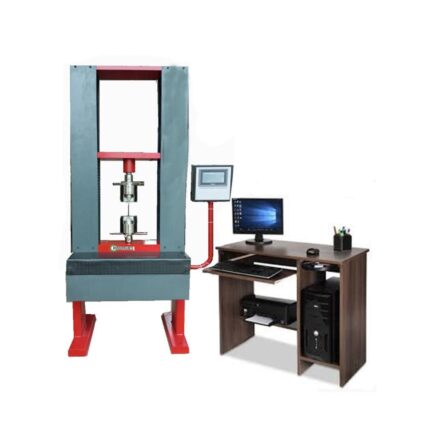
COMPUTERIZED TENSILE TESTING MACHINE
A Computerized Tensile Testing Machine (CTTM) is used to measure the mechanical properties of materials by applying a controlled tensile (pulling) load and recording the response digitally.
What it does
It determines properties such as:
-
Tensile strength
-
Yield strength
-
Elongation (%)
-
Reduction in area
-
Young’s modulus (with extensometer)
All results are captured, displayed, and stored via computer-based data acquisition software.
Main components
-
Loading Frame
-
Rigid two- or four-column structure
-
Driven by servo motor / AC motor / hydraulic system
-
-
Grips & Fixtures
-
Wedge grips (manual or hydraulic)
-
Suitable for flat, round, wire, or threaded specimens
-
-
Load Cell
-
High-accuracy force measurement (typically Class 1 or better)
-
-
Crosshead & Drive System
-
Precise speed control for strain-rate–dependent tests
-
-
Extensometer (optional but recommended)
-
For accurate strain and modulus measurement
-
-
Computer & Testing Software
-
Real-time load–elongation / stress–strain curves
-
Automatic calculation of results
-
Report generation and data export
-
Typical capacities
-
1 kN – 100 kN → plastics, rubber, wires, thin metals
-
100 kN – 600 kN → structural steel, rebars, plates
-
Higher capacities available in hydraulic models
Materials tested
-
Metals (steel, aluminum, copper, rebars)
-
Plastics & polymers
-
Rubber & elastomers
-
Wires, cables, fasteners
-
Composites and sheets
Standards supported
-
ASTM: A370, E8, D638, D412
-
ISO: 6892, 527
-
IS: 1608, 1828
-
BS / DIN standards (as required)
Key advantages
-
High accuracy and repeatability
-
Fully automated testing & reporting
-
Easy calibration and compliance
-
Suitable for R&D, QA/QC, and production labs
Optional features
-
Video extensometer
-
Temperature chamber (hot/cold testing)
-
Automatic hydraulic grips
-
Networked data storage
-
Customized test methods
If you want, I can help you with:
-
Technical specifications for a particular capacity
-
Comparison: electromechanical vs hydraulic
-
Tender / purchase specification
-
Brochure-style product description
-
Price range in India

DIGITAL INSULATOR LOAD TESTING MACHINE
⚙️ Typical Specifications
(Can vary by manufacturer and capacity)
-
Load Capacity:
-
10 kN to 500 kN (1–50 Ton)
-
Higher capacities available on request
-
-
Loading Type:
-
Tensile (most common)
-
Compression (optional)
-
-
Load Measurement:
-
High-accuracy digital load cell
-
-
Accuracy:
-
±1% or better
-
-
Display:
-
Digital controller showing load, peak load, and hold time
-
-
Control Mode:
-
Manual / semi-automatic / fully automatic
-
-
Loading Rate:
-
Adjustable as per IS/IEC standards
-
-
Frame Type:
-
Rigid steel fabricated or 4-column structure
-
-
Power Supply:
-
230V AC, 50 Hz (India standard)
-
🧪 Tests Performed
-
Mechanical Failing Load Test
-
Proof Load Test
-
Routine Load Test
-
Sustained Load Test
-
Breaking Load Test
📜 Applicable Standards
-
IS 731 / IS 2544
-
IEC 60383 / IEC 61109
-
ASTM standards (where applicable)
🖥️ Optional Features
-
PC interface with software
-
Load vs time graph
-
Data logging & report generation
-
Hydraulic power pack with proportional valve
-
Safety enclosure & overload protection
🏭 Construction Highlights
-
Heavy-duty hydraulic cylinder
-
Precision servo or hand-operated hydraulic system
-
Self-aligning grips to avoid bending stresses
-
Corrosion-resistant fixtures for outdoor insulators
If you want, I can help you with:
-
Technical specification for tender
-
Comparison with UTM
-
Budgetary price range (India)
-
Customized capacity selection
-
Datasheet or catalogue format

Environmental Test Chamber
Features of Humidity/Conditioning Test Chambers Deluxe Model
- Alarm system with buzz sound at the test end process
- Temperature sensing through PT-100 sensor
- Highly accurate test results under uniform temperatures and humidity levels in the chamber
- Digital Control for Humidity and Temperature
- High Grade-imported puff insulation
- Maximum Thermal Efficiency by insulation means.
- SSR based heaters
- Digital Preset timer with LED Display
- In-built Auto tuning function
- Water Level Indicator
- Equipped with rapid air circulation German imported fan for uniform and homogenous heating, cooling, humidity, de-humidity
- inside the chamber
- Inbuilt Calibration feature with reference to master PID controller
- Setting to RTD PT-100 sensor through advanced PID controller
- Auto stop feature to stop the machine at a set time
- Time totalizer to calculate the no. of Hours run by the instrument
- Reservoir water tank auto refilling (Float value arrangement)
Technical specifications
- Capacity: 150 litres
- Display: LED (Digital)
- Accuracy: Temp. ± 2ºC / Humidity ± 5%
- Least Count/Resolution Temp / Humidity: 0.1ºC / 1%
- Power: 15A, 220V , Single phase, 50 Hz
- Temperature Range: 15ºC to 60ºC
- Humidity Range: upto to 95% RH
- Timer: 999Hr (Changeable to Min. as per request)
- Water Level Low: Alarm output
- No. of Sample racks: 2
- Handle: Yes
- Wet Heater: 1 Kw, 1 no.
- Dry Heater: 500 Watt, 1 no.
- Temperature Sensor: 1 (PT-100)
- Humidity Sensor: 1 (RH)
- Movement Castor: Wheels
- Material: Stainless Steel (Inner & outer body)
- Finish: Stainless Steel combination finish for corrosion resistant
- Dimensions: Inner : 455 x 455 x 710 mm & Outer : 660 x 930 x 1515 mm
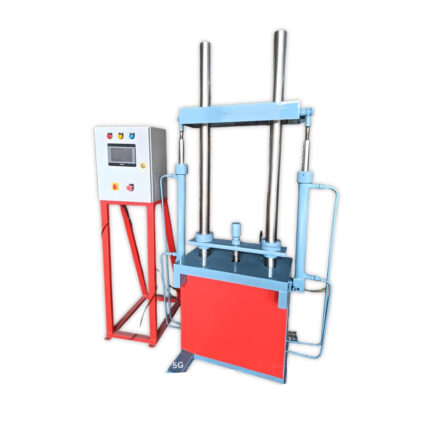
Endurance Testing Machine
Universal Testing systems for medical testing with all accessories compressive Tensile bending and Torsion test
| Type Of Testing Machines | Bending testing and Tensile Testing |
| Automation Grade | Automatic |
| Material | Stiffness |
| Display Type | Digital |
| Product Type | Univesal Testing machine |
| Availability | Customise |
-
- More than 140 Years of Experience of manufacturing world class technology directly from Japan.
- More than 100 Years of Experience of manufacturing Mechanical Testing products.
- 1000s of leading customers in various segment/zones using Shimadzu products with full trust and confidence.
- We respect the business ethics and maintain transparency in all our dealings.
- We provide products at reasonable rates keeping in mind our clients budgetary constraints.
- We are associated with dependable logistic partners for timely delivery of products.
- We accept payments via several modes.
- We pack all the equipment in safe packaging material for avoiding and kind of mechanical damage during transportation.
Reviews
There are no reviews yet.