


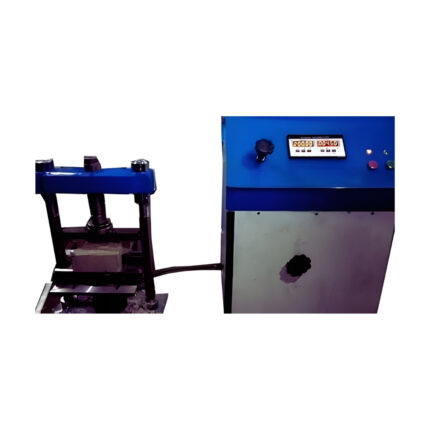

UNIVERSAL-TESTING-MACHINE
Technical Specifications
Load Capacity Range
-
From: 1 kN to 2000 kN (or higher depending on model)
-
Common ranges: 10 kN, 50 kN, 100 kN, 200 kN, 600 kN, 1000 kN
Machine Types
-
Electromechanical UTM
-
Servo Hydraulic UTM
-
Computerized / Digital UTM
Control Modes
-
Load control
-
Displacement control
-
Strain control
-
Pace rate control
Accuracy
-
Load accuracy: ±0.5% to ±1% of indicated load
-
Class 0.5 / Class 1 as per ISO standards
Load Measurement
-
High precision load cell
-
Multiple load cell options
Crosshead Travel
-
Typically 600–1200 mm (model dependent)
Speed Range
-
Very low to high test speeds
-
Example: 0.001 to 500 mm/min
Data Acquisition
-
Real-time force vs displacement curve
-
Stress–strain graph generation
-
PC based software with test reports
Safety Features
-
Overload protection
-
Emergency stop
-
Limit switches
-
Safety guards
Standards Compliance
-
ASTM
-
ISO
-
IS
-
EN
-
DIN
Common Tests Performed
-
Tensile test
-
Compression test
-
Flexural test
-
Shear test
-
Peel test
-
Tear test
-
Bend test
A Universal Testing Machine (UTM) is a versatile material testing system used to evaluate the mechanical properties of materials and components under different loading conditions such as tension, compression, bending, shear, and peel. It is widely used in quality control labs, R&D centers, educational institutions, and manufacturing industries to determine strength and performance characteristics of metals, plastics, rubber, composites, textiles, and construction materials.
Applications
-
Material testing laboratories
-
Steel & metal industries
-
Plastic & polymer testing
-
Rubber industry
-
Construction materials testing
-
Aerospace & automotive
-
Research & academic institutes
Related products
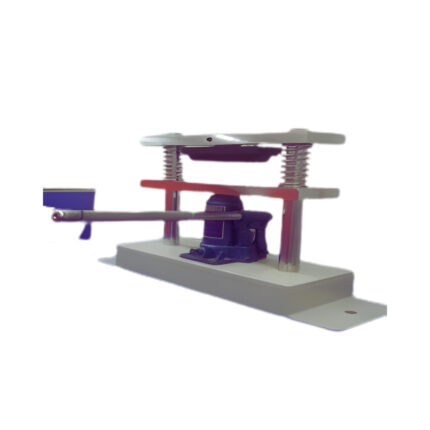
SAMPLE CUTTING PRESS
Technical Specifications
-
Operation Type: Manual / Hydraulic / Pneumatic
-
Capacity: 5 kN – 50 kN (or higher as per model)
-
Cutting Force Control: Lever / Hydraulic hand pump / Air pressure
-
Stroke Length: Adjustable stroke
-
Working Table: Hardened steel or aluminum base plate
-
Die Holder: Quick-change die holder
-
Cutting Area: Approx. 150 × 150 mm to 300 × 300 mm
-
Pressure Indication: Pressure gauge (for hydraulic/pneumatic models)
-
Frame Construction: Heavy-duty steel frame
-
Safety Features: Safety guard / Two-hand operation (model dependent)
-
Power Supply: Not required (manual) / 230V AC (motorized hydraulic)
-
Applications: Rubber, plastic sheets, foam, leather, paperboard, textile samples

LOAD TESTING MACHINE
Technical Specifications
-
Load Capacity Range: 50 kN to 5000 kN (customizable)
-
Type: Hydraulic / Electro-Mechanical
-
Control Mode: Manual / Semi-Automatic / Computerized
-
Load Measurement: Digital Load Cell / Pressure Sensor
-
Accuracy: ±1% or better
-
Display: Digital indicator / Computer software display
-
Resolution: High resolution load reading
-
Loading Rate Control: Adjustable
-
Frame Construction: Heavy-duty steel frame
-
Power Supply: 220V / 415V AC
-
Hydraulic System: Motorized hydraulic power pack
-
Data Output: USB / RS232 / Software-based reporting (computerized models)
-
Safety Features: Overload protection, emergency stop
-
Test Modes: Compression / Tension / Flexural (depending on model)
-
Standards Compliance: IS / ASTM / BS / EN standards (model dependent)

VIBRATING TABLE
Key Features
-
Heavy-duty fabricated steel construction
-
Adjustable vibration frequency and amplitude
-
Uniform vibration across table surface
-
Low noise and energy-efficient operation
-
Anti-vibration mounts for floor protection
-
Manual / digital / PLC control options
-
Maintenance-free vibrator motor
-
Custom table size and load capacity available
Applications
-
Concrete cube and block compaction
-
Precast concrete products
-
Foundry sand compaction
-
Laboratory material testing
-
Pharmaceutical and chemical compaction
-
Packaging and container settling
-
Soil and aggregate testing
Technical Specifications (Typical)
-
Table Size: Customizable
-
Load Capacity: 50 kg to 2000 kg (or higher)
-
Vibration Frequency: 0–6000 vibrations/min
-
Amplitude: Adjustable
-
Motor Type: Unbalanced / Electromagnetic
-
Power Supply: 230V / 415V, 50 Hz
-
Control: Manual / Digital / PLC
-
Mounting: Spring or rubber isolation

DIN ABRASION TESTER
Key Features
-
Conforms to DIN 53516 / ISO 4649 / ASTM D5963
-
Precision abrasive drum with uniform speed
-
Constant load application mechanism
-
Digital revolution counter
-
Sliding distance control
-
Specimen holder with angular adjustment
-
High accuracy and repeatability
-
Rugged, vibration-free construction
-
Easy specimen mounting and removal
Technical Specifications (Typical)
-
Drum Diameter: ~150 mm
-
Drum Speed: 40 ± 1 rpm
-
Abrasive Paper: Grit 60 (as per DIN)
-
Normal Load: 10 N
-
Sliding Distance: 40 m (standard)
-
Specimen Size: Ø16 mm × 6–15 mm thickness
-
Display: Digital / LCD
-
Power Supply: 220–240 V AC, 50 Hz
Applications
-
Rubber and elastomer industries
-
Tyre and automotive components
-
Conveyor belts and hoses
-
Footwear and sole materials
-
PU and polymer products
-
Quality control and R&D laboratories
Advantages
-
Reliable abrasion resistance evaluation
-
Standard-compliant testing
-
Consistent and repeatable results
-
Low maintenance
-
User-friendly operation

GOVERNOR TESTING MACHINE
Main Functions
-
Testing of centrifugal governors
-
Measurement of speed vs lift characteristics
-
Determination of controlling force
-
Study of stability and sensitiveness
-
Calibration of mechanical governors
Construction & Components
-
Rigid MS fabricated frame
-
Variable speed electric motor with controller
-
Vertical spindle with governor mounting arrangement
-
Precision RPM measuring system (digital tachometer / encoder)
-
Sleeve lift measurement using dial gauge / LVDT
-
Load application mechanism (weights / spring system)
-
Safety guard enclosure
-
Digital display / DAQ system (optional)
Typical Technical Specifications
-
Speed Range: 0 – 6000 RPM (customizable)
-
Speed Control: VFD / Servo drive
-
RPM Accuracy: ±0.5%
-
Lift Measurement Range: 0 – 25 mm
-
Lift Accuracy: 0.01 mm
-
Power Supply: 230V / 415V AC
-
Mounting Type: Vertical
-
Data Output: Digital display / PC interface (optional)
Types of Governors Tested
-
Watt Governor
-
Porter Governor
-
Proell Governor
-
Hartnell Governor
-
Wilson-Hartnell Governor
Applications
-
Mechanical engineering laboratories
-
Polytechnic & engineering colleges
-
R&D centers
-
Industrial training institutes
-
Governor calibration workshops

COMPUTERIZED SPRING TESTING MACHINE
Key Functions
-
Load–Deflection Testing
-
Spring Rate (k) Calculation
-
Compression / Tension Testing
-
Cycle (Fatigue) Testing (optional)
-
Free Length & Solid Height Measurement
Types of Springs Tested
-
Compression springs
-
Tension (extension) springs
-
Torsion springs
-
Disc (Belleville) springs
Main Components
-
High-precision Load Cell
-
Servo / Stepper Motor Drive
-
Ball Screw & Linear Guide System
-
Computer with Testing Software
-
Digital Displacement Encoder
-
Safety Enclosure & Limit Switches
Typical Specifications (Indicative)
-
Capacity: 10 N to 50 kN (customizable)
-
Accuracy: ±0.5%
-
Stroke Length: 100–500 mm
-
Speed Range: 0.1–500 mm/min
-
Data Output: Load–deflection curve, test reports (PDF/Excel)
Software Features
-
Real-time load vs deflection graph
-
Automatic spring constant calculation
-
Test method storage
-
Pass/Fail limits
-
Data export & printer support
Standards Supported
-
IS, ASTM, DIN, JIS, ISO
-
Automotive & industrial spring standards
Applications
-
Automotive spring manufacturers
-
Electrical & electronics industry
-
Aerospace components
-
R&D laboratories
-
Incoming and final inspection

DIGITAL HARDNESS TESTING MACHINE
Common Types
-
Digital Rockwell Hardness Testing Machine
-
Digital Brinell Hardness Testing Machine
-
Digital Vickers Hardness Testing Machine
-
Portable Digital Hardness Tester (Leeb type)
Key Features
-
Digital LCD/LED display
-
Automatic load application & dwell time
-
High accuracy & repeatability
-
Direct hardness value display (HRC, HRB, HB, HV, etc.)
-
Data storage & USB/PC connectivity (optional)
-
Conforms to ASTM / ISO / IS standards
Typical Applications
-
Quality control labs
-
Heat treatment shops
-
Foundries & forging units
-
R&D laboratories
-
Engineering colleges & testing labs

Environmental Test Chamber
Features of Humidity/Conditioning Test Chambers Deluxe Model
- Alarm system with buzz sound at the test end process
- Temperature sensing through PT-100 sensor
- Highly accurate test results under uniform temperatures and humidity levels in the chamber
- Digital Control for Humidity and Temperature
- High Grade-imported puff insulation
- Maximum Thermal Efficiency by insulation means.
- SSR based heaters
- Digital Preset timer with LED Display
- In-built Auto tuning function
- Water Level Indicator
- Equipped with rapid air circulation German imported fan for uniform and homogenous heating, cooling, humidity, de-humidity
- inside the chamber
- Inbuilt Calibration feature with reference to master PID controller
- Setting to RTD PT-100 sensor through advanced PID controller
- Auto stop feature to stop the machine at a set time
- Time totalizer to calculate the no. of Hours run by the instrument
- Reservoir water tank auto refilling (Float value arrangement)
Technical specifications
- Capacity: 150 litres
- Display: LED (Digital)
- Accuracy: Temp. ± 2ºC / Humidity ± 5%
- Least Count/Resolution Temp / Humidity: 0.1ºC / 1%
- Power: 15A, 220V , Single phase, 50 Hz
- Temperature Range: 15ºC to 60ºC
- Humidity Range: upto to 95% RH
- Timer: 999Hr (Changeable to Min. as per request)
- Water Level Low: Alarm output
- No. of Sample racks: 2
- Handle: Yes
- Wet Heater: 1 Kw, 1 no.
- Dry Heater: 500 Watt, 1 no.
- Temperature Sensor: 1 (PT-100)
- Humidity Sensor: 1 (RH)
- Movement Castor: Wheels
- Material: Stainless Steel (Inner & outer body)
- Finish: Stainless Steel combination finish for corrosion resistant
- Dimensions: Inner : 455 x 455 x 710 mm & Outer : 660 x 930 x 1515 mm
Reviews
There are no reviews yet.