
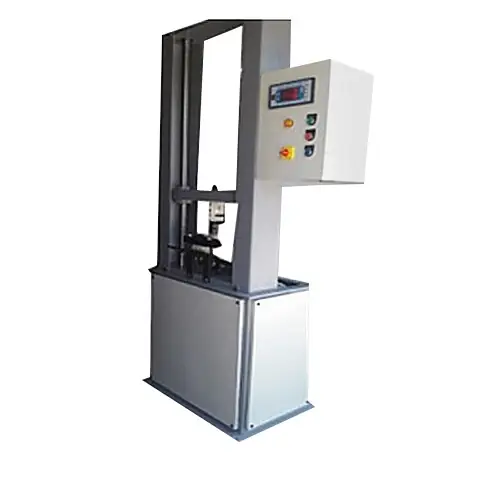
Digital Load Testing Machine
Digital Load Testing Machine
A Digital Load Testing Machine is used to evaluate the load-bearing capacity, strength and performance of industrial components under controlled loading conditions. Depending on the testing application, the system can be configured for static load, proof load, tensile, pull or compression testing. Available with application-specific fixtures, loading arrangements and measurement options for industrial quality control and laboratory testing.
MODEL
ILTM
OVERVIEW
Description
Digital Load Testing Machine Manufacturer in Bhiwadi India
A Digital Load Testing Machine is an industrial testing system designed to apply a controlled force to a component, material or finished product and evaluate how it responds to the applied load. It helps manufacturers and testing laboratories determine whether a product can withstand a specified force without unacceptable deformation, damage or failure.
Digital Load testing is important in manufacturing because components may experience mechanical forces during installation, handling and actual service conditions. Testing under controlled conditions helps evaluate product strength, structural integrity and performance against defined acceptance criteria.
Innotech Engineering Devices Private Limited manufactures industrial testing equipment and develops customized testing solutions according to application requirements. A suitable Load Testing Machine can be configured around the product being tested, required test load, specimen dimensions, loading direction and measurement requirements.
Working Principle of a Digital Load Testing Machine
The specimen is positioned on the machine using suitable fixtures, supports, grips or loading attachments. The operator selects the required test parameters, and the machine applies force through its mechanical or hydraulic loading arrangement.
A load measurement system, such as a suitable load cell, monitors the applied force. Depending on the configuration, displacement or deformation can also be measured during the test.
The typical testing process includes:
- Positioning and securing the specimen.
- Selecting the required test method and loading parameters.
- Applying force at the specified rate or sequence.
- Monitoring load and specimen displacement.
- Holding, releasing or continuing the load as required by the test procedure.
- Recording the results and evaluating the specimen against acceptance criteria.
The actual test sequence depends on the component, applicable standard and machine configuration.
Types and Configurations of Load Testing Machines
Different load testing requirements need different machine arrangements:
- Hydraulic Load Testing Machine: Uses a hydraulic system to apply controlled force and is suitable for applications requiring substantial loading capacity.
- Digital Load Testing Machine: Displays measured load digitally for convenient monitoring and recording.
- Computerized Load Testing Machine: Can incorporate software, data acquisition, graphs and test report generation.
- Static Load Testing Machine: Applies a specified load for a defined duration to evaluate deformation or load-bearing performance.
- Proof Load Testing Machine: Applies a prescribed proof load to verify whether a component can withstand the required test force.
- Horizontal Load Testing Machine: Suitable for long components such as cables, rods, chains and other engineering products.
- Application-Specific Load Testing System: Designed with dedicated fixtures and loading arrangements for particular products, assemblies or industrial processes.
A static or proof-load test should not be confused with fatigue testing. Fatigue testing evaluates performance under repeated or cyclic loading and requires an appropriate cyclic testing system.
Testing Parameters and Measurement
Depending on the test method, a Load Testing Machine can be configured to evaluate:
- Applied load and peak load.
- Load versus displacement.
- Permanent deformation or set.
- Specimen response during a specified load hold.
- Tensile or pulling force.
- Compression or structural load response.
- Failure load, where destructive testing is required.
- Test duration and loading sequence.
The parameters available depend on the selected measurement system and test configuration.
Industrial Importance
Load testing supports incoming inspection, production quality control, product validation, design verification and research activities. It helps manufacturers identify weak components, assess product consistency and document test results before products are released for use.
Customized Manufacturing
Different products require different loading arrangements, specimen supports and measurement systems. Innotech Engineering Devices Private Limited can discuss customized testing solutions based on the buyer's application.
Possible configuration considerations include:
- Required load capacity and loading direction.
- Horizontal or vertical machine arrangement.
- Specimen dimensions and test space.
- Hydraulic or mechanical force application.
- Special grips, platens, supports and fixtures.
- Digital display or computerized control.
- Load and displacement measurement.
- Programmable loading and holding sequences.
- Data storage, graphs and test report formats.
- Safety arrangements for the intended test.
The final machine design should be established after reviewing the specimen, test method and applicable acceptance requirements.
9. Why Choose Innotech Engineering Devices Pvt Ltd?
Innotech Engineering Devices Private Limited provides industrial testing machines and customized testing solutions for manufacturers, laboratories and research facilities.
Buyers can discuss their testing application, specimen requirements and preferred machine configuration with the technical team before selecting a suitable system.
- Industrial testing equipment manufacturing.
- Application-specific machine configurations.
- Customized fixtures and testing arrangements.
- Technical consultation for machine selection.
- Solutions for different industrial and laboratory applications.
- Manufacturing and customer support from Bhiwadi, Rajasthan, India.
Applicable Testing Standards
The Load Testing Machine can be configured for testing applications that require controlled force application and load measurement. Depending on the machine configuration and intended testing method, relevant calibration and verification references may include:
- ISO 7500-1:2018: Calibration and verification of static uniaxial tension and compression testing machines.
- ASTM E4-24: Force calibration and verification of testing machines.
- ASTM E74-18(2026): Calibration and verification of force-measuring instruments.
- ISO 376: Calibration of force-proving instruments used for verification of uniaxial testing machines.
- IS 1828 (Part 1): Indian standard reference for verification of static uniaxial tension and compression testing machines.
The applicable standard depends on the testing application, machine configuration, force-measuring system and customer requirements. Standard compliance and calibration should be confirmed for the selected machine model.
Frequently Asked Questions
Q1. What is a Load Testing Machine used for?
It is used to apply a controlled force to a component or product and evaluate its load-bearing capacity, strength, deformation or response under specified testing conditions.
Q2. Which industries use Load Testing Machines?
Automotive, construction, metal, engineering, lifting equipment, manufacturing, infrastructure, research and testing laboratories use load testing systems for different applications.
Q3. What is the difference between a load testing machine and a proof load testing machine?
A load testing machine is a broad term for equipment that applies and measures force. A proof load testing machine is specifically configured to apply a prescribed proof load to verify that a component withstands the required test condition.
Q4. Can a Load Testing Machine perform tensile and compression tests?
It depends on the machine design. Suitable grips, platens, fixtures and loading arrangements are required for each test method.
Q5. Is a computerized Load Testing Machine available?
A computerized configuration can include test control, data acquisition, graph display and report generation, depending on the selected model.
Q6. Can the machine be customized for a particular product?
Yes. The loading arrangement, fixtures, test space, measurement system and control options can be discussed according to the product and test requirements.
Q7. What is the price of a Load Testing Machine in India?
The price depends on testing capacity, loading mechanism, automation, measurement accuracy, specimen size, fixtures and software. Contact the manufacturer with your application details for a suitable quotation.
Q8. How do I select the right Load Testing Machine?
Identify the specimen, required test load, loading direction, test method, measurement requirements, test standard and available installation space before selecting a machine.
Request a Quote for a Load Testing Machine
Looking for a Load Testing Machine for your factory, production unit, quality-control department or testing laboratory?
Discuss your specimen, required load, testing method and application with Innotech Engineering Devices Private Limited. Get assistance in identifying a suitable standard or customized testing arrangement.
Innotech Engineering Devices Private Limited
Mobile: +91 9810431604
Email: info@innotechgroup.net
Location: H-307, RIICO Industrial Area Karoli, Tapukara, Bhiwadi, Rajasthan, India
Contact us today to discuss your Load Testing Machine requirements and request a quotation.
WHY IT WORKS
Key benefits
Helps evaluate component load-bearing performance.
Supports manufacturing quality control.
Enables controlled and repeatable test procedures.
Helps identify weak points before product dispatch.
Supports product development and design validation.
Provides documented test data when configured with data acquisition.
Reduces dependence on improvised manual testing arrangements.
Allows testing arrangements to be tailored to different products.
USE CASE
Application range
BUILT IN
Features
Application-specific load testing arrangement.
Hydraulic or mechanical loading options, where suitable.
Digital load measurement options.
Load cell-based force measurement.
Dedicated specimen fixtures and supports.
Customizable horizontal or vertical configurations.
Optional displacement measurement.
Programmable test sequence, where required.
Computerized data acquisition and reporting options.
Suitable safety provisions, including overload protection and emergency stop, as specified for the model.
SPEC
Specifications
Machine Type
Load Testing Machine
Loading System
Hydraulic / Mechanical, as configured
Testing Method
Static / Proof Load / Tensile / Pull / Compression, as applicable
Testing Capacity
Available as per customer requirements
Load Measurement
Load cell-based system, as configured
Display System
Digital / Computerized, as selected
Displacement Measurement
Optional, as per test requirement
Test Control
Manual / Semi-automatic / Automatic, as configured
Test Fixtures
Application-specific
Data Acquisition
Optional, depending on configuration
Test Software
Available as per requirement
Safety System
As per selected machine design
Power Requirement
To be confirmed for selected model
Dimensions
As per machine configuration
Applicable Standards
Based on the specimen and test method
Customization
Available as per confirmed requirements