



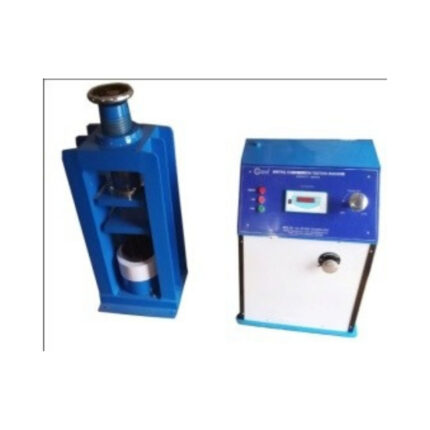
COMPUTERIZED HYDRAULIC UNIVERSAL TESTING MACHINE
Technical Specifications
Capacity Range
-
100 kN to 2000 kN (10 Ton to 200 Ton or higher)
Load Frame
-
Four-column or two-column rigid steel frame
-
High stiffness for accurate testing
Loading System
-
Hydraulic power pack with servo or proportional valve
-
Smooth and controlled load application
Control Mode
-
Computerized closed-loop control
-
Load, displacement, and strain control
Load Measurement
-
High-precision load cell or hydraulic pressure transducer
-
Accuracy: ±1% or better of indicated load
Crosshead Travel
-
Up to 300–500 mm (customizable)
Grips & Fixtures
-
Hydraulic wedge grips for tensile testing
-
Compression platens, bending fixtures, shear tools
Software Features
-
Real-time load vs displacement / stress-strain curves
-
Automatic calculation of UTS, yield strength, elongation
-
Test standard library (ASTM, ISO, BIS)
-
Test data storage, export, and printing
Display & Interface
-
PC-based system with LCD/LED monitor
-
Digital indicators for load, displacement, and extension
Power Supply
-
415V AC, 3 Phase, 50 Hz
Safety Features
-
Overload protection
-
Emergency stop button
-
Hydraulic pressure relief valve
A Computerized Hydraulic Universal Testing Machine (HUTM) is a heavy-duty material testing system designed to perform tensile, compression, bending, shear, and proof load tests on metals and high-strength materials. The machine uses a hydraulic loading system to generate high test forces and a computerized digital control system for accurate measurement, real-time data acquisition, and automated test reporting.
The system is controlled through advanced testing software, enabling precise load, displacement, and strain measurement with graphical display of test curves. It is widely used in steel plants, fabrication units, research laboratories, quality control departments, and educational institutions, complying with international standards such as ASTM, ISO, BIS, and EN.
Applications
-
Tensile testing of steel rods, plates, wires
-
Compression testing of metals and components
-
Bend and flexural testing
-
Proof load and structure testing
-
Quality assurance and R&D material analysis
Related products
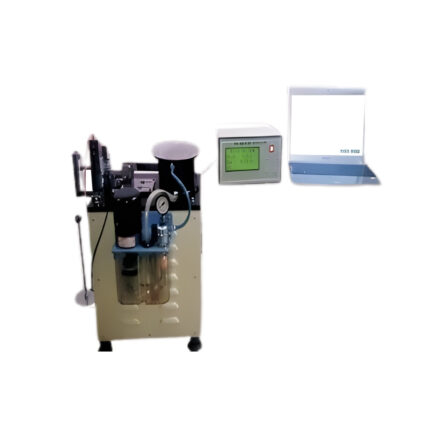
PIN ON DISC WEAR TESTING MACHINE
Technical Specifications (Typical)
-
Test Type: Dry / Lubricated sliding wear test
-
Principle: Pin-on-disc tribological method
-
Disc Diameter: 100–165 mm (customizable)
-
Disc Material: Hardened alloy steel (or as required)
-
Speed Range: 100 – 2000 RPM (variable)
-
Load Range: 5 N to 200 N (dead weight or lever loading system)
-
Wear Track Radius: Adjustable
-
Friction Force Measurement: Strain gauge / load cell based
-
Coefficient of Friction Display: Digital real-time display
-
Wear Measurement: Linear displacement sensor / LVDT
-
Motor: Variable speed DC / AC motor with controller
-
Data Display: Digital display / Computerized interface (optional)
-
Data Output: USB / Software-based data logging (optional)
-
Power Supply: 220–240V AC, 50 Hz
-
Safety Features: Guard cover, overload protection
-
Standards Compliance: ASTM G99 / ISO 7148 (or equivalent)
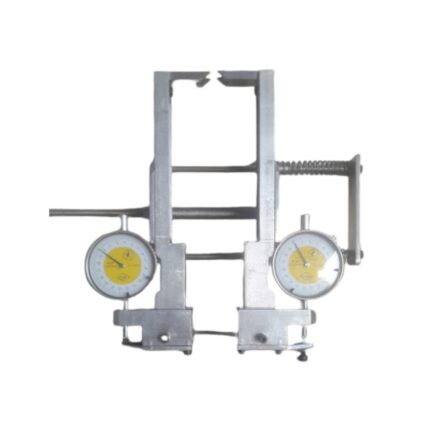
MECHANICAL EXTENSOMETER
Technical Specifications
-
Measurement Type: Linear elongation / strain measurement
-
Gauge Length Options: 25 mm, 50 mm, 100 mm, 200 mm (customizable)
-
Measuring Range: 0–5 mm / 0–10 mm (model dependent)
-
Least Count / Resolution: Up to 0.001 mm (with dial indicator)
-
Accuracy: ±0.5% or better
-
Output Type: Mechanical dial reading
-
Mounting: Knife-edge or clip-on attachment
-
Frame Material: Hardened steel / aluminum alloy
-
Contact Points: Replaceable knife edges
-
Compatibility: Universal Testing Machines (UTM), Tensile Testing Machines
-
Operation: Manual
-
Power Requirement: Not required
-
Application Standards: ASTM / ISO compliant models available
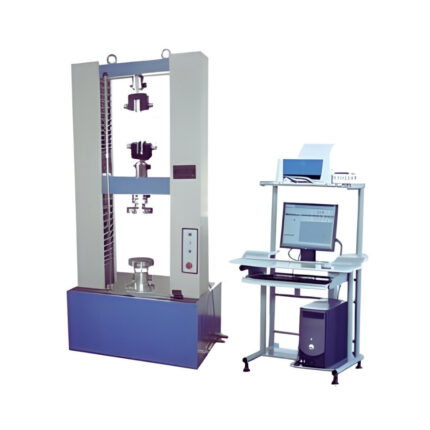
UNIVERSAL-TESTING-MACHINE
Technical Specifications
Load Capacity Range
-
From: 1 kN to 2000 kN (or higher depending on model)
-
Common ranges: 10 kN, 50 kN, 100 kN, 200 kN, 600 kN, 1000 kN
Machine Types
-
Electromechanical UTM
-
Servo Hydraulic UTM
-
Computerized / Digital UTM
Control Modes
-
Load control
-
Displacement control
-
Strain control
-
Pace rate control
Accuracy
-
Load accuracy: ±0.5% to ±1% of indicated load
-
Class 0.5 / Class 1 as per ISO standards
Load Measurement
-
High precision load cell
-
Multiple load cell options
Crosshead Travel
-
Typically 600–1200 mm (model dependent)
Speed Range
-
Very low to high test speeds
-
Example: 0.001 to 500 mm/min
Data Acquisition
-
Real-time force vs displacement curve
-
Stress–strain graph generation
-
PC based software with test reports
Safety Features
-
Overload protection
-
Emergency stop
-
Limit switches
-
Safety guards
Standards Compliance
-
ASTM
-
ISO
-
IS
-
EN
-
DIN
Common Tests Performed
-
Tensile test
-
Compression test
-
Flexural test
-
Shear test
-
Peel test
-
Tear test
-
Bend test

LOAD TESTING MACHINE
Technical Specifications
-
Load Capacity Range: 50 kN to 5000 kN (customizable)
-
Type: Hydraulic / Electro-Mechanical
-
Control Mode: Manual / Semi-Automatic / Computerized
-
Load Measurement: Digital Load Cell / Pressure Sensor
-
Accuracy: ±1% or better
-
Display: Digital indicator / Computer software display
-
Resolution: High resolution load reading
-
Loading Rate Control: Adjustable
-
Frame Construction: Heavy-duty steel frame
-
Power Supply: 220V / 415V AC
-
Hydraulic System: Motorized hydraulic power pack
-
Data Output: USB / RS232 / Software-based reporting (computerized models)
-
Safety Features: Overload protection, emergency stop
-
Test Modes: Compression / Tension / Flexural (depending on model)
-
Standards Compliance: IS / ASTM / BS / EN standards (model dependent)


OPTICAL BRINELL HARDNESS TESTER
Technical Specifications
-
Hardness Scale: Brinell (HBW / HBS)
-
Test Loads: 62.5 kgf, 100 kgf, 187.5 kgf, 250 kgf, 500 kgf, 750 kgf, 1000 kgf, 3000 kgf
-
Indenter Type:
-
Tungsten Carbide Ball
-
Hardened Steel Ball
-
-
Ball Diameters: 2.5 mm, 5 mm, 10 mm
-
Optical System:
-
Built-in measuring microscope or digital optical system
-
Magnification: 20× / 40× (model dependent)
-
-
Measurement Method: Manual or digital optical indentation measurement
-
Load Application: Dead-weight or hydraulic system
-
Dwell Time: Adjustable (typically 10–30 seconds)
-
Accuracy: Conforms to ASTM E10 / ISO 6506 standards
-
Specimen Height (Max): 200–300 mm (model dependent)
-
Throat Depth: 150–200 mm (model dependent)
-
Resolution: Up to 0.01 mm indentation measurement
-
Power Supply: 220–240 V AC, 50 Hz
-
Display:
-
Optical scale (manual models)
-
Digital display/software output (advanced models)
-
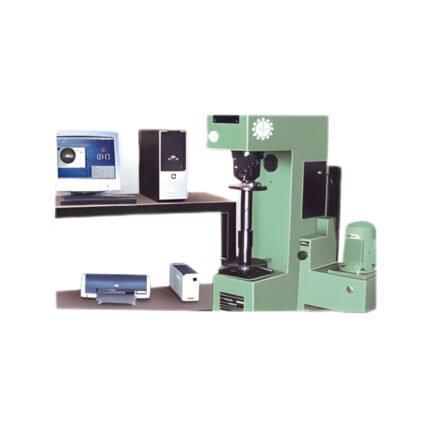
COMPUTERIZED BRINELL HARDNESS TESTER
Technical Specifications
-
Testing Method: Brinell Hardness (HB / HBW)
-
Load Range: 62.5 kgf to 3000 kgf (selectable as per model)
-
Load Application: Closed-loop servo motor / hydraulic with electronic control
-
Indenter: Tungsten Carbide Ball (Ø 1 mm, 2.5 mm, 5 mm, 10 mm)
-
Dwell Time: Programmable (1–99 seconds)
-
Measurement System: Digital optical system with CCD camera
-
Accuracy: Conforms to ASTM E10 / ISO 6506
-
Resolution: 0.01 HB
-
Display: PC-based software interface
-
Data Output: USB / LAN / Printer connectivity
-
Software Features:
-
Automatic indentation measurement
-
Statistical analysis
-
Test history storage
-
Report generation
-
-
Power Supply: 230V AC, 50 Hz
-
Standards Compliance: ASTM E10, ISO 6506, IS 1500

SERVO CONTROLLED UTM
📊 Typical Technical Parameters
(Specifications vary by model & capacity: 100 kN–2000 kN or more)
| Parameter | Typical Range / Value |
|---|---|
| Load Capacity | 100 kN, 200 kN, 400 kN, 600 kN, 1000 kN, 2000 kN etc. |
| Load Accuracy | ±1 % or better |
| Test Speed | 0.001 to 500 mm/min (configurable) |
| Position Resolution | 0.01 mm or better |
| Control Modes | Load, strain/elongation, displacement, hold |
| Measurement Feedback | Load cell, encoder/extensometer |
| Data Output | Real-time graph, exportable results |

DIGITAL TENSILE TESTING MACHINE
What Is a Digital Tensile Testing Machine?
A Digital Tensile Testing Machine is an electromechanical device used to measure how materials behave under tension — that is, how much force they can withstand before they stretch or break. It digitally records key parameters like force, elongation, and strength, and displays these on a screen or computer interface for analysis.
🧪 How It Works
-
Specimen Mounting
A sample (metal, plastic, rubber, textile, etc.) is gripped between the machine’s upper and lower fixtures. -
Tension Application
The machine pulls the specimen apart at a controlled speed using a motor and crosshead mechanism. -
Data Capture
As tension increases, digital sensors (usually load cells) record force versus elongation. Modern machines often interface with software for real-time graphs and data export. -
Failure & Analysis
Testing continues until the material breaks. The machine then reports properties such asultimate tensile strength, yield strength, elongation, and modulus of elasticity.
📊 Typical Features
✅ Digital & Computerized Readouts
-
Real-time display of force, displacement, and elongation.
-
Many machines provide computer interfaces for storing and analyzing test results.
✅ Precision Sensors
-
High-sensitivity load cells and digital encoders ensure accurate measurements.
✅ Safety & Protection
-
Limit switches and overload protection safeguard both the specimen and the machine.
✅ Variable Speed Control
-
Test speeds can often be varied based on material type and test standards.
✅ Standards Compliance
-
Machines can be designed to meet ASTM, ISO, and IS standards depending on industry requirements.
🏭 Common Applications
Digital tensile testers are used in:
-
Industrial quality control (metals, plastics, elastomers)
-
R&D laboratories (new materials, composites)
-
Automotive & aerospace sectors (ensuring material safety)
-
Textile and packaging industries (fiber and film testing)
-
Educational and research institutions
🔍 What Results You Get
After a test, you typically get:
| Property | Meaning |
|---|---|
| Tensile Strength | Highest stress the material withstands before breaking |
| Yield Strength | Stress at which material begins to deform permanently |
| Elongation at Break | How much the material stretched before breaking |
| Modulus of Elasticity | Material stiffness measured from stress-strain data |
🛠 Buying Considerations
If you’re looking to purchase one:
-
Load Capacity: Choose based on maximum force you need to test (e.g., 500 N vs. 5000 kgf).
-
Display Type: Digital panel vs. computer-integrated software.
-
Accuracy & Standards: Verify compliance with relevant testing standards (ASTM, ISO, etc.).
-
Accessories: Special grips or fixtures for different materials enhance flexibility.
Reviews
There are no reviews yet.