

Universal Testing Machine
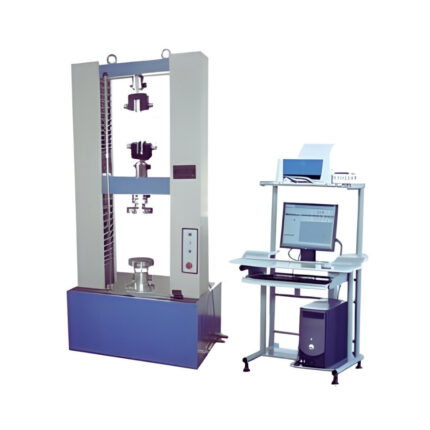
UNIVERSAL-TESTING-MACHINE
Technical Specifications
Load Capacity Range
-
From: 1 kN to 2000 kN (or higher depending on model)
-
Common ranges: 10 kN, 50 kN, 100 kN, 200 kN, 600 kN, 1000 kN
Machine Types
-
Electromechanical UTM
-
Servo Hydraulic UTM
-
Computerized / Digital UTM
Control Modes
-
Load control
-
Displacement control
-
Strain control
-
Pace rate control
Accuracy
-
Load accuracy: ±0.5% to ±1% of indicated load
-
Class 0.5 / Class 1 as per ISO standards
Load Measurement
-
High precision load cell
-
Multiple load cell options
Crosshead Travel
-
Typically 600–1200 mm (model dependent)
Speed Range
-
Very low to high test speeds
-
Example: 0.001 to 500 mm/min
Data Acquisition
-
Real-time force vs displacement curve
-
Stress–strain graph generation
-
PC based software with test reports
Safety Features
-
Overload protection
-
Emergency stop
-
Limit switches
-
Safety guards
Standards Compliance
-
ASTM
-
ISO
-
IS
-
EN
-
DIN
Common Tests Performed
-
Tensile test
-
Compression test
-
Flexural test
-
Shear test
-
Peel test
-
Tear test
-
Bend test

COMPUTERIZED TENSILE TESTING MACHINE
Technical Specifications (Typical)
-
Capacity Range: 1 kN to 1000 kN (or higher on request)
-
Drive System: Servo motor / AC variable frequency drive / Hydraulic (as per model)
-
Load Measurement: High-precision strain gauge load cell
-
Accuracy: ±1% or better of indicated load
-
Crosshead Speed: 0.01 to 500 mm/min (programmable)
-
Speed Accuracy: ±1%
-
Stroke Length: 800 – 1200 mm (customizable)
-
Grips: Wedge, pneumatic, hydraulic, compression platens, bending fixtures
-
Control Mode: Load, displacement, and strain control
-
Software: PC-based testing software with graph plotting, test methods, and report generation
-
Data Output: Load vs extension, stress vs strain curves
-
Safety Features: Overload protection, limit switches, emergency stop
-
Power Supply: 230V / 415V AC, 50 Hz
-
Standards Compliance: ASTM E8, ASTM A370, ISO 6892, BIS standards

IZOD IMPACT TESTING MACHINE
📌 What an Izod Impact Testing Machine Is
An Izod impact testing machine is a pendulum-based impact resistance tester used to determine how much energy a material absorbs when impacted suddenly — a measure of the material’s toughness. In the test:
-
A notched specimen (usually plastic or metal) is held vertically in a clamp.
-
A pendulum hammer is raised to a fixed height and then released.
-
It swings down and strikes the specimen, breaking it.
-
The energy absorbed in breaking the specimen is measured from how far the pendulum swings after impact.
Standards: Many machines conform to internationally recognized standards such as ASTM D256 (Izod methods) and ISO 180 (plastic impact testing).
🧪 Why It’s Used
-
Material toughness assessment: Determines how materials behave under sudden shock loading.
-
Quality control: Ensures consistency and safety for products experiencing impacts in real use.
-
R&D: Helps in material selection and design validation in industries like plastics, automotive, aerospace, and consumer products.
🧠 Key Features to Look For
-
Energy range: Typically from a few joules up to several dozen joules depending on material and application.
-
Display: Analog dial or digital interface with read-out.
-
Automatic data handling: USB/PC connectivity on digital models.
-
Dual test capability: Some models support both Izod and Charpy tests.

DIGITAL TENSILE TESTING MACHINE
What Is a Digital Tensile Testing Machine?
A Digital Tensile Testing Machine is an electromechanical device used to measure how materials behave under tension — that is, how much force they can withstand before they stretch or break. It digitally records key parameters like force, elongation, and strength, and displays these on a screen or computer interface for analysis.
🧪 How It Works
-
Specimen Mounting
A sample (metal, plastic, rubber, textile, etc.) is gripped between the machine’s upper and lower fixtures. -
Tension Application
The machine pulls the specimen apart at a controlled speed using a motor and crosshead mechanism. -
Data Capture
As tension increases, digital sensors (usually load cells) record force versus elongation. Modern machines often interface with software for real-time graphs and data export. -
Failure & Analysis
Testing continues until the material breaks. The machine then reports properties such asultimate tensile strength, yield strength, elongation, and modulus of elasticity.
📊 Typical Features
✅ Digital & Computerized Readouts
-
Real-time display of force, displacement, and elongation.
-
Many machines provide computer interfaces for storing and analyzing test results.
✅ Precision Sensors
-
High-sensitivity load cells and digital encoders ensure accurate measurements.
✅ Safety & Protection
-
Limit switches and overload protection safeguard both the specimen and the machine.
✅ Variable Speed Control
-
Test speeds can often be varied based on material type and test standards.
✅ Standards Compliance
-
Machines can be designed to meet ASTM, ISO, and IS standards depending on industry requirements.
🏭 Common Applications
Digital tensile testers are used in:
-
Industrial quality control (metals, plastics, elastomers)
-
R&D laboratories (new materials, composites)
-
Automotive & aerospace sectors (ensuring material safety)
-
Textile and packaging industries (fiber and film testing)
-
Educational and research institutions
🔍 What Results You Get
After a test, you typically get:
| Property | Meaning |
|---|---|
| Tensile Strength | Highest stress the material withstands before breaking |
| Yield Strength | Stress at which material begins to deform permanently |
| Elongation at Break | How much the material stretched before breaking |
| Modulus of Elasticity | Material stiffness measured from stress-strain data |
🛠 Buying Considerations
If you’re looking to purchase one:
-
Load Capacity: Choose based on maximum force you need to test (e.g., 500 N vs. 5000 kgf).
-
Display Type: Digital panel vs. computer-integrated software.
-
Accuracy & Standards: Verify compliance with relevant testing standards (ASTM, ISO, etc.).
-
Accessories: Special grips or fixtures for different materials enhance flexibility.