

Universal Testing Machine

CTM WITH PACE CONTROL
Key Features
-
Pace Control System – Maintains constant loading rate
-
Microprocessor / PLC Based Control
-
Closed-Loop Servo Control
-
Digital Load & Extension Measurement
-
High Accuracy Load Cell (±1% or better)
-
Automatic Load Holding & Unloading
-
Overload Protection
-
Emergency Stop Switch
-
Data Acquisition Software (PC Based)
-
Real-Time Load vs Elongation Graph
-
USB / Ethernet Interface
Technical Specifications (Typical)
-
Capacity: 100 kN, 200 kN, 300 kN (customizable)
-
Pace Rate: Programmable (kN/sec or mm/min)
-
Load Resolution: 1/10000 of capacity
-
Crosshead Speed: Variable with pace control
-
Power Supply: 230V AC, 50 Hz
-
Frame Type: Rigid 2-Column / 4-Column Structure
Pace Control Description
-
Automatically controls rate of loading during tensile test
-
Conforms to IS, ASTM, ISO, BS standards
-
Ensures uniform stress application on specimen
-
Ideal for concrete, steel, rebar, wire, fasteners testing
Applications
-
Tensile testing of metal rods, bars, wires
-
Testing of rebars as per IS 1786
-
Quality control laboratories
-
R&D and material testing labs
-
Educational institutions
-
Construction & infrastructure projects
Standards Compliance
-
IS 1828
-
ASTM E8 / E9
-
ISO 6892
-
BS Standards

MOTORIZED KNOTCH CUTTER
Key Features
-
Motorized operation for uniform and precise notch cutting
-
High-accuracy linear slide mechanism
-
Interchangeable cutters for V-notch and U-notch
-
Rigid body construction for vibration-free operation
-
Adjustable cutting depth and feed
-
Safety cover for operator protection
-
Suitable for metals, plastics, and composite specimens
Technical Specifications (Typical)
-
Notch Types: V-notch (45°), U-notch (2 mm radius)
-
Specimen Size: As per ASTM / ISO standards
-
Motor: Single phase / Three phase AC motor
-
Cutting Accuracy: ±0.01 mm
-
Standards Compliance: ASTM E23, ISO 148, IS 1757
-
Operation: Bench-mounted, motor-driven
Applications
-
Impact test specimen preparation
-
Quality control laboratories
-
Metallurgical testing labs
-
Plastic and polymer testing
-
Research & development centers

GOVERNOR TESTING MACHINE
Main Functions
-
Testing of centrifugal governors
-
Measurement of speed vs lift characteristics
-
Determination of controlling force
-
Study of stability and sensitiveness
-
Calibration of mechanical governors
Construction & Components
-
Rigid MS fabricated frame
-
Variable speed electric motor with controller
-
Vertical spindle with governor mounting arrangement
-
Precision RPM measuring system (digital tachometer / encoder)
-
Sleeve lift measurement using dial gauge / LVDT
-
Load application mechanism (weights / spring system)
-
Safety guard enclosure
-
Digital display / DAQ system (optional)
Typical Technical Specifications
-
Speed Range: 0 – 6000 RPM (customizable)
-
Speed Control: VFD / Servo drive
-
RPM Accuracy: ±0.5%
-
Lift Measurement Range: 0 – 25 mm
-
Lift Accuracy: 0.01 mm
-
Power Supply: 230V / 415V AC
-
Mounting Type: Vertical
-
Data Output: Digital display / PC interface (optional)
Types of Governors Tested
-
Watt Governor
-
Porter Governor
-
Proell Governor
-
Hartnell Governor
-
Wilson-Hartnell Governor
Applications
-
Mechanical engineering laboratories
-
Polytechnic & engineering colleges
-
R&D centers
-
Industrial training institutes
-
Governor calibration workshops

PLASTIC IMPACT TESTER
Types of Plastic Impact Testers
-
Izod Impact Tester
-
Charpy Impact Tester
-
Combined Izod & Charpy Impact Tester
-
Pendulum Type Impact Tester
-
Digital / Computerized Impact Tester
Applications
-
Thermoplastics and thermosetting plastics
-
PVC, PE, PP, ABS, Nylon, Polycarbonate
-
Plastic sheets, molded components
-
Automotive plastic parts
-
Electrical & electronic plastic components
Technical Specifications (Typical)
-
Impact Energy Range: 1 J, 2.75 J, 5.5 J, 11 J, 22 J
-
Pendulum Capacity: Up to 25 Joules
-
Display Type: Analog / Digital / Computerized
-
Test Method: Izod / Charpy
-
Resolution: 0.01 J
-
Specimen Size: As per ASTM / ISO standards
-
Clamp Type: Vice-type specimen clamp
-
Machine Body: Heavy-duty cast iron / steel frame
-
Safety Guard: Full protective enclosure
Standards Supported
-
ASTM D256
-
ISO 180
-
ISO 179
-
BS EN standards
Salient Features
-
High accuracy pendulum mechanism
-
Easy pendulum change for multiple energy ranges
-
Digital energy loss calculation
-
User-friendly operation
-
Robust and vibration-free construction
-
Calibration certificate traceable to national standards
Accessories (Optional)
-
Notching machine for plastic specimens
-
Extra pendulums (different energy ranges)
-
Computerized data acquisition software
-
Safety enclosure

COMPUTERIZED SPRING TESTING MACHINE
Key Functions
-
Load–Deflection Testing
-
Spring Rate (k) Calculation
-
Compression / Tension Testing
-
Cycle (Fatigue) Testing (optional)
-
Free Length & Solid Height Measurement
Types of Springs Tested
-
Compression springs
-
Tension (extension) springs
-
Torsion springs
-
Disc (Belleville) springs
Main Components
-
High-precision Load Cell
-
Servo / Stepper Motor Drive
-
Ball Screw & Linear Guide System
-
Computer with Testing Software
-
Digital Displacement Encoder
-
Safety Enclosure & Limit Switches
Typical Specifications (Indicative)
-
Capacity: 10 N to 50 kN (customizable)
-
Accuracy: ±0.5%
-
Stroke Length: 100–500 mm
-
Speed Range: 0.1–500 mm/min
-
Data Output: Load–deflection curve, test reports (PDF/Excel)
Software Features
-
Real-time load vs deflection graph
-
Automatic spring constant calculation
-
Test method storage
-
Pass/Fail limits
-
Data export & printer support
Standards Supported
-
IS, ASTM, DIN, JIS, ISO
-
Automotive & industrial spring standards
Applications
-
Automotive spring manufacturers
-
Electrical & electronics industry
-
Aerospace components
-
R&D laboratories
-
Incoming and final inspection

DIGITAL HARDNESS TESTING MACHINE
Common Types
-
Digital Rockwell Hardness Testing Machine
-
Digital Brinell Hardness Testing Machine
-
Digital Vickers Hardness Testing Machine
-
Portable Digital Hardness Tester (Leeb type)
Key Features
-
Digital LCD/LED display
-
Automatic load application & dwell time
-
High accuracy & repeatability
-
Direct hardness value display (HRC, HRB, HB, HV, etc.)
-
Data storage & USB/PC connectivity (optional)
-
Conforms to ASTM / ISO / IS standards
Typical Applications
-
Quality control labs
-
Heat treatment shops
-
Foundries & forging units
-
R&D laboratories
-
Engineering colleges & testing labs
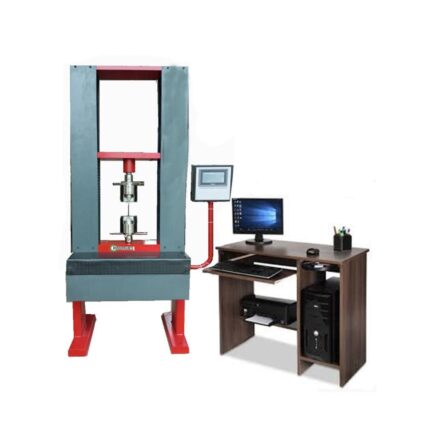
COMPUTERIZED TENSILE TESTING MACHINE
A Computerized Tensile Testing Machine (CTTM) is used to measure the mechanical properties of materials by applying a controlled tensile (pulling) load and recording the response digitally.
What it does
It determines properties such as:
-
Tensile strength
-
Yield strength
-
Elongation (%)
-
Reduction in area
-
Young’s modulus (with extensometer)
All results are captured, displayed, and stored via computer-based data acquisition software.
Main components
-
Loading Frame
-
Rigid two- or four-column structure
-
Driven by servo motor / AC motor / hydraulic system
-
-
Grips & Fixtures
-
Wedge grips (manual or hydraulic)
-
Suitable for flat, round, wire, or threaded specimens
-
-
Load Cell
-
High-accuracy force measurement (typically Class 1 or better)
-
-
Crosshead & Drive System
-
Precise speed control for strain-rate–dependent tests
-
-
Extensometer (optional but recommended)
-
For accurate strain and modulus measurement
-
-
Computer & Testing Software
-
Real-time load–elongation / stress–strain curves
-
Automatic calculation of results
-
Report generation and data export
-
Typical capacities
-
1 kN – 100 kN → plastics, rubber, wires, thin metals
-
100 kN – 600 kN → structural steel, rebars, plates
-
Higher capacities available in hydraulic models
Materials tested
-
Metals (steel, aluminum, copper, rebars)
-
Plastics & polymers
-
Rubber & elastomers
-
Wires, cables, fasteners
-
Composites and sheets
Standards supported
-
ASTM: A370, E8, D638, D412
-
ISO: 6892, 527
-
IS: 1608, 1828
-
BS / DIN standards (as required)
Key advantages
-
High accuracy and repeatability
-
Fully automated testing & reporting
-
Easy calibration and compliance
-
Suitable for R&D, QA/QC, and production labs
Optional features
-
Video extensometer
-
Temperature chamber (hot/cold testing)
-
Automatic hydraulic grips
-
Networked data storage
-
Customized test methods
If you want, I can help you with:
-
Technical specifications for a particular capacity
-
Comparison: electromechanical vs hydraulic
-
Tender / purchase specification
-
Brochure-style product description
-
Price range in India

IZOD IMPACT TESTING MACHINE
📌 What an Izod Impact Testing Machine Is
An Izod impact testing machine is a pendulum-based impact resistance tester used to determine how much energy a material absorbs when impacted suddenly — a measure of the material’s toughness. In the test:
-
A notched specimen (usually plastic or metal) is held vertically in a clamp.
-
A pendulum hammer is raised to a fixed height and then released.
-
It swings down and strikes the specimen, breaking it.
-
The energy absorbed in breaking the specimen is measured from how far the pendulum swings after impact.
Standards: Many machines conform to internationally recognized standards such as ASTM D256 (Izod methods) and ISO 180 (plastic impact testing).
🧪 Why It’s Used
-
Material toughness assessment: Determines how materials behave under sudden shock loading.
-
Quality control: Ensures consistency and safety for products experiencing impacts in real use.
-
R&D: Helps in material selection and design validation in industries like plastics, automotive, aerospace, and consumer products.
🧠 Key Features to Look For
-
Energy range: Typically from a few joules up to several dozen joules depending on material and application.
-
Display: Analog dial or digital interface with read-out.
-
Automatic data handling: USB/PC connectivity on digital models.
-
Dual test capability: Some models support both Izod and Charpy tests.

DIGITAL TENSILE TESTING MACHINE
What Is a Digital Tensile Testing Machine?
A Digital Tensile Testing Machine is an electromechanical device used to measure how materials behave under tension — that is, how much force they can withstand before they stretch or break. It digitally records key parameters like force, elongation, and strength, and displays these on a screen or computer interface for analysis.
🧪 How It Works
-
Specimen Mounting
A sample (metal, plastic, rubber, textile, etc.) is gripped between the machine’s upper and lower fixtures. -
Tension Application
The machine pulls the specimen apart at a controlled speed using a motor and crosshead mechanism. -
Data Capture
As tension increases, digital sensors (usually load cells) record force versus elongation. Modern machines often interface with software for real-time graphs and data export. -
Failure & Analysis
Testing continues until the material breaks. The machine then reports properties such asultimate tensile strength, yield strength, elongation, and modulus of elasticity.
📊 Typical Features
✅ Digital & Computerized Readouts
-
Real-time display of force, displacement, and elongation.
-
Many machines provide computer interfaces for storing and analyzing test results.
✅ Precision Sensors
-
High-sensitivity load cells and digital encoders ensure accurate measurements.
✅ Safety & Protection
-
Limit switches and overload protection safeguard both the specimen and the machine.
✅ Variable Speed Control
-
Test speeds can often be varied based on material type and test standards.
✅ Standards Compliance
-
Machines can be designed to meet ASTM, ISO, and IS standards depending on industry requirements.
🏭 Common Applications
Digital tensile testers are used in:
-
Industrial quality control (metals, plastics, elastomers)
-
R&D laboratories (new materials, composites)
-
Automotive & aerospace sectors (ensuring material safety)
-
Textile and packaging industries (fiber and film testing)
-
Educational and research institutions
🔍 What Results You Get
After a test, you typically get:
| Property | Meaning |
|---|---|
| Tensile Strength | Highest stress the material withstands before breaking |
| Yield Strength | Stress at which material begins to deform permanently |
| Elongation at Break | How much the material stretched before breaking |
| Modulus of Elasticity | Material stiffness measured from stress-strain data |
🛠 Buying Considerations
If you’re looking to purchase one:
-
Load Capacity: Choose based on maximum force you need to test (e.g., 500 N vs. 5000 kgf).
-
Display Type: Digital panel vs. computer-integrated software.
-
Accuracy & Standards: Verify compliance with relevant testing standards (ASTM, ISO, etc.).
-
Accessories: Special grips or fixtures for different materials enhance flexibility.

DIGITAL INSULATOR LOAD TESTING MACHINE
⚙️ Typical Specifications
(Can vary by manufacturer and capacity)
-
Load Capacity:
-
10 kN to 500 kN (1–50 Ton)
-
Higher capacities available on request
-
-
Loading Type:
-
Tensile (most common)
-
Compression (optional)
-
-
Load Measurement:
-
High-accuracy digital load cell
-
-
Accuracy:
-
±1% or better
-
-
Display:
-
Digital controller showing load, peak load, and hold time
-
-
Control Mode:
-
Manual / semi-automatic / fully automatic
-
-
Loading Rate:
-
Adjustable as per IS/IEC standards
-
-
Frame Type:
-
Rigid steel fabricated or 4-column structure
-
-
Power Supply:
-
230V AC, 50 Hz (India standard)
-
🧪 Tests Performed
-
Mechanical Failing Load Test
-
Proof Load Test
-
Routine Load Test
-
Sustained Load Test
-
Breaking Load Test
📜 Applicable Standards
-
IS 731 / IS 2544
-
IEC 60383 / IEC 61109
-
ASTM standards (where applicable)
🖥️ Optional Features
-
PC interface with software
-
Load vs time graph
-
Data logging & report generation
-
Hydraulic power pack with proportional valve
-
Safety enclosure & overload protection
🏭 Construction Highlights
-
Heavy-duty hydraulic cylinder
-
Precision servo or hand-operated hydraulic system
-
Self-aligning grips to avoid bending stresses
-
Corrosion-resistant fixtures for outdoor insulators
If you want, I can help you with:
-
Technical specification for tender
-
Comparison with UTM
-
Budgetary price range (India)
-
Customized capacity selection
-
Datasheet or catalogue format

Environmental Test Chamber
Features of Humidity/Conditioning Test Chambers Deluxe Model
- Alarm system with buzz sound at the test end process
- Temperature sensing through PT-100 sensor
- Highly accurate test results under uniform temperatures and humidity levels in the chamber
- Digital Control for Humidity and Temperature
- High Grade-imported puff insulation
- Maximum Thermal Efficiency by insulation means.
- SSR based heaters
- Digital Preset timer with LED Display
- In-built Auto tuning function
- Water Level Indicator
- Equipped with rapid air circulation German imported fan for uniform and homogenous heating, cooling, humidity, de-humidity
- inside the chamber
- Inbuilt Calibration feature with reference to master PID controller
- Setting to RTD PT-100 sensor through advanced PID controller
- Auto stop feature to stop the machine at a set time
- Time totalizer to calculate the no. of Hours run by the instrument
- Reservoir water tank auto refilling (Float value arrangement)
Technical specifications
- Capacity: 150 litres
- Display: LED (Digital)
- Accuracy: Temp. ± 2ºC / Humidity ± 5%
- Least Count/Resolution Temp / Humidity: 0.1ºC / 1%
- Power: 15A, 220V , Single phase, 50 Hz
- Temperature Range: 15ºC to 60ºC
- Humidity Range: upto to 95% RH
- Timer: 999Hr (Changeable to Min. as per request)
- Water Level Low: Alarm output
- No. of Sample racks: 2
- Handle: Yes
- Wet Heater: 1 Kw, 1 no.
- Dry Heater: 500 Watt, 1 no.
- Temperature Sensor: 1 (PT-100)
- Humidity Sensor: 1 (RH)
- Movement Castor: Wheels
- Material: Stainless Steel (Inner & outer body)
- Finish: Stainless Steel combination finish for corrosion resistant
- Dimensions: Inner : 455 x 455 x 710 mm & Outer : 660 x 930 x 1515 mm
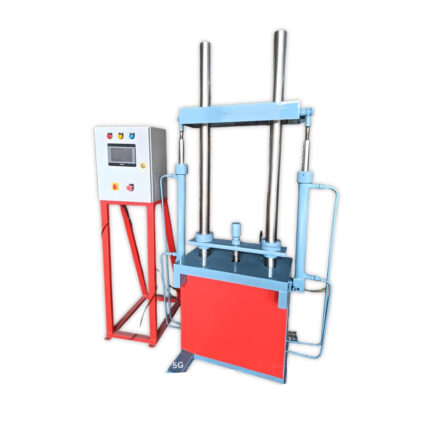
Endurance Testing Machine
Universal Testing systems for medical testing with all accessories compressive Tensile bending and Torsion test
| Type Of Testing Machines | Bending testing and Tensile Testing |
| Automation Grade | Automatic |
| Material | Stiffness |
| Display Type | Digital |
| Product Type | Univesal Testing machine |
| Availability | Customise |
-
- More than 140 Years of Experience of manufacturing world class technology directly from Japan.
- More than 100 Years of Experience of manufacturing Mechanical Testing products.
- 1000s of leading customers in various segment/zones using Shimadzu products with full trust and confidence.
- We respect the business ethics and maintain transparency in all our dealings.
- We provide products at reasonable rates keeping in mind our clients budgetary constraints.
- We are associated with dependable logistic partners for timely delivery of products.
- We accept payments via several modes.
- We pack all the equipment in safe packaging material for avoiding and kind of mechanical damage during transportation.