



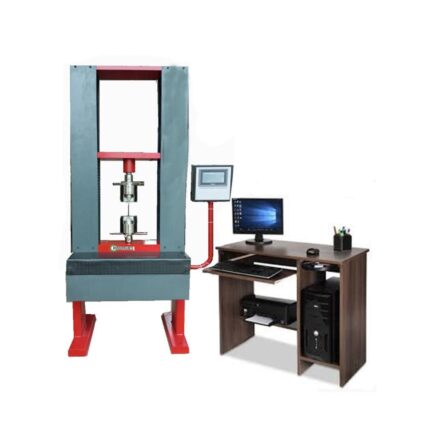
IZOD IMPACT TESTING MACHINE
📌 What an Izod Impact Testing Machine Is
An Izod impact testing machine is a pendulum-based impact resistance tester used to determine how much energy a material absorbs when impacted suddenly — a measure of the material’s toughness. In the test:
-
A notched specimen (usually plastic or metal) is held vertically in a clamp.
-
A pendulum hammer is raised to a fixed height and then released.
-
It swings down and strikes the specimen, breaking it.
-
The energy absorbed in breaking the specimen is measured from how far the pendulum swings after impact.
Standards: Many machines conform to internationally recognized standards such as ASTM D256 (Izod methods) and ISO 180 (plastic impact testing).
🧪 Why It’s Used
-
Material toughness assessment: Determines how materials behave under sudden shock loading.
-
Quality control: Ensures consistency and safety for products experiencing impacts in real use.
-
R&D: Helps in material selection and design validation in industries like plastics, automotive, aerospace, and consumer products.
🧠 Key Features to Look For
-
Energy range: Typically from a few joules up to several dozen joules depending on material and application.
-
Display: Analog dial or digital interface with read-out.
-
Automatic data handling: USB/PC connectivity on digital models.
-
Dual test capability: Some models support both Izod and Charpy tests.
Related products
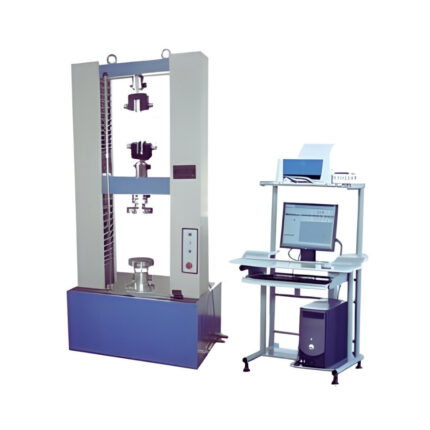
UNIVERSAL-TESTING-MACHINE
Technical Specifications
Load Capacity Range
-
From: 1 kN to 2000 kN (or higher depending on model)
-
Common ranges: 10 kN, 50 kN, 100 kN, 200 kN, 600 kN, 1000 kN
Machine Types
-
Electromechanical UTM
-
Servo Hydraulic UTM
-
Computerized / Digital UTM
Control Modes
-
Load control
-
Displacement control
-
Strain control
-
Pace rate control
Accuracy
-
Load accuracy: ±0.5% to ±1% of indicated load
-
Class 0.5 / Class 1 as per ISO standards
Load Measurement
-
High precision load cell
-
Multiple load cell options
Crosshead Travel
-
Typically 600–1200 mm (model dependent)
Speed Range
-
Very low to high test speeds
-
Example: 0.001 to 500 mm/min
Data Acquisition
-
Real-time force vs displacement curve
-
Stress–strain graph generation
-
PC based software with test reports
Safety Features
-
Overload protection
-
Emergency stop
-
Limit switches
-
Safety guards
Standards Compliance
-
ASTM
-
ISO
-
IS
-
EN
-
DIN
Common Tests Performed
-
Tensile test
-
Compression test
-
Flexural test
-
Shear test
-
Peel test
-
Tear test
-
Bend test

TILE ABRASION TESTING MACHINE
Technical Specifications
| Feature | Specification / Option |
|---|---|
| Model Type | Single-head / Dual-head abrasion tester |
| Test Standard Compliance | ISO 10545-7, EN 14157, ASTM C1243, DIN standards |
| Number of Abrasive Heads | 1 or 2 heads |
| Turntable Diameter | ~300–400 mm (industry varies) |
| Speed Control | Variable speed (e.g., 50–150 rpm) |
| Load Weights | Calibrated weights (typically up to 1,000 g or more per head) |
| Abrasive Medium | Standard abrasive wheels/discs or sand/rubber pads |
| Test Cycle Timer | Digital timer, programmable up to several hours |
| Display | Digital/LED display for time, speed, and test status |
| Power Supply | 220–240 V AC, 50/60 Hz (or 110 V option) |
| Frame Material | Sturdy mild steel / powder-coated structure |
| Sample Size Accommodation | Large enough platform to hold standard tiles (e.g., up to 300 × 300 mm or larger) |
| Safety Features | Emergency stop, protective covers |
| Control Mode | Manual / semi-automatic / PLC touch screen (depending on model) |
| Data Output | Manual recording or digital export (optional) |
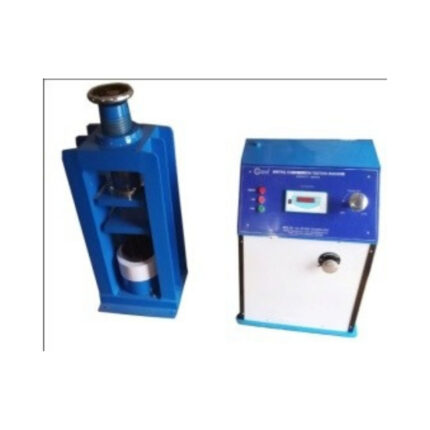
COMPRESSION TESTING MACHINE
Technical Specifications
-
Capacity Range:
50 Ton / 100 Ton / 200 Ton / 300 Ton / 500 Ton / 2000 kN -
Load Measurement:
Digital load indicator / Computerized data acquisition system -
Load Accuracy:
±1% of indicated load (Class 1) -
Loading Method:
Hydraulic compression with controlled pace rate -
Pace Rate Control:
Manual / Semi-automatic / Fully automatic -
Platen Size:
200 × 200 mm / 300 × 300 mm / Customizable -
Maximum Piston Stroke:
50 – 100 mm -
Frame Construction:
Heavy-duty welded steel frame with high rigidity -
Power Supply:
230V AC, Single Phase / 415V AC, Three Phase -
Hydraulic Pressure:
High-pressure axial piston pump -
Standards Compliance:
IS:14858, IS:516, ASTM C39, ASTM C109, BS EN standards -
Safety Features:
Overload protection, pressure relief valve, emergency stop

SERVO CONTROLLED UTM
📊 Typical Technical Parameters
(Specifications vary by model & capacity: 100 kN–2000 kN or more)
| Parameter | Typical Range / Value |
|---|---|
| Load Capacity | 100 kN, 200 kN, 400 kN, 600 kN, 1000 kN, 2000 kN etc. |
| Load Accuracy | ±1 % or better |
| Test Speed | 0.001 to 500 mm/min (configurable) |
| Position Resolution | 0.01 mm or better |
| Control Modes | Load, strain/elongation, displacement, hold |
| Measurement Feedback | Load cell, encoder/extensometer |
| Data Output | Real-time graph, exportable results |
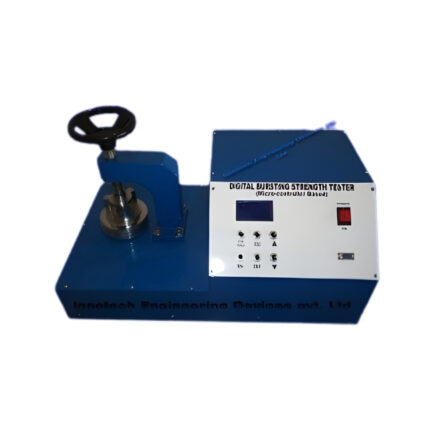
DIGITAL BURSTING STRENGTH TESTER
Technical Specifications
-
Measurement Range: 0–100 kg/cm² / 0–1000 kPa (customizable)
-
Display: High-resolution digital LCD / LED display
-
Accuracy: ±1% of full scale
-
Pressure System: Hydraulic pressure with rubber diaphragm
-
Clamping Method: Manual / Pneumatic clamping (optional)
-
Specimen Diameter: As per standard (e.g., 30.5 mm / 50 mm)
-
Pressure Application Rate: Adjustable, as per standard requirements
-
Control System: Microprocessor-based digital controller
-
Peak Hold Function: Yes (maximum burst value capture)
-
Units Displayed: kg/cm², kPa, PSI (selectable)
-
Power Supply: 220–240 V AC, 50 Hz
-
Standards Compliance:
-
IS: 1060
-
TAPPI T403
-
ISO 2758 / ISO 2759
-
ASTM D3786 / ASTM D3787
-
-
Optional Features:
-
Computer interface (RS-232 / USB)
-
Bursting index calculation
-
Data storage & printer output
-

PLASTIC IMPACT TESTER
Types of Plastic Impact Testers
-
Izod Impact Tester
-
Charpy Impact Tester
-
Combined Izod & Charpy Impact Tester
-
Pendulum Type Impact Tester
-
Digital / Computerized Impact Tester
Applications
-
Thermoplastics and thermosetting plastics
-
PVC, PE, PP, ABS, Nylon, Polycarbonate
-
Plastic sheets, molded components
-
Automotive plastic parts
-
Electrical & electronic plastic components
Technical Specifications (Typical)
-
Impact Energy Range: 1 J, 2.75 J, 5.5 J, 11 J, 22 J
-
Pendulum Capacity: Up to 25 Joules
-
Display Type: Analog / Digital / Computerized
-
Test Method: Izod / Charpy
-
Resolution: 0.01 J
-
Specimen Size: As per ASTM / ISO standards
-
Clamp Type: Vice-type specimen clamp
-
Machine Body: Heavy-duty cast iron / steel frame
-
Safety Guard: Full protective enclosure
Standards Supported
-
ASTM D256
-
ISO 180
-
ISO 179
-
BS EN standards
Salient Features
-
High accuracy pendulum mechanism
-
Easy pendulum change for multiple energy ranges
-
Digital energy loss calculation
-
User-friendly operation
-
Robust and vibration-free construction
-
Calibration certificate traceable to national standards
Accessories (Optional)
-
Notching machine for plastic specimens
-
Extra pendulums (different energy ranges)
-
Computerized data acquisition software
-
Safety enclosure

DIGITAL INSULATOR LOAD TESTING MACHINE
⚙️ Typical Specifications
(Can vary by manufacturer and capacity)
-
Load Capacity:
-
10 kN to 500 kN (1–50 Ton)
-
Higher capacities available on request
-
-
Loading Type:
-
Tensile (most common)
-
Compression (optional)
-
-
Load Measurement:
-
High-accuracy digital load cell
-
-
Accuracy:
-
±1% or better
-
-
Display:
-
Digital controller showing load, peak load, and hold time
-
-
Control Mode:
-
Manual / semi-automatic / fully automatic
-
-
Loading Rate:
-
Adjustable as per IS/IEC standards
-
-
Frame Type:
-
Rigid steel fabricated or 4-column structure
-
-
Power Supply:
-
230V AC, 50 Hz (India standard)
-
🧪 Tests Performed
-
Mechanical Failing Load Test
-
Proof Load Test
-
Routine Load Test
-
Sustained Load Test
-
Breaking Load Test
📜 Applicable Standards
-
IS 731 / IS 2544
-
IEC 60383 / IEC 61109
-
ASTM standards (where applicable)
🖥️ Optional Features
-
PC interface with software
-
Load vs time graph
-
Data logging & report generation
-
Hydraulic power pack with proportional valve
-
Safety enclosure & overload protection
🏭 Construction Highlights
-
Heavy-duty hydraulic cylinder
-
Precision servo or hand-operated hydraulic system
-
Self-aligning grips to avoid bending stresses
-
Corrosion-resistant fixtures for outdoor insulators
If you want, I can help you with:
-
Technical specification for tender
-
Comparison with UTM
-
Budgetary price range (India)
-
Customized capacity selection
-
Datasheet or catalogue format

Environmental Test Chamber
Features of Humidity/Conditioning Test Chambers Deluxe Model
- Alarm system with buzz sound at the test end process
- Temperature sensing through PT-100 sensor
- Highly accurate test results under uniform temperatures and humidity levels in the chamber
- Digital Control for Humidity and Temperature
- High Grade-imported puff insulation
- Maximum Thermal Efficiency by insulation means.
- SSR based heaters
- Digital Preset timer with LED Display
- In-built Auto tuning function
- Water Level Indicator
- Equipped with rapid air circulation German imported fan for uniform and homogenous heating, cooling, humidity, de-humidity
- inside the chamber
- Inbuilt Calibration feature with reference to master PID controller
- Setting to RTD PT-100 sensor through advanced PID controller
- Auto stop feature to stop the machine at a set time
- Time totalizer to calculate the no. of Hours run by the instrument
- Reservoir water tank auto refilling (Float value arrangement)
Technical specifications
- Capacity: 150 litres
- Display: LED (Digital)
- Accuracy: Temp. ± 2ºC / Humidity ± 5%
- Least Count/Resolution Temp / Humidity: 0.1ºC / 1%
- Power: 15A, 220V , Single phase, 50 Hz
- Temperature Range: 15ºC to 60ºC
- Humidity Range: upto to 95% RH
- Timer: 999Hr (Changeable to Min. as per request)
- Water Level Low: Alarm output
- No. of Sample racks: 2
- Handle: Yes
- Wet Heater: 1 Kw, 1 no.
- Dry Heater: 500 Watt, 1 no.
- Temperature Sensor: 1 (PT-100)
- Humidity Sensor: 1 (RH)
- Movement Castor: Wheels
- Material: Stainless Steel (Inner & outer body)
- Finish: Stainless Steel combination finish for corrosion resistant
- Dimensions: Inner : 455 x 455 x 710 mm & Outer : 660 x 930 x 1515 mm
Reviews
There are no reviews yet.