


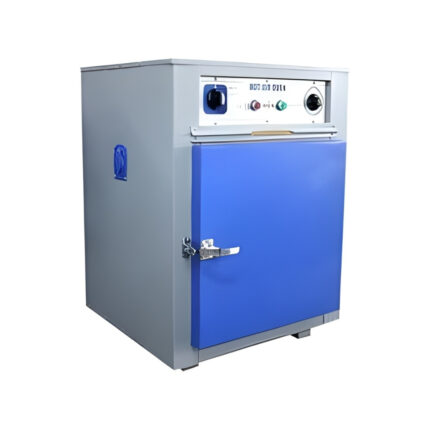

VIBRATING TABLE
Key Features
-
Heavy-duty fabricated steel construction
-
Adjustable vibration frequency and amplitude
-
Uniform vibration across table surface
-
Low noise and energy-efficient operation
-
Anti-vibration mounts for floor protection
-
Manual / digital / PLC control options
-
Maintenance-free vibrator motor
-
Custom table size and load capacity available
Applications
-
Concrete cube and block compaction
-
Precast concrete products
-
Foundry sand compaction
-
Laboratory material testing
-
Pharmaceutical and chemical compaction
-
Packaging and container settling
-
Soil and aggregate testing
Technical Specifications (Typical)
-
Table Size: Customizable
-
Load Capacity: 50 kg to 2000 kg (or higher)
-
Vibration Frequency: 0–6000 vibrations/min
-
Amplitude: Adjustable
-
Motor Type: Unbalanced / Electromagnetic
-
Power Supply: 230V / 415V, 50 Hz
-
Control: Manual / Digital / PLC
-
Mounting: Spring or rubber isolation
A Vibrating Table is a robust industrial machine designed to generate controlled vibrations for compaction, settling, densification, and testing of materials. It is widely used in construction, foundry, laboratories, concrete products manufacturing, packaging, and testing applications to remove air voids and achieve uniform material distribution.
The table consists of a heavy-duty steel platform mounted on anti-vibration springs or rubber pads, powered by unbalanced motors or electromagnetic vibrators. Vibration frequency and amplitude can be adjusted manually or digitally to suit different materials and applications.
Vibrating tables ensure consistent quality, higher density, improved strength, and repeatable test results. They are available in fixed frequency, variable frequency, analog, and PLC-controlled models.
Related products
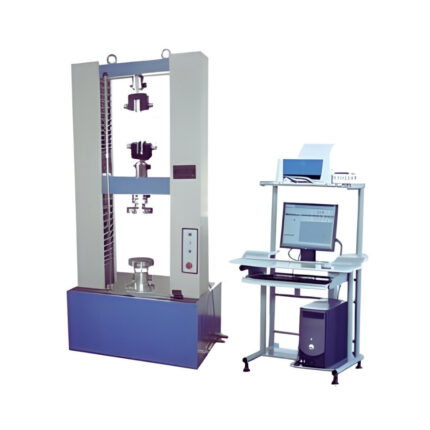
UNIVERSAL-TESTING-MACHINE
Technical Specifications
Load Capacity Range
-
From: 1 kN to 2000 kN (or higher depending on model)
-
Common ranges: 10 kN, 50 kN, 100 kN, 200 kN, 600 kN, 1000 kN
Machine Types
-
Electromechanical UTM
-
Servo Hydraulic UTM
-
Computerized / Digital UTM
Control Modes
-
Load control
-
Displacement control
-
Strain control
-
Pace rate control
Accuracy
-
Load accuracy: ±0.5% to ±1% of indicated load
-
Class 0.5 / Class 1 as per ISO standards
Load Measurement
-
High precision load cell
-
Multiple load cell options
Crosshead Travel
-
Typically 600–1200 mm (model dependent)
Speed Range
-
Very low to high test speeds
-
Example: 0.001 to 500 mm/min
Data Acquisition
-
Real-time force vs displacement curve
-
Stress–strain graph generation
-
PC based software with test reports
Safety Features
-
Overload protection
-
Emergency stop
-
Limit switches
-
Safety guards
Standards Compliance
-
ASTM
-
ISO
-
IS
-
EN
-
DIN
Common Tests Performed
-
Tensile test
-
Compression test
-
Flexural test
-
Shear test
-
Peel test
-
Tear test
-
Bend test

FLEXURAL STRENGTH TESTING MACHINE
Technical Specifications
Load Capacity
-
Range: 10 kN to 300 kN
-
Suitable for concrete beams, tiles, blocks, polymers, composites
Loading Type
-
Three-point bending
-
Four-point bending
Control System
-
Manual / Motorized / Servo-controlled
-
Pace rate control available
-
Closed-loop feedback system (in advanced models)
Display
-
Digital load indicator
-
Touchscreen controller (computerized models)
-
Real-time load vs deflection graph
Accuracy
-
±1% or better of indicated load
-
Calibrated load cell system
Loading Rate
-
Adjustable loading rate
-
Standard compliant loading speed control
Test Span Adjustment
-
Adjustable support span
-
Roller support fixtures
Drive Mechanism
-
Hydraulic power pack or electromechanical screw drive
-
Servo motor (in advanced systems)
Data Output
-
Software-based data acquisition
-
Test reports generation
-
USB / PC connectivity
-
Automatic peak load capture
Safety Features
-
Overload protection
-
Emergency stop
-
Limit switches
-
Guard enclosure
Standards Compliance
-
ASTM C78 / ASTM D790
-
IS 516
-
ISO standards for flexural testing

LOAD TESTING MACHINE
Technical Specifications
-
Load Capacity Range: 50 kN to 5000 kN (customizable)
-
Type: Hydraulic / Electro-Mechanical
-
Control Mode: Manual / Semi-Automatic / Computerized
-
Load Measurement: Digital Load Cell / Pressure Sensor
-
Accuracy: ±1% or better
-
Display: Digital indicator / Computer software display
-
Resolution: High resolution load reading
-
Loading Rate Control: Adjustable
-
Frame Construction: Heavy-duty steel frame
-
Power Supply: 220V / 415V AC
-
Hydraulic System: Motorized hydraulic power pack
-
Data Output: USB / RS232 / Software-based reporting (computerized models)
-
Safety Features: Overload protection, emergency stop
-
Test Modes: Compression / Tension / Flexural (depending on model)
-
Standards Compliance: IS / ASTM / BS / EN standards (model dependent)

PLASTIC IMPACT TESTER
Types of Plastic Impact Testers
-
Izod Impact Tester
-
Charpy Impact Tester
-
Combined Izod & Charpy Impact Tester
-
Pendulum Type Impact Tester
-
Digital / Computerized Impact Tester
Applications
-
Thermoplastics and thermosetting plastics
-
PVC, PE, PP, ABS, Nylon, Polycarbonate
-
Plastic sheets, molded components
-
Automotive plastic parts
-
Electrical & electronic plastic components
Technical Specifications (Typical)
-
Impact Energy Range: 1 J, 2.75 J, 5.5 J, 11 J, 22 J
-
Pendulum Capacity: Up to 25 Joules
-
Display Type: Analog / Digital / Computerized
-
Test Method: Izod / Charpy
-
Resolution: 0.01 J
-
Specimen Size: As per ASTM / ISO standards
-
Clamp Type: Vice-type specimen clamp
-
Machine Body: Heavy-duty cast iron / steel frame
-
Safety Guard: Full protective enclosure
Standards Supported
-
ASTM D256
-
ISO 180
-
ISO 179
-
BS EN standards
Salient Features
-
High accuracy pendulum mechanism
-
Easy pendulum change for multiple energy ranges
-
Digital energy loss calculation
-
User-friendly operation
-
Robust and vibration-free construction
-
Calibration certificate traceable to national standards
Accessories (Optional)
-
Notching machine for plastic specimens
-
Extra pendulums (different energy ranges)
-
Computerized data acquisition software
-
Safety enclosure

COMPUTERIZED SPRING TESTING MACHINE
Key Functions
-
Load–Deflection Testing
-
Spring Rate (k) Calculation
-
Compression / Tension Testing
-
Cycle (Fatigue) Testing (optional)
-
Free Length & Solid Height Measurement
Types of Springs Tested
-
Compression springs
-
Tension (extension) springs
-
Torsion springs
-
Disc (Belleville) springs
Main Components
-
High-precision Load Cell
-
Servo / Stepper Motor Drive
-
Ball Screw & Linear Guide System
-
Computer with Testing Software
-
Digital Displacement Encoder
-
Safety Enclosure & Limit Switches
Typical Specifications (Indicative)
-
Capacity: 10 N to 50 kN (customizable)
-
Accuracy: ±0.5%
-
Stroke Length: 100–500 mm
-
Speed Range: 0.1–500 mm/min
-
Data Output: Load–deflection curve, test reports (PDF/Excel)
Software Features
-
Real-time load vs deflection graph
-
Automatic spring constant calculation
-
Test method storage
-
Pass/Fail limits
-
Data export & printer support
Standards Supported
-
IS, ASTM, DIN, JIS, ISO
-
Automotive & industrial spring standards
Applications
-
Automotive spring manufacturers
-
Electrical & electronics industry
-
Aerospace components
-
R&D laboratories
-
Incoming and final inspection
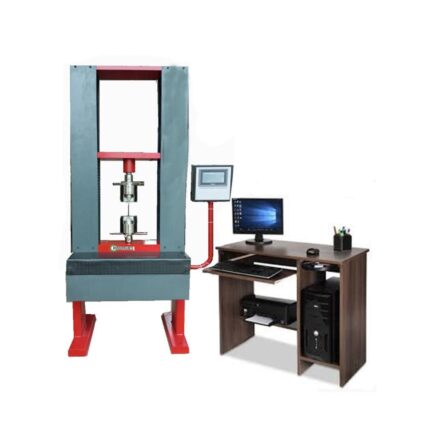
COMPUTERIZED TENSILE TESTING MACHINE
A Computerized Tensile Testing Machine (CTTM) is used to measure the mechanical properties of materials by applying a controlled tensile (pulling) load and recording the response digitally.
What it does
It determines properties such as:
-
Tensile strength
-
Yield strength
-
Elongation (%)
-
Reduction in area
-
Young’s modulus (with extensometer)
All results are captured, displayed, and stored via computer-based data acquisition software.
Main components
-
Loading Frame
-
Rigid two- or four-column structure
-
Driven by servo motor / AC motor / hydraulic system
-
-
Grips & Fixtures
-
Wedge grips (manual or hydraulic)
-
Suitable for flat, round, wire, or threaded specimens
-
-
Load Cell
-
High-accuracy force measurement (typically Class 1 or better)
-
-
Crosshead & Drive System
-
Precise speed control for strain-rate–dependent tests
-
-
Extensometer (optional but recommended)
-
For accurate strain and modulus measurement
-
-
Computer & Testing Software
-
Real-time load–elongation / stress–strain curves
-
Automatic calculation of results
-
Report generation and data export
-
Typical capacities
-
1 kN – 100 kN → plastics, rubber, wires, thin metals
-
100 kN – 600 kN → structural steel, rebars, plates
-
Higher capacities available in hydraulic models
Materials tested
-
Metals (steel, aluminum, copper, rebars)
-
Plastics & polymers
-
Rubber & elastomers
-
Wires, cables, fasteners
-
Composites and sheets
Standards supported
-
ASTM: A370, E8, D638, D412
-
ISO: 6892, 527
-
IS: 1608, 1828
-
BS / DIN standards (as required)
Key advantages
-
High accuracy and repeatability
-
Fully automated testing & reporting
-
Easy calibration and compliance
-
Suitable for R&D, QA/QC, and production labs
Optional features
-
Video extensometer
-
Temperature chamber (hot/cold testing)
-
Automatic hydraulic grips
-
Networked data storage
-
Customized test methods
If you want, I can help you with:
-
Technical specifications for a particular capacity
-
Comparison: electromechanical vs hydraulic
-
Tender / purchase specification
-
Brochure-style product description
-
Price range in India

IZOD IMPACT TESTING MACHINE
📌 What an Izod Impact Testing Machine Is
An Izod impact testing machine is a pendulum-based impact resistance tester used to determine how much energy a material absorbs when impacted suddenly — a measure of the material’s toughness. In the test:
-
A notched specimen (usually plastic or metal) is held vertically in a clamp.
-
A pendulum hammer is raised to a fixed height and then released.
-
It swings down and strikes the specimen, breaking it.
-
The energy absorbed in breaking the specimen is measured from how far the pendulum swings after impact.
Standards: Many machines conform to internationally recognized standards such as ASTM D256 (Izod methods) and ISO 180 (plastic impact testing).
🧪 Why It’s Used
-
Material toughness assessment: Determines how materials behave under sudden shock loading.
-
Quality control: Ensures consistency and safety for products experiencing impacts in real use.
-
R&D: Helps in material selection and design validation in industries like plastics, automotive, aerospace, and consumer products.
🧠 Key Features to Look For
-
Energy range: Typically from a few joules up to several dozen joules depending on material and application.
-
Display: Analog dial or digital interface with read-out.
-
Automatic data handling: USB/PC connectivity on digital models.
-
Dual test capability: Some models support both Izod and Charpy tests.

DIGITAL INSULATOR LOAD TESTING MACHINE
⚙️ Typical Specifications
(Can vary by manufacturer and capacity)
-
Load Capacity:
-
10 kN to 500 kN (1–50 Ton)
-
Higher capacities available on request
-
-
Loading Type:
-
Tensile (most common)
-
Compression (optional)
-
-
Load Measurement:
-
High-accuracy digital load cell
-
-
Accuracy:
-
±1% or better
-
-
Display:
-
Digital controller showing load, peak load, and hold time
-
-
Control Mode:
-
Manual / semi-automatic / fully automatic
-
-
Loading Rate:
-
Adjustable as per IS/IEC standards
-
-
Frame Type:
-
Rigid steel fabricated or 4-column structure
-
-
Power Supply:
-
230V AC, 50 Hz (India standard)
-
🧪 Tests Performed
-
Mechanical Failing Load Test
-
Proof Load Test
-
Routine Load Test
-
Sustained Load Test
-
Breaking Load Test
📜 Applicable Standards
-
IS 731 / IS 2544
-
IEC 60383 / IEC 61109
-
ASTM standards (where applicable)
🖥️ Optional Features
-
PC interface with software
-
Load vs time graph
-
Data logging & report generation
-
Hydraulic power pack with proportional valve
-
Safety enclosure & overload protection
🏭 Construction Highlights
-
Heavy-duty hydraulic cylinder
-
Precision servo or hand-operated hydraulic system
-
Self-aligning grips to avoid bending stresses
-
Corrosion-resistant fixtures for outdoor insulators
If you want, I can help you with:
-
Technical specification for tender
-
Comparison with UTM
-
Budgetary price range (India)
-
Customized capacity selection
-
Datasheet or catalogue format
Reviews
There are no reviews yet.