



PLASTIC IMPACT TESTER
Types of Plastic Impact Testers
-
Izod Impact Tester
-
Charpy Impact Tester
-
Combined Izod & Charpy Impact Tester
-
Pendulum Type Impact Tester
-
Digital / Computerized Impact Tester
Applications
-
Thermoplastics and thermosetting plastics
-
PVC, PE, PP, ABS, Nylon, Polycarbonate
-
Plastic sheets, molded components
-
Automotive plastic parts
-
Electrical & electronic plastic components
Technical Specifications (Typical)
-
Impact Energy Range: 1 J, 2.75 J, 5.5 J, 11 J, 22 J
-
Pendulum Capacity: Up to 25 Joules
-
Display Type: Analog / Digital / Computerized
-
Test Method: Izod / Charpy
-
Resolution: 0.01 J
-
Specimen Size: As per ASTM / ISO standards
-
Clamp Type: Vice-type specimen clamp
-
Machine Body: Heavy-duty cast iron / steel frame
-
Safety Guard: Full protective enclosure
Standards Supported
-
ASTM D256
-
ISO 180
-
ISO 179
-
BS EN standards
Salient Features
-
High accuracy pendulum mechanism
-
Easy pendulum change for multiple energy ranges
-
Digital energy loss calculation
-
User-friendly operation
-
Robust and vibration-free construction
-
Calibration certificate traceable to national standards
Accessories (Optional)
-
Notching machine for plastic specimens
-
Extra pendulums (different energy ranges)
-
Computerized data acquisition software
-
Safety enclosure
A Plastic Impact Tester is a laboratory testing instrument used to determine the impact strength, toughness, and energy absorption capacity of plastic materials under sudden load conditions. It is widely used in plastic manufacturing, polymer testing labs, R&D centers, and quality control departments.
Related products
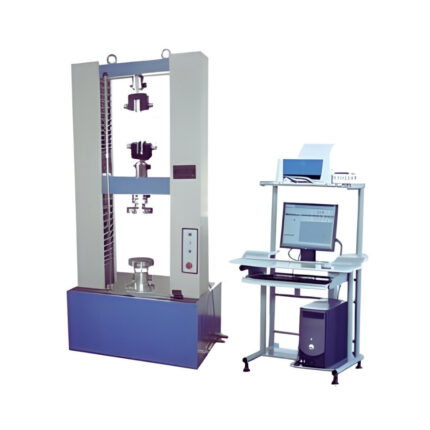
UNIVERSAL-TESTING-MACHINE
Technical Specifications
Load Capacity Range
-
From: 1 kN to 2000 kN (or higher depending on model)
-
Common ranges: 10 kN, 50 kN, 100 kN, 200 kN, 600 kN, 1000 kN
Machine Types
-
Electromechanical UTM
-
Servo Hydraulic UTM
-
Computerized / Digital UTM
Control Modes
-
Load control
-
Displacement control
-
Strain control
-
Pace rate control
Accuracy
-
Load accuracy: ±0.5% to ±1% of indicated load
-
Class 0.5 / Class 1 as per ISO standards
Load Measurement
-
High precision load cell
-
Multiple load cell options
Crosshead Travel
-
Typically 600–1200 mm (model dependent)
Speed Range
-
Very low to high test speeds
-
Example: 0.001 to 500 mm/min
Data Acquisition
-
Real-time force vs displacement curve
-
Stress–strain graph generation
-
PC based software with test reports
Safety Features
-
Overload protection
-
Emergency stop
-
Limit switches
-
Safety guards
Standards Compliance
-
ASTM
-
ISO
-
IS
-
EN
-
DIN
Common Tests Performed
-
Tensile test
-
Compression test
-
Flexural test
-
Shear test
-
Peel test
-
Tear test
-
Bend test

TILE ABRASION TESTING MACHINE
Technical Specifications
| Feature | Specification / Option |
|---|---|
| Model Type | Single-head / Dual-head abrasion tester |
| Test Standard Compliance | ISO 10545-7, EN 14157, ASTM C1243, DIN standards |
| Number of Abrasive Heads | 1 or 2 heads |
| Turntable Diameter | ~300–400 mm (industry varies) |
| Speed Control | Variable speed (e.g., 50–150 rpm) |
| Load Weights | Calibrated weights (typically up to 1,000 g or more per head) |
| Abrasive Medium | Standard abrasive wheels/discs or sand/rubber pads |
| Test Cycle Timer | Digital timer, programmable up to several hours |
| Display | Digital/LED display for time, speed, and test status |
| Power Supply | 220–240 V AC, 50/60 Hz (or 110 V option) |
| Frame Material | Sturdy mild steel / powder-coated structure |
| Sample Size Accommodation | Large enough platform to hold standard tiles (e.g., up to 300 × 300 mm or larger) |
| Safety Features | Emergency stop, protective covers |
| Control Mode | Manual / semi-automatic / PLC touch screen (depending on model) |
| Data Output | Manual recording or digital export (optional) |

COMPUTERIZED TENSILE TESTING MACHINE
Technical Specifications (Typical)
-
Capacity Range: 1 kN to 1000 kN (or higher on request)
-
Drive System: Servo motor / AC variable frequency drive / Hydraulic (as per model)
-
Load Measurement: High-precision strain gauge load cell
-
Accuracy: ±1% or better of indicated load
-
Crosshead Speed: 0.01 to 500 mm/min (programmable)
-
Speed Accuracy: ±1%
-
Stroke Length: 800 – 1200 mm (customizable)
-
Grips: Wedge, pneumatic, hydraulic, compression platens, bending fixtures
-
Control Mode: Load, displacement, and strain control
-
Software: PC-based testing software with graph plotting, test methods, and report generation
-
Data Output: Load vs extension, stress vs strain curves
-
Safety Features: Overload protection, limit switches, emergency stop
-
Power Supply: 230V / 415V AC, 50 Hz
-
Standards Compliance: ASTM E8, ASTM A370, ISO 6892, BIS standards

SERVO CONTROLLED UTM
📊 Typical Technical Parameters
(Specifications vary by model & capacity: 100 kN–2000 kN or more)
| Parameter | Typical Range / Value |
|---|---|
| Load Capacity | 100 kN, 200 kN, 400 kN, 600 kN, 1000 kN, 2000 kN etc. |
| Load Accuracy | ±1 % or better |
| Test Speed | 0.001 to 500 mm/min (configurable) |
| Position Resolution | 0.01 mm or better |
| Control Modes | Load, strain/elongation, displacement, hold |
| Measurement Feedback | Load cell, encoder/extensometer |
| Data Output | Real-time graph, exportable results |
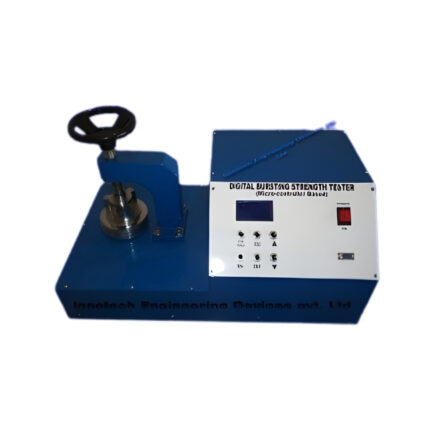
DIGITAL BURSTING STRENGTH TESTER
Technical Specifications
-
Measurement Range: 0–100 kg/cm² / 0–1000 kPa (customizable)
-
Display: High-resolution digital LCD / LED display
-
Accuracy: ±1% of full scale
-
Pressure System: Hydraulic pressure with rubber diaphragm
-
Clamping Method: Manual / Pneumatic clamping (optional)
-
Specimen Diameter: As per standard (e.g., 30.5 mm / 50 mm)
-
Pressure Application Rate: Adjustable, as per standard requirements
-
Control System: Microprocessor-based digital controller
-
Peak Hold Function: Yes (maximum burst value capture)
-
Units Displayed: kg/cm², kPa, PSI (selectable)
-
Power Supply: 220–240 V AC, 50 Hz
-
Standards Compliance:
-
IS: 1060
-
TAPPI T403
-
ISO 2758 / ISO 2759
-
ASTM D3786 / ASTM D3787
-
-
Optional Features:
-
Computer interface (RS-232 / USB)
-
Bursting index calculation
-
Data storage & printer output
-

DIN ABRASION TESTER
Key Features
-
Conforms to DIN 53516 / ISO 4649 / ASTM D5963
-
Precision abrasive drum with uniform speed
-
Constant load application mechanism
-
Digital revolution counter
-
Sliding distance control
-
Specimen holder with angular adjustment
-
High accuracy and repeatability
-
Rugged, vibration-free construction
-
Easy specimen mounting and removal
Technical Specifications (Typical)
-
Drum Diameter: ~150 mm
-
Drum Speed: 40 ± 1 rpm
-
Abrasive Paper: Grit 60 (as per DIN)
-
Normal Load: 10 N
-
Sliding Distance: 40 m (standard)
-
Specimen Size: Ø16 mm × 6–15 mm thickness
-
Display: Digital / LCD
-
Power Supply: 220–240 V AC, 50 Hz
Applications
-
Rubber and elastomer industries
-
Tyre and automotive components
-
Conveyor belts and hoses
-
Footwear and sole materials
-
PU and polymer products
-
Quality control and R&D laboratories
Advantages
-
Reliable abrasion resistance evaluation
-
Standard-compliant testing
-
Consistent and repeatable results
-
Low maintenance
-
User-friendly operation

CTM WITH PACE CONTROL
Key Features
-
Pace Control System – Maintains constant loading rate
-
Microprocessor / PLC Based Control
-
Closed-Loop Servo Control
-
Digital Load & Extension Measurement
-
High Accuracy Load Cell (±1% or better)
-
Automatic Load Holding & Unloading
-
Overload Protection
-
Emergency Stop Switch
-
Data Acquisition Software (PC Based)
-
Real-Time Load vs Elongation Graph
-
USB / Ethernet Interface
Technical Specifications (Typical)
-
Capacity: 100 kN, 200 kN, 300 kN (customizable)
-
Pace Rate: Programmable (kN/sec or mm/min)
-
Load Resolution: 1/10000 of capacity
-
Crosshead Speed: Variable with pace control
-
Power Supply: 230V AC, 50 Hz
-
Frame Type: Rigid 2-Column / 4-Column Structure
Pace Control Description
-
Automatically controls rate of loading during tensile test
-
Conforms to IS, ASTM, ISO, BS standards
-
Ensures uniform stress application on specimen
-
Ideal for concrete, steel, rebar, wire, fasteners testing
Applications
-
Tensile testing of metal rods, bars, wires
-
Testing of rebars as per IS 1786
-
Quality control laboratories
-
R&D and material testing labs
-
Educational institutions
-
Construction & infrastructure projects
Standards Compliance
-
IS 1828
-
ASTM E8 / E9
-
ISO 6892
-
BS Standards

GOVERNOR TESTING MACHINE
Main Functions
-
Testing of centrifugal governors
-
Measurement of speed vs lift characteristics
-
Determination of controlling force
-
Study of stability and sensitiveness
-
Calibration of mechanical governors
Construction & Components
-
Rigid MS fabricated frame
-
Variable speed electric motor with controller
-
Vertical spindle with governor mounting arrangement
-
Precision RPM measuring system (digital tachometer / encoder)
-
Sleeve lift measurement using dial gauge / LVDT
-
Load application mechanism (weights / spring system)
-
Safety guard enclosure
-
Digital display / DAQ system (optional)
Typical Technical Specifications
-
Speed Range: 0 – 6000 RPM (customizable)
-
Speed Control: VFD / Servo drive
-
RPM Accuracy: ±0.5%
-
Lift Measurement Range: 0 – 25 mm
-
Lift Accuracy: 0.01 mm
-
Power Supply: 230V / 415V AC
-
Mounting Type: Vertical
-
Data Output: Digital display / PC interface (optional)
Types of Governors Tested
-
Watt Governor
-
Porter Governor
-
Proell Governor
-
Hartnell Governor
-
Wilson-Hartnell Governor
Applications
-
Mechanical engineering laboratories
-
Polytechnic & engineering colleges
-
R&D centers
-
Industrial training institutes
-
Governor calibration workshops
Reviews
There are no reviews yet.