

DIGITAL TENSILE TESTING MACHINE
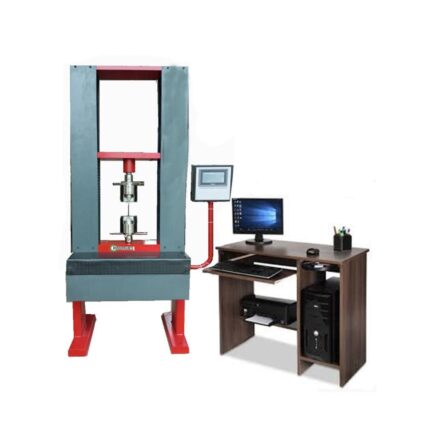
COMPUTERIZED TENSILE TESTING MACHINE
A Computerized Tensile Testing Machine (CTTM) is used to measure the mechanical properties of materials by applying a controlled tensile (pulling) load and recording the response digitally.
What it does
It determines properties such as:
-
Tensile strength
-
Yield strength
-
Elongation (%)
-
Reduction in area
-
Young’s modulus (with extensometer)
All results are captured, displayed, and stored via computer-based data acquisition software.
Main components
-
Loading Frame
-
Rigid two- or four-column structure
-
Driven by servo motor / AC motor / hydraulic system
-
-
Grips & Fixtures
-
Wedge grips (manual or hydraulic)
-
Suitable for flat, round, wire, or threaded specimens
-
-
Load Cell
-
High-accuracy force measurement (typically Class 1 or better)
-
-
Crosshead & Drive System
-
Precise speed control for strain-rate–dependent tests
-
-
Extensometer (optional but recommended)
-
For accurate strain and modulus measurement
-
-
Computer & Testing Software
-
Real-time load–elongation / stress–strain curves
-
Automatic calculation of results
-
Report generation and data export
-
Typical capacities
-
1 kN – 100 kN → plastics, rubber, wires, thin metals
-
100 kN – 600 kN → structural steel, rebars, plates
-
Higher capacities available in hydraulic models
Materials tested
-
Metals (steel, aluminum, copper, rebars)
-
Plastics & polymers
-
Rubber & elastomers
-
Wires, cables, fasteners
-
Composites and sheets
Standards supported
-
ASTM: A370, E8, D638, D412
-
ISO: 6892, 527
-
IS: 1608, 1828
-
BS / DIN standards (as required)
Key advantages
-
High accuracy and repeatability
-
Fully automated testing & reporting
-
Easy calibration and compliance
-
Suitable for R&D, QA/QC, and production labs
Optional features
-
Video extensometer
-
Temperature chamber (hot/cold testing)
-
Automatic hydraulic grips
-
Networked data storage
-
Customized test methods
If you want, I can help you with:
-
Technical specifications for a particular capacity
-
Comparison: electromechanical vs hydraulic
-
Tender / purchase specification
-
Brochure-style product description
-
Price range in India

DIGITAL TENSILE TESTING MACHINE
What Is a Digital Tensile Testing Machine?
A Digital Tensile Testing Machine is an electromechanical device used to measure how materials behave under tension — that is, how much force they can withstand before they stretch or break. It digitally records key parameters like force, elongation, and strength, and displays these on a screen or computer interface for analysis.
🧪 How It Works
-
Specimen Mounting
A sample (metal, plastic, rubber, textile, etc.) is gripped between the machine’s upper and lower fixtures. -
Tension Application
The machine pulls the specimen apart at a controlled speed using a motor and crosshead mechanism. -
Data Capture
As tension increases, digital sensors (usually load cells) record force versus elongation. Modern machines often interface with software for real-time graphs and data export. -
Failure & Analysis
Testing continues until the material breaks. The machine then reports properties such asultimate tensile strength, yield strength, elongation, and modulus of elasticity.
📊 Typical Features
✅ Digital & Computerized Readouts
-
Real-time display of force, displacement, and elongation.
-
Many machines provide computer interfaces for storing and analyzing test results.
✅ Precision Sensors
-
High-sensitivity load cells and digital encoders ensure accurate measurements.
✅ Safety & Protection
-
Limit switches and overload protection safeguard both the specimen and the machine.
✅ Variable Speed Control
-
Test speeds can often be varied based on material type and test standards.
✅ Standards Compliance
-
Machines can be designed to meet ASTM, ISO, and IS standards depending on industry requirements.
🏭 Common Applications
Digital tensile testers are used in:
-
Industrial quality control (metals, plastics, elastomers)
-
R&D laboratories (new materials, composites)
-
Automotive & aerospace sectors (ensuring material safety)
-
Textile and packaging industries (fiber and film testing)
-
Educational and research institutions
🔍 What Results You Get
After a test, you typically get:
| Property | Meaning |
|---|---|
| Tensile Strength | Highest stress the material withstands before breaking |
| Yield Strength | Stress at which material begins to deform permanently |
| Elongation at Break | How much the material stretched before breaking |
| Modulus of Elasticity | Material stiffness measured from stress-strain data |
🛠 Buying Considerations
If you’re looking to purchase one:
-
Load Capacity: Choose based on maximum force you need to test (e.g., 500 N vs. 5000 kgf).
-
Display Type: Digital panel vs. computer-integrated software.
-
Accuracy & Standards: Verify compliance with relevant testing standards (ASTM, ISO, etc.).
-
Accessories: Special grips or fixtures for different materials enhance flexibility.