

Fabric Testing Equipments
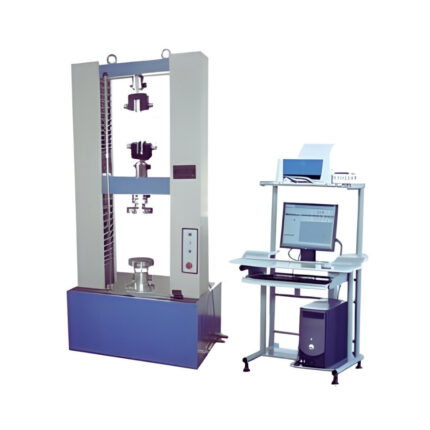
UNIVERSAL-TESTING-MACHINE
Technical Specifications
Load Capacity Range
-
From: 1 kN to 2000 kN (or higher depending on model)
-
Common ranges: 10 kN, 50 kN, 100 kN, 200 kN, 600 kN, 1000 kN
Machine Types
-
Electromechanical UTM
-
Servo Hydraulic UTM
-
Computerized / Digital UTM
Control Modes
-
Load control
-
Displacement control
-
Strain control
-
Pace rate control
Accuracy
-
Load accuracy: ±0.5% to ±1% of indicated load
-
Class 0.5 / Class 1 as per ISO standards
Load Measurement
-
High precision load cell
-
Multiple load cell options
Crosshead Travel
-
Typically 600–1200 mm (model dependent)
Speed Range
-
Very low to high test speeds
-
Example: 0.001 to 500 mm/min
Data Acquisition
-
Real-time force vs displacement curve
-
Stress–strain graph generation
-
PC based software with test reports
Safety Features
-
Overload protection
-
Emergency stop
-
Limit switches
-
Safety guards
Standards Compliance
-
ASTM
-
ISO
-
IS
-
EN
-
DIN
Common Tests Performed
-
Tensile test
-
Compression test
-
Flexural test
-
Shear test
-
Peel test
-
Tear test
-
Bend test

LOAD TESTING MACHINE
Technical Specifications
-
Load Capacity Range: 50 kN to 5000 kN (customizable)
-
Type: Hydraulic / Electro-Mechanical
-
Control Mode: Manual / Semi-Automatic / Computerized
-
Load Measurement: Digital Load Cell / Pressure Sensor
-
Accuracy: ±1% or better
-
Display: Digital indicator / Computer software display
-
Resolution: High resolution load reading
-
Loading Rate Control: Adjustable
-
Frame Construction: Heavy-duty steel frame
-
Power Supply: 220V / 415V AC
-
Hydraulic System: Motorized hydraulic power pack
-
Data Output: USB / RS232 / Software-based reporting (computerized models)
-
Safety Features: Overload protection, emergency stop
-
Test Modes: Compression / Tension / Flexural (depending on model)
-
Standards Compliance: IS / ASTM / BS / EN standards (model dependent)

COMPUTERIZED TENSILE TESTING MACHINE
Technical Specifications (Typical)
-
Capacity Range: 1 kN to 1000 kN (or higher on request)
-
Drive System: Servo motor / AC variable frequency drive / Hydraulic (as per model)
-
Load Measurement: High-precision strain gauge load cell
-
Accuracy: ±1% or better of indicated load
-
Crosshead Speed: 0.01 to 500 mm/min (programmable)
-
Speed Accuracy: ±1%
-
Stroke Length: 800 – 1200 mm (customizable)
-
Grips: Wedge, pneumatic, hydraulic, compression platens, bending fixtures
-
Control Mode: Load, displacement, and strain control
-
Software: PC-based testing software with graph plotting, test methods, and report generation
-
Data Output: Load vs extension, stress vs strain curves
-
Safety Features: Overload protection, limit switches, emergency stop
-
Power Supply: 230V / 415V AC, 50 Hz
-
Standards Compliance: ASTM E8, ASTM A370, ISO 6892, BIS standards

SERVO CONTROLLED UTM
📊 Typical Technical Parameters
(Specifications vary by model & capacity: 100 kN–2000 kN or more)
| Parameter | Typical Range / Value |
|---|---|
| Load Capacity | 100 kN, 200 kN, 400 kN, 600 kN, 1000 kN, 2000 kN etc. |
| Load Accuracy | ±1 % or better |
| Test Speed | 0.001 to 500 mm/min (configurable) |
| Position Resolution | 0.01 mm or better |
| Control Modes | Load, strain/elongation, displacement, hold |
| Measurement Feedback | Load cell, encoder/extensometer |
| Data Output | Real-time graph, exportable results |
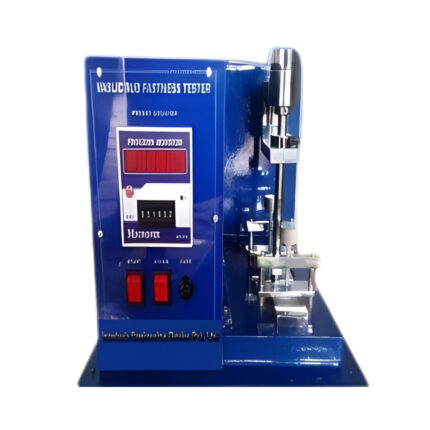
VASLIC RUB FASTNESS TESTER
Technical Overview
✔ Test Principle:
-
A wool felt rubbing pad (dry or wet) repeatedly rubs the sample surface under a specified pressure and stroke.
-
After a set number of cycles, color transfer and surface changes are assessed visually, typically using a grey scale for staining and color change.
✔ Typical Specifications
-
Rubbing Head Area: ~15 mm × 15 mm
-
Rubbing Speed: ~40 ± 2 cycles per minute
-
Rubbing Stroke: ~35–40 mm
-
Weight (Pressure): ~500 g finger + optional 500 g additional weight (total ~1000 g)
-
Sample Size: ~120 × 20 mm
-
Sample Tension Range: ~0–20 %
-
Power Supply: ~AC 220 V 50/60 Hz
-
Automatic Cycle Counter: Digital or mechanical with automatic stop upon reaching preset cycles
✔ Testing Conditions:
-
Dry rubbing
-
Wet rubbing (sample and/or felt soaked as per standard procedures)
✔ Compliance Standards:
Common standards this tester supports:
-
ISO 11640 – Colour fastness to rubbing (leather)
-
DIN 4843 – Leather colour fastness
-
SATRA TM173 / TM177 – Rubbing fastness methods
-
EN ISO 20344:7.3 – Footwear upper and lining tests
-
ISO 17700 Method A – Footwear material colour fastness