
Salt Spray Chamber Dos and Don’ts: How to Use a Corrosion Test Chamber Correctly
Jay Pal Singh
07 October 2026
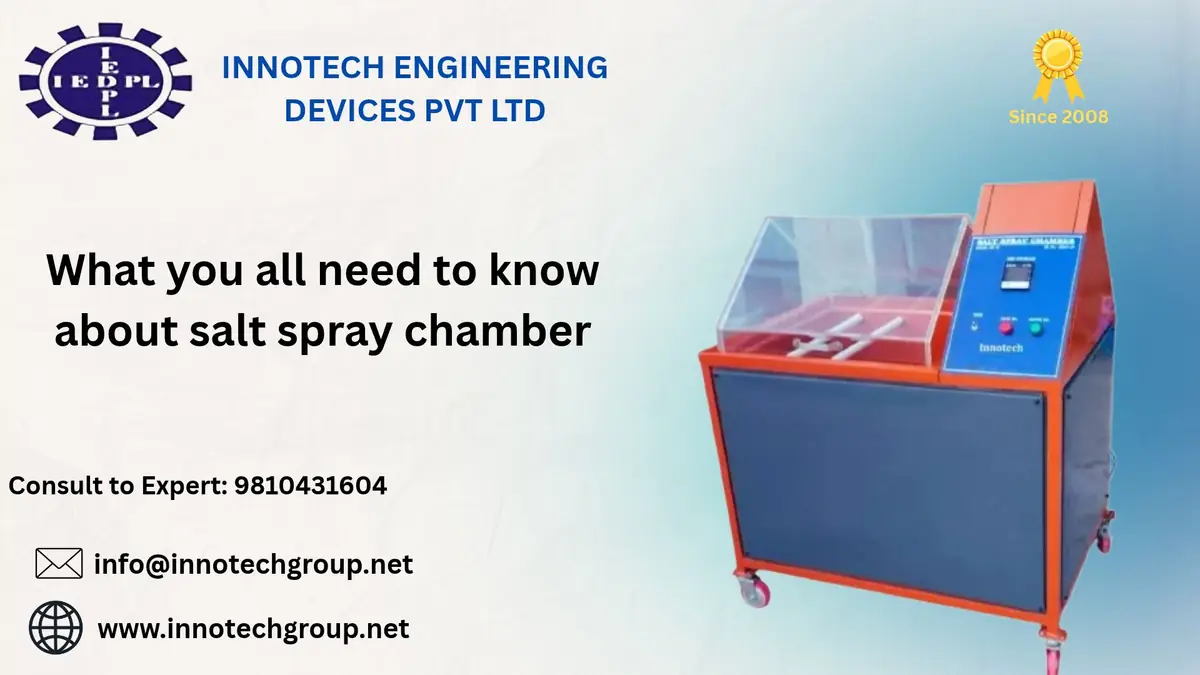
Salt Spray Chamber Dos and Don’ts: How to Use a Corrosion Test Chamber Correctly
A Salt Spray Chamber, also known as a Corrosion Test Chamber, is widely used to evaluate the corrosion resistance of metals, coatings, surface treatments, and finished components. The test exposes specimens to a controlled salt-laden environment so that their resistance to corrosion can be evaluated.
However, having a salt spray chamber is only one part of obtaining reliable test results. Correct specimen placement, solution preparation, chamber operation, cleaning, and test conditions are equally important.
In this article, we explain the important dos and don’ts of using a Salt Spray Chamber for corrosion testing.
Dos When Using a Salt Spray Chamber
1. Do Prepare the Salt Solution Correctly
Prepare the salt solution according to the applicable testing method and required concentration. The solution should be prepared using suitable water and the specified salt.
The pH, concentration, and other solution conditions should be checked according to the selected test procedure.
Incorrect solution preparation can affect the corrosion test results.
2. Do Check the Chamber Before Starting the Test
Before starting a test, check important operating conditions such as:
- Salt solution level
- Solution condition
- Chamber temperature
- spray or fog generation
- Nozzle condition
- Air pressure
- Collection system
- Drainage
- Chamber cleanliness
A basic pre-test inspection can help prevent interruptions during testing.
3. Do Place Specimens Correctly
Test specimens should be positioned according to the applicable test standard.
The specimen angle, orientation, spacing, and exposure area can affect the amount of salt fog reaching the surface.
Avoid placing specimens so close together that they block the salt spray from reaching other specimens.
4. Do Maintain Uniform Salt Fog Distribution
The salt spray should be distributed as uniformly as required by the applicable test method.
Check the atomizing system and spray pattern regularly. A blocked nozzle or incorrectly positioned atomizer can affect fog distribution and therefore influence test results.
5. Do Monitor the Test Conditions
During the test, monitor the required operating parameters.
Depending on the chamber configuration and applicable method, these may include:
- Chamber temperature
- Salt solution condition
- spray rate
- Air pressure
- pH
- Collection volume
- Test duration
Maintaining consistent conditions helps improve repeatability between tests.
6. Do Keep the Chamber Clean
After testing, remove salt deposits and residues from the chamber and relevant components.
Regular cleaning helps reduce contamination and supports reliable operation of the chamber.
7. Do Follow the Applicable Test Standard
Different products and coatings may require different corrosion testing procedures.
Always configure and operate the chamber according to the applicable standard and customer's testing requirement rather than using one procedure for every material.
Don’ts When Using a Salt Spray Chamber
1. Don't Use an Incorrect Salt Solution
Do not use an improperly prepared solution or ignore the required solution conditions.
Changes in concentration or pH can affect the corrosion environment and may make test results difficult to compare.
2. Don't Overload the Chamber
Avoid placing too many specimens inside the chamber.
An overloaded chamber can interfere with proper salt fog exposure and specimen positioning.
Allow sufficient space between specimens according to the applicable testing procedure.
3. Don't Place Specimens Against the Chamber Walls
Avoid positioning test specimens directly against the chamber walls.
Specimens should be positioned according to the required test arrangement so that they receive the intended exposure.
4. Don't Block the Spray System
Test specimens, fixtures, or other objects should not obstruct the atomizing system.
The spray system needs to operate correctly to produce the required salt fog distribution.
5. Don't Open the Chamber Unnecessarily
Avoid opening the chamber repeatedly during a test.
Opening the chamber can disturb the controlled test environment and may affect temperature, fog conditions, or exposure continuity.
If inspection is required, follow the procedure specified by the applicable test method.
6. Don't Ignore Low Solution Levels
Do not allow the salt solution reservoir to become empty during testing.
Check the solution level before and during longer tests and use the appropriate refill arrangement where provided.
7. Don't Ignore Nozzle Blockage
A partially blocked atomizing nozzle can affect spray generation and distribution.
Inspect and clean the nozzle according to the manufacturer's maintenance procedure.
8. Don't Leave Salt Deposits Inside the Chamber
Salt residue should not be allowed to accumulate unnecessarily.
Regular cleaning and maintenance help protect chamber components and maintain suitable test conditions.
Why Correct Salt Spray Chamber Operation Matters
A Salt Spray Chamber is designed to provide a controlled corrosive environment. However, incorrect operation can introduce variations into the test.
For example, incorrect specimen positioning, unsuitable salt solution conditions, blocked spray nozzles, insufficient cleaning, or uncontrolled chamber conditions can affect the exposure received by the test specimens.
Correct operation helps laboratories and manufacturers achieve more consistent, repeatable, and meaningful corrosion test results.
Common Salt Spray Chamber Mistakes
Some common mistakes include:
- Incorrect salt solution preparation
- Not checking solution pH
- Incorrect specimen positioning
- Overloading the chamber
- Poor specimen spacing
- Blocked spray nozzle
- Insufficient chamnber cleaning
- Ignoring solution level
- Opening the chamber unnecessarily
- Not following the applicable testing procedure
Avoiding these mistakes can improve the reliability of corrosion testing.
Salt Spray Chamber for Corrosion Testing
A Salt Spray Chamber can be used for evaluating the corrosion resistance of materials and protective finishes in applications such as:
- Metal components
- Painted surfaces
- Plated components
- Coated metals
- Automotive components
- Fasteners
- Hardware
- Electrical components
- Industrial parts
- Surface-treated products
The appropriate test method and chamber configuration depend on the material, coating, product and testing requirement.
Salt Spray Chamber Manufacturer in Bhiwadi, Rajasthan
Innotech Engineering Devices Private Limited manufactures testing equipment for industrial and laboratory applications, including Salt Spray Chambers / Corrosion Test Chambers.
The chamber configuration can be selected according to the customer's application, required test conditions, specimen size, exposure requirements, control system and other testing needs.
If you are planning to purchase a Salt Spray Chamber, it is important to discuss the material being tested, specimen dimensions, required test method, test duration and applicable standard before finalizing the machine.
Final Takeaway
A Salt Spray Chamber is an important testing instrument for evaluating corrosion resistance, but reliable testing depends on more than simply starting the machine.
Prepare the salt solution correctly, position specimens properly, maintain the chamber, monitor test conditions, keep the spray system clean, and follow the applicable testing procedure.
These simple dos and don’ts can help laboratories and manufacturers obtain more consistent corrosion testing results and maintain their Salt Spray Chamber in suitable operating condition.
Consult an Expert
Looking for a Salt Spray Chamber or Corrosion Test Chamber for your laboratory or manufacturing application?
Share your specimen size, material, coating, required test method and testing requirements with our technical team.
Innotech Engineering Devices Private Limited
H-307, RIICO Industrial Area, Karoli, Tapukara, Bhiwadi, Rajasthan
📞 +91 9810431604
📧 info@innotechgroup.net
🌐 www.innotechgroup.net
Consult an Expert for the right Salt Spray Chamber configuration.
Category: Salt Spray Testing / Corrosion Testing
Tags: salt spray chamber dos and don’ts, salt spray chamber, corrosion test chamber, corrosion testing chamber, salt spray testing, salt spray test, salt spray chamber working, how to use salt spray chamber, salt spray chamber operation, salt spray testing mach
Last Updated: 07 October 2026