
Sole Abrasion Machine: Working Principle, Testing Methods & Buying Guide
Jay Pal Singh
12 November 2026
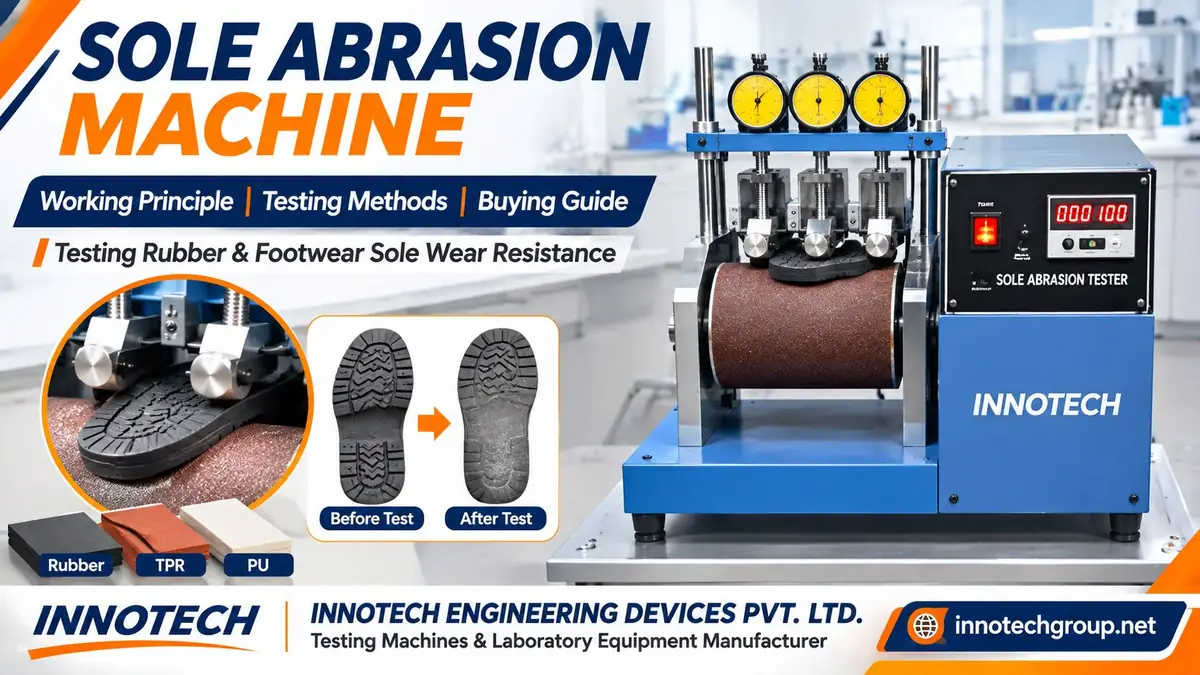
Sole Abrasion Machine: Working Principle, Testing Methods & Buying Guide
Footwear soles are continuously exposed to friction, surface contact and repeated movement during walking and everyday use. The ability of a sole material to resist wear plays an important role in footwear durability and product quality. This is why footwear manufacturers and rubber testing laboratories perform abrasion resistance tests before approving materials for production.
A Sole Abrasion Machine is a laboratory testing instrument used to evaluate the resistance of footwear sole materials to abrasive wear under controlled test conditions. It helps manufacturers compare different rubber and polymer compounds, examine material wear and maintain consistent quality during production.
If you are searching for a Sole Abrasion Machine, Shoe Sole Abrasion Tester, DIN Abrasion Tester or Rubber Sole Abrasion Testing Machine, this guide explains the working principle, testing methods, applications, materials, buying considerations and important testing standards.
What Is a Sole Abrasion Machine?
A Sole Abrasion Machine is used to determine how a footwear sole material behaves when exposed to controlled friction against an abrasive surface.
During testing, a prepared specimen is brought into contact with an abrasive surface under defined conditions. The machine produces a controlled rubbing or abrasion action. The resulting material loss or change in specimen thickness is evaluated according to the selected test method.
The test helps footwear manufacturers assess the relative abrasion resistance of materials used in:
- Rubbber shoe soles
- Safety footwear soles
- Sports shoe soles
- Industrial footwear
- Leather footwear components
- TPR and other thermoplastic soles
- PU and EVAbased soling materials, where the selected method is applicable
The result provides useful information for material development, quality control and comparison of different sole compounds.
What Are the Other Names Used for a Sole Abrasion Machine?
Buyers do not always search using the same product name. Depending on their industry, application or required testing method, they may use different search terms.
Common names include:
| Search name |
What the buyer may be looking for |
| Sole Abrasion Machine | General footwear sole abrasion testing equipment |
| Sole Abrasion Testing Machine | Laboratory instrument for testing sole wear |
| Shoe Sole Abrasion Tester | Testing equipment fo footwear manufacturing |
| DIN Abrasion Tester | Rotating drum abrasion testing equipment |
| DIN Sole Abrasion Machine | DIN/ISO-type rubber and sole abrasion testing |
| Rubber Sole Abrasion Tester | Abrasion testing for rubber soling materials |
| Shoe Sole Wear Tester |
Equipment for evaluating wear resistance |
| SATRA-Type Sole Abrasion Tester | Equipment configured for a specified footwear abrasion method |
| Rubbber Abrasion Testing Machine | General rubbber abrasion testing equipment |
Important: A DIN abrasion tester and a SATRA-type sole abrasion tester should not automatically be treated as identical machines. Always select the equipment according to the required test method and specimen arrangement.
Why Is Sole Abrasion Testing Important?
Abrasion resistance is an important property when selecting materials for footwear soles. A sole that wears excessively during use may affect product durability, appearance and customer satisfaction.
Sole abrasion testing helps manufacturers:
1. Evaluate material durability: Compare how different sole compounds resist abrasive wear.
2. Compare rubber formulations: Examine the relative performance of natural rubber, synthetic rubber and other compounds.
3. Support product development: Select suitable materials during footwear design and development.
4. Maintain production quality: Check whether different production batches provide consistent results.
5. Reduce material-related complaints: Identify materials with unsuitable abrasion performance before large-scale production.
6. Support quality documentation: Maintain test records for internal quality checks and customer requirements.
Laboratory abrasion results are useful for comparing materials under controlled conditions. They should not be treated as a direct prediction of the exact service life of a finished shoe because actual wear also depends on sole design, walking conditions, surface type and other footwear construction factors.
Working Principle of a Sole Abrasion Machine
The working principle depends on the machine configuration and the test method selected. Two configurations commonly considered for sole abrasion testing are the DIN rotary-drum type and the SATRA-type linear arrangement.
1. DIN Rotary-Drum Abrasion Method
In a DIN-type rotary-drum abrasion tester, a prepared cylindrical specimen is held in a specimen holder and brought into contact with an abrasive sheet attached to a rotating cylindrical drum.
The basic working sequence is:
1. Prepare the cylindrical test specimen according to the selected method.
2. Measure and record its initial mass.
3. Fix the specified abrasive sheet around the rotating drum.
4. Secure the specimen in the holder.
5. Apply the prescribed contact force.
6. Run the machine for the required test distance or number of rotations.
7. Remove the specimen and measure its final mass.
8. Calculate the material loss and, where required, volume loss using the specimen density and applicable test procedure.
The result helps determine the relative abrasion resistance of the tested material.
2. SATRA-Type Linear Abrasion Configuration
A SATRA-type linear configuration uses a different specimen arrangement and movement from the DIN rotary-drum method.
In this configuration, a prepared sole specimen is placed in its holder and moved across an abrasive surface under the specified test conditions.
The general sequence is:
1. Prepare the sole specimen in the required shape and dimensions.
2. Record its initial thickness or other required measurements.
3. Place the specimen in the sample holder.
4. Position the specified abrasive material.
5. Apply the prescribed load.
6. Operate the machine to produce the required linear rubbing movement.
7. Complete the test for the specified cycles or distance.
8. Examine and measure the specimen after testing.
9. Evaluate the wear or thickness change according to the applicable method.
The exact load, movement, test duration and evaluation procedure must follow the test method for which the machine is configured.
Remember: DIN rotary-drum testing and linear abrasion testing have different operating arrangements. Confirm the required method before purchasing the machine.
DIN vs SATRA-Type Sole Abrasion Machine
| Comparison |
DIN Rotary-Drum type |
SATRA-Type Linear Configuration |
| Abrasion arrangement | Specimen contacts abrasive-covered rotating drum | Specimen moves across an abrasive surface |
| Specimen arrangement | Typically cylindrical specimen | Prepared soling specimen |
| Main movement | Rotating drum with specimen-holder movement | Linear reciprocating movement |
| Evaluation | commonly mass loss and calculated volume loss | Thickness or other method-defined wear evaluation |
| Typical purpose | Rubber and footwear soling material abrasion evaluation | Soling material abrasion evaluation under the specified procedure |
| Selection | Based on DIN/ISO or other applicable drum method | Based on the specified linear test procedure |
The two configurations should be selected according to the buyer's testing requirement, not simply because both are described as sole abrasion machines.
Materials Tested Using a Sole Abrasion Machine
Sole abrasion testing can be useful for evaluating different footwear materials. The actual suitability depends on the specimen preparation and the selected test method.
| Material |
Typical footwear application |
| Natural Rubber | General-purpose footwear soles |
| Synthetic Rubber | Industrial and commercial footwear |
| TPR (Thermoplastic Rubber) | Casual shoes and flexible soles |
| PU (Polyrethane) | Safety shoes and comfort footwear |
| EVA (Ethylene Vinyl Acetate) | Lighweight footwear and sports shoes |
| Rubber Compounds | Shoe soles,heels and footwear components |
| Polymer Sheet Material | Material development and laboratory evaluation |
Not every material can be tested using identical specimen preparation or test settings. Always check the applicable method before conducting the test.
Sole Abrasion Testing Procedure
A reliable abrasion test requires correct specimen preparation, machine setup and evaluation.
A general testing workflow includes:
Step 1: Specimen preparation
Prepare the test specimen according to the dimensions, shape and conditioning requirements of the selected method.
Step 2: Initial measurement
Record the initial mass, thickness or other measurement required by the method.
Step 3: Machine preparation
Check the abrasive surface, specimen holder, loading arrangement and machine condition.
Step 4: Specimen mounting
Secure the prepared specimen correctly so that it remains in the intended position during testing.
Step 5: Test setting
Set the load, movement, test distance or cycle count according to the applicable test procedure.
Step 6: Run the test
Start the machine and allow the specified abrasion action to take place.
Step 7: Final measurement
Remove the specimen carefully and measure the required parameters after testing.
Step 8: Result evaluation
Calculate or record the material loss, volume loss or thickness change as required by the selected method.
Step 9: Test documentation
Record the material identification, method, test conditions and results for quality-control comparison.
Standards Related to Sole Abrasion Testing
Before buying a sole abrasion machine, identify the exact standard or customer test specification required by your laboratory.
Some important references associated with rubber and footwear abrasion testing include:
- ISO 4649: Determination of abrasion resistance of rubber using a rotating cylindrical drum device.
- ASTM D5963: Standard test method for rubber property—abrasion resistance (rotary drum abrader).
- DIN 53516: A historical DIN reference frequently found in older equipment specifications; check the current applicable ISO reference and the edition required by your customer.
- EN ISO 20344: Test methods for footwear, including applicable outsole-related testing requirements.
- SATRA TM174: A footwear soling-material abrasion test method associated with rotary-drum abrasion testing.
Do not assume that a machine complies with all these standards simply because the standards appear in a general product description. The machine configuration, accessories, test settings and procedure must match the relevant method.
Also note that SATRA TM362 is a separate biomechanical method for assessing abrasion resistance of soles using a walking-machine arrangement. It is not simply another name for a linear specimen abrasion tester.
How to Choose the Right Sole Abrasion Machine
Selecting the correct machine is more important than choosing equipment based only on its product name or price.
Consider the following points before placing an order:
1. Identify the Required Test Method
Confirm whether your laboratory needs DIN rotary-drum abrasion testing, a SATRA-related method or another specified test arrangement.
2. Check the Specimen Shape
Find out whether the test requires a cylindrical rubber specimen, a square soling specimen or another prepared shape.
3. Confirm the Material
Tell the manufacturer whether you will test natural rubber, synthetic rubber, TPR, PU, EVA or other footwear materials.
4. Verify the Test Load and Movement
Ask for the applicable load, movement, speed, distance and cycle requirements. These must match the selected method.
5. Ask About Abrasive Materials
Confirm the abrasive sheet or cloth type, its grade and replacement requirements.
6. Check Measurement Requirements
For a DIN-type method, check the arrangements for initial and final mass measurement and density-based volume-loss calculation. For other configurations, confirm the required thickness or wear measurement process.
7. Ask for Technical Documentation
Request the operating manual, test procedure, accessories list, electrical requirements and applicable standard details.
8. Check After-Sales Support
Consider installation guidance, operator training, technical assistance, spare parts and service support.
9. Compare the Complete Configuration
Do not compare machines only by their names. Compare the test method, accessories, specimen holders, operating arrangement and documentation.
Sole Abrasion Machine Price: What Affects the Cost?
The price of a Sole Abrasion Machine depends on its configuration and the test requirements.
Common factors affecting the quotation include:
- DIN rotary-drum or SATRA-type linear configuration
- Required test method and accessories
- Specimen holders and preparation accessories
- Abrasive drum or test surface arrangement
- Digital controls and operating features
- Special customer requirements
- Installation, training and service requirements
If you are searching for Sole Abrasion Machine Price, DIN Abrasion Tester Price or Shoe Sole Abrasion Tester Price, share your required test method and material details with the manufacturer to receive a suitable quotation.
A lower-priced machine may not be suitable if its test arrangement does not match your laboratory's required method.
Industries and Applications
Sole abrasion testing equipment is useful for organisations involved in footwear materials, rubber products and quality evaluation.
- Footwear manufacturing companies
- Shoe sole manufacturing units
- Rubber product manufacturers
- Safety shoe manufacturers
- Sports footwear manufacturers
- TPR and PU sole manufacturers
- Rubber compound development laboratories
- Footwear testing laboratories
- Research and quality-control departments
Sole Abrasion Machine Manufacturer in India
Choosing a suitable manufacturer is important when investing in footwear testing equipment. Buyers should evaluate the manufacturer's ability to understand the required test method, provide the correct machine configuration and support the equipment after installation.
Innotech Engineering Devices Private Limited manufactures testing machines and laboratory equipment for industrial and quality-control applications.
The Sole Abrasion Machine is available in DIN rotary-drum and SATRA-type linear configurations to address different sole abrasion testing requirements.
Before ordering, buyers can discuss the material to be tested, specimen arrangement, applicable standard and required machine configuration with the technical team.
If you are looking for a Sole Abrasion Machine Manufacturer in India, a Shoe Sole Abrasion Tester in Bhiwadi or a DIN Abrasion Testing Machine, contact the team to discuss your application and request a quotation.
Company: Innotech Engineering Devices Private Limited
Location: Bhiwadi, Rajasthan, India
Email: info@innotechgroup.net
Phone: +91 9810431604
Frequently Asked Questions
1. What is a Sole Abrasion Machine used for?
It is used to evaluate the abrasion resistance of footwear sole materials under controlled laboratory conditions.
2. What is another name for a Sole Abrasion Machine?
Common names include Shoe Sole Abrasion Tester, Sole Abrasion Testing Machine, Footwear Sole Abrasion Tester, DIN Abrasion Tester and Rubber Sole Abrasion Tester.
3. What is the working principle of a DIN Abrasion Tester?
A prepared cylindrical specimen is pressed against an abrasive sheet mounted on a rotating drum. After the prescribed test, material loss is evaluated by measuring the specimen's mass and calculating volume loss where required.
4. What is the difference between DIN and SATRA-type sole abrasion testing?
The DIN rotary-drum method uses a cylindrical specimen against an abrasive-covered rotating drum. A SATRA-type linear configuration uses a different specimen arrangement and linear rubbing movement. The required test method determines which machine is appropriate.
5. Which materials can be tested?
Depending on the test method and specimen preparation, materials can include natural rubber, synthetic rubber, TPR, PU, EVA and other footwear sole compounds.
6. Which standards are related to sole abrasion testing?
Important references include ISO 4649, ASTM D5963, EN ISO 20344 and SATRA TM174. The exact machine configuration must match the required test method and edition.
7. How do I select the right sole abrasion tester?
First identify the required standard, material, specimen shape, test movement, load and measurement method. Then compare machine configurations and accessories.
8. What is the price of a Sole Abrasion Machine?
The price depends on the testing configuration, required accessories, controls and customer specifications. Contact the manufacturer with your testing requirements for a quotation.
9. Can one machine perform both DIN and SATRA-type testing?
A machine may be offered in different configurations, but the test methods are not interchangeable. Confirm the required configuration and standard-specific capability before ordering.
10. Where can I buy a Sole Abrasion Machine in India?
You can contact Innotech Engineering Devices Private Limited in Bhiwadi, Rajasthan, to discuss your footwear sole abrasion testing requirements and request a quotation.
Conclusion
A Sole Abrasion Machine helps footwear manufacturers and testing laboratories evaluate the wear resistance of sole materials under controlled conditions. Understanding the difference between DIN rotary-drum and SATRA-type linear configurations is essential when selecting equipment.
Before purchasing, check the test method, material, specimen arrangement, required accessories and applicable standard. Choosing the correct configuration helps laboratories obtain meaningful and repeatable results for material comparison and quality control.
Looking for a Sole Abrasion Machine in India? Contact Innotech Engineering Devices Private Limited to discuss your application and machine requirements.
Category: Footwear Testing Equipment
Tags: Sole Abrasion Machine, Shoe Sole Abrasion Tester, Sole Abrasion Testing Machine, DIN Abrasion Tester, Rubber Sole Abrasion Tester, Footwear Testing Equipment, Sole Wear Testing, Abrasion Resistance Test, Shoe Testing Machine, Footwear Quality Testing.
Last Updated: 12 November 2026