
Servo Controlled Electro Hydraulic UTM: Working Principle, Benefits and Applications
Jay Pal Singh
14 September 2026
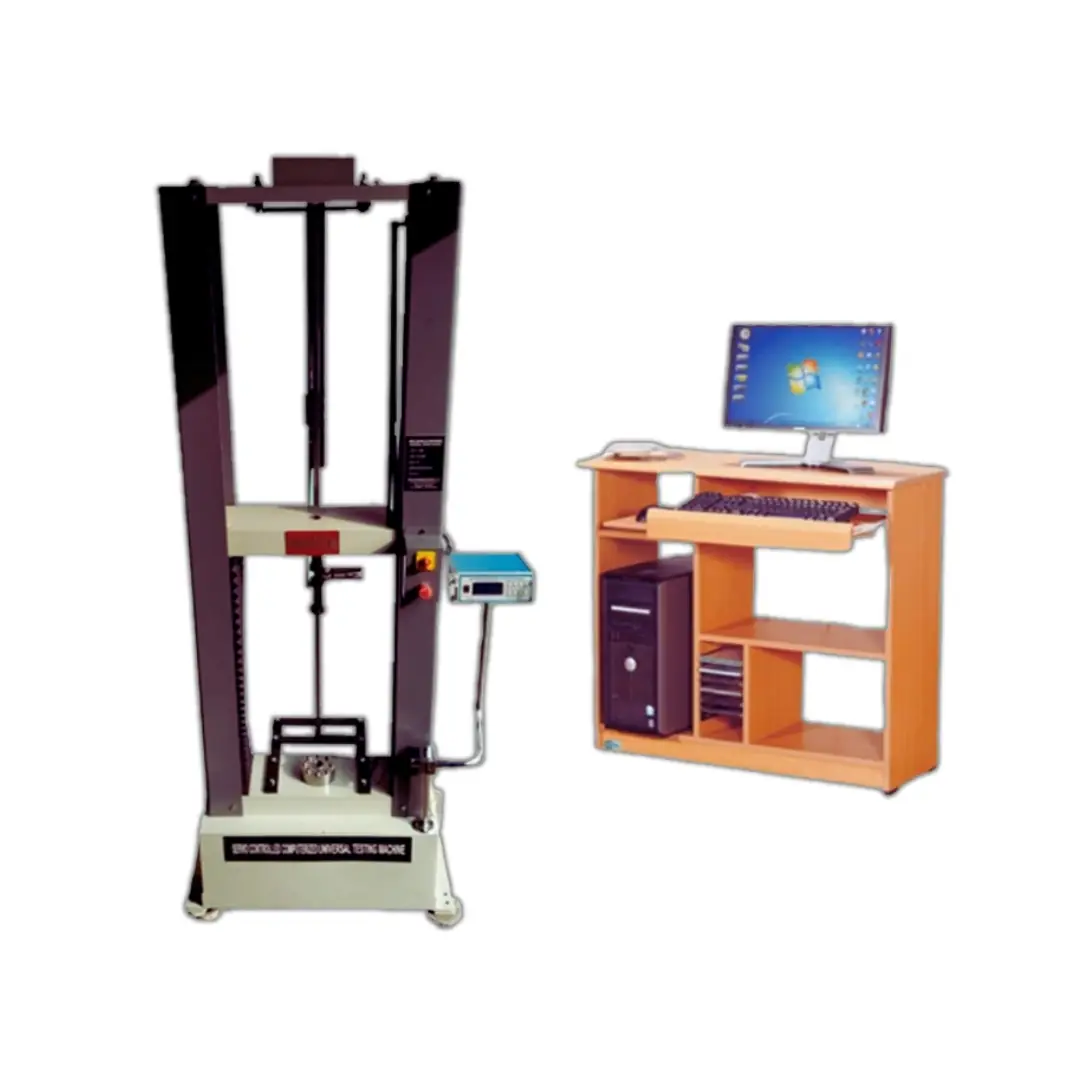
Servo Controlled Electro Hydraulic UTM
Servo Controlled Electro Hydraulic UTM: Working Principle, Benefits and Applications
Modern industries require accurate and reliable testing of materials to ensure that products and components meet specified mechanical performance requirements. As manufacturing processes become more advanced, testing laboratories increasingly require machines that provide precise load control, repeatable testing, automated operation, and reliable data acquisition.
A Servo Controlled Electro Hydraulic Universal Testing Machine (UTM) is an advanced material testing system designed to provide controlled and precise mechanical testing using an electro-hydraulic power system and servo control technology.
Compared with conventional manually operated or basic hydraulic testing machines, a servo controlled electro hydraulic UTM provides greater control over test parameters and can be integrated with digital measurement and computerized data-acquisition systems.
These machines are widely used for tensile, compression, bending, flexural, and other mechanical tests, depending on the machine configuration and available fixtures.
What Is a Servo Controlled Electro Hydraulic UTM?
A Servo Controlled Electro Hydraulic UTM is a Universal Testing Machine that uses hydraulic power to apply mechanical force while an electronic servo-control system regulates the testing process.
The hydraulic system generates the required test force, while the servo control system controls parameters such as load, displacement, or test rate according to the selected testing procedure.
The combination of hydraulic power and electronic control makes the system suitable for applications requiring relatively high test loads, controlled loading rates, and accurate measurement of material behavior.
Depending on the configuration, the machine can be used for:
- Tensile testing
- Compression testing
- Bending testing
- Flexural testing
- Proof-load testing
- Breaking-load testing
- Load versus displacement testing
- Other specialized mechanical tests
How Does a Servo Controlled Electro Hydraulic UTM Work?
The working principle combines a hydraulic loading system with electronic servo control.
The specimen is placed and securely held using the appropriate grips, fixtures, or compression platens. The hydraulic system then generates the required force and applies it to the specimen.
The servo control system continuously monitors the relevant test parameters through measurement sensors and regulates the hydraulic system to maintain the desired test condition.
During testing, the system can measure parameters such as:
- Applied load
- Displacement
- Extension
- Deformation
- Test speed
- Other application-specific parameters
The collected data can be processed through the machine's digital control or computer software, depending on the configuration.
This closed-loop control approach allows the machine to maintain more consistent testing conditions compared with manually controlled hydraulic loading.
What Is Servo Control?
Servo control is an electronic control technology used to regulate the operation of a mechanical or hydraulic system according to feedback from measurement sensors.
In a servo controlled testing machine, the actual test parameter is continuously monitored and compared with the required or programmed value.
If there is a difference between the desired and measured condition, the control system adjusts the hydraulic system accordingly.
This feedback-based approach provides improved control over parameters such as:
- Load
- Displacement
- Strain
- Test speed
- Loading rate
The exact control capabilities depend on the machine's electronics, sensors, hydraulic system, and software configuration.
Major Benefits of a Servo Controlled Electro Hydraulic UTM
1. Precise Load Control
Servo control allows the hydraulic loading system to regulate the applied test force according to the programmed test procedure.
This is particularly useful for applications where controlled loading is important.
2. Controlled Testing Speed
Many material testing standards specify particular test speeds or loading rates.
A servo controlled system can provide controlled test movement or loading conditions according to the machine configuration and applicable testing procedure.
3. High Load Testing Capability
Electro-hydraulic systems are particularly suitable for applications requiring higher testing forces.
This makes servo hydraulic UTMs useful for heavy engineering materials, structural components, metals, and other applications where high load capacity is required.
4. Automated Testing
Computerized and servo-controlled configurations can automate significant portions of the testing sequence.
Depending on the system, the operator can select test parameters, start the test, monitor the test process, and obtain calculated results through the control software.
5. Improved Repeatability
Controlled loading and feedback-based operation can help reduce variations caused by manual operation.
When specimen preparation and test conditions are properly controlled, this can contribute to improved repeatability of test results.
6. Digital Data Acquisition
Modern servo controlled UTMs can be equipped with digital data-acquisition systems that record force, displacement, and other test parameters.
The collected information can be used to generate test curves, calculate material properties, and prepare test reports, depending on the software configuration.
7. Flexible Testing
A UTM can accommodate different grips and fixtures, allowing one testing platform to support multiple mechanical testing applications.
This flexibility can make the machine particularly useful for laboratories that test different materials and products.
Tensile Testing Using a Servo Controlled UTM
Tensile testing is one of the most common applications of a Universal Testing Machine.
During a tensile test, a specimen is secured between suitable grips and subjected to a controlled pulling force.
As the load increases, the specimen deforms and may eventually fracture.
The machine can record parameters such as:
- Maximum tensile load
- Breaking load
- Elongation
- Displacement
- Yield-related properties
- Tensile strength
- Load-extension characteristics
The exact parameters obtained depend on the specimen, measurement system, extensometer, software, and applicable testing standard.
Compression Testing Using a Servo Hydraulic UTM
A servo controlled electro hydraulic UTM can also be configured for compression testing.
In a compression test, the specimen is positioned between suitable compression platens and subjected to a controlled compressive force.
Compression testing is commonly used for materials and components where resistance to compressive loading is an important performance characteristic.
Suitable fixtures and test procedures should be selected according to the material and applicable testing standard.
Flexural and Bending Testing
With appropriate fixtures, a UTM can also be used for bending and flexural testing.
These tests evaluate how a specimen behaves when subjected to bending forces.
Flexural testing can be useful for materials and products such as plastics, composites, construction-related materials, and other suitable specimens.
The required fixture and test procedure depend on the material and applicable standard.
Applications of Servo Controlled Electro Hydraulic UTM
Servo controlled electro hydraulic UTMs are used across numerous industrial and laboratory applications.
Metal and Steel Industry
The machines can be used for evaluating the mechanical properties of metals and metal components, including tensile and compression-related characteristics.
Automotive Industry
Automotive manufacturers and component suppliers can use appropriately configured UTMs for testing metals, components, plastics, rubber, wires, and other materials.
Construction and Infrastructure
High-capacity testing systems can be used for testing suitable construction materials and components where controlled mechanical loading is required.
Engineering Industry
Engineering manufacturers can use UTMs for material qualification, component testing, production inspection, and research.
Wire and Cable Industry
Specialized grips can allow tensile and breaking-load testing of wires and cables.
Plastic and Polymer Industry
With appropriate grips and fixtures, UTMs can be used for evaluating the mechanical properties of plastics and polymers.
Research and Development
Research laboratories can use servo controlled testing systems to study material behavior and compare different materials, formulations, manufacturing processes, and designs.
Servo Controlled UTM vs Conventional UTM
Both conventional and servo controlled UTMs can perform mechanical testing, but the level of automation and control can differ significantly.
A conventional manually operated machine may rely more heavily on the operator for controlling the testing sequence.
A servo controlled electro hydraulic UTM uses electronic feedback and hydraulic actuation to control the testing process.
Key differences may include:
- More controlled loading
- Improved test-speed control
- Automated test sequences
- Digital data acquisition
- Computerized test operation
- Programmable test parameters
- Greater suitability for complex testing procedures
The actual capabilities depend on the specific machine configuration.
Why Choose a Servo Controlled Electro Hydraulic UTM?
A servo controlled electro hydraulic UTM can be a suitable choice for laboratories and industries that require:
- High testing loads
- Controlled loading rates
- Automated testing
- Repeatable testing conditions
- Digital data acquisition
- Multiple testing capabilities
- Flexible test configurations
- Computerized test reporting
- Advanced material characterization
For laboratories conducting frequent or high-load mechanical tests, these features can improve testing efficiency and provide better control over the testing process.
Factors to Consider Before Buying a Servo Controlled UTM
Selecting the right UTM requires consideration of several technical factors.
Test Load Capacity
The required maximum test force should be determined based on the materials and specimens that will be tested.
Testing Space
The machine should provide sufficient vertical and horizontal test space for the intended specimens and fixtures.
Material Type
The material being tested determines the appropriate grips, fixtures, load capacity, and measurement requirements.
Test Type
Determine whether the machine will be used for tensile, compression, bending, flexural, or other tests.
Control Requirements
Applications requiring controlled load, displacement, strain, or test speed may benefit from servo-controlled operation.
Measurement System
Consider the required load-cell capacity, displacement measurement, extensometer requirements, and measurement accuracy.
Software
For computerized testing environments, software capabilities such as test setup, real-time graphs, data storage, calculation, and report generation should be considered.
Calibration
The machine and measurement systems should be appropriately calibrated and verified according to the applicable laboratory procedures and testing requirements.
Role of Servo Control in Quality Testing
Servo control can provide more consistent control over the mechanical loading process.
In quality-control applications, consistent test conditions are important because variations in loading rate, force application, and operator control can influence measured results.
A servo controlled system can help standardize the testing process when properly configured and operated according to the applicable test procedure.
This can be particularly valuable for laboratories conducting repetitive testing across multiple production batches.
Servo Controlled UTM for Research and Development
Research and development teams often need to investigate the mechanical behavior of new materials and products.
A servo controlled UTM provides a flexible testing platform that can be adapted to different specimens and testing procedures.
Researchers can use the machine to:
- Compare different materials
- Study load-deflection behavior
- Evaluate new material formulations
- Investigate product designs
- Analyze failure behavior
- Study the effect of manufacturing processes
- Perform controlled mechanical experiments
Testing Standards
The applicable testing standard depends on the material, specimen type, test method, and intended application.
UTM testing may be carried out according to relevant ASTM, ISO, BIS/IS, EN, or other applicable standards.
The specific standard should always be selected according to the material specification and testing requirement.
Note: Standards compliance should be confirmed based on the actual machine configuration, load cell, grips, extensometer, software, calibration, validation, and applicable testing procedure before making a formal compliance claim.
Maintenance and Calibration
Regular maintenance and calibration are important for maintaining reliable performance of a servo controlled electro hydraulic UTM.
Important maintenance areas can include:
- Hydraulic system inspection
- Hydraulic oil condition
- Hydraulic connections
- Load-cell verification
- Grip and fixture inspection
- Mechanical alignment
- Sensor condition
- Electrical and control-system inspection
- Software and data-acquisition checks
Calibration and verification should be performed according to the applicable laboratory procedures, equipment usage, and relevant standards.
Why Choose Innotech Engineering Devices Private Limited?
Innotech Engineering Devices Private Limited provides material testing and measuring equipment for manufacturing industries, quality-control laboratories, research organizations, and educational institutions.
Our testing solutions are designed around application-specific requirements, with configurations available for different test loads, materials, testing methods, grips, fixtures, measurement systems, and data-acquisition requirements.
A Servo Controlled Electro Hydraulic UTM can provide an advanced solution for laboratories and industries requiring controlled, repeatable, and high-capacity mechanical testing.
Conclusion
A Servo Controlled Electro Hydraulic Universal Testing Machine combines the high-force capability of a hydraulic testing system with electronic servo control and digital measurement.
This combination provides a versatile platform for tensile, compression, bending, flexural, and other mechanical testing applications, depending on machine configuration.
The ability to control testing parameters, automate test sequences, collect digital data, and accommodate different fixtures makes servo controlled electro hydraulic UTMs suitable for demanding industrial and laboratory applications.
For organizations performing high-load or advanced mechanical testing, selecting a properly configured servo controlled UTM can improve testing efficiency, consistency, data management, and overall laboratory capability.
Before selecting a machine, it is important to evaluate the required test load, material type, specimen dimensions, testing method, control requirements, measurement accuracy, fixtures, software, calibration, and applicable testing standards.
For application-specific requirements, contact Innotech Engineering Devices Private Limited to determine the appropriate Servo Controlled Electro Hydraulic UTM configuration for your testing needs.
Category: Material Testing & Universal Testing Machines
Tags: Servo Controlled UTM, Electro Hydraulic UTM, Universal Testing Machine, UTM Machine, Material Testing, Tensile Testing, Compression Testing, Hydraulic Testing Machine, Servo Control, Mechanical Testing, Material Testing Equipment, Quality Control, Laborat
Last Updated: 30 September 2026