
Pin-on-Disc Wear Testing: Working Principle, Test Procedure, Applications & ASTM G99
Jay Pal Singh
26 September 2026
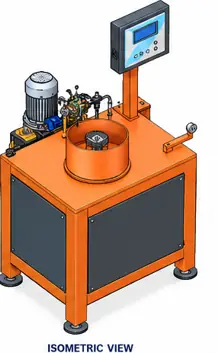
Pin-on-Disc Wear Testing: Working Principle, Test Procedure, Applications & ASTM G99
When two material surfaces repeatedly slide against each other, friction and wear can gradually change their performance. But how can engineers compare the wear behaviour of different materials before using them in real products?
Pin-on-disc wear testing provides a controlled laboratory method for studying friction and sliding wear between two contacting materials. The test uses a stationary pin or specimen against a rotating disc while controlled test conditions such as normal load and rotational speed are applied.
The method is widely used in tribology, material research, mechanical engineering, automotive development, surface engineering and quality-control laboratories.
What Is a Pin-on-Disc Wear Test?
A pin-on-disc wear test is a laboratory test used to investigate the friction and wear behaviour of material pairs during controlled sliding contact.
In a typical arrangement, a pin-shaped specimen is held against a rotating disc. A known normal load is applied to the contact, and the disc rotates at a selected speed. The sliding interaction creates friction and can produce a wear track on the disc and/or wear on the specimen.
ASTM G99 describes a laboratory procedure for determining wear during sliding using a pin-on-disk apparatus and also addresses measurement of coefficient of friction. The current ASTM G99-23 edition also emphasizes that parameters such as load, sliding speed, materials and other test conditions influence the result.
Pin-on-Disc Working Principle
The working principle is based on controlled relative motion between a stationary specimen and a rotating disc.
The test specimen is mounted securely in a holder and brought into contact with the rotating disc. A predetermined normal load is applied. As the disc rotates, the specimen slides against its surface and a circular wear track develops.
During the test, the laboratory can monitor relevant parameters such as:
• Normal load
• Rotational speed
• Sliding distance or test duration
• Frictional force
• Wear behaviour
• Test environment
The resulting information can then be used to compare the behaviour of different material combinations.
Pin-on-Disc Wear Test Procedure
A typical pin-on-disc test involves the following sequence:
1. Prepare the Specimen
The pin and disc specimens are prepared according to the selected test method. Their material, dimensions and surface condition should be suitable for the intended test.
2. Mount the Specimen
The pin is securely installed in the specimen holder and positioned against the rotating disc.
3. Select the Test Load
A predetermined normal load is applied to establish the required contact condition.
4. Set the Sliding Speed
The required rotational speed is selected according to the test procedure.
5. Start the Test
The disc rotates while the pin remains in controlled contact with the disc surface.
6. Monitor Friction and Wear
Frictional behaviour and wear-related information are monitored throughout the selected test period.
7. Evaluate the Results
After completion, the test results can be used to compare material wear and friction behaviour under the selected conditions.
The exact procedure should always follow the applicable test method and the parameters required for the particular material investigation.
What Does a Pin-on-Disc Test Measure?
Depending on the test configuration and measurement system, pin-on-disc testing can provide information about:
• Wear behaviour
• Wear rate
• Frictional force
• Coefficient of friction
• Sliding wear performance
• Comparative material performance
• Surface and coating behaviour
The test result is strongly influenced by the selected load, speed, sliding distance, material pair, environment and other experimental conditions. ASTM G99 specifically notes that changing these parameters can affect the results and their comparability.
ASTM G99 and Pin-on-Disc Testing
ASTM G99 is an important reference for pin-on-disc wear and friction testing. The current ASTM G99-23 standard covers laboratory determination of wear and friction during sliding using pin-on-disk or ball-on-disk apparatus.
However, having a pin-on-disc machine does not automatically mean that every test performed on it is an ASTM G99-compliant test.
The actual test must follow the applicable requirements of the standard, including the relevant test parameters, specimen configuration and procedure. If different parameters are used, the results should be reported appropriately rather than automatically described as fully compliant with the standard.
Applications of Pin-on-Disc Wear Testing
Pin-on-disc testing is useful in many research and industrial applications.
Automotive Materials
Engineers can investigate the friction and wear behaviour of suitable automotive materials and sliding-contact material combinations.
Metals and Alloys
Metallic materials can be compared under controlled sliding conditions to study relative wear behaviour.
Polymers and Plastics
Pin-on-disc testing can be used for suitable polymer and plastic material combinations where sliding wear is an important property.
Coatings and Surface Treatments
Researchers can investigate how coatings and surface treatments influence friction and wear behaviour.
Composite Materials
Different composite materials can be compared for their resistance to sliding wear under selected laboratory conditions.
Research and Development
Tribology laboratories can use the test to investigate new materials, coatings, lubricants and material combinations.
Why Is Pin-on-Disc Wear Testing Important?
Material performance cannot always be determined from appearance or static properties alone. A material may perform differently when subjected to repeated sliding contact.
Pin-on-disc testing creates a controlled laboratory environment where researchers can compare materials under selected conditions.
This can help with:
• Material selection
• Product development
• Surface treatment development
• Wear-resistant material research
• Friction studies
• Quality control
• Comparative material analysis
Factors Affecting Pin-on-Disc Wear Results
Several factors can influence the result of a pin-on-disc test.
Important variables include:
• Normal load
• Sliding speed
• Sliding distance
• Material properties
• Pin and disc materials
• Surface roughness
• Lubrication
• Temperature
• Environmental conditions
• Contact geometry
ASTM G99 notes that wear depends on multiple system factors and that laboratory pin-on-disc testing does not necessarily reproduce every condition experienced by a component in actual service.
Pin-on-Disc Tribometer at Innotech
Innotech Engineering Devices Private Limited provides a Pin-on-Disc Wearing Tribometer Machine for controlled friction and sliding-wear evaluation.
The Innotech machine configuration includes a rotating steel disc, adjustable normal load, variable rotational speed, frictional-force monitoring, preset test timing, variable wear-track positioning and online graphical monitoring.
The specified configuration includes a 10–100 N normal load range, 150–1500 RPM sliding speed range and 0–100 N frictional-force measurement range.
For the complete technical specifications and machine configuration, readers can visit the Innotech product page:
Pin-on-Disc Wearing Tribometer Machine
How to Choose a Pin-on-Disc Tribometer
Before purchasing a pin-on-disc testing machine, laboratories should consider:
• Required normal load range
• Sliding-speed range
• Specimen dimensions
• Disc material and dimensions
• Friction measurement
• Wear measurement method
• Test duration
• Lubrication requirements
• Data recording and graphical monitoring
• Required testing procedure
The machine should be selected according to the materials and research questions being investigated rather than only by its maximum load or speed.
Frequently Asked Questions about Pin-on-disc Tribometer
What is a pin-on-disc tribometer?
A pin-on-disc tribometer is a laboratory instrument used to investigate friction and wear between a stationary specimen and a rotating disc under controlled conditions.
What is the purpose of a pin-on-disc test?
The purpose is to study and compare friction and sliding-wear behaviour of material combinations under selected laboratory conditions.
What is ASTM G99?
ASTM G99 is a standard test method covering wear and friction testing using pin-on-disk or ball-on-disk apparatus.
Can polymers be tested on a pin-on-disc machine?
Suitable polymers and plastic materials can be evaluated when the specimen configuration and test conditions are appropriate.
Can pin-on-disc testing measure friction?
Yes. Depending on the instrument configuration, frictional force and coefficient of friction can be evaluated.
Is pin-on-disc testing suitable for research laboratories?
Yes. It is commonly used for material comparison, tribology research, product development, surface-treatment studies and quality-control investigations.
Does every pin-on-disc test comply with ASTM G99?
No. The test must follow the applicable requirements and parameters of the standard to be described as following ASTM G99.
Category: Tribology & Material Testing
Tags: Pin-on-Disc Wear Testing, Pin-on-Disc Tribometer, Wear Testing, Tribology, Friction Testing, ASTM G99, Material Testing, Wear Resistance, Material Testing Equipment
Last Updated: 26 September 2026