
Packaging Drop Testing Machine: Working Principle, Test Procedure, Applications & Buying Guide
Jay Pal Singh
21 September 2026
Packaging Drop Testing Machine: Working Principle, Test Procedure, Applications & Buying Guide
Packaging plays an important role in protecting products during storage, handling, transportation and distribution. A package may experience impacts when it is manually handled, loaded into vehicles, moved through warehouses, transferred between locations or accidentally dropped. For this reason, packaging manufacturers and product manufacturers need to evaluate whether their packaging can provide adequate protection under impact conditions.
A Packaging Drop Testing Machine is used to simulate controlled free-fall impacts and evaluate how a package and its contents respond to dropping. It is commonly used in packaging laboratories, manufacturing industries, quality-control departments, research and development facilities and transportation-related testing applications.
This article explains what a packaging drop testing machine is, how it works, what a drop test evaluates, common test procedures, applications, packaging types, important selection factors and frequently asked questions.
What Is a Packaging Drop Testing Machine?
A Packaging Drop Testing Machine is a testing instrument designed to evaluate the ability of a package, container or packaged product to withstand impact caused by a controlled drop.
The machine raises a test specimen to a selected position and releases it so that it falls freely onto a rigid impact surface. After the impact, the package and its contents can be inspected for visible or functional damage.
The test can help manufacturers understand whether packaging provides sufficient protection against sudden impacts that may occur during normal handling and distribution.
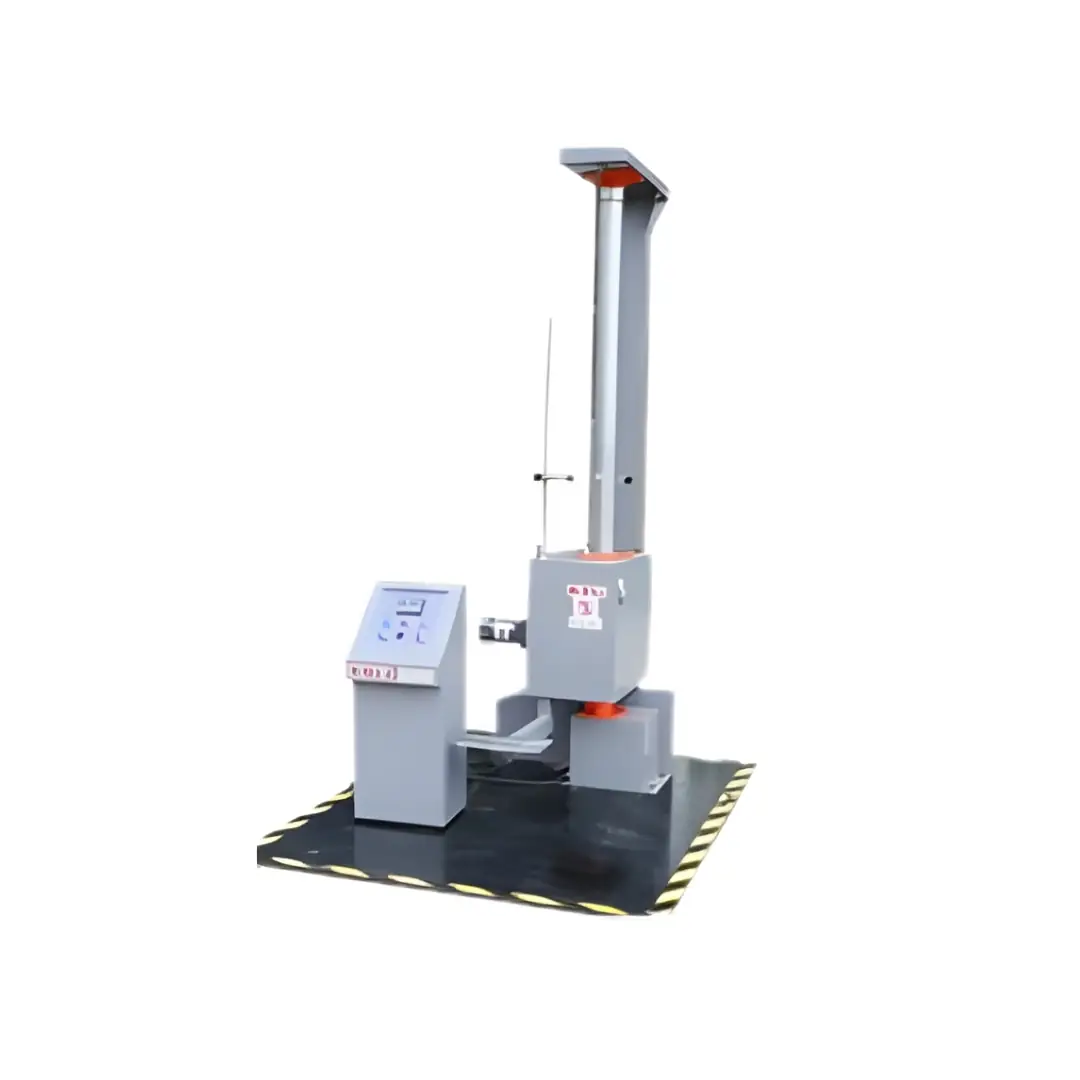
Packaging drop testers may be designed in different configurations. A Single-Arm Packaging Drop Testing Machine uses a single-arm mechanism for positioning and releasing the test specimen.
Why Is Packaging Drop Testing Important?
Packaging is exposed to many different conditions throughout the product distribution cycle. Even when a package is carefully designed, unexpected drops and impacts can occur.
A packaging drop test can help identify weaknesses before the product reaches customers.
Drop testing can help determine:
• Whether the package maintains its structural integrity after impact
• Whether the product inside remains protected
• Whether cushioning materials provide adequate protection
• Whether corners and edges require additional protection
• Whether closures remain secure
• Whether packaging materials are suitable for the intended application
• Whether a revised package design performs better than an existing design
Testing during packaging development can therefore help manufacturers identify potential problems before large-scale production or distribution.
How Does a Packaging Drop Testing Machine Work?
The basic principle of a packaging drop tester is controlled free-fall impact.
The test specimen is positioned on the machine's drop mechanism. The required drop height is selected according to the applicable test procedure. The machine then raises the specimen to the selected position.
Once the release mechanism is activated, the specimen falls freely onto the impact surface.
After impact, the operator examines the package and, where applicable, the product inside.
The general process is:
1. Prepare the package and product.
2. Position the test specimen correctly.
3. Select the required drop height.
4. Select the required test orientation.
5. Raise the specimen to the selected height.
6. Release the specimen.
7. Allow it to fall freely onto the impact surface.
8. Inspect the package after impact.
9. Inspect the product for possible damage.
10. Record and evaluate the results.
The exact test sequence depends on the packaging type, test method and application requirements.
What Does a Packaging Drop Test Evaluate?
A drop test can evaluate several aspects of packaging performance.
Package Structural Strength
The test can show whether the package maintains its structural integrity after impact.
Product Protection
One of the main objectives is to determine whether the package protects the product inside from impact-related damage.
Cushioning Performance
Internal cushioning materials can absorb or distribute impact energy. Drop testing can help evaluate whether the cushioning arrangement provides the intended protection.
Closure Performance
The test can also help determine whether closures, lids, seals or other securing mechanisms remain intact after impact.
Packaging Design
Manufacturers can use drop testing to compare different box structures, inserts, cushioning arrangements and protective packaging designs.
Face, Edge and Corner Drop Testing
A package can land on different surfaces during real-world handling. Therefore, drop testing may involve different orientations.
Face Drop
In a face drop, one of the major surfaces of the package impacts the test surface.
This can be useful for evaluating the structural performance of the package's broad surfaces.
Edge Drop
An edge drop places the package on one of its edges during impact.
This can help evaluate how the package responds to concentrated impact along an edge.
Corner Drop
Corner impacts can produce concentrated loading at a relatively small area.
Corner testing can therefore be useful for evaluating corner protection, internal cushioning and package construction.
The exact sequence and orientation should be selected according to the applicable test procedure.
What Types of Packaging Can Be Drop Tested?
Depending on machine capacity, dimensions and configuration, packaging drop testing can be used for various types of packages.
Examples include:
• Corrugated boxes
• Cartons
• Shipping containers
• Product boxes
• Bags
• Sacks
• Suitable containers
• Industrial packaging
• Consumer product packaging
• E-commerce packaging
• Protective packaging systems
The selected machine should match the dimensions and weight of the packages that need to be tested.
Packaging Drop Testing Applications
Corrugated Packaging
Corrugated packaging manufacturers can use drop testing to evaluate the structural performance of cartons and boxes.
E-Commerce Packaging
Products shipped directly to customers may experience repeated handling during transportation and delivery. Drop testing can help evaluate whether the packaging provides appropriate protection.
Electronics Packaging
Electronic products can be sensitive to mechanical shock. Packaging drop testing can help assess whether the packaging system protects the product against impact.
Consumer Products
Manufacturers of consumer goods can evaluate packaging designs before introducing products into distribution channels.
Automotive Components
Automotive components and spare parts may require protective packaging during transportation. Drop testing can be used to evaluate suitable packaging arrangements.
Industrial Products
Industrial components, tools and equipment can also be evaluated using packaging drop testing where impact resistance is an important consideration.
Packaging Research and Development
R&D teams can compare different packaging materials, box structures, cushioning materials and internal protective systems.
Packaging Drop Testing for Quality Control
Packaging testing can be incorporated into quality-control procedures to monitor packaging performance.
Manufacturers can establish internal testing procedures and compare results between different production batches or packaging configurations.
A quality-control record may include:
• Product identification
• Packaging type
• Packaging material
• Test specimen information
• Test height
• Drop orientation
• Test sequence
• Observed package damage
• Product condition
• Test result
• Corrective action, if required
Maintaining consistent testing procedures helps organizations compare results more effectively.
Packaging Drop Testing Standards
Different industries and organizations may use different test methods depending on the packaging application.
ASTM D5276 is a recognized test method for drop testing loaded containers by free fall. It covers free-fall drop testing of loaded containers and is intended to evaluate the ability of a container to withstand sudden shock or its ability to protect its contents.
ISO 2248 is another packaging test method associated with vertical impact testing by dropping.
The applicable standard should be selected according to the product, package design, customer requirements and intended testing application.
It is also important to distinguish between a machine being designed for a particular test method and making a specific certification or compliance claim. Machine configuration and technical documentation should be checked before making compliance claims.
Benefits of Using a Packaging Drop Testing Machine
A packaging drop testing machine can provide several benefits to manufacturers and testing laboratories.
Identifies Packaging Weaknesses
Testing can reveal weaknesses in packaging structures, cushioning systems and protective arrangements.
Supports Product Protection
Drop testing helps evaluate whether packaging is capable of protecting the product during impact.
Supports Packaging Development
Different designs can be compared using controlled testing conditions.
Helps Quality-Control Activities
Manufacturers can incorporate testing into their packaging inspection and quality-control procedures.
Supports Research and Development
Packaging engineers can use test results while developing new packaging solutions.
Provides Controlled Testing
Laboratory testing provides a controlled environment for evaluating package performance.
How to Choose a Packaging Drop Testing Machine
Selecting the right packaging drop testing machine requires consideration of the packages that will be tested and the intended testing procedure.
Important factors include:
• Maximum specimen weight
• Package dimensions
• Required drop height
• Test orientations
• Face, edge and corner testing requirements
• Testing frequency
• Impact surface requirements
• Machine operating arrangement
• Laboratory space
• Safety requirements
• Applicable test procedures
• Future testing requirements
A machine should be selected based on actual packaging requirements rather than choosing a machine only by its general description.
What Is a Single-Arm Packaging Drop Testing Machine?
A Single-Arm Packaging Drop Testing Machine uses a single-arm mechanism to position and release a packaging specimen for a controlled drop test.
The configuration provides a practical arrangement for packaging laboratories and quality-control environments where repeated drop testing is required.
Depending on the machine design, the package may be tested in different orientations to evaluate its response to impact.
Who Uses Packaging Drop Testing Machines?
Packaging drop testers can be used by:
• Packaging manufacturers
• Consumer product manufacturers
• Electronics manufacturers
• Automotive industries
• FMCG companies
• E-commerce packaging operations
• Logistics companies
• Quality-control laboratories
• Research and development departments
• Testing laboratories
• Educational and technical institutions
Frequently Asked Questions About Packaging Drop Testing
What is the purpose of a packaging drop test?
A packaging drop test is used to evaluate how a package and its contents respond to sudden impact caused by a controlled free fall.
What is tested in a drop test?
The test can evaluate package structural integrity, product protection, cushioning performance, closure performance and overall packaging design.
Can boxes be tested using a drop testing machine?
Yes. Suitable boxes and cartons are among the common types of packages evaluated using drop testing.
Can packaging be tested on its corner?
Depending on the machine configuration and test procedure, corner drop testing can be performed to evaluate the response of the package and its protective system.
What is ASTM D5276?
ASTM D5276 is a standard test method for drop testing loaded containers by free fall. It is used to evaluate container resistance to sudden shock and the ability of packaging to protect its contents.
What is ISO 2248?
ISO 2248 is an international packaging test method associated with vertical impact testing by dropping.
Is drop testing important for e-commerce packaging?
Yes. E-commerce packages can pass through multiple handling and transportation stages, making package protection an important consideration.
How is the correct drop height selected?
The required drop height should be determined from the applicable test method, customer specification, product requirements or internal packaging test procedure.
What should I consider before buying a packaging drop tester?
Consider specimen weight, package dimensions, required drop height, testing orientations, test frequency, applicable test procedures, laboratory space and future testing requirements.
Conclusion
Packaging Drop Testing Machines provide a controlled method for evaluating how packages and packaged products respond to sudden impact. They are useful for packaging development, quality control, product protection studies and research applications.
A properly selected drop testing machine can help manufacturers compare packaging designs, identify weaknesses and evaluate protective performance before products enter the distribution chain.
For organizations looking for packaging testing equipment in India, Innotech Engineering Devices Private Limited provides testing equipment solutions for industrial and laboratory applications. The required machine configuration should be selected according to package size, weight, testing procedure and application requirements.
Category: Packaging Testing Equipment
Tags: Packaging Drop Testing, Packaging Testing Machine, Drop Testing Machine, Packaging Testing Equipment, Package Testing, Packaging Quality Control, Packaging Testing Laboratory, Carton Testing, Box Testing, Packaging Impact Testing, Transport Packaging, Pac
Last Updated: 30 September 2026