
Concrete Compression Testing Machine: Working Principle, Test Procedure, Standards & Applications
Jay Pal Singh
26 November 2026
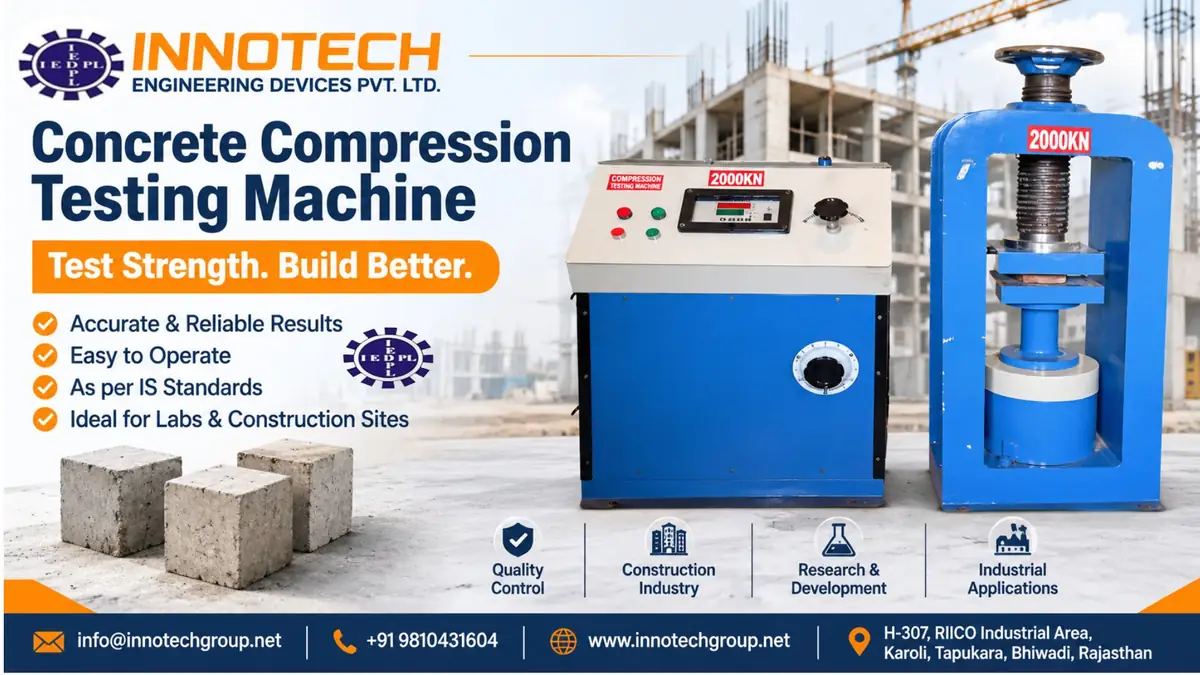
Concrete Compression Testing Machine: Working Principle, Test Procedure, Standards & Applications
1. What Is a Concrete Compression Testing Machine?
A concrete compression testing machine is a laboratory testing instrument used to determine the compressive strength of concrete specimens by applying a controlled compressive load until the specimen fails.
It is commonly used in construction material testing laboratories, civil engineering colleges, infrastructure projects, cement manufacturing plants, R&D departments and quality control laboratories.
The machine helps engineers and quality control professionals evaluate whether concrete can withstand the loads expected in actual construction applications.
A concrete compression testing machine is also commonly known as a CTM (Compression Testing Machine) or concrete cube testing machine.
For laboratories and construction companies looking for reliable testing equipment, selecting the correct compression testing machine is important for obtaining consistent and repeatable test results.
2. Why Is Compressive Strength Testing of Concrete Important?
Compressive strength is one of the most important properties used to evaluate the quality and performance of concrete.
Testing helps determine whether concrete meets the required strength specifications before it is used in construction projects.
Some important reasons for conducting compression tests include:
- Quality Control: Verify the strength and consistency of concrete batches.
- Construction Safety: Help assess whether concrete meets specified structural requirements.
- Material Evaluation: Compare concrete mixes prepared with different materials or proportions.
- Research and Development: Evaluate new concrete formulations and construction materials.
- Compliance Testing: Support quality assessment according to applicable IS and other recognised testing standards.
- Production Monitoring: Check the consistency of concrete manufactured at batching plants and precast facilities.
Concrete compression testing is particularly important for infrastructure projects, residential buildings, bridges, roads and industrial structures.
3. Which Materials Can Be Tested Using a Compression Testing Machine?
Depending on the machine configuration, capacity, fixtures and applicable test method, compression testing equipment can be used for different construction materials.
Concrete Cubes and Cylinders
Used to determine the compressive strength of concrete specimens prepared for quality control and construction testing.
Cement and Cement Mortar
Used to evaluate the compressive strength of cement mortar specimens in cement testing laboratories.
Bricks
Used to assess the compressive strength of burnt clay bricks and support construction material quality checks.
Concrete Blocks
Used for evaluating the compressive strength of concrete masonry units with appropriate test arrangements.
A separate testing arrangement or suitable accessories may be required depending on the specimen dimensions and test standard.
4. How Does a Concrete Compression Testing Machine Work?
A concrete compression testing machine works by applying a gradually increasing compressive force to a specimen placed between two compression plates.
The basic working process involves the following steps:
1. Specimen Preparation: Prepare the concrete cube, cylinder or other test specimen according to the applicable standard.
2. Machine Setup: Switch on the machine and ensure that the compression platens and loading arrangement are clean.
3. Specimen Placement: Position the specimen centrally between the compression plates.
4. Load Application: Apply compressive force gradually using the machine's hydraulic or electromechanical loading system.
5. Load Measurement: The load measurement system records the force applied to the specimen.
6. Failure Detection: Continue loading until the specimen reaches its failure point.
7. Result Recording: Record the maximum load and calculate the compressive strength.
Digital and computerised compression testing machines can display the applied load and test results through their electronic measurement systems.
5. Concrete Compression Testing Procedure: Step by Step
Concrete cube compression testing is a commonly used method for evaluating concrete strength.
The general procedure includes:
Step 1: Prepare the Concrete Specimens
Prepare concrete cubes using suitable moulds and the specified concrete mix. Standard specimen dimensions and preparation must follow the applicable test method.
Step 2: Cure the Specimens
Keep the specimens under the prescribed curing conditions for the required testing age. Common testing ages include 7 days and 28 days.
Step 3: Prepare the Testing Machine
Check the compression testing machine, loading platens, load indicator and calibration status before starting the test.
Step 4: Position the Concrete Cube
Remove the specimen from curing, prepare its surfaces as required and position it centrally on the lower platen.
Step 5: Apply Compressive Load
Apply the load continuously and without sudden impact, following the loading rate specified by the relevant testing standard.
Step 6: Record the Maximum Load
Continue the test until the specimen fails. Record the maximum load indicated by the machine.
Step 7: Calculate Compressive Strength
Use the maximum applied load and the loaded cross-sectional area of the specimen to calculate compressive strength.
The testing procedure and loading conditions should always follow the applicable standard and specimen requirements.
6. How Is Compressive Strength Calculated?
The compressive strength of concrete is calculated by dividing the maximum load applied to the specimen by its loaded cross-sectional area.
Formula:
Compressive Strength = Maximum Applied Load / Loaded Cross-Sectional Area
Where:
- P = Maximum applied load in Newtons (N)
- A = Loaded cross-sectional area in square millimetres (mm²)
- Result = Compressive strength in N/mm² or MPa
Example:
Suppose a concrete cube has a loaded surface area of 150 mm × 150 mm and the maximum recorded load is 675 kN.
Cross-sectional area:
150 × 150 = 22,500 mm²
Maximum load:
675 × 1000 = 675,000 N
Compressive strength:
675,000 / 22,500 = 30 N/mm²
The calculated compressive strength is 30 MPa.
This calculation represents an individual specimen result. Concrete test reporting and acceptance should follow the applicable standard and project specifications.
7. Important Indian Standards for Compression Testing
When selecting a concrete compression testing machine, buyers should consider the testing standards followed by their laboratory, customers or project requirements.
Some relevant Indian Standards include:
| Standard |
Application |
| IS 516 (Part 1/Sec 1):2021 | Compressive, flexural and split tensile strength testing of hardened concrete |
| IS 14856:2000 | Requirements for compression testing machines used for concrete and mortar |
| IS 4031 (Part 6):1988 | Compressive strength testing of hydraulic cement other than masonry cement |
| IS 4031 (Part 6):1988 | Compressive strength testing of masonry cement |
| IS 3495 (Part 1) | Determination of compressive strength of burnt clay building bricks |
Always confirm the applicable edition, amendments, specimen dimensions and testing requirements before conducting tests. Different materials may require different fixtures and testing arrangements.
8. How to Select the Right Concrete Compression Testing Machine?
Choosing the right CTM machine depends on the type of material, specimen dimensions, expected maximum load and testing requirements.
Consider these important factors before purchasing:
1. Load Capacity
Select the machine capacity according to the maximum expected testing load. The machine should safely accommodate the required load range without exceeding its rated capacity.
2. Digital or Automatic Operation
Digital compression testing machines provide electronic load indication, while automatic and computerised configurations can offer additional control and data recording features depending on the model.
3. Compression Platen Dimensions
Check the platen size and available testing space to ensure that the required concrete cubes, cylinders or other specimens can be accommodated.
4. Load Measurement Accuracy
Check the load measurement system, accuracy requirements, calibration and verification arrangements.
5. Testing Standards
Confirm that the machine configuration and accessories are suitable for the relevant IS or international testing methods.
6. After-Sales Service
Consider installation, calibration support, technical assistance, spare parts and maintenance availability.
For laboratories and construction material manufacturers, selecting the right compression testing equipment can improve testing consistency and quality control operations.
9. Difference Between Manual, Digital and Automatic CTM Machines
| Machine Type |
Main Characteristics |
Suitable Applications |
| Manual CTM | Manual control of loading, depending on configuration | Basic laboratory testing |
| Digital CTM | Electronic load indication and display | Routine quality control laboratories |
| Automatice CTM | Automated loading or control functions, depending on model | Laboratories requiring controlled test operation |
| Computerized CTM | Computer-based monitoring, data acquisition and reporting features | Advanced testing and research laboratories |
The right choice depends on testing frequency, reporting requirements, budget, specimen type and the level of automation required.
10. Where to Buy a Concrete Compression Testing Machine in India?
If you are looking for a concrete compression testing machine manufacturer in India, it is important to select a manufacturer that understands laboratory testing requirements and offers suitable equipment configurations.
Innotech Engineering Devices Private Limited manufactures testing machines and laboratory equipment for industrial and material testing applications.
Based in Bhiwadi, Rajasthan, the company provides testing equipment solutions for laboratories, manufacturers, educational institutions and industrial quality control departments.
You can explore the available equipment here:
- Compression Testing Machines Category: https://innotechgroup.net/categories/compression-testing-machines
- Compression Testing Machine: https://innotechgroup.net/products/compression-testing-machine
- Pace Rate Controlled Compression Testing Machine: https://innotechgroup.net/products/pace-rate-controlled-compression-testing-machine
Whether you require a concrete compression testing machine, digital CTM, brick compression testing machine or customised compression testing equipment, discuss your specimen requirements and testing capacity with the manufacturer before finalising your purchase.
Contact for Product Enquiries
Company: Innotech Engineering Devices Private Limited
Location: H-307, RIICO Industrial Area, Karoli, Tapukara, Bhiwadi, Rajasthan, India
Phone: +91 9810431604
Email: info@innotechgroup.net
Contact the team to discuss your testing requirements and request a quotation.
11. Frequently Asked Questions About Concrete Compression Testing Machines
Q1. What is a concrete compression testing machine?
A concrete compression testing machine is laboratory equipment used to determine the compressive strength of concrete cubes, cylinders and other suitable specimens by applying a controlled compressive load.
Q2. What is the full form of CTM?
CTM stands for Compression Testing Machine. It is commonly used for determining the compressive strength of concrete and other construction materials.
Q3. Which standard is used for concrete compression testing in India?
IS 516 (Part 1/Sec 1):2021 covers compressive, flexural and split tensile strength testing of hardened concrete.
Q4. How is concrete compressive strength calculated?
Concrete compressive strength is calculated by dividing the maximum load at failure by the loaded cross-sectional area of the specimen. The result is generally expressed in MPa or N/mm².
Q5. Can a compression testing machine test bricks?
Yes, a suitably configured compression testing machine can test burnt clay bricks using the appropriate specimen preparation, fixtures and testing procedure.
Q6. Can a compression testing machine test cement?
Yes, suitable compression testing equipment can be used for cement mortar specimens when configured according to the applicable cement testing standard.
Q7. What is the difference between a CTM and a UTM?
A CTM is primarily designed for compression testing, particularly of concrete and construction materials. A Universal Testing Machine (UTM) can perform different mechanical tests, such as tensile, compression and flexural testing, depending on its configuration and accessories.
Q8. How do I choose the capacity of a concrete compression testing machine?
The required capacity depends on the specimen size, expected compressive strength, maximum test load and applicable testing standard. Consult the equipment manufacturer before selecting the capacity.
Q9. Where can I buy a digital compression testing machine in India?
You can contact Innotech Engineering Devices Private Limited in Bhiwadi, Rajasthan, for information about digital compression testing machines and other laboratory testing equipment.
Category: Compression Testing Machines
Tags: concrete compression testing machine, concrete compression machine, compression testing machine for concrete, concrete cube testing machine, compressive strength testing machine, brick compression testing machine, cement compression testing machine, CTM m
Last Updated: 26 November 2026