
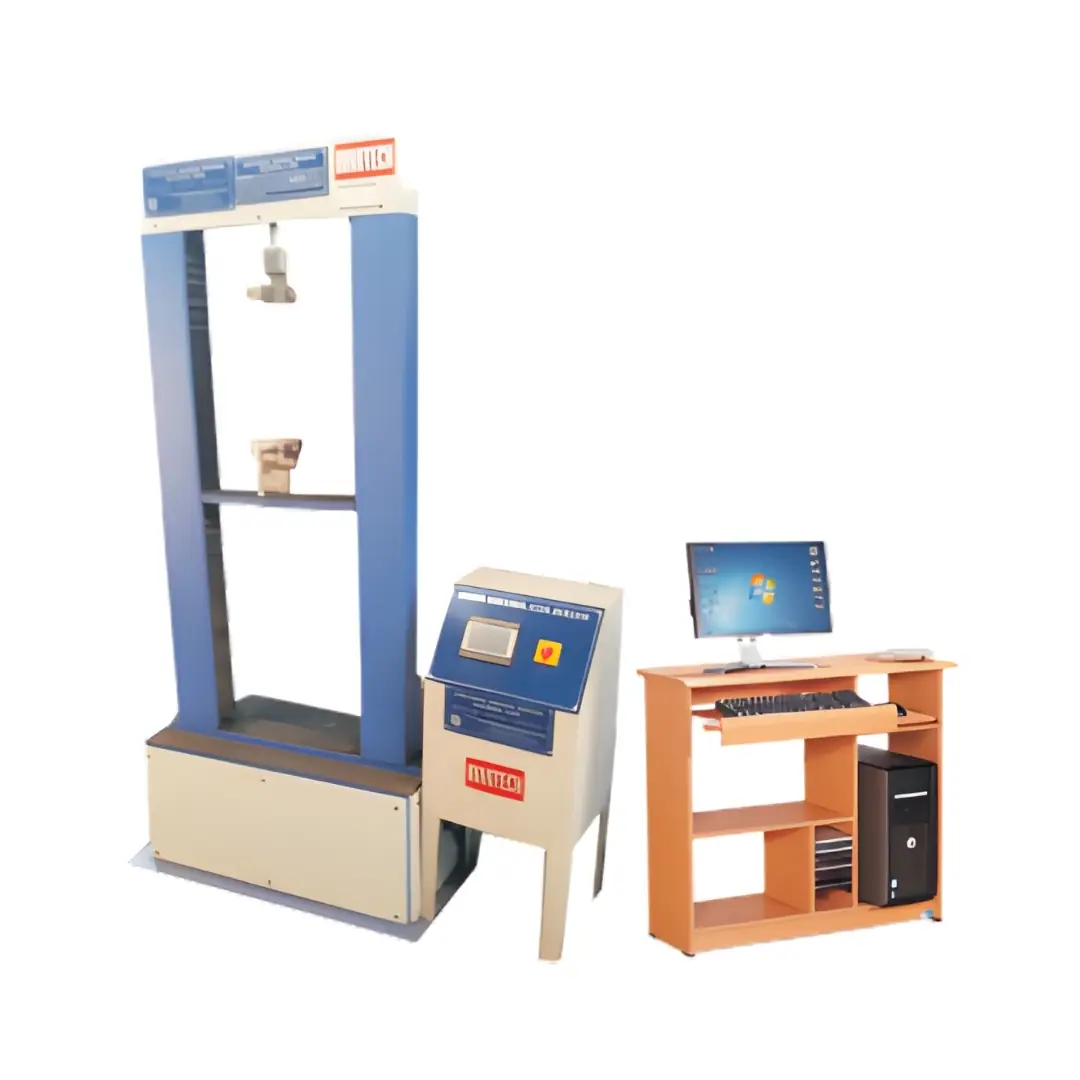
Tensile Testing Machine
Tensile Testing Machine
Innotech Engineering Devices Private Limited manufactures tensile testing machines for evaluating the strength, breaking load, extension and mechanical performance of materials under controlled pulling forces. We offer digital, computerized, servo-controlled, hydraulic and customized testing solutions for metals, plastics, rubber, wires, cables, textiles, packaging materials and engineering components, depending on the selected machine configuration. Based in Bhiwadi, Rajasthan, India, Innotech helps industrial manufacturers, quality-control laboratories and research institutions select suitable testing capacities, grips, fixtures, extensometers and data-reporting arrangements. Contact our team with your specimen details and applicable testing standard for a technical quotation.
MODEL
ITTM
OVERVIEW
Description
Tensile Testing Machine Manufacturer in India
Innotech Engineering Devices Private Limited is an OEM manufacturer and supplier of Tensile Testing Machines, Computerized Tensile Testing Machines, Digital Tensile Strength Testers and customized material testing equipment in India.
Our testing solutions are developed for manufacturers, quality-control departments, industrial laboratories, R&D centres and educational institutions that need to evaluate the tensile performance of materials and components.
Based in Bhiwadi, Rajasthan, we offer application-specific machine configurations with suitable testing capacities, grips, fixtures, force-measurement systems and control arrangements.
What Is a Tensile Testing Machine?
A tensile testing machine is mechanical testing equipment used to apply a controlled pulling force to a specimen and measure its response. Depending on the specimen, test method and measurement system, tensile testing can determine maximum force, breaking force, tensile strength, yield properties, extension, elongation and other mechanical characteristics.
Tensile testing helps manufacturers compare materials, inspect incoming supplies, verify finished products and investigate variations in manufacturing quality.
Tensile Testing Machine Working Principle
A prepared specimen is secured between two suitable grips. The testing machine moves one grip relative to the other, applying a controlled tensile load along the specimen's testing axis.
A force-measurement system records the applied load. Crosshead displacement can be monitored by the machine, while specimen extension or strain may require a suitable extensometer or other measurement arrangement.
Depending on the material, the specimen may deform elastically, undergo permanent deformation and eventually fracture.
Tensile Test Procedure
1. Prepare the specimen according to the applicable test method.
2. Select grips suitable for its material, shape and dimensions.
3. Mount and align the specimen correctly.
4. Set the required test speed, force range and measurement parameters.
5. Apply tensile loading under controlled conditions.
6. Record load and the relevant displacement or extension data.
7. Determine applicable tensile properties using the specified calculation method.
8. Review the results and generate the required test documentation.
The exact sequence, speed control, measurement method and reporting requirements depend on the selected standard and machine configuration.
Types of Tensile Testing Machines
Digital Tensile Testing Machine
A digital tensile tester uses an electronic measurement and display system to present selected test parameters. Depending on the model, it may provide digital force indication, displacement measurement and basic result functions. Computer-based reporting should not be assumed unless specified.
Computerized Tensile Testing Machine
A computerized tensile testing machine integrates electronic measurement with a computer-based interface for supported test functions. Depending on the supplied software, the system may provide test-method setup, live data display, load-extension graphs, stress-strain analysis, result calculations, data storage and report generation.
Servo-Controlled Tensile Testing Machine
Servo-controlled machines use a suitable servo drive and control arrangement to regulate movement or loading according to the system design. They are considered where controlled testing speeds, programmable methods and consistent operation are required.
Hydraulic Tensile Testing Machine
Hydraulic systems apply testing force through a hydraulic loading arrangement. They are commonly considered for higher-force testing and heavy-duty industrial applications. Selection depends on the force range, loading control, specimen geometry and measurement requirements.
Electromechanical Tensile Testing Machine
Electromechanical systems use a motor-driven mechanism, such as a precision screw drive, to produce controlled crosshead movement. They can be configured for a variety of laboratory and industrial applications.
Single-Column and Double-Column Machines
Single-column machines can be suitable for smaller specimens and appropriate force ranges. Double-column designs provide different working-space and structural options, depending on capacity and intended testing applications.
Customized Tensile Testing Machine
For unusual specimens, specialized test methods, large components or non-standard fixtures, Innotech can discuss a machine configuration based on the customer's engineering requirements.
What Does a Tensile Testing Machine Measure?
Depending on the equipment and test method, relevant results may include:
- Maximum load: Highest force recorded during the test
- Breaking load: Force at specimen fracture
- Tensile strength: Tensile force divided by the relevant original specimen cross-sectional area, according to the test method.
- Yield strength: Stress associated with the onset of specified yielding behaviour
- Extension: Increase in measured length
- Percentage elongation: Extension relative to the specified original gauge length, expresses as a percentage.
- Stress-strain curve: Relationship between calculated stress and strain
- Young's modulus: Elastic stiffness determined from an appropriate stress-strain measurement
- Reduction in area: Change in specimen cross-section after fracture, where applicable
Not every parameter can be obtained reliably from crosshead displacement alone. Accurate specimen-strain measurements, particularly for modulus determination, may require an appropriate extensometer and validated calculation procedure.
Computerized Testing and Software
A computerized tensile testing system can be configured to support test setup, live monitoring, data acquisition and reporting.
Available functions should be confirmed against the selected controller and software package. Relevant requirements may include graph generation, result calculations, report formats, test-method management, data export and comparison of test results.
For laboratories requiring traceable or controlled electronic records, software access, method security, validation and documentation requirements should be discussed before quotation.
Important: Numerical values for capacity, accuracy, resolution, speed, dimensions and electrical requirements must be confirmed for the particular model before purchase.
Materials and Industry Applications
With suitable equipment configurations, tensile testing can be used for:
- Metals and steel: Evaluation of tensile strength, yielding and ductility.
- Plastics and polymers: Assessment of tensile properties and material formulation performance.
- Rubber and elastomers: Evaluation of tensile stress-strain behaviour and elongation.
- Wires and cables: Breaking force and specified tensile performance.
- Textiles and fabrics: Strength and extension of fabric specimens.
- Films and flexible packaging: Tensile strength and elongation of thin materials.
- Paper and packaging: Material strength and quality-control testing.
- Composites: Tensile performance with suitable specimen preparation and gripping.
- Automotive and industrial components: Application-specific pull, proof-load or destructive testing.
The selected grips, testing force, measurement system and test procedure must suit the specimen.
Applicable Tensile Testing Standards
Commonly referenced tensile test methods include:
| Standard |
General application |
| ASTM E9/E8M | Metallic materials |
| ISO 6892-1 | Metallic materials at room temeperature |
| IS 1608 (Part 1) | Metallic materials at room temperature |
| ASTM D638 | Plastics |
| ISO 527 series | Plastics |
| ASTM D412 | Rubber and thermoplastic elastomers |
| ISO 37 | Vulcanized or thermoplastic rubber |
| ASTM D882 | Thin plastic sheeting |
| ASTM D3039/D3039M | Polymer matrix composites |
| ASTM D5034 | Textile fabrics, grab test |
| ISO 13934 series | Textile fabrics |
Standards applicability is not automatic. The machine's usable force range, measurement accuracy, specimen dimensions, gripping system, test speed, extensometer and reporting functions must be evaluated against the required method.
Grips, Fixtures and Accessories
Depending on the application, a tensile testing machine may require flat grips, wedge grips, wire grips, threaded specimen holders, rubber grips, film grips, pneumatic or hydraulic grips, specialized fixtures, additional load cells or extensometers.
Some universal testing systems may also accommodate compression or bending accessories, subject to machine compatibility.
Selecting the correct fixture is important for specimen alignment, reducing slippage and obtaining meaningful results.
How to Select the Right Tensile Testing Machine
Before purchasing, consider the following:
1. Material and specimen dimensions.
2. Maximum expected breaking force.
3. Required testing standard.
4. Test speed and control requirements.
5. Force-measurement range and accuracy.
6. Elongation or strain measurement.
7. Grip and fixture arrangement.
8. Digital display or computerized operation.
9. Software and report requirements.
10. Available laboratory space and electrical supply.
11. Installation, calibration and training needs.
12. Potential future testing applications.
Machine selection should consider the actual working force range, not only the maximum rated capacity.
Tensile Testing Machine Price in India
The price of a tensile testing machine depends on its testing capacity, mechanical design, control system, load measurement, software, extensometer, grips, fixtures, accessories and customization requirements.
A digital machine, computerized servo-controlled machine and heavy-duty hydraulic machine may have substantially different specifications and costs.
For a suitable quotation, share your material, specimen dimensions, required test force, testing standard, control preference and reporting requirements.
Customized Tensile Testing Machine Manufacturer in India
Innotech Engineering Devices Private Limited develops application-specific testing solutions based on customer requirements.
Customization can involve testing capacity, machine frame, specimen space, grips, fixtures, measurement systems, controls, software requirements and specialized testing environments.
Our manufacturing presence in Bhiwadi, Rajasthan, supports enquiries from Delhi NCR, Haryana, Uttar Pradesh, Punjab, Gujarat, Maharashtra, Karnataka, Tamil Nadu and industrial customers across India.
Why Choose Innotech?
- OEM manufacturer of industrial testing machines and laboratory equipment.
- Digital, computerized and application-specific testing solutions.
- Multiple mechanical and control-system configurations.
- Customized gripping and specimen-holding arrangements.
- Engineering discussion based on material and test requirements.
- Technical quotation tailored to the intended application.
Request a Tensile Testing Machine Quotation
Looking for a Tensile Testing Machine Manufacturer in India?
Contact Innotech Engineering Devices Private Limited with your specimen details, expected maximum force, testing standard, required test speed, extensometer needs and preferred control system.
Innotech Engineering Devices Private Limited
H-307, RIICO Industrial Area, Karoli, Tapukara, Bhiwadi – 301707, Rajasthan, India
Phone: +91 9810431604
Email: info@innotechgroup.net
Frequently Asked Question
What is a Computerized Tensile Testing Machine?
A Computerized Tensile Testing Machine combines a mechanical loading system with electronic measurement and computer-based test functions. Depending on the configuration, it can support test monitoring, data acquisition, graphs, result calculations and report generation.
What is the difference between a Digital and Computerized Tensile Testing Machine?
A Digital Tensile Testing Machine provides electronic measurement and indication of relevant test parameters. A Computerized Tensile Testing Machine additionally offers computer-based functions such as data recording, analysis and reporting, according to the supplied software.
What is a Hydraulic Tensile Testing Machine?
A Hydraulic Tensile Testing Machine uses a hydraulic system to apply tensile force. It is commonly considered for heavy-duty material testing and applications requiring higher testing forces.
Which Tensile Testing Machine is suitable for steel and metals?
The machine should be selected according to specimen dimensions, maximum expected tensile force, testing speed, accuracy and applicable standard, such as ASTM E8/E8M or ISO 6892-1.
Which Tensile Testing Machine is suitable for plastic?
A suitable electromechanical or computerized testing machine may be selected according to the plastic specimen, required force range, extensometer and test method, such as ASTM D638 or ISO 527.
Can a Tensile Testing Machine test rubber?
Yes. A suitable machine with appropriate rubber grips, force range and elongation-measurement system can be configured for rubber tensile testing using relevant methods such as ASTM D412 or ISO 37.
Can a Tensile Testing Machine test wires and cables?
Yes. Wires and cables can be tested using suitable grips, testing capacity and the applicable material or product standard.
How do I select the correct Tensile Testing Machine capacity?
Determine the maximum expected breaking force of the specimen, then select a machine with a suitable rated capacity and force-measurement range. The required accuracy over the actual testing range is also important.
What is an extensometer used for in tensile testing?
An extensometer measures extension over a specified gauge length. It is useful for strain measurement and determining mechanical properties such as modulus, where required.
What is a stress-strain curve?
A stress-strain curve shows how a material responds to tensile loading. It can help evaluate stiffness, yield behaviour, tensile strength and deformation characteristics.
What is the difference between a Universal Testing Machine and a Tensile Testing Machine?
A Tensile Testing Machine is intended for tensile loading. A Universal Testing Machine may perform tensile, compression, bending and other tests when equipped with compatible accessories and appropriate measurement systems.
Can Tensile Testing Machines be customized?
Yes. Innotech offers customized machine configurations based on testing capacity, specimen dimensions, gripping requirements, testing speed, instrumentation and control-system needs.
Which standards are used for tensile testing?
Common standards include ASTM E8/E8M and ISO 6892 for metals, ASTM D638 and ISO 527 for plastics, ASTM D412 and ISO 37 for rubber, and relevant IS standards. The correct method depends on the material and application.
What are the main parts of a Tensile Testing Machine?
The main parts generally include the load frame, loading mechanism, force-measurement system, specimen grips, controller and displacement-measurement system. Computerized machines may additionally include software and data acquisition.
What is the difference between Hydraulic and Electromechanical Tensile Testing Machines?
Hydraulic machines apply force through hydraulic actuation, while electromechanical machines use motor-driven mechanisms. The correct choice depends on testing capacity, control requirements, specimen type and application.
Can a Tensile Testing Machine generate test reports?
Computerized configurations may generate reports containing relevant test results, graphs and specimen information. The available reporting functions depend on the supplied software.
What information is required to purchase a Tensile Testing Machine?
Customers should provide the material type, specimen dimensions, maximum expected force, applicable standard, testing speed, required accuracy, extensometer needs, grips and software requirements.
Where can I buy a Tensile Testing Machine in Bhiwadi, Rajasthan?
Innotech Engineering Devices Private Limited is located in Bhiwadi, Rajasthan, India. Industrial customers can contact the company for tensile testing machine specifications, customized configurations and quotations.
What factors affect Tensile Testing Machine accuracy?
Important factors include force-measurement calibration, load-cell selection, machine alignment, specimen gripping, extensometer performance, testing speed and the applied test method.
Can a Tensile Testing Machine measure Young's modulus?
Yes, when suitable force and specimen-strain measurements are available and the applicable test method is followed. An appropriate extensometer is often necessary for reliable modulus measurement.
What materials can be tested using a Tensile Testing Machine?
Depending on the machine configuration, suitable materials include metals, plastics, rubber, polymers, wires, cables, textiles, films, packaging materials, composites and engineering components.
Is a Computerized Tensile Testing Machine better than a Digital Tensile Tester?
Not necessarily for every application. Computerized machines are generally preferable when advanced data analysis and reporting are required. A digital tester may be suitable where simpler measurement and display functions are sufficient.
How can I request a customized Tensile Testing Machine quotation from Innotech?
Send your material details, specimen dimensions, required testing force, testing standard and preferred machine configuration to info@innotechgroup.net or contact +91 9810431604. The technical requirements can then be reviewed for a suitable machine proposal.
WHY IT WORKS
Key benefits
Customized testing solutions: Select a machine according to the required material, specimen size, testing force and application.
Material quality evaluation: Assess relevant tensile properties to support manufacturing quality control.
Multiple machine configurations: Choose digital, computerized, hydraulic or servo-controlled equipment according to testing requirements.
Improved testing workflow: Computerized configurations can simplify test monitoring, data recording and report preparation.
Application-specific accuracy: Select suitable force-measurement systems and extensometers for the required testing method.
Versatile material testing: Suitable configurations can test metals, plastics, rubber, wires, cables, textiles, films and other materials.
Reliable specimen holding: Properly selected grips help reduce slippage and improve test consistency.
Research and development support: Evaluate material behaviour, product development and manufacturing changes.
Production quality control: Compare testing results with specified material or product acceptance criteria.
Flexible laboratory integration: Select machine dimensions, control systems and accessories according to available space and workflow.
Data analysis: Suitable computerized systems support graphical evaluation of tensile testing results.
Testing standard alignment: Configure the machine and accessories according to relevant test-method requirements.
Future application flexibility: Discuss additional grips, fixtures and measurement accessories for potential future testing.
Direct OEM consultation: Work with an Indian testing-machine manufacturer to define the appropriate configuration.
USE CASE
Application range
BUILT IN
Features
Available in digital, computerized, hydraulic, electromechanical and servo-controlled configurations.
Customized testing capacities according to customer requirements.
Load-cell-based force measurement available in suitable configurations.
Digital display or computerized control system according to the selected model.
Controlled tensile loading for material and component testing.
Adjustable testing speed according to the selected machine design.
Suitable tensile grips for flat, round, wire, cable, rubber and other specimens.
Optional electronic or mechanical extensometer for specimen extension measurement.
Load-extension and stress-strain graph generation with suitable software and instrumentation.
Computerized data acquisition and real-time monitoring where specified.
Test-result calculations and reporting according to the supplied software.
Customizable specimen testing space and grip separation.
Single-column and double-column designs for suitable applications.
Hydraulic and electromechanical loading options.
Application-specific fixtures and gripping arrangements.
Suitable for industrial quality control, material research and testing laboratories.
Testing configurations selectable for relevant ASTM, ISO, IS and other industry methods.
Customized software and reporting requirements subject to technical feasibility.
Safety provisions according to machine configuration and engineering requirements.
OEM manufacturing and technical support from Innotech Engineering Devices Private Limited, India.
SPEC
Specifications
Product name
Computerized Tensile Testing Machine
Machine configurations
Digital / Computerized / Hydraulic / Electromechanical / Servo-Controlled
Testing capacity
Customized as per customer requirements
Testing method
Controlled axial tensile loading
Force measurement
Suitable force-measurement system; load cell where specified
Force accuracy
According to selected model and verified measurement class
Load resolution
According to selected controller and force-measurement range
Testing speed
As per selected machine and applicable test method
Speed control
According to selected drive and control system
Crosshead movement
Hydraulic or electromechanical, according to model
Machine frame
Single-column / Double-column / Customized
Control system
Digital or computerized, as specified
Display
Digital indicator / Computer interface
Software
Available with selected computerized models
Data acquisition
As per selected instrumentation and software
Test graphs
Load-extension / Stress-strain, where supported
Tensile strength calculation
According to software and test-method configuration
Yield strength measurement
Subject to material, instrumentation and test method
Elongation measurement
As per selected measurement arrangement
Extensometer
Optional / As per testing requirements
Specimen gripping
Flat / Round / Wire / Cable / Specialized grips
Grip separation
Customized according to specimen requirements
Vertical testing space
According to selected machine design
Horizontal clearance
According to selected machine design
Maximum specimen size
Based on selected grips and machine configuration
Test direction
Tensile loading
Test result storage
According to computerized software
Report generation
Available in suitable computerized configurations
Safety provisions
According to approved machine design
Power supply
To be confirmed for selected model
Applicable standards
ASTM / ISO / IS / EN / DIN, as applicable
Machine dimensions
Model-dependent
Machine weight
Model-dependent
Installation
According to project scope
Calibration
According to agreed scope and relevant requirements
DIM
Dimensions
Overall length
According to selected machine
Overall width
According to selected machine
Overall height
According to selected machine
Maximum vertical test space
Customized
Distance between columns
According to frame design
Maximum grip separation
Customized
Crosshead travel
According to selected model
Crosshead travel
Depends on capacity and structure
Installation footprint
Confirmed in approved general arrangement drawing