
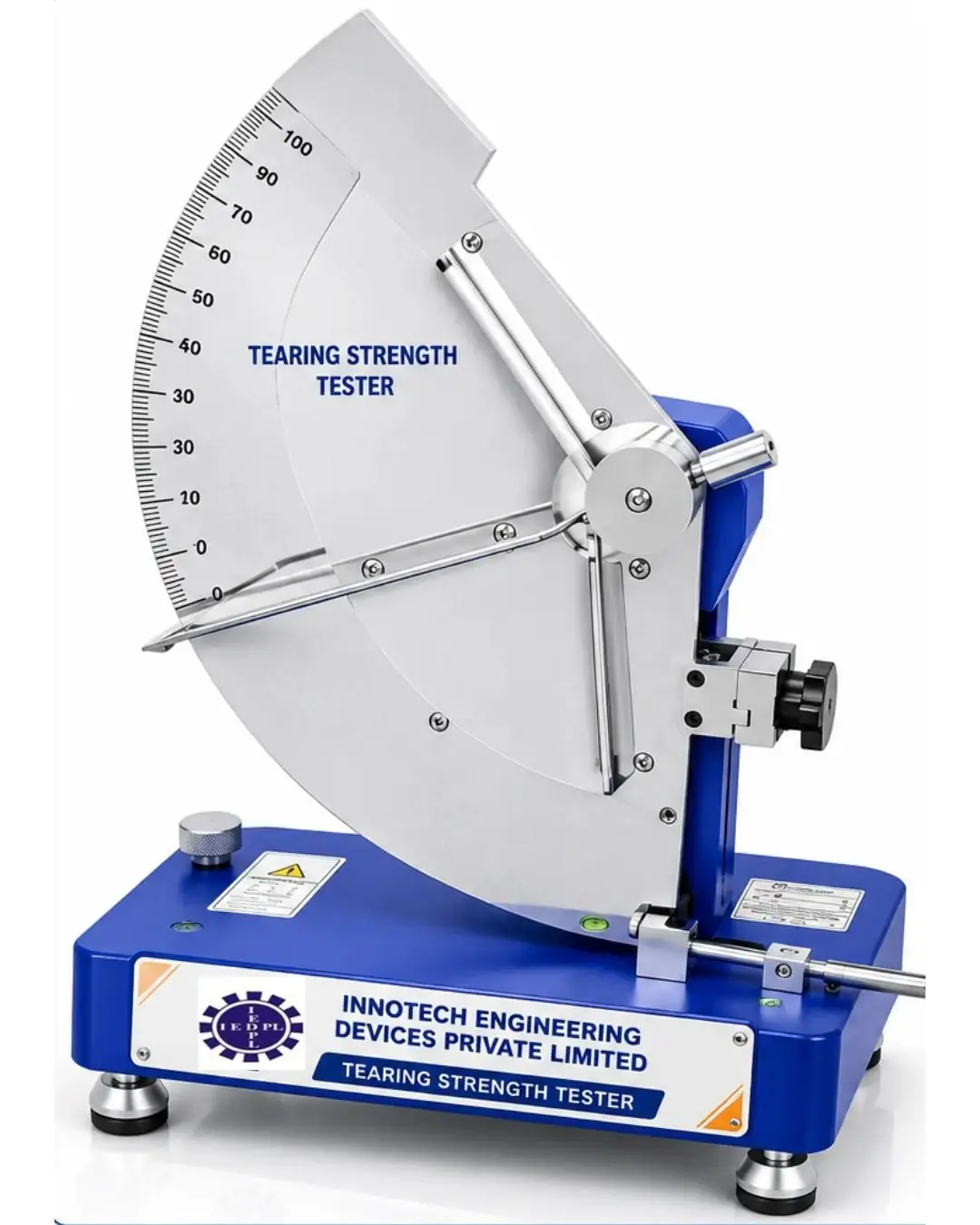
Tearing Strength Tester Machine – Elmendorf, Digital & Customized Models
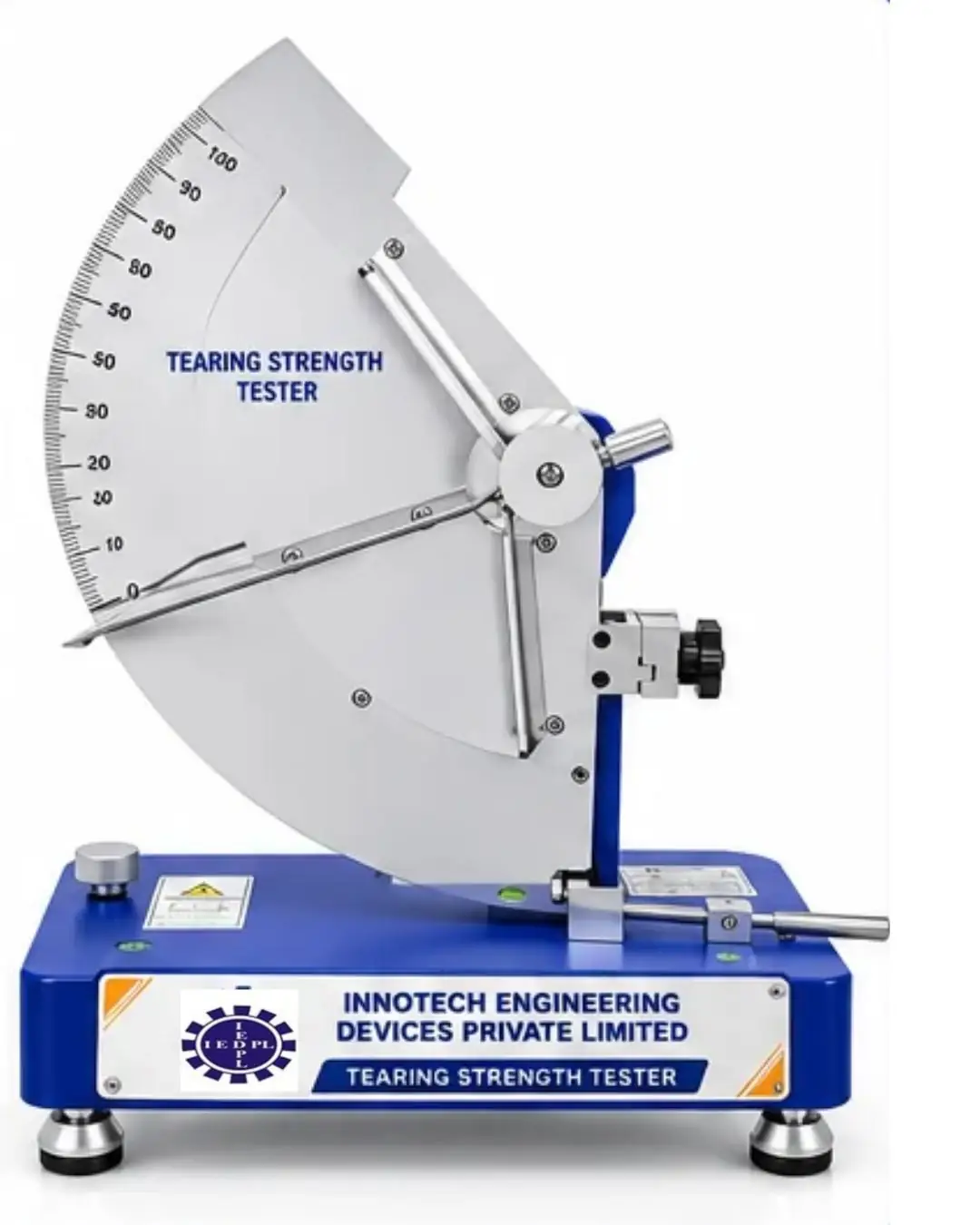
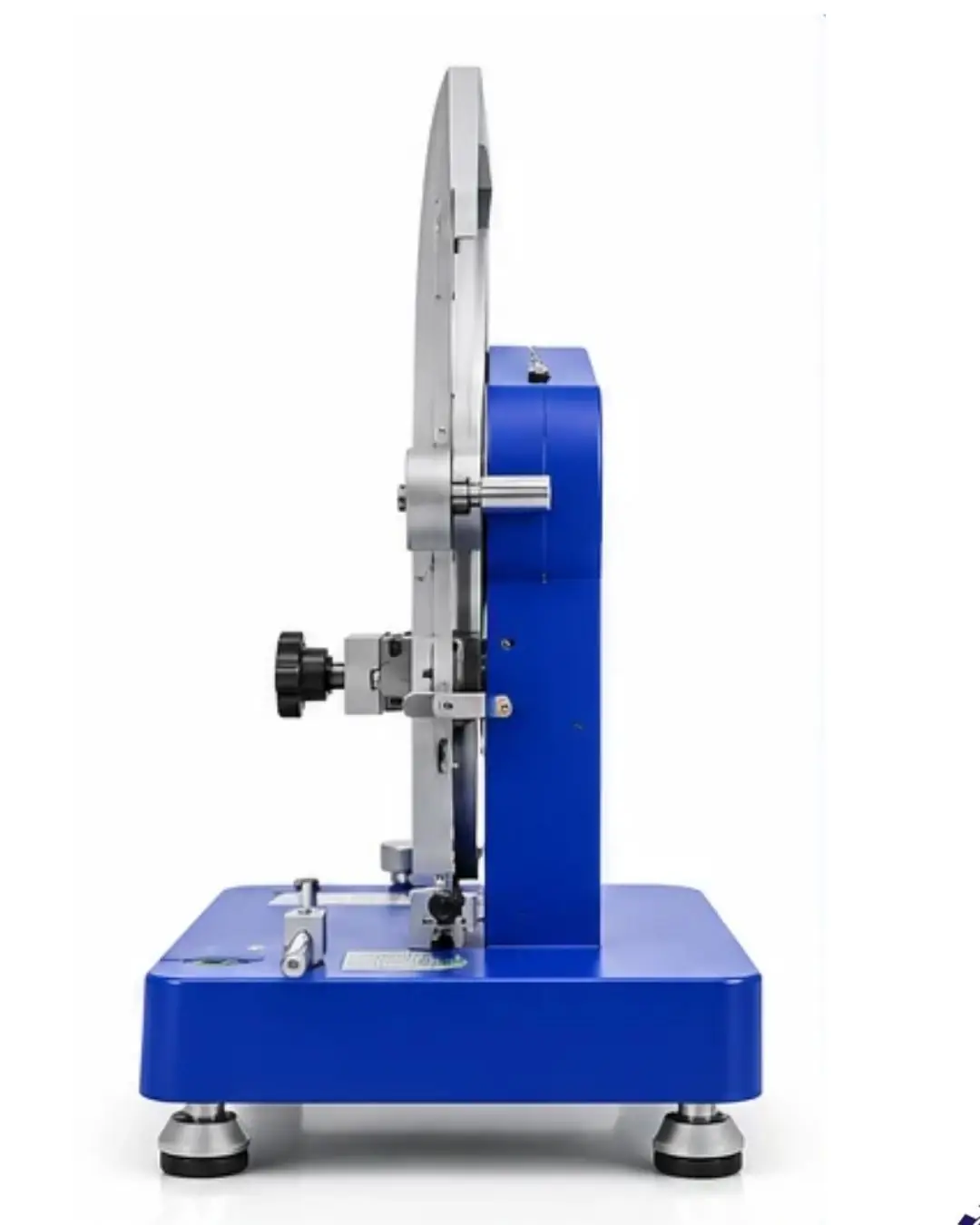
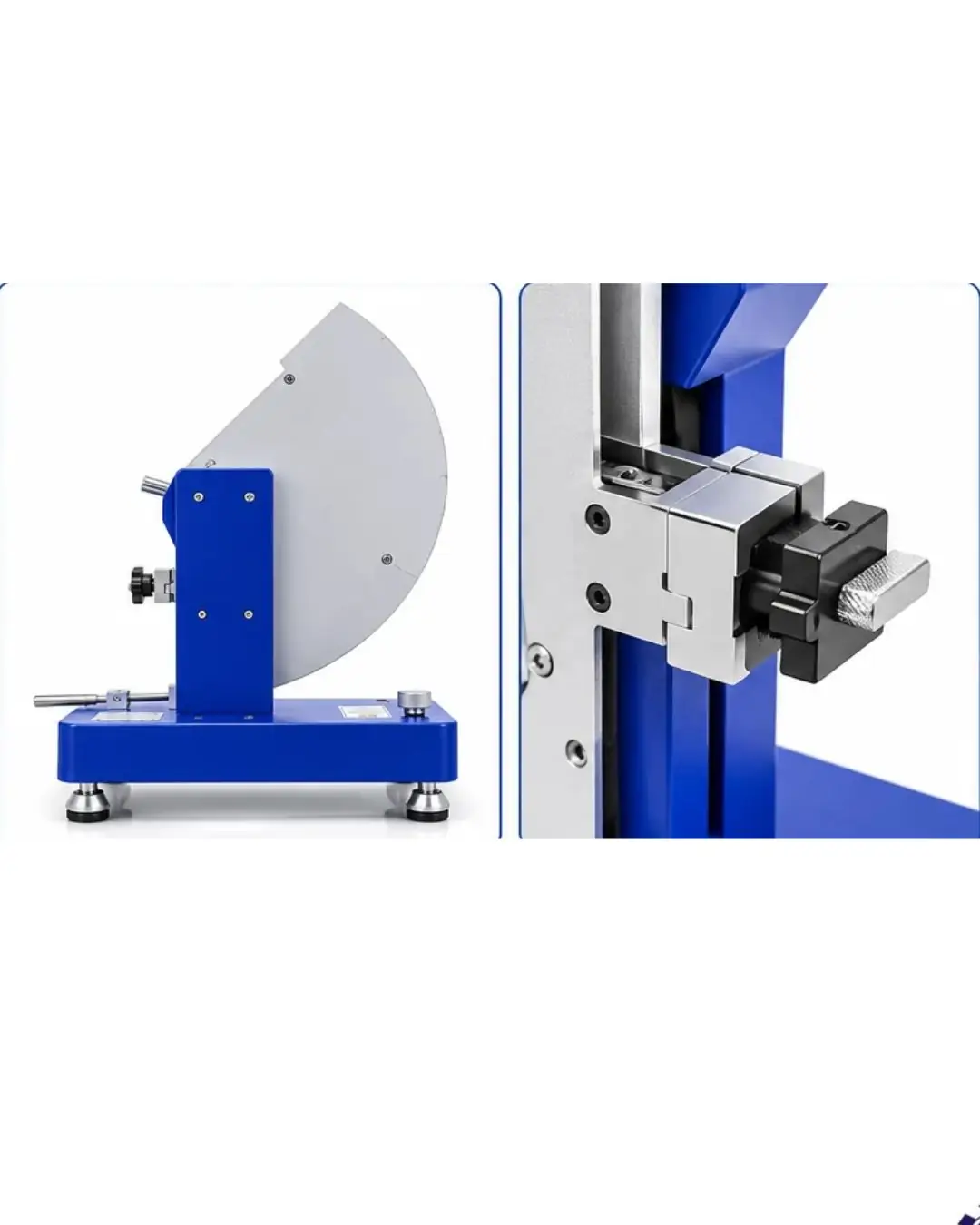
Tearing Strength Tester Machine – Elmendorf, Digital & Customized Models
The Tearing Strength Tester Machine from Innotech Engineering Devices Private Limited is designed to evaluate tear resistance of fabrics, textiles, paper, plastic films and other suitable materials. Available in application-specific Elmendorf pendulum, digital and customized configurations, the equipment supports quality control and laboratory testing. For rubber tear-strength testing, suitable tensile-based testing systems can be specified separately. Innotech is a Tearing Strength Tester Manufacturer in India, based in Bhiwadi, Rajasthan, offering technical specifications and customized testing solutions for industrial buyers across India.
MODEL
ITST
OVERVIEW
Description
Tearing Strength Tester Manufacturer in Bhiwadi India – Fabric, Paper, Film & Rubber Testing
The Tearing Strength Tester is a laboratory testing instrument used to determine the resistance of a material to the propagation of a tear under specified test conditions. It is widely used for evaluating textiles, fabrics, paper, plastic films, flexible packaging and other materials where tear resistance is an important quality parameter.
Innotech Engineering Devices Private Limited, based in Bhiwadi, Rajasthan, India, manufactures industrial testing machines and laboratory equipment. Our Tearing Strength Tester Machine solutions can be developed according to customer requirements, including material type, test method, measuring range, control system and reporting needs.
Whether you need an Elmendorf tearing tester for fabrics, a digital tear resistance tester for flexible materials or a tensile-based testing arrangement for rubber, selecting the correct method is essential for meaningful results.
What Is a Tearing Strength Tester Machine?
A Tearing Strength Tester measures the force or energy-related resistance associated with extending a tear through a prepared specimen.
Tearing strength is different from tensile strength. Tensile testing measures how a material responds to an applied pulling load, while tear testing examines its resistance to the growth of an existing cut or tear.
Different tearing methods use different specimen shapes, loading arrangements and measurement principles. Results obtained using different methods should not be treated as directly interchangeable.
A Tearing Strength Tester in India may be selected for textile quality control, packaging material development, laboratory research, incoming-material inspection and production testing.
Tearing Strength Tester Working Principle
The Tearing Strength Tester working principle depends on the selected testing mechanism.
Elmendorf Pendulum Tearing Strength Tester
An Elmendorf tearing tester uses a falling pendulum to propagate a tear through a pre-cut specimen.
The specimen is held between a stationary clamp and a clamp attached to the pendulum. When released, the pendulum swings and tears the specimen over a specified distance.
The energy consumed during tearing is determined from the pendulum movement. The instrument uses this energy and the prescribed tear distance to determine the tear-force result.
A mechanical model may use a calibrated scale, while an electronic model may calculate and display the result digitally.
Tensile-Based Tearing Strength Tester
For certain textile, rubber and plastic applications, tear resistance is determined using a constant-rate-of-extension tensile testing machine with a specified specimen shape and gripping arrangement.
The machine pulls the prepared specimen at a controlled speed and measures force during tearing.
Depending on the applicable standard, the reported result may be a peak force, an average tear force or a force normalized by specimen thickness.
Why Is the Correct Working Principle Important?
An Elmendorf pendulum tester and a tensile-based tear tester apply different loading conditions. Their results may differ even when testing the same material.
Before purchasing, laboratories should identify the material, required test standard and expected tear resistance.
Types of Tearing Strength Testers Available in India
1. Elmendorf Tearing Strength Tester
This configuration is commonly used for determining the tear resistance of suitable woven fabrics, paper and plastic films using the applicable falling-pendulum test method.
2. Digital Tearing Strength Tester
A digital tearing tester may incorporate electronic sensing, automatic calculations, digital indication and test-result storage, depending on the selected design.
3. Computerized Tearing Strength Testing System
Computerized configurations can provide data acquisition, test-result management and reporting functions where supported by the instrument and software.
4. Textile and Fabric Tearing Strength Tester
A Tearing Strength Tester for fabric is selected according to the textile construction and required method. Some fabrics are tested using the Elmendorf method, while others require tongue-tear, trapezoid or related tensile-based methods.
5. Rubber Tearing Strength Tester
A Tearing Strength Tester for rubber generally requires a suitable tensile testing machine, specimen preparation arrangement and grips for the prescribed rubber tear test.
Rubber tear testing should not be assumed to be compatible with a standard fabric Elmendorf tester.
6. Customized Tearing Strength Testing Machine
Customized testing arrangements may be considered for specialized materials, measuring ranges, fixtures, data recording or laboratory automation requirements.
Tearing Strength Test of Fabric
The tearing strength test of fabric helps manufacturers assess how well a textile resists the continuation of an existing tear.
For suitable fabrics, the Elmendorf method is commonly used in textile laboratories and manufacturing quality control.
A typical testing sequence involves preparing a representative specimen, conditioning it according to the relevant method, making the specified initial cut, clamping the specimen and performing the test.
The result is evaluated according to the applicable test procedure.
Fabric structure, yarn strength, weave pattern, finishing treatments, coating and test direction can influence tear resistance.
For woven fabrics, testing may be required in both principal fabric directions, as specified by the method.
Not every knitted or highly extensible fabric is suitable for the Elmendorf procedure. The appropriate test method should be selected before ordering the equipment.
Tearing Strength Tester for Rubber and Elastomers
Rubber components may experience tearing during installation, stretching, repeated deformation or service.
A rubber tear-strength test evaluates resistance to tear propagation using the specimen geometry and loading conditions prescribed by the applicable method.
For example, ASTM D624 covers tear-strength testing of conventional vulcanized rubber and thermoplastic elastomers.
The equipment arrangement may include a universal testing machine, suitable load cell, appropriate grips, specimen cutting dies and testing software.
When requesting a Tearing Strength Tester for rubber, buyers should specify the rubber type, specimen thickness, test standard, expected force and required test speed.
Tearing Strength Tester Test Standards
Different materials require different test methods. The following are important examples.
| Standard |
Material |
Testing Method |
| ASTM D1424-25 | Suitable fabrics | Falling-pendulum Elmendorf tear test |
| ISO 13937-1:2000 | Fabrics | Ballistic pendulum tear-force determination |
| ASTM D2261 | Fabrics | Tongue-tear method using a tensile testing machine |
| ASTM D624-00(2020) | Rubber and thermoplastic elastomers | Tear-strength testing using specified specimen geometries |
| ISO 6383-1:2015 | Plastic film and sheeting | Trouser-tear method |
| ISO 6383-2 | Plastic film and sheeting | Elmendorf tear-resistance method |
| ISO 1974 | Paper | Elmendorf tearing resistance |
Important: A standard identifies the required testing procedure. A machine should be described as compliant only when the supplied configuration meets the applicable requirements.
How to Select the Right Tearing Strength Tester
Industrial buyers should select equipment based on the actual testing requirement rather than only the machine's appearance or maximum capacity.
The first consideration is the material being tested. Woven fabrics, coated textiles, rubber sheets, plastic films and paper may require different testing arrangements.
Next, identify the relevant ASTM, ISO, BIS or customer-specific standard. This determines the required specimen geometry, loading method, test range and result calculation.
For an Elmendorf tester, buyers should evaluate pendulum capacity, specimen clamping, cutting arrangement, measurement resolution and calibration requirements.
For a tensile-based system, load-cell capacity, crosshead speed, grips, software and force measurement performance become important.
The expected tear-force range is also essential. A machine with an unsuitable measuring range may produce poor results even when its maximum capacity appears adequate.
Manual vs Digital Tearing Strength Tester
A manual Elmendorf tearing tester typically uses a mechanical pendulum and calibrated reading arrangement.
Digital versions may provide electronic measurement, automatic result calculations and additional reporting options.
The selection depends on testing frequency, laboratory documentation requirements, operator preferences and the desired level of automation.
Digital indication alone does not guarantee better accuracy. Calibration, mechanical condition, sensor performance and correct test procedures remain essential.
Tearing Strength Tester Manufacturer in India
When selecting a Tearing Strength Tester Manufacturer in India, industrial buyers should evaluate technical capability, customization options, equipment documentation and service support.
A suitable Tearing Strength Tester Manufacturer and Supplier should help customers identify the correct testing method and equipment configuration.
Innotech Engineering Devices Private Limited provides industrial testing machine manufacturing and application-based equipment solutions from Bhiwadi, Rajasthan.
Customers looking for Tearing Strength Tester Manufacturers can contact Innotech to discuss manual, digital and customized testing requirements.
We welcome technical enquiries from textile manufacturers, packaging companies, rubber industries, laboratories, educational institutions, procurement teams and industrial distributors across India.
Tearing Strength Tester Manufacturer in Bhiwadi, Rajasthan
Innotech is located in Bhiwadi, Rajasthan, serving industrial buyers in Delhi NCR and other manufacturing regions.
If you are searching for a Tearing Strength Tester in Bhiwadi, Tearing Strength Tester in Rajasthan, or Tearing Strength Tester in India, our team can review your material, test standard and required equipment configuration.
Buyers searching for a Tearing Strength Tester near me should compare not only supplier location but also technical suitability, installation requirements and service arrangements.
Tearing Strength Tester Machine Price and Buying Considerations
The Tearing Strength Tester Machine Price depends on the selected testing method, measuring capacity, mechanical construction, controller, automation level, accessories and documentation requirements.
A basic manual Elmendorf tester and a computerized tensile-based rubber tear testing system have substantially different technical requirements.
For an accurate Tearing Strength Tester Price quotation, buyers should share:
- Material to be tested
- Applicable test standard
- Expected tearing-force range
- Preferred manual or digital configuration
- Specimen dimensions
- Reporting and software requirements
- Required accessories
- Delivery location and quantity
Rather than comparing only the initial purchase cost, evaluate whether the machine can perform the required test correctly.
How to Identify the Best Tearing Strength Tester Machine
The best Tearing Strength Tester Machine is the one that meets the buyer's material, testing method, capacity, accuracy and operational requirements.
A high-capacity tester is not automatically suitable for low-force specimens. Similarly, a fabric pendulum tester should not be selected for a rubber test requiring tensile loading.
Before purchasing, ask the manufacturer to confirm the applicable standards, measuring range, calibration approach, accessories, operating procedure and technical documentation.
Frequently Asked Questions
What is a Tearing Strength Tester?
It is an instrument used to evaluate the resistance of a material to tear propagation under specified testing conditions.
What is the working principle of a Tearing Strength Tester?
Elmendorf testers use pendulum energy to propagate a tear. Tensile-based systems apply controlled pulling force to a prepared specimen.
Which Tearing Strength Tester is suitable for fabric?
The correct machine depends on the fabric construction and test standard. Elmendorf and tensile-based methods are both used for textile tear testing.
Can a Tearing Strength Tester be used for rubber?
Yes, but rubber tear testing generally requires a suitable tensile-based system and specimen arrangement rather than a conventional textile Elmendorf tester.
What is the price of a Tearing Strength Tester in India?
The quotation depends on the tester type, measuring range, controls, accessories and application requirements. Contact the manufacturer for a configuration-based offer.
Can a Tearing Strength Tester be customized?
Yes. Measuring ranges, grips, control systems and testing arrangements can be evaluated for customization according to technical feasibility.
Where can I find a Tearing Strength Tester Manufacturer in India?
Innotech Engineering Devices Private Limited, based in Bhiwadi, Rajasthan, manufactures industrial testing machines and laboratory equipment and accepts enquiries for application-specific tear testing systems.
Request Technical Specifications and a Quotation
Looking for a Tearing Strength Tester Manufacturer in India for textile, fabric, paper, plastic film or rubber testing?
Contact Innotech Engineering Devices Private Limited for technical specifications, application guidance and customized testing machine requirements.
Email: info@innotechgroup.net
Phone: +91 9810431604
Manufacturing Location: Bhiwadi, Rajasthan, India
WHY IT WORKS
Key benefits
Helps evaluate tear resistance of suitable materials.
Supports repeatable laboratory quality control.
Assists in identifying weak or inconsistent material batches.
Supports incoming-material inspection and supplier evaluation.
Helps verify product performance against specified test methods.
Supports research and material development.
Helps monitor production quality consistency.
Reduces reliance on subjective manual tearing assessments.
Provides measurable results for technical documentation.
Offers application-specific testing options for different industries.
USE CASE
Application range
BUILT IN
Features
Elmendorf pendulum-based testing mechanism.
Multiple selectable measuring-capacity options.
Rigid industrial machine construction.
Precision specimen-clamping arrangement.
Specimen cutting or notching arrangement.
Controlled pendulum release mechanism.
Mechanical scale or digital result indication.
Optional electronic data acquisition.
Optional computerized reporting and result storage.
Customizable testing fixtures and measurement configurations.
SPEC
Specifications
Testing Principle
Elmendorf pendulum / tensile-based, depending on configuration
Machine Types
Manual, digital, computerized, customized
Typical Pendulum Capacities
1600 / 3200 / 6400 gf options
Additional Capacity
As per test method and design feasibility
Tear Distance
Method-specific; nominal 43 mm for relevant Elmendorf designs
Initial Slit Length
Method-specific; 20 mm in the referenced Presto configuration
Measurement Display
Mechanical scale / digital display
Reading Range
0–100% of selected pendulum range, where applicable
Measurement Accuracy
As per selected design and verified calibration
Resolution
Mechanical scale or electronic system dependent
Pendulum Release
Manual / controlled release
Specimen Clamping
Precision gripping arrangement
Cutting Arrangement
Integrated or separate specimen notching tool
Body Construction
Rigid metal construction
Control System
Mechanical / electronic / PLC-HMI option
Data Recording
Optional computerized reporting
Power Supply
Not required for purely mechanical models; electrical supply as designed for powered versions
Test Standards
ASTM / ISO / IS, according to selected test configuration
Calibration
Verification and calibration as agreed
Accessories
Specimen cutter, weights, grips, fixtures
Customization
Test range, mechanism, controls, fixtures, reporting
TECH
Technical data
ASTM D1424-25
Elmendorf tear testing of suitable fabrics.
ISO 13937-1:2000
Ballistic pendulum tear-force testing of fabrics.
ASTM D624-00(2020)
Tear strength of vulcanized rubber and thermoplastic elastomers.
ISO 6383-1:2015
Trouser-tear resistance of plastic film and sheeting.