
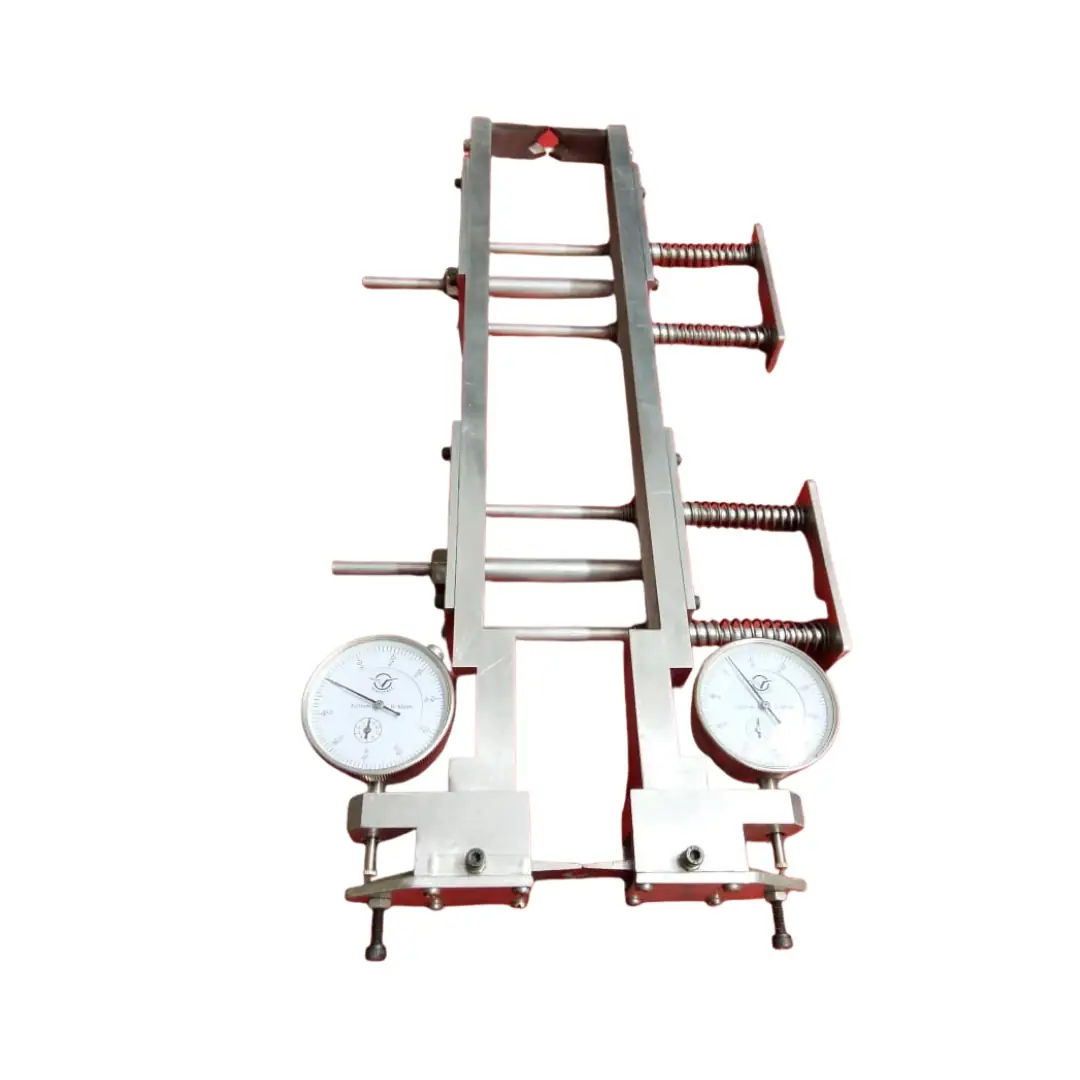
Stand Wire Extensometer (Mechanical Strand Wire Extensometer)
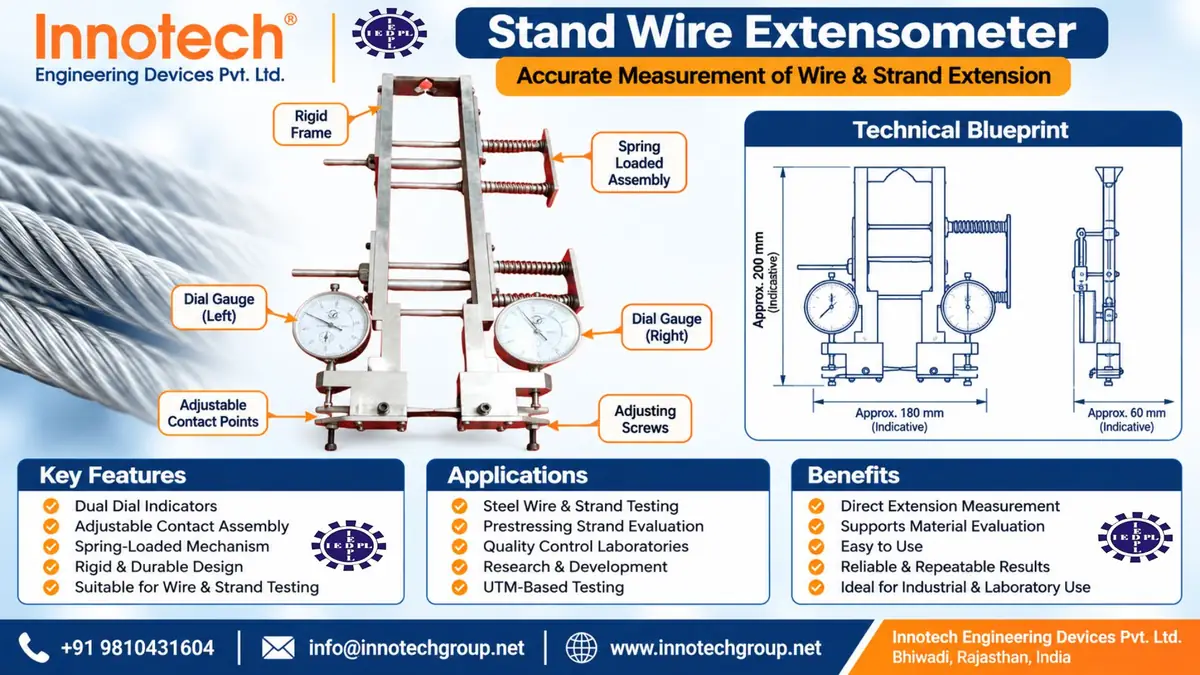
Stand Wire Extensometer (Mechanical Strand Wire Extensometer)
The Stand Wire Extensometer is a mechanical measuring instrument designed to measure the elongation of compatible steel wire and strand specimens during tensile testing. Featuring a rigid measuring frame, adjustable contact assemblies and dual dial indicators, it helps laboratories monitor specimen extension under applied tensile load. Suitable for compatible Universal Testing Machines and prestressing steel testing applications.
MODEL
ISWE
WEIGHT
500g
OVERVIEW
Description
Stand Wire Extensometer for Steel Wire and Strand Testing
The Stand Wire Extensometer is a mechanical measuring instrument used to measure the elongation of steel wire and strand specimens during tensile testing. It helps testing laboratories observe changes in specimen length under an applied tensile load and evaluate the extension characteristics of prestressing steel.
Designed with a long mechanical frame, adjustable spring-loaded contact assemblies and dual dial indicators, this instrument provides visible displacement readings during testing. It can be used with a compatible Universal Testing Machine (UTM) or tensile testing setup, depending on the specimen dimensions and test requirements.
What Is a Stand Wire Extensometer?
A Stand Wire Extensometer, also referred to in the market as a strand wire extensometer, is used to measure the extension of a wire or strand specimen over a specified gauge length.
Steel wires and multi-wire strands are used in prestressed concrete and other structural applications where their mechanical properties are important. During tensile testing, measuring elongation helps determine how the specimen deforms under load.
An extensometer provides a measurement of specimen extension over its selected gauge length rather than relying only on the movement of the testing machine crosshead.
Working Principle of Stand Wire Extensometer
The instrument operates using a mechanical contact and dial-indicator arrangement.
1. Specimen preparation: The steel wire or strand specimen is prepared according to the applicable test procedure.
2. Mounting: The specimen is secured in the tensile grips of a compatible testing machine.
3. Instrument positioning: The extensometer is attached to the specimen using its contact and adjustment assemblies.
4. Initial reading: The dial indicators are checked and their initial readings are recorded.
5. Application of tensile load: The testing machine applies tensile force to the specimen.
6. Extension measurement: As the specimen elongates, the relative movement is transferred through the mechanical arrangement to the dial indicators.
7. Result evaluation: The displacement readings are recorded and evaluated with reference to the original gauge length and applicable test requirements.
The engineering strain can be calculated using:
Engineering Strain = Change in Gauge Length / Original Gauge Length
The measurement arrangement and calculation procedure should follow the applicable material testing standard.
Applications of Stand Wire Extensometer
The instrument can be used in suitable testing arrangements for:
Prestressing Steel Strand Testing
Measurement of extension in compatible prestressing steel strand specimens used in prestressed concrete applications.
Steel Wire Tensile Testing
Monitoring the elongation of suitable steel wire samples subjected to tensile loading.
Seven-Wire Strand Testing
Supporting extension measurement during tensile testing of compatible seven-wire prestressing strands, subject to specimen and instrument compatibility.
Construction Material Testing
Used in laboratories that evaluate the mechanical properties of prestressing steel used in concrete construction.
Wire Manufacturing Quality Control
Helps quality control teams assess the extension characteristics of manufactured steel wire and strand products.
Material Testing Laboratories
Suitable for laboratory testing, material inspection and research activities involving compatible wire and strand specimens.
Importance of Elongation Measurement in Prestressing Steel
Prestressing steel is used in structural applications where tensile strength and elongation characteristics are important for material evaluation.
During tensile testing, elongation measurement helps determine how much a specimen extends under an applied load. This information can contribute to the evaluation of:
- Total elongation under load
- Extension behaviour during tensile loading
- Strain over a specified gauge length
- Deformation characteristics of steel wire and strand
- Material quality against the selected test requirements
For prestressing steel, the relevant test method and gauge length must be followed to obtain meaningful results.
Relevant Testing Standards
The applicable standard depends on the type of steel specimen and the intended test.
| Standard |
General application |
| Is 14268 | Low-relaxation seven-wire prestressing steel strand |
| IS 6006 | Uncoated stress-relieved stand for prestressed concrete |
| IS 6003 | Indented wire for pestressed concrete |
| ASTM A1061 | Mechanical testing of steel strand |
The instrument's compatibility with the required test procedure, gauge length and measurement range must be verified before claiming compliance with any standard.
How to Select a Stand Wire Extensometer
Before selecting an instrument, consider the following factors:
1. Specimen type: Identify whether you are testing single steel wire or multi-wire strand.
2. Specimen diameter: Confirm the diameter and profile of the wire or strand.
3. Gauge length: Select the required measuring length according to the applicable standard.
4. Measurement range: Ensure the instrument can accommodate the expected extension.
5. Dial indicator resolution: Check the least count and required measurement resolution.
6. Mounting arrangement: Confirm that the contact assemblies can securely fit the specimen.
7. Testing machine compatibility: Verify the instrument's suitability for the tensile testing setup.
Stand Wire Extensometer Manufacturer and Supplier in India
Innotech Engineering Devices Pvt. Ltd. is a manufacturer and supplier of testing machines and laboratory equipment based in Bhiwadi, Rajasthan, India.
We provide material testing equipment for industrial laboratories, manufacturing companies, construction material testing facilities and research institutions.
Our Stand Wire Extensometer is intended for laboratories requiring mechanical measurement of wire and strand extension during tensile testing. Buyers can discuss specimen dimensions, required gauge length, dial indicator resolution and testing machine compatibility before selecting the suitable configuration.
We supply testing equipment across India and support customers with product information and application-based solutions.
Contact us for product details and a quotation.
Email: info@innotechgroup.net
Phone: +91 9810431604
Location: Bhiwadi, Rajasthan, India
Frequently Asked Questions
1. What is a Stand Wire Extensometer used for?
It is used to measure the elongation of compatible steel wire and strand specimens during tensile testing.
2. What is the difference between a wire extensometer and a strand wire extensometer?
A wire extensometer may be designed for individual wire specimens, while a strand wire extensometer is configured for measuring extension in multi-wire strand specimens. The mounting arrangement and specimen compatibility can differ.
3. Can a Stand Wire Extensometer be used for prestressing steel?
It can be used for suitable prestressing steel wire and strand testing when its gauge length, measurement range and mounting arrangement meet the test requirements.
4. How does a mechanical strand wire extensometer measure elongation?
It transfers relative specimen movement through its mechanical contact arrangement to dial indicators, which display the displacement readings.
5. Can it be used with a Universal Testing Machine?
Yes, it can be used with a compatible tensile testing machine, provided the specimen arrangement and measurement requirements are suitable.
6. Why is elongation measurement important in strand testing?
Elongation measurement helps evaluate the deformation behaviour of prestressing steel under tensile loading and supports the assessment of its mechanical properties.
7. What details should be checked before purchasing?
The specimen type, strand diameter, gauge length, measuring range, dial indicator resolution and testing machine compatibility should all be confirmed.
WHY IT WORKS
Key benefits
Provides direct measurement of specimen extension over a selected gauge length.
Helps evaluate the elongation behaviour of prestressing steel.
Dual dial indicators make displacement readings easy to observe.
Supports material quality inspection and laboratory testing.
Provides additional extension data alongside tensile load measurements.
Mechanical operation does not require an electronic display for basic readings.
Helps laboratories assess specimen deformation during tensile loading.
Supports repeatable measurements when the same mounting and testing procedure is maintained.
USE CASE
Application range
BUILT IN
Features
Mechanical extensometer for stand wire and compatible strand testing
Dual dial indicators for displacement measurement
Extended frame arrangement for longer gauge-length applications
Adjustable spring-loaded contact assemblies
Mechanical specimen extension measurement
Rigid metal frame construction
Direct visual observation of dial readings
Suitable for compatible tensile testing machines
Designed for laboratory and material testing applications
Configuration based on specimen dimensions and testing requirements