
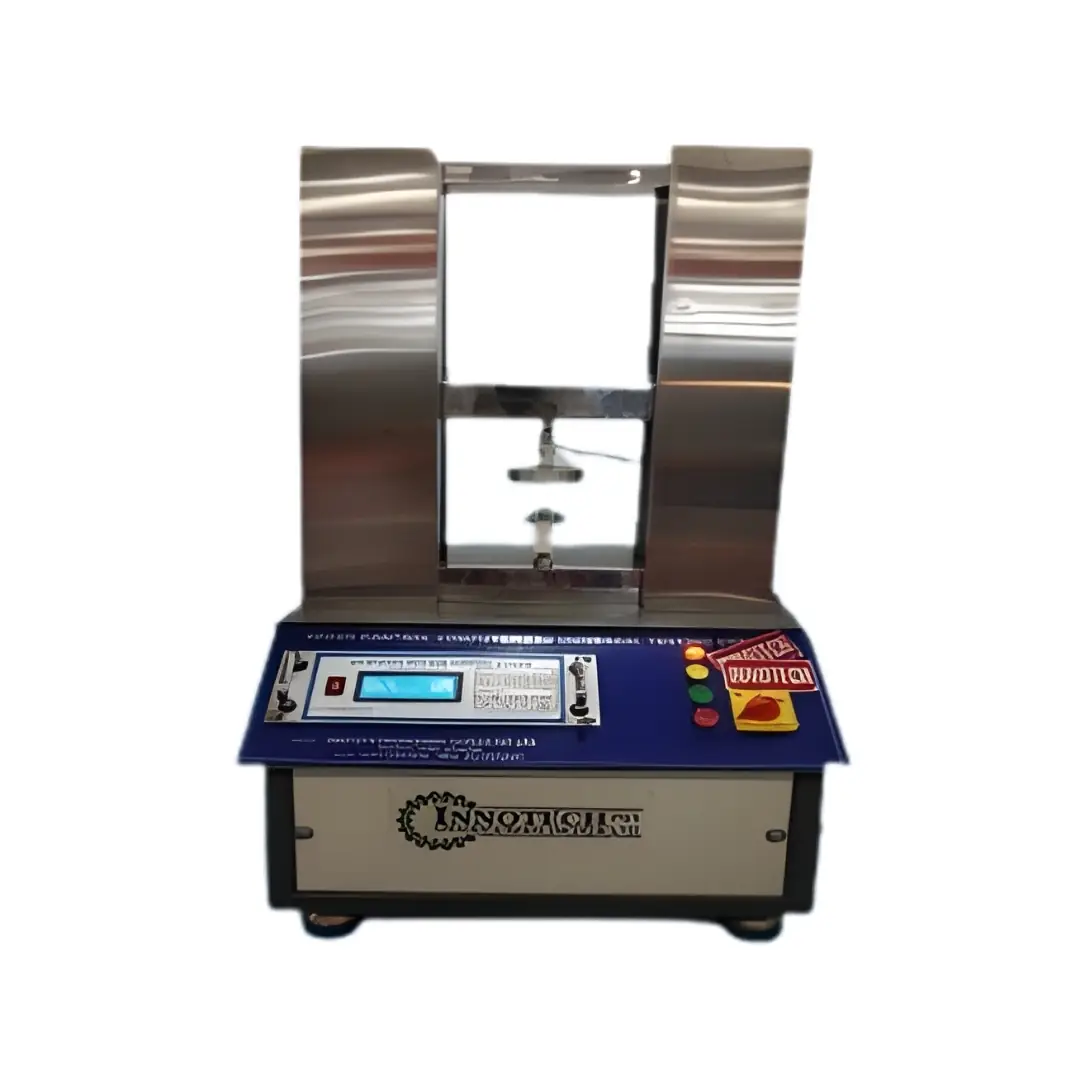
Servo Control Computerized Testing Machine
Servo Control Computerized Testing Machine
The Servo-Controlled Computerized Testing Machine from Innotech Engineering Devices Private Limited is designed for controlled testing of materials, components and products according to specific application requirements. Depending on its configuration, the system can incorporate servo-controlled movement, load measurement, computerized monitoring and test-data recording. Load capacity, fixtures, sensors, control functions and software can be specified according to the required test method.
OVERVIEW
Description
Servo-Controlled Computerized Testing Machine
The Servo-Controlled Computerized Testing Machine from Innotech Engineering Devices Private Limited is a configurable testing system designed for evaluating materials, components and products under controlled test conditions. It can be developed for specific testing applications where controlled movement, force measurement and computerized monitoring are required.
Depending on the machine configuration, a servo-control system can regulate the movement of the testing mechanism, while suitable sensors measure the required parameters. The computer-based interface can be configured to display test information, record data and support result analysis when these functions are included in the supplied system.
The machine's design depends on the intended application, specimen dimensions, required load range, test speed, fixtures and measurement requirements. These details should be established before the final machine configuration is selected.
What Is a Servo-Controlled Computerized Testing Machine?
A Servo-Controlled Computerized Testing Machine uses a servo-based control arrangement to regulate the movement of a testing mechanism according to programmed or selected parameters. A computerized system can be used to monitor the test and manage available data-acquisition functions.
Depending on the supplied design, the machine may be configured for a specific mechanical test, such as applying force to a component, measuring its response or evaluating its performance under a defined loading procedure.
The exact testing capability depends on the machine's mechanical arrangement, sensors, fixtures, software and load capacity. The term does not automatically mean that every machine can perform all tensile, compression, fatigue or other mechanical tests.
Working Principle
The working principle depends on the intended test and the machine configuration.
1. Specimen preparation: Prepare the material or component according to the selected test procedure.
2. Specimen mounting: Position and secure the specimen using suitable grips, fixtures or supports.
3. Parameter selection: Enter the available test settings, such as movement, speed or load-related parameters, according to the configured control system.
4. Controlled operation: The servo-control system regulates the movement of the testing mechanism.
5. Measurement: Suitable sensors measure the required test parameters.
6. Monitoring and recording: The computerized system displays and records the available measurements when the relevant functions are provided.
7. Result evaluation: Review the recorded results according to the intended test method and acceptance criteria.
The appropriate test procedure, sensor selection and measurement-system calibration should be confirmed for the specific application.
Key Features
- Servo-controlled Operation
- Computerized Control
- Load Measurement
- Configurable Test Parameters
- Real Time Monitoring
- Data Recording:
- Application-Specific Fixtures
- Custom Load Capacity
- Flexible Testing Arrangement
- Laboratory and Industrial Use
Technical Specifications
Technical note: Final capacity, accuracy, speed range, measurement resolution, control modes and software functions must be confirmed by the technical team. Do not publish estimated values as guaranteed specifications.
Applications
The machine can be configured for a defined testing task involving materials, components or assemblies. Potential applications depend on the mechanical design, load range, fixtures and available measurement functions.
Possible application areas include:
- Mechanical testing of selected components.
- Controlled loading of components or assemblies
- Force measurement during a specified test procedure
- Product performance evaluation
- coparative testing of samples
- Quality-control testing in manufacturing
- Research and development testing
- Special-purpose testing systems developed for customer requirements.
Specific tests, such as tensile, compression, cyclic or endurance testing, should be listed only when the supplied machine is designed and equipped to perform them.
Industries Served
Depending on the final configuration, potential users may include:
- General manufacturing and engineering.
- Automotive component manufacturing
- Metal component manufacturing
- Plastics and polymer product manufacturing
- Industrial quality-control laboratories
- Research and development facilities
- Component and assembly testing laboratories
The relevant industries should be selected according to the machine's verified application.
Benefits of Computerized Testing
Controlled testing: A suitable servo-control arrangement can regulate movement according to the configured procedure.
Measurement and monitoring: Compatible sensors and data-acquisition equipment can help monitor the required test parameters.
Data documentation: Computerized recording and reporting can support the review and comparison of test results when included.
Application-specific design: The testing arrangement, fixtures and measurement system can be selected for the customer's component and test method.
Quality-control support: The machine can support product evaluation and quality checks when used with an appropriate, repeatable test procedure.
How to Select the Right Configuration
Before requesting a quotation, identify the material or component to be tested and describe the required test. Confirm the expected load range, specimen dimensions, movement or speed requirements, required sensors, fixtures and reporting functions.
If a particular testing standard applies, provide its name and relevant requirements. The technical team can then assess the suitable machine arrangement and determine which control and measurement functions are necessary.
Why Choose Innotech Engineering Devices Private Limited?
Innotech Engineering Devices Private Limited supplies testing equipment for industrial and laboratory applications across India. Machine requirements can be discussed according to the intended test, component design, measurement needs and operating conditions.
Contact our team to discuss your application and confirm the technical parameters before finalizing a machine configuration.
Enquire About a Servo-Controlled Computerized Testing Machine
For technical details, a quotation or assistance in selecting a suitable testing arrangement, contact Innotech Engineering Devices Private Limited.
Location: Bhiwadi, Rajasthan, India
Phone: +91 9810431604
Email: info@innotechgroup.net
Website: www.innotechgroup.net
Consult to Expert to discuss your testing requirements.
Please contact us to arrange an appointment before visiting our Bhiwadi facility.
SPEC
Specifications
Machine Name
Servo-Controlled Computerized Testing Machine
Testing Application
To be defined according to the required test
Control System
Servo control, subject to the supplied configuration
Computerized Interface
To be confirmed
Load Capacity
To be selected according to application requirements
Load Measurement
Suitable sensor or load cell, as specified
Displacement Measurement
To be confirmed if required
Test Speed
To be specified according to the test method
Movement Control
According to the selected servo system
Test Fixtures
Selected according to the specimen or component
Data Acquisition
To be confirmed
Software and Reporting
To be confirmed
Specimen Dimensions
According to the intended application
Test Modes
To be defined and verified for the supplied machine
Applicable Standard
To be identified according to the test method
Calibration Requirements
To be confirmed
Power Supply
To be confirmed
Machine Dimensions
To be finalized for the selected design
Special Requirements
Subject to technical feasibility