
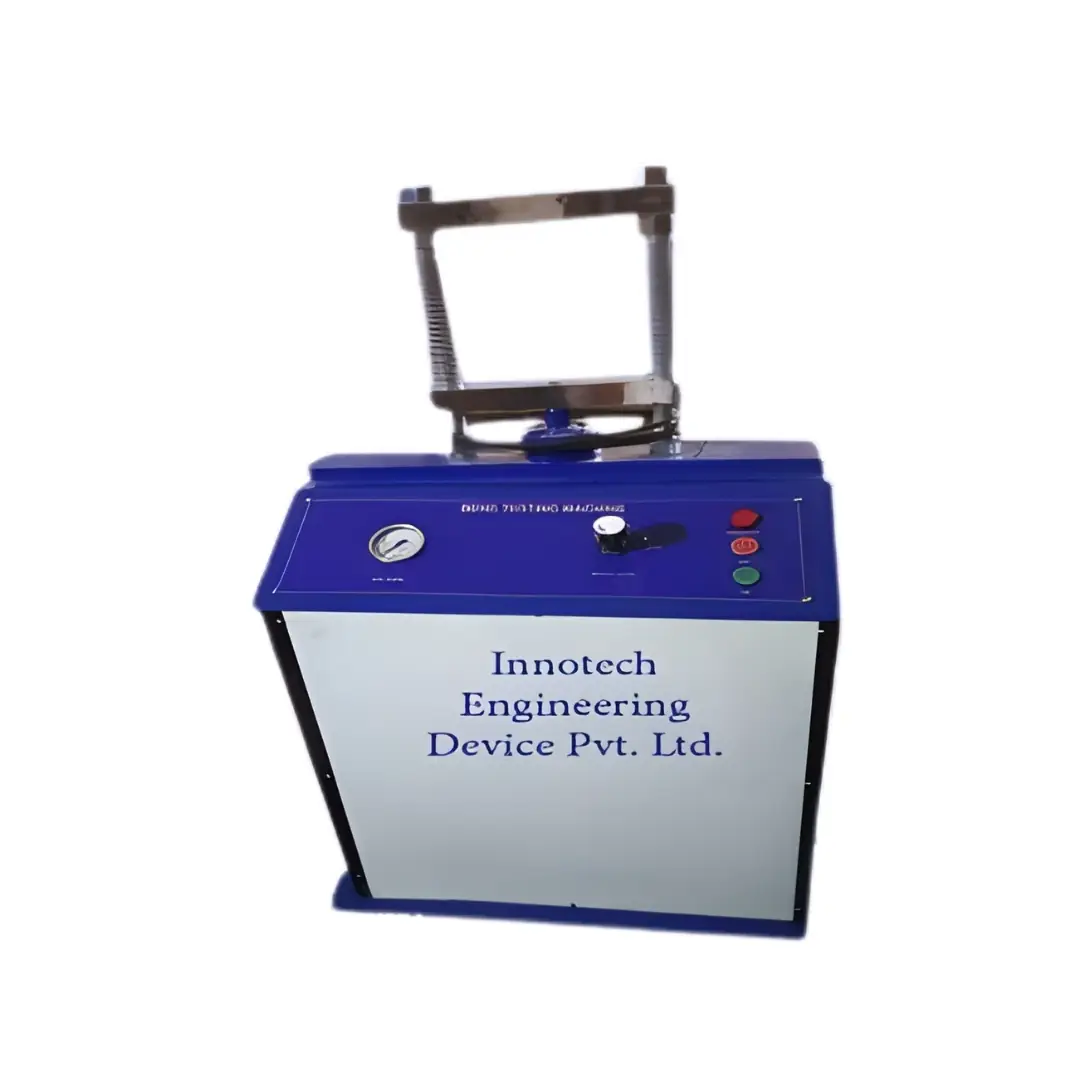
Hydraulic Testing or Pressing Machine
Hydraulic Testing or Pressing Machine
Hydraulic Testing or Pressing Machine designed for controlled pressing, compression, forming, bending, straightening and testing applications. The machine uses a hydraulic power system to apply controlled force and is suitable for material testing laboratories, research and development, manufacturing, quality control and industrial applications.
OVERVIEW
Description
Hydraulic Testing or Pressing Machine
The Hydraulic Testing or Pressing Machine is a robust hydraulic equipment solution designed for applications requiring controlled mechanical force. Depending on the machine configuration, it can be used for pressing, compression, forming, bending, straightening, component testing, assembly, disassembly and other specialized industrial or laboratory operations.
The machine uses a hydraulic power system to generate and transfer force through a hydraulic cylinder. Its configuration can be selected according to the required application, force range, working area, stroke, operating method, fixtures and tooling requirements.
Hydraulic pressing technology is widely used where controlled force, stable operation and repeatable mechanical loading are required.
Innotech Engineering Devices Private Limited manufactures and supplies hydraulic testing and pressing equipment for laboratories, manufacturing industries, research and development facilities, quality-control departments and engineering applications.
What Is a Hydraulic Testing or Pressing Machine?
A Hydraulic Testing or Pressing Machine is equipment that uses hydraulic pressure to generate mechanical force for testing, pressing, compression and other controlled-force applications.
The hydraulic power unit pressurizes hydraulic fluid and directs it to a hydraulic cylinder. The cylinder converts hydraulic pressure into linear mechanical movement and force.
The generated force can then be applied to a suitable:
- Test specimen
- Component
- Material
- Workpiece
- Assembly
- Mechanical part
The machine can be configured according to the intended application and may incorporate suitable fixtures, dies, supports, tooling and control arrangements.
Working Principle
The machine operates on the principle of hydraulic force transmission.
Basic Working Process
- Hydraulic pressure generation
- Fluid transfer
- Cylinder movement
- Force generation
- Testing or pressuring operation
- Pressure release
The actual operating sequence depends on the machine configuration and intended application.
Technical Specifications and Configuration
The exact specifications of a hydraulic testing or pressing machine depend on the customer's application. Important parameters to confirm before ordering include:
| Parameter |
0-100kN | 100-200kN | 200-300kN | 300-500kN | 500-1000kN |
| Machine Type |
Hydraulic Testing / Pressing Machine | Hydraulic Testing / Pressing Machine | Hydraulic Testing / Pressing Machine | Hydraulic Testing / Pressing Machine | Hydraulic Testing / Pressing Machine |
| Maximum Capacity | 100 kN | 200 kN | 300 kN | 500 kN | 1000 kN |
| Approx, Capacity in Tonnes | 10 Ton | 20 Ton | 30 Ton | 50 Ton | 100 Ton |
| Load Range | 5-100 kN | 10-200 kN | 15-300 kN | 25-500 kN | 50-1000 kN |
| Hydraulic Cylinder Bore | Approx. 80-10 mm | Approx. 100-125 mm | Approx. 125-150 mm | Approx. 150-180 mm | Approx. 200-250 mm |
| Cylinder Stroke | 100-200 mm | 150-250 mm | 150-300 mm | 200-350 mm | 250-400 mm |
| Working Area | Approx. 300 X 300 mm | Approx.400 X 400 mm | Approx. 500 X 500 mm | Approx 600 X 600 mm | Approx. 800 X 800 mm |
| Working Height | Approx. 300-500 mm | Approx. 400-600 mm | Approx. 500-700 mm | Approx. 500-800 mm | Approx. 700-1000 mm |
| Ram Movement | Hydraulic | Hydraulic | Hydraulic | Hydraulic | Hydraulic |
| Loading Method | Hydraulic | Hydraulic | Hydraulic | Hydraulic | Hydraulic |
| Hydraulic Pressure | Approx. 100-200 bar | Approx. 150-250 bar | Approx. 150-250 bar | Approx. 180-250 bar | Approx. 200-300 bar |
| Load Measurement | Load Cell / Pressure Measurement | Load Cell / Pressure Measurement | Load Cell/ Pressure Measurement | Load Cel / Pressure Measurement | Load Cell / Pressure Measuremnt |
| Load Display | Digital | Digital | Digital | Digital | Digital |
| Control System | Manual / Digital | Manual / Digital | Manual / Digital / PLC | Digital / PLC | Digital / PLC |
| Pressing Speed | Approx. 5-20 mm/min | Approx. 5-20 mm/min | Apporx. 5-15 mm/min | Approx. 3-15 mm/min | Approx. 2-10 mm/min |
| Return Speed | Approx. 10-30 mm/min | Approx. 10-30 mm/min | Approx. 10-25 mm/min | Approx. 10-25 mm/min | Approx.5-20 mm/min |
| Hydraulic Pump | Approx. 1-3 HP | Approx. 2-5 HP | Approx. 3-5 HP | Approx. 5-7.5 HP | Approx. 7.5-15 HP |
| Hydraulic Oil Tank | Approx 30-50L | Approx 40-70L | Approx. 50-100L | Approx. 80-150L | Approx. 120-250L |
| Frame Construction | Heavy-duty Fabricated Steel | Heavy-duty Fabricated Steel | Reinforced Steel Frame | Heavy-duty Reinforced Frame | Heavy-Duty Industrial Frame |
| Platen Size | Approx. 250-300 mm | Approx. 300-400 mm | Approx. 400-500 mm | Approx. 500-600 mm | Approx. 600-800 mm |
| Fixture Arrangement | Standard / Custom | Standard / Custom | Customised | Customised | Heavy Duty Customised |
| Pressure Control | Manual / Hydraulic | Manual / Hydraulic | Hydraulic / Digital | Digital / PLC | Digital / PLC |
| Emergency stop | Available | Available | Available | Available | Available |
| Safety Guard | Optional / As required | Optional / As required | Avaialble | Available | Heavy-Duty Guard |
| Power Supply | Apporx. 230/415 V | Approx. 415 V | Approx. 415 V | Approx. 415 V | Approx. 415 V |
| Operation | Manual / Semi-Automatic | Manual / Semi Automatic | 700-1200 kg | Semi-Automatic / Automatic | Automatic / PLC |
| Approx. Machine Weight | 300-600kg | 500-900 kg | 700-1200kg | 1000-1800 kg | 1500-3000+ kg |
Note: Numerical specifications should be confirmed from the official machine configuration before publication or quotation.
Applications
- Material Testing
- Compression Applications
- Component Testing
- Pressing Operations
- Forming Applications
- Bending Applications
- Straightening Applications
- Assembly adn Disassembly
- Automotive Applications
- Research and Development
- Quality Control
- Mechanical Engineetring
Key Features
The Hydraulic Testing or Pressing Machine can be configured with features such as:
- Hydraulic force generation
- Controlled mechanical loading
- Robust structural frame
- Hydraulic cylinder based operation
- Application-specific working arrangement
- Suitable fixtures and tooling
- Compression testing capability, where configured
- Pressing and forming capability
- Bending and straightening arrangements
- Manual or other control options, depending on configuration
- Laboratory and industrial suitability
- Application-specific customization
- Suitable safety arrangements
- Support for specilized testing applications
Advantages
A hydraulic pressing system can provide several practical advantages:
Can be adapted for different workpieces and components
- Controlled force application
- Stable hydraulic operation
- Suitable for heavy-force applications
- Flexible pressing arrangements
- Application-specific tooling
- Suitable for testing and industrial operations
- Useful for component development
- Suitable for manufacturing applications
- Useful for quality-control activities
- Suitable for laboratory applications
- Can support customized testing arrangements
Hydraulic Testing or Pressing Machine for Laboratories
Testing laboratories often require equipment capable of applying controlled mechanical force to specimens and components.
A hydraulic testing or pressing machine can be configured for applications involving:
- Compression testing
- Controlled mechanical loading
- Component evaluation
- Material testing
- Experimental testing
- Research and development
- Prototype evaluation
The final configuration should be selected according to the laboratory's test procedure, specimen dimensions, required force, fixtures and measurement requirements.
Hydraulic Pressing Machine for Industrial Applications
Manufacturing industries may use hydraulic pressing equipment for controlled-force production and component operations.
Potential applications include:
- Pressing
- Forming
- Bending
- Straightening
- Component fitting
- Assembly
- Dissembly
- Prototype development
- Component inspection
- Specilized manufacturing processes
The machine should be configured according to workpiece dimensions, production requirements, tooling and operating conditions.
How to Select the Right Hydraulic Testing or Pressing Machine?
Before purchasing the equipment, consider the following:
- Required force
- Application type
- Workpiece dimensions
- Cylinder requirements
- Operating speed
- Fixtures and tooling
- Control requirements
- Testing requirements
- Safety requirements
- future requirements
Custom Hydraulic Testing and Pressing Machine
Hydraulic testing and pressing equipment can be configured according to application-specific requirements.
Depending on technical feasibility, configuration considerations may include:
- Required force
- Working area
- Cylinder arrangements
- Stroke
- Fixtures
- Dies
- Supports
- Tooling
- Control arrangements
- Specimen dimensions
- Component geometry
- Laboratory or production requirements
Customers should provide their application details to the manufacturer so that the appropriate machine arrangement can be discussed.
Safety and Maintenance
Hydraulic machines can operate with significant mechanical forces. Operators should therefore follow the manufacturer's operating instructions and appropriate safety procedures.
Regular maintenance may include:
- Checking hydraulic fluid
- Inspecting hoses and connections
- Checking hydraulic cylinders
- Inspecting seals
- Checking moving components
- Inspecting fixtures and pressing surfaces
- Checking for hydraulic leakage
- Cleaning the machine
- Inspecting control components
- Periodic servicing according to manufacturer recommendations
Hydraulic Testing or Pressing Machine Manufacturer in India
Innotech Engineering Devices Private Limited manufactures and supplies hydraulic testing equipment, pressing machines and specialized engineering equipment for industrial and laboratory applications.
Our hydraulic machine solutions can be considered for testing, pressing, compression, forming, bending, straightening, component testing and other controlled-force applications.
Customers looking for a Hydraulic Testing or Pressing Machine manufacturer in India can contact Innotech Engineering Devices with their required force, application, workpiece dimensions, tooling and operating requirements.
Hydraulic Testing or Pressing Machine Manufacturer in Bhiwadi, Rajasthan
Innotech Engineering Devices Private Limited serves customers from its industrial base in Bhiwadi, Rajasthan, supplying testing and engineering equipment for customers across India.
Why Choose Innotech Engineering Devices?
Innotech Engineering Devices Private Limited provides testing and specialized engineering equipment for industrial, laboratory, research and quality-control applications.
Our approach focuses on selecting or developing machine configurations according to the actual application rather than relying on a one-size-fits-all arrangement.
Customers can discuss requirements related to:
- Force capacity
- Application
- Specimen or workpiece dimensions
- Working area
- Stroke
- Fixtures
- Tooling
- Controls
- Laboratory requirements
- Industrial requirements
Frequently Asked Questions
What is a Hydraulic Testing or Pressing Machine?
A Hydraulic Testing or Pressing Machine uses hydraulic pressure to generate controlled mechanical force for suitable testing, pressing, compression, forming, bending, straightening and industrial applications.
How does a hydraulic pressing machine work?
A hydraulic power unit pressurizes hydraulic fluid and supplies it to a hydraulic cylinder. The cylinder converts hydraulic pressure into mechanical force that is applied to the required specimen, component or workpiece.
What are the applications of a hydraulic pressing machine?
Applications can include pressing, compression, forming, bending, straightening, component testing, assembly, disassembly, research and development and quality-control operations.
Can a hydraulic pressing machine be used for material testing?
Yes. Depending on its configuration, a hydraulic machine can support suitable material testing and controlled mechanical loading applications.
Can the machine be customized?
Yes, the machine can be configured according to application requirements, subject to technical feasibility. Requirements may include force, working area, stroke, fixtures, tooling and controls.
Which industries use hydraulic pressing machines?
Hydraulic pressing equipment can be used in automotive, manufacturing, mechanical engineering, material testing, research and development, quality control and other industrial applications.
What should be considered before purchasing a hydraulic pressing machine?
Important factors include required force, application, specimen or workpiece dimensions, working area, stroke, operating speed, fixtures, tooling, controls, safety requirements and future requirements.
Is maintenance required?
Yes. Regular inspection of hydraulic fluid, hoses, connections, cylinders, seals, fixtures and other components helps support safe and reliable operation.
Who manufactures Hydraulic Testing or Pressing Machines in India?
Innotech Engineering Devices Private Limited manufactures and supplies hydraulic testing and pressing equipment for laboratory, industrial, research and engineering applications.
Conclusion
The Hydraulic Testing or Pressing Machine provides a practical solution for applications requiring controlled mechanical force.
With hydraulic force generation, robust construction and application-specific configuration, the machine can support pressing, compression, forming, bending, straightening, component testing and other specialized operations.
The correct machine configuration should be selected according to the required force, application, material or component, dimensions, working area, tooling, fixtures and operating requirements.
Consult Innotech Engineering Devices for application-specific machine requirements.
Call: 9810431604
Email: info@innotechgroup.net
Website: www.innotechgroup.net