
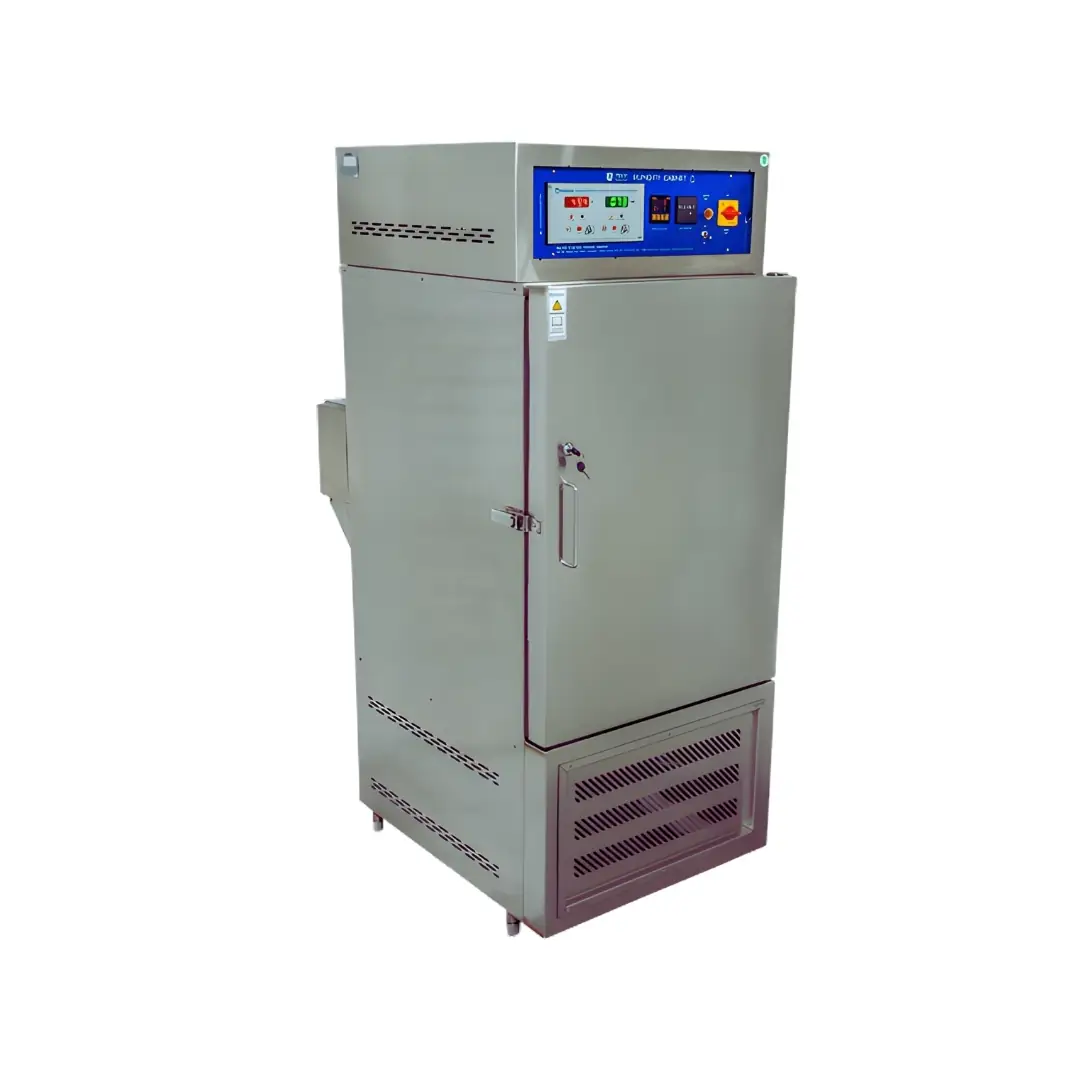
Humidity and Temperature Conditioning Chamber
Humidity and Temperature Conditioning Chamber
Humidity and Temperature Conditioning Chamber for controlled laboratory specimen conditioning, material preparation and industrial quality testing. Designed for paper, packaging, textiles, plastics, rubber and other moisture-sensitive products. Available with customized chamber capacities, digital temperature/RH control, specimen racks and optional programmable cycles or data logging. Manufactured in Bhiwadi, Rajasthan, with application-specific configurations available for laboratories across India.
MODEL
IHTCC
OVERVIEW
Description
Humidity and Temperature Conditioning Chamber Manufacturer in Bhiwadi India
Innotech Engineering Devices Private Limited is an OEM Humidity and Temperature Conditioning Chamber Manufacturer in India, supplying customized laboratory and industrial conditioning equipment for manufacturers, research institutions and quality-control laboratories.
Manufactured in Bhiwadi, Rajasthan, our Humidity Conditioning Chamber is designed to expose test specimens to controlled temperature and relative humidity (RH) conditions before physical, mechanical or material-performance testing.
The equipment is suitable for conditioning paper, packaging materials, textiles, plastics, rubber, polymers and other products whose properties may be influenced by temperature or moisture.
Customers can specify chamber capacity, temperature and humidity conditions, specimen dimensions, control systems, conditioning duration and monitoring requirements.
What Is a Humidity and Temperature Conditioning Chamber?
A Humidity and Temperature Conditioning Chamber is an environmental conditioning cabinet used to maintain selected temperature and humidity conditions for a specified period.
It helps laboratories prepare specimens under controlled conditions before performing tests such as tensile strength, compression, dimensional stability, flexibility and other material-specific evaluations.
Conditioning is particularly important for moisture-sensitive materials because changes in moisture content can influence test results.
A laboratory conditioning chamber helps reduce variation caused by uncontrolled room temperature and humidity.
Why Is Specimen Conditioning Important Before Testing?
The condition of a specimen can affect the measured properties of a material.
For example, paper may absorb or release moisture depending on ambient humidity, while some polymers can change their dimensions or mechanical response after moisture exposure.
Testing specimens without following the prescribed conditioning procedure may reduce comparability between results.
A controlled Temperature and Humidity Conditioning Chamber helps laboratories:
- Establish the specified conditioning environment.
- Prepare specimens before testing.
- Maintain consistent temperature and humidity exposure.
- Follow applicable material conditioning procedures.
- Improve comparability between laboratory test batches.
The required conditioning period must be determined by the applicable test standard or material specification.
Working Principle of a Humidity Conditioning Chamber
The chamber uses temperature sensing, humidity sensing, environmental control and forced-air circulation to maintain selected conditions.
A temperature sensor monitors the chamber air temperature, while an RH sensor measures relative humidity.
The controller compares the measured values with the selected setpoints and regulates the installed heating, cooling, humidification and dehumidification systems as required.
Air circulation distributes conditioned air around the specimens.
Depending on the configuration, a digital controller or PLC/HMI system can be used for monitoring and operation.
Typical Conditioning Procedure
- Identify the applicable material test standard.
- Select the required temperature and relative humidity.
- Arrange specimens on suitable shelves or racks.
- Allow the chamber to stabilize at the required conditions.
- Condition specimens for the specified period.
- Monitor environmental conditions during exposure.
- Transfer specimens for testing according to the standard's requirements.
Specimen spacing, conditioning time and transfer conditions should follow the relevant test method.
Humidity Conditioning Chamber for Paper and Packaging Testing
Paper, cardboard and corrugated packaging materials can respond to changes in environmental humidity.
Conditioning these materials before testing helps laboratories evaluate properties under the required environmental conditions.
Applications may include specimen preparation before suitable tensile, compression, bursting or other packaging-material tests.
The required atmosphere and duration must be selected according to the applicable material standard.
Conditioning Chamber for Textiles and Fabrics
Textile specimens may require conditioning before tests involving fabric strength, elongation or other physical properties.
A suitable Textile Conditioning Chamber helps maintain the specified laboratory atmosphere for fabric, fibre and yarn specimens.
Standards such as ISO 139 and ASTM D1776/D1776M may be relevant, depending on the material and test procedure.
The chamber must be configured to achieve the specified conditioning conditions.
Conditioning Chamber for Plastics, Polymers and Rubber
Temperature and moisture can influence selected physical and mechanical properties of plastics, polymers and elastomers.
A Material Conditioning Chamber can support controlled environmental preparation of specimens before appropriate testing.
Applications include conditioning before selected tensile, flexural, dimensional or other material evaluations.
The correct temperature, RH and conditioning duration depend on the material and relevant standard.
Relevant Specimen Conditioning Standards
| Standard |
Relevance |
| ISO 291 | Standard atmoshpheres for conditioning and testing plastics |
| ISO 139 | Standard atmoshpheres for conditioning and testing textiles |
| ASTM D1776/D1776M | Conditioning and testing textiles |
| ISO 187 | Standard atmosphere for conditioning and testing paper, board and pulps |
Standards specify conditions for particular materials and tests. The exact edition and requirements should be checked before selecting a chamber.
Compliance depends on the final chamber performance and test procedure, not simply on the product description.
How to Select a Laboratory Conditioning Chamber
When purchasing a humidity and temperature conditioning chamber, industrial buyers should provide:
Material type: Paper, packaging, textiles, rubber, plastic or other specimens.
Test standard: Applicable IS, ISO, ASTM or customer-specific method.
Temperature and RH: Required environmental conditions.
Specimen dimensions: Maximum size and quantity of samples.
Chamber capacity: Required internal working space.
Conditioning duration: Required exposure period and whether continuous operation is needed.
Controller: Constant-setpoint or programmable operation.
Data recording: Whether test records and downloadable data are required.
Installation: Electrical supply, available floor space and water requirements.
These details help the manufacturer prepare a suitable technical offer.
Humidity Conditioning Chamber Price in India
The Humidity Conditioning Chamber Price in India depends on the required chamber capacity, operating conditions, construction, controller and accessories.
A compact laboratory specimen conditioning chamber may require a different configuration from a large industrial environmental conditioning chamber.
Cost considerations include heating and cooling systems, humidity control, sensor selection, programmable operation, data logging and specimen racks.
For an accurate quotation, provide the required standard, temperature/RH conditions, chamber size and specimen details.
Why Choose Innotech?
Innotech Engineering Devices Private Limited manufactures industrial testing machines and laboratory equipment in Bhiwadi, Rajasthan.
Our humidity and temperature conditioning chambers can be configured according to customer-specific laboratory and industrial testing requirements.
We focus on understanding the intended conditioning process, specimen dimensions, control requirements and applicable testing standards before finalizing the machine specification.
Customers searching for a Conditioning Chamber Manufacturer in India, Humidity Conditioning Chamber Manufacturer in Bhiwadi or Laboratory Conditioning Chamber Supplier can contact Innotech for technical discussions and quotations.
Frequently Asked Questions
What is a humidity conditioning chamber used for?
It is used to condition materials and test specimens at specified temperature and relative humidity conditions before or during laboratory testing.
What is the difference between a conditioning chamber and a humidity testing chamber?
A conditioning chamber is primarily used to prepare specimens under specified environmental conditions. A humidity testing chamber may be used for longer-term environmental exposure and product reliability evaluation.
Can the chamber be used for paper and packaging materials?
Yes, provided the configuration meets the required material conditioning conditions.
Can a conditioning chamber be customized?
Yes. Capacity, temperature/RH conditions, shelves, controls and monitoring options can be selected according to engineering feasibility.
What determines the conditioning chamber price?
Chamber size, environmental range, control accuracy, heating/cooling arrangement, construction and optional accessories.
Request a Humidity Conditioning Chamber Quotation
Looking for a Humidity and Temperature Conditioning Chamber Manufacturer in India?
Contact Innotech Engineering Devices Private Limited for application-specific chamber specifications and quotations.
Factory: H-307, RIICO Industrial Area, Karoli, Tapukara, Bhiwadi – 301707, Rajasthan, India
Email: info@innotechgroup.net
Phone: +91 9810431604
WHY IT WORKS
Key benefits
Helps prepare specimens under controlled temperature and humidity conditions.
Supports more consistent material testing procedures.
Reduces variation associated with changing ambient laboratory conditions.
Suitable for multiple moisture-sensitive materials.
Supports conditioning requirements for applicable ASTM and ISO methods.
Enables selection of chamber capacity according to specimen size.
Offers digital monitoring and controller options.c
Allows application-specific conditioning durations.
Supports controlled specimen arrangement with shelves and racks.
Optional data logging helps maintain environmental records.
Customizable configuration for industrial and laboratory requirements.
Helps buyers specify the correct equipment before procurement.
USE CASE
Application range
BUILT IN
Features
Controlled temperature and relative humidity environment.
Customized chamber capacities and internal dimensions.
Digital temperature controller or PLC-HMI control option.
Digital humidity controller or PLC-HMI control option.
Electronic RH sensing arrangement.
RTD or other suitable temperature sensing.
Electrical heating system.
Refrigeration-based cooling where required.
Application-specific humidification system.
Dehumidification arrangement where required.
Forced-air circulation for environmental distribution.
Insulated heavy-duty chamber construction.
Stainless steel internal lining option.
Adjustable or customized specimen shelves.
Adjustable conditioning duration.
Optional programmable temperature and humidity profiles.
Optional digital data logging and software interface.
Optional viewing window and chamber lighting.
Configurable temperature/RH deviation alarms and safety protection.
Customized electrical supply and installation configuration.
SPEC
Specifications
Product type
Humidity and Temperature Conditioning Chamber
Chamber capacity
Customized as per requirement
Temperature range
Application-specific
Relative humidity range
Application-specific
Temperature controller
Digital / PLC-HMI option
Humidity controller
Digital / PLC-HMI option
Temperature sensor
RTD / suitable sensor
Humidity sensor
Electronic RH sensor
Heating system
Electrical heating
Cooling system
Refrigeration-based, where required
Humidification
Selected according to required conditions
Dehumidification
Where required
Air circulation
Motorized forced-air arrangement
Inner chamber
Corrosion-resistant / stainless-steel lining option
Shelves
Customized specimen racks
Test duration
Adjustable / programmable option
Data logging
Optional
Power supply
According to approved design