
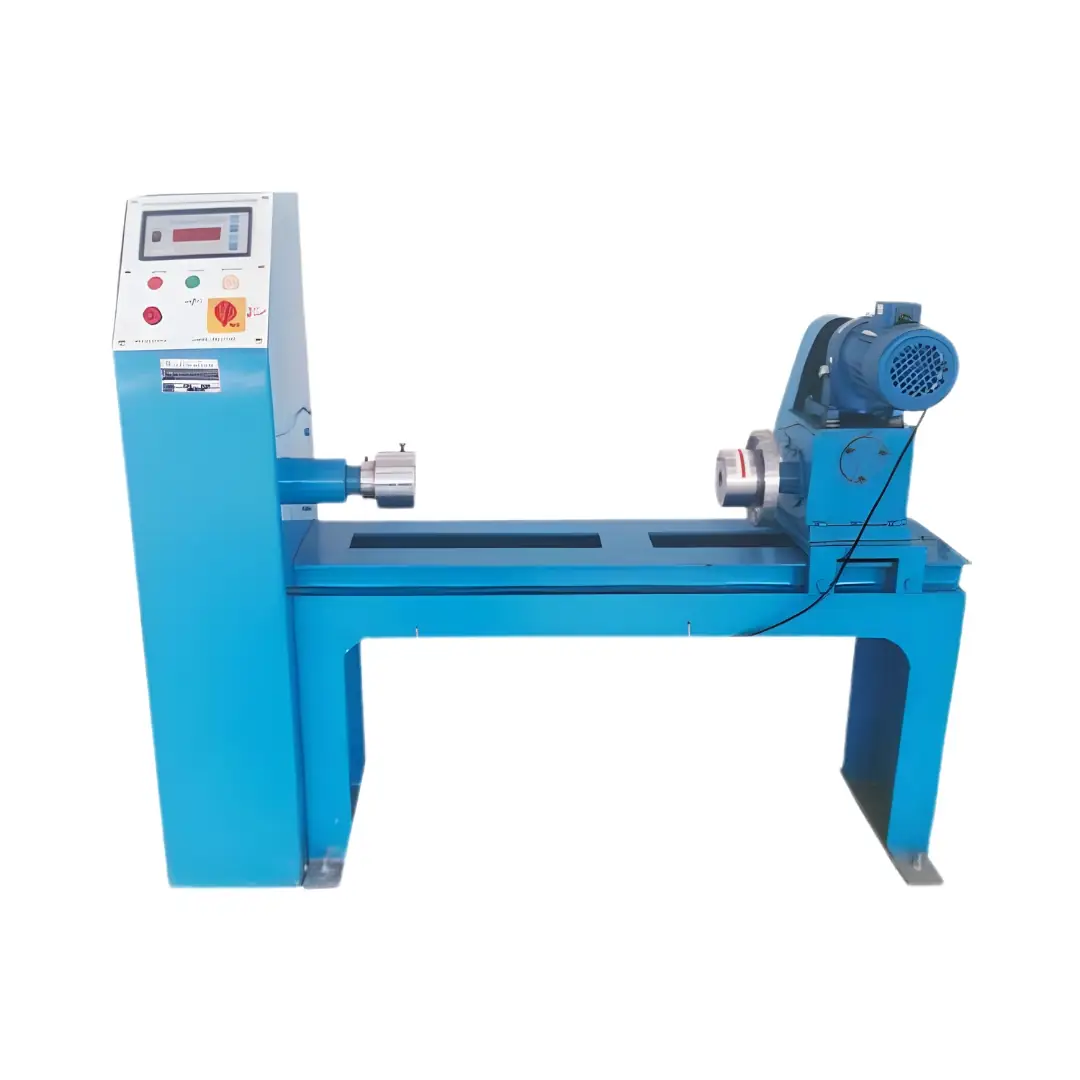
Digital Torsion Testing Machine
Digital Torsion Testing Machine
Digital Torsion Testing Machine is designed to evaluate the torsional strength, resistance to twisting, torque behaviour and angle of twist of suitable materials and test specimens. The machine is suitable for material testing laboratories, engineering industries, automotive applications, manufacturing units, research and development facilities and quality-control departments requiring controlled torsion testing and measurement.
OVERVIEW
Description
Digital Torsion Testing Machine
A Digital Torsion Testing Machine is used to evaluate the behaviour of materials and engineering components when they are subjected to twisting or torsional loads.
The machine applies controlled torque to a test specimen and measures the resulting angle of twist. This helps manufacturers, laboratories and engineers study properties such as torsional strength, torque resistance and torsional behaviour.
Torsion testing is useful for materials and components that experience twisting forces during actual use, including shafts, rods, wires, tubes, fasteners and other mechanical parts.
Innotech Engineering Devices Private Limited manufactures and supplies material testing and laboratory testing equipment for industrial, research, quality-control and educational applications.
Applications of Digital Torsion Testing Machine
The Digital Torsion Testing Machine can be used in several industries and testing applications.
Metal and Material Testing
The machine can be used to study the torsional behaviour of metals and suitable engineering materials. Testing can help compare materials and evaluate their resistance to twisting.
Automotive Component Testing
Many automotive components are exposed to torque during operation. The machine can be used for suitable shafts, rods, fasteners and other components where torsional performance is important.
Shaft Testing
Shafts used for transmitting rotational power can be tested under torsional loading to study their response to applied torque.
Wire Testing
Suitable wire specimens can be evaluated for their resistance to twisting and their torsional behaviour.
Mechanical Engineering
Engineering laboratories can use torsion testing to study shafts, rods and other components that are subjected to twisting forces.
Quality Control
Manufacturers can use torsion testing for product inspection, batch comparison and quality-control procedures where torsional performance is an important requirement.
Research and Product Development
R&D teams can compare materials, component designs and manufacturing processes by studying their response to torsional loading.
Educational Laboratories
The machine can also be used in engineering institutions for practical experiments related to torsion, torque, shear behaviour and angle of twist.
What Can Be Evaluated?
Depending on the machine configuration, specimen geometry and test procedure, torsion testing can be used to study:
- Torsional strength
- Torque resistance
- Angle of twist
- Torsional stifness
- Shear stress and strain behaviour
- Modulus of rigidity
- Yield behaviour under torsion
- Failure behaviour
- Resistance to twisting
The exact properties that can be calculated depend on the testing standard, specimen dimensions and measurement system.
Key Features
Digital Torque Measurement
The machine is designed to measure the torque applied to the specimen during testing.
Angle-of-Twist Measurement
The angular movement of the specimen can be measured to study its response to the applied torque.
Controlled Torsional Loading
The testing arrangement allows torque to be applied in a controlled manner according to the selected test procedure.
Digital Display
A digital display allows the operator to monitor important test values during operation.
Secure Specimen Gripping
Suitable grips or fixtures hold the specimen securely during the torsion test.
Laboratory-Friendly Design
The machine can be used in material testing laboratories, manufacturing units, quality-control departments, research facilities and educational institutions.
Application-Specific Configuration
Fixtures, torque capacity and measurement arrangements can be selected according to the type and size of specimens being tested.
Technical Specifications
The exact specifications depend on the machine configuration and testing requirements.
| Parameterr | Specifications |
| Torque Measurement Range | To be confirmed |
| Maximum Torque capacity | To be confirmed |
| Test Speed | To be confirmed |
| Specimen Size | AS per machine configuration |
| Specimen Grips | As required |
| Digital Display | Available |
| Control System | As per configuration |
| Data Recording | As applicable |
| Power Supply | To be confirmed |
| Machine Dimensions | To be confirmed |
| Machine Weight | To be confirmed |
Note: Actual numerical values should be confirmed from the final Innotech technical specification sheet before publishing.
Materials and Specimens That Can Be Tested
Depending on the machine capacity and available fixtures, suitable materials and specimens may include:
- Mild steel
- Carbon steel
- Stainless steel
- Alloy steel
- Copper and copper alloys
- Brass
- Engineering materials
- Wires
- Rods
- Tubes
- Shafts
- Fasteners
The machine should be selected according to the specimen dimensions, expected torque and applicable test procedure.
Torsion Testing for Automotive Applications
Torsional loads are present in many automotive components. A Digital Torsion Testing Machine can be considered for testing suitable components such as:
- Shafts
- Rods
- Fasteners
- Drive components
- Torque-loaded mechanical parts
- Suitable wires and similar components
The appropriate fixtures and test conditions depend on the component design and intended application.
Torsion Testing for Quality Control
Torsion testing can be included in a manufacturer's quality-control process when resistance to twisting is an important product requirement.
Testing can help manufacturers compare samples and identify variations related to:
- Material properties
- Heat treatments
- Manufaturing processes
- Components geometry
- Material selection
- Product design
Using a consistent test procedure and specimen preparation is important when comparing results between samples or production batches.
How to Choose a Digital Torsion Testing Machine?
Before purchasing a torsion testing machine, consider the following:
- Required torque capacity
- Specimen diameter and length
- Type of material or component
- Required angle-of-twist range
- Test speed
- Measurement accuracy
- Type of specimen grips
- Digital display requirements
- Data recording requirements
- Laboratory space
- Future testing requirements
Selecting the machine according to the actual specimen and testing procedure helps ensure that the equipment is suitable for the intended application.
Digital Torsion Testing Machine Manufacturer in India
Innotech Engineering Devices Private Limited manufactures and supplies testing machines and laboratory equipment for material testing, manufacturing, quality control, research and engineering applications.
The Digital Torsion Testing Machine is intended for controlled torsional testing of suitable materials and engineering components.
The machine configuration can be discussed according to requirements such as:
- Torque capacity
- Specimen dimensions
- Test speed
- Angle-of-twist measurement
- Fixtures
- Digital measurement
- Data recording
- Application requirements
Digital Torsion Testing Machine Manufacturer in Bhiwadi, Rajasthan
Innotech Engineering Devices Private Limited is based in Bhiwadi, Rajasthan, and supplies testing equipment to laboratories, manufacturers, educational institutions and industrial customers across India.
Customers looking for a Digital Torsion Testing Machine manufacturer in Bhiwadi, a torsion testing machine supplier in Rajasthan, or a torsion testing machine manufacturer in India can contact Innotech to discuss their testing requirements.
Frequently Asked Questions
What is a Digital Torsion Testing Machine?
A Digital Torsion Testing Machine is used to apply controlled twisting force to a specimen and measure its response, including torque and angle of twist.
What does a torsion test measure?
A torsion test can be used to evaluate torque resistance, torsional strength, angle of twist and other torsional or shear-related properties, depending on the test method.
What is torsional strength?
Torsional strength refers to the ability of a material or component to withstand twisting or torsional loading up to a specified limit or failure condition.
What is angle of twist?
Angle of twist is the angular deformation produced in a specimen when torque is applied.
Which materials can be tested?
Suitable metals, alloys, wires, rods, tubes, shafts, fasteners and other engineering specimens can be tested when their dimensions and required torque are within the machine's capacity.
Can automotive components be tested?
Yes. Suitable automotive components that experience torsional loading can be tested when the machine capacity and fixtures are appropriate.
Can wires be tested?
Suitable wires can be tested if the machine has the required gripping arrangement, torque capacity and specimen configuration.
Is torsion testing useful for quality control?
Yes. It can be used for product inspection, batch comparison and quality-control testing where torsional performance is an important requirement.
What is the difference between torsion testing and tensile testing?
Tensile testing applies a pulling force to a specimen, while torsion testing applies a twisting force or torque. The two tests provide different information about material and component behaviour.
Can the machine measure angle of twist?
A suitable torsion testing machine can include an angular measurement system for measuring the twist produced during testing. The measurement range depends on the machine configuration.
Can test results be recorded digitally?
The machine can provide digital measurement and display. Computerized data acquisition and reporting depend on the selected configuration.
Can the machine be customized?
The machine configuration can be discussed according to torque capacity, specimen dimensions, gripping requirements, angle-of-twist measurement and other application requirements.
Conclusion
The Digital Torsion Testing Machine provides a practical solution for studying the torsional behaviour of suitable materials and engineering components. By applying controlled torque and measuring the resulting angle of twist, it can support the evaluation of torsional strength, resistance to twisting and other mechanical properties.
The machine is suitable for material testing laboratories, metal industries, automotive applications, mechanical engineering, manufacturing, quality control, research and development, and educational institutions.
For information about torque capacity, specimen size, fixtures, accuracy, angle-of-twist range and other technical specifications, contact Innotech Engineering Devices Private Limited for the appropriate machine configuration.