
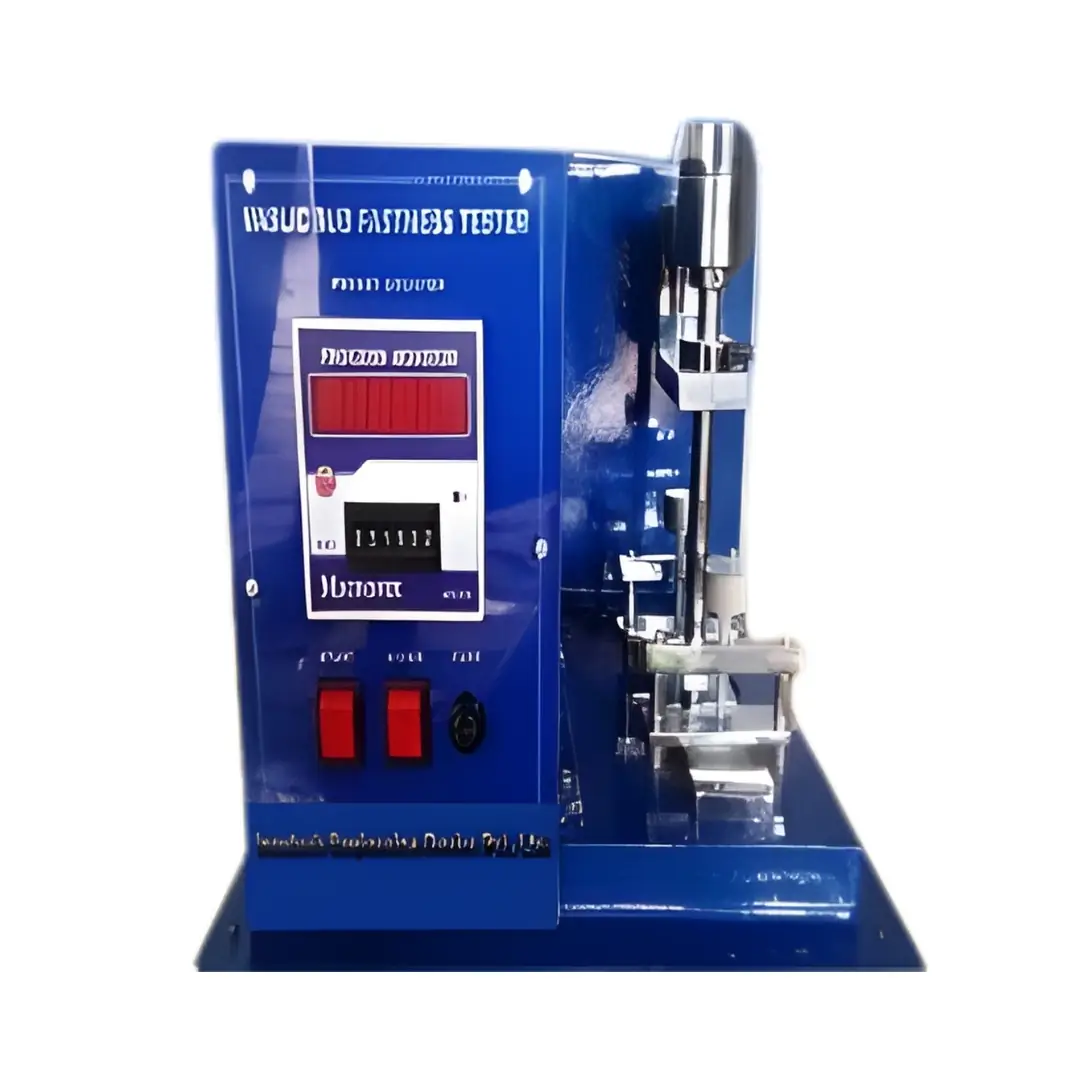
Digital Rubbing Fastness Tester
Digital Rubbing Fastness Tester
The Digital Rubbing Fastness Tester is a precision fabric testing machine designed to evaluate the color fastness of dyed, printed, coated, and finished textile materials against rubbing. Also known as a Digital Crockmeter, the machine provides controlled and repeatable rubbing conditions for assessing color transfer under dry and wet test conditions. It is suitable for textile manufacturers, dyeing and printing units, garment manufacturers, quality control laboratories, textile testing laboratories, and research and development facilities
OVERVIEW
Description
DIGITAL RUBBING FASTNESS TESTER
The Digital Rubbing Fastness Tester from Innotech Engineering Devices Private Limited is a laboratory testing instrument designed for evaluating the resistance of textile materials to color transfer caused by rubbing. Also known as a Crocking Tester or Crockmeter, the instrument is used to assess the color fastness of dyed, printed, coated, and finished textile materials under controlled dry and wet rubbing conditions.
Rubbing fastness is an important quality characteristic of textiles because color may transfer from a fabric surface to another material when subjected to friction during handling, manufacturing, washing, transportation, or normal use. The Digital Rubbing Fastness Tester helps textile manufacturers and quality-control laboratories evaluate this behavior in a controlled and repeatable manner.
The instrument is designed with a controlled rubbing mechanism that applies a specified rubbing action to the textile specimen using a standard rubbing finger or rubbing material. After completion of the test, the amount of color transferred to the rubbing material can be evaluated using the appropriate grey scale or color assessment method according to the applicable testing procedure.
The digital control system provides convenient operation and helps maintain consistent test parameters, making the instrument suitable for routine textile quality control as well as laboratory research and development.
Working Principle
During a rubbing fastness test, the textile specimen is securely positioned on the testing platform. A standardized rubbing material is attached to the rubbing finger of the tester.
The rubbing finger is moved across the surface of the textile specimen for a specified number of cycles under controlled testing conditions. Depending on the applicable test method, the test can be performed using dry or wet rubbing material.
After completion of the rubbing cycle, the rubbing material is examined for transferred color. The degree of staining or color transfer can be evaluated using the appropriate grey scale or other specified assessment method.
The controlled rubbing movement of the Digital Rubbing Fastness Tester helps reduce variations associated with manual testing and supports consistent laboratory evaluation.
KEY FEATURES
- Digital control and display for convenient operation
- Designed for rubbing/crocking fastness evaluation of textiles
- Suitable for both dry and wet rubbing tests, depending on configuration
- Controlled and repeatable rubbing action
- Consistent rubbing stroke and test conditions
- Suitable for dyed, printed, coated, and finished fabrics
- Helps evaluate color transfer and staining caused by rubbing
- Easy-to-operate testing mechanism
- Suitable for routine laboratory quality control
- Robust construction for regular testing applications
- Useful for textile research and product development
- Supports comparative testing of different textile samples
- Suitable for textile mills, dyeing houses, garment manufacturers, and testing laboratories
WORKING PRINCIPLE
In a rubbing fastness test, a textile specimen is securely mounted on the test platform. A standard rubbing material is attached to the rubbing finger of the instrument.
The rubbing finger is then moved over the textile specimen for a specified number of rubbing cycles under controlled conditions. Testing may be performed under dry or wet conditions depending on the applicable test method and instrument configuration.
After the rubbing cycle is completed, the rubbing material is examined for transferred color. The degree of staining or color transfer can then be assessed using an appropriate grey scale or other specified evaluation method.
The Digital Rubbing Fastness Tester provides controlled mechanical rubbing to help minimize variations caused by manual testing and improve the repeatability of laboratory results.
APPLICATIONS
The Digital Rubbing Fastness Tester is suitable for testing:
- Dyed textile fabrics
- Printed textile fabrics
- Colored fabrics
- Finished fabrics
- Coated textile materials
- Garment materials
- Home textile fabrics
- Upholstery fabrics
- Technical textiles
- Knitted fabrics
- Woven fabrics
- Other suitable textile materials
Industries Served
The Digital Rubbing Fastness Tester is suitable for:
- Textile Manufacturing
- Fabric Manufacturing
- Textile Dyeing
- Textile Printing
- Garment and Apparel Manufacturing
- Textile Finishing
- Home Textile Manufacturing
- Technical Textile Manufacturing
- Textile Processing Units
- Textile Testing Laboratories
- Quality Control Laboratories
- Research and Development Laboratories
- Third-Party Testing Laboratories
- Educational and Institutional Laboratories
Importance of Rubbing Fastness Testing
Rubbing fastness testing is essential for evaluating how well the color of a textile material withstands friction. Poor rubbing fastness can result in unwanted color transfer to other fabrics, garments, surfaces, or materials during handling and use.
Regular rubbing fastness testing helps textile manufacturers evaluate the performance of dyes, pigments, printing systems, and finishing processes. It also helps quality-control teams identify variations between production batches and maintain consistent product quality.
For garment and apparel manufacturers, good rubbing fastness is particularly important because fabrics may experience repeated friction during manufacturing, transportation, handling, and everyday use.
Dry and Wet Rubbing Testing
The tester can be used for dry rubbing and wet rubbing fastness evaluation, subject to the applicable testing method and instrument configuration.
Dry rubbing testing evaluates color transfer when the textile specimen is rubbed using a dry standard rubbing material. Wet rubbing testing evaluates color transfer when the specified rubbing material is prepared under controlled moisture conditions.
The number of rubbing cycles, applied pressure, rubbing material, specimen preparation, and evaluation procedure should be selected according to the applicable testing standard and product specification.
Quality Control Applications
The Digital Rubbing Fastness Tester can be incorporated into different stages of textile quality control, including:
- Incoming raw-material inspection
- Fabric inspection
- Dyeing quality control
- Printing quality control
- Finishing-process evaluation
- Production batch comparison
- Finished-product inspection
- Supplier qualification
- Customer-specific quality testing
Consistent rubbing fastness measurements can help manufacturers identify variations in dyeing, printing, and finishing processes and improve overall product consistency.
Research and Development Applications
The instrument is also useful for textile research and product development. Rubbing fastness testing can help researchers compare different dyes, pigments, printing formulations, fabric constructions, and finishing treatments.
Comparative testing can support the development of textiles with improved resistance to color transfer and better performance in their intended applications.
Testing Standards
Rubbing fastness testing may be performed according to recognized textile testing methods such as ISO 105-X12 and AATCC TM8, depending on the test procedure, instrument configuration, specimen requirements, and applicable product specification.
The appropriate standard should be selected according to the material being tested, customer requirements, laboratory procedure, and intended application.
Note: Specific standards compliance should be confirmed according to the actual configuration, calibration, validation, and applicable testing procedure of the Innotech instrument before making a formal compliance claim.
Product Benefits
- Helps evaluate textile color fastness against rubbing
- Provides controlled and repeatable rubbing conditions
- Helps assess color transfer and staining
- Suitable for dyed and printed fabrics
- Supports textile quality control
- Useful for production batch comparison
- Helps compare different dyes and textile finishes
- Suitable for research and development
- Useful for incoming and finished-product inspection
- Convenient digital operation
- Suitable for textile laboratories and manufacturing facilities
- Supports consistent laboratory testing
Why Choose Innotech Engineering Devices Private Limited?
Innotech Engineering Devices Private Limited provides testing and measuring equipment for industrial quality control, laboratory testing, research and development, and educational applications.
Our Digital Rubbing Fastness Tester is designed to provide controlled rubbing conditions for evaluating textile color fastness. The equipment can be configured according to the required testing method, textile material, test parameters, applicable standards, and laboratory requirements.
For specific applications, customers can consult the Innotech technical team regarding suitable instrument configuration, accessories, test methods, and applicable testing standards.