
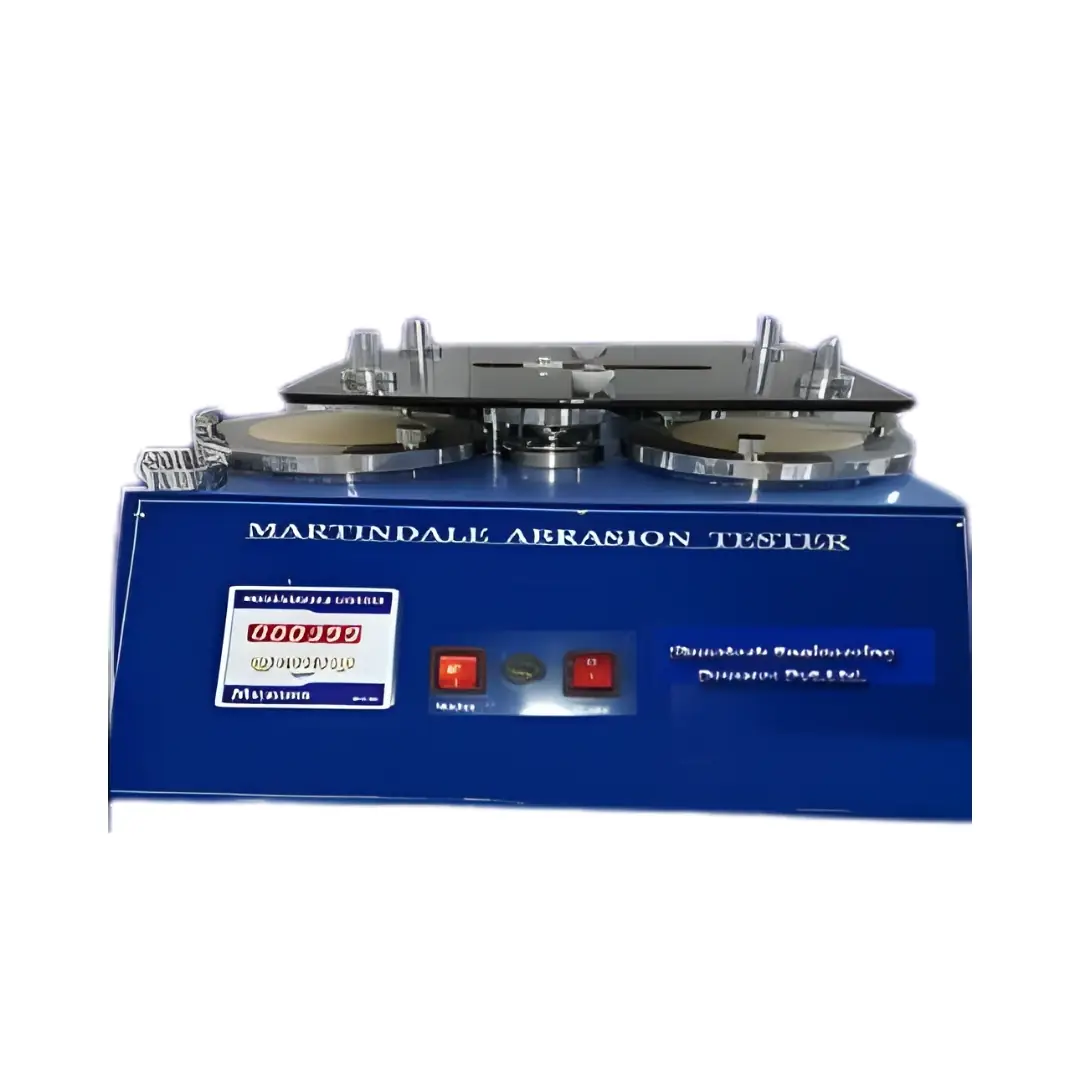
Digital Abrasion and Pilling Tester
Digital Abrasion and Pilling Tester
Digital Abrasion and Pilling Tester is a laboratory testing instrument designed to evaluate the abrasion resistance and pilling tendency of textile fabrics and other suitable materials. It helps manufacturers, textile laboratories and quality-control departments assess fabric durability, surface wear and appearance changes under controlled testing conditions.
OVERVIEW
Description
Digital Abrasion and Pilling Tester
A fabric may look smooth and new when it leaves the factory, but what happens after repeated rubbing, friction and everyday use? Its surface may begin to wear, and small fibre balls known as pills may develop. These changes can affect both the appearance and performance of textile products.
The Digital Abrasion and Pilling Tester is designed to help manufacturers and testing laboratories evaluate these characteristics under controlled laboratory conditions. It supports the assessment of fabric abrasion resistance and pilling tendency, providing useful information for product development, material comparison and quality control.
Manufactured and supplied by Innotech Engineering Devices Private Limited, this testing equipment is intended for textile laboratories, garment manufacturers, fabric suppliers, research facilities and quality-assurance departments.
What Is a Digital Abrasion and Pilling Tester?
A Digital Abrasion and Pilling Tester is a laboratory instrument used to evaluate how textile fabrics respond to repeated rubbing or mechanical friction.
Abrasion testing examines surface wear, while pilling testing evaluates the formation of small fibre balls on the fabric surface. Although both involve mechanical action, they assess different aspects of fabric performance.
The digital operating arrangement helps users monitor the testing process conveniently. The test method, specimen holders and accessories should be selected according to the fabric type and intended evaluation.
Abrasion Testing vs Pilling Testing
| Feature |
Abrasion Testing |
Pilling Testing |
| Main purpose | Evaluate resistance to surface wear | Evaluate the tendency to form fibre pills |
| What is observed? | Surface damage, wear and appearance changes | Fuzz formation and small fibre balls |
| Why is it useful? | Helps assess fabric durability | Helps assess appearance retention |
| Common applications | Apparel, upholstery and furnishing fabrics | Garments, knitted gabrics and home textiles |
| Main outcome | Abrasion resistance assessment | Pilling tendency or appearance assessment |
Both tests can support textile quality evaluation, but the appropriate procedure depends on the material, test requirement and applicable testing method.
Key Features
| Key Feature |
Description |
| Digital operation | Supports convenient operation and monitoring of the test process. |
| Abrasion evaluation | Helps assess fabric resistance to repeated rubbing and surface wear. |
| Pilling evaluation | Supports assessment of pilling tendency in suitable textile specimens. |
| Controlled testing | Provides a testing arrangement for conducting evaluations under defined conditions. |
| Digital Display | Allows relevent operating parameters to be monitored, depending on the configuration. |
| Repeat testing | Supports laboratory evaluations using consistent procedures. |
| Laboratory application | Suitable for textile testing, inspection and research environments. |
| Specimen compatibility | Test holders and accessories should match the selected material and method |
Actual machine functions, controls and accessories depend on the supplied configuration and should be confirmed before purchase.
How Does the Tester Work?
The testing procedure depends on the selected abrasion or pilling method. A typical laboratory workflow includes the following stages:
Prepare the Fabric Specimen
Selected the Test Arrangement
Position the Specimen
Condust the Test
Examine the Fabric
Record and Compare Results
Benefits
- Fabric durability assessment
- Appearance evaluation
- Better material comparison
- Quality-control support
- Product development
- Convenient operation
- Laboratory repeatability
- Research support
The benefits obtained depend on the test method, machine configuration, specimen preparation and interpretation of results.
Applications
The tester can support a range of textile testing applications, including:
- Textile and fabric manufacturing
- Garment and apparel production
- Knitted and woven fabric evaluation
- Home textile testing
- Upholstery and furnishing fabrics
- Fabric supplier quality inspection
- Textile product development
- Material comparison
- Research and development
- Laboratory quality assurance
- Production inspection
Suitable applications should be confirmed against the machine's test arrangement and the requirements of the intended method.
Materials Suitable for Testing
Depending on the configuration and applicable test procedure, suitable materials may include:
- Woven fabrics
- Knitted fabrics
- Apparel and arrangement
- Synthetic fabrics
- Blended fabrics
- Home furnishing fabrics
- Upholstery textiles
- Other suitable textile materials
Not every fabric can be tested using the same arrangement. Confirm specimen dimensions, holders, test conditions and the required evaluation method before testing.
Technical Specifications
The following table lists the main specifications to confirm when selecting the machine. Exact numerical values should be added after verification against the manufacturer's official specification sheet.
| Specification |
Details |
| Machine name | Digital Abrasion and Pilling Tester |
| Equipment type | Textile testing equipment |
| Testing functions | Abrasion and pilling evaluation, subject to configuration |
| Display | digital display, confirm supplied configuration |
| Test cycles | As supported by the machine configuration and selected method |
| Specimen holders | According to the applicable test procedure |
| Fabric compatibility | Depends on the test method and accessories |
| Test standards | Confirm the applicable standard and machine compatibility |
| Power supply | To be confirmed |
| Machine dimensions | To be confirmed |
| Machine weight | To be confirmed |
| Accessories | Confirmed according to the selected testing application |
Note: Contact Innotech Engineering Devices Private Limited for confirmed specifications, compatible test methods, accessories and available configurations.
How to Choose the Right Abrasion and Pilling Tester
Before selecting a machine, consider the following factors:
- Types of fabric you intend to test
- Whether abrasion testing, pilling testing or both are required
- Applicable test method and standard
- Specimen holders and accessories
- Required test cycles and operating parameters
- Digital monitoring and data-recording needs
- Expected laboratory workload
- Available laboratory space
- Future testing requirements
A machine should be selected according to the actual test requirements, not simply because its name includes both abrasion and pilling.
Digital Abrasion and Pilling Tester Manufacturer in India
Innotech Engineering Devices Private Limited manufactures and supplies testing equipment for textile, material and industrial laboratory applications.
Our Digital Abrasion and Pilling Tester is intended for laboratories and quality-control teams that need to evaluate fabric surface wear and pilling behaviour under controlled conditions.
Whether you are involved in textile manufacturing, apparel quality assurance, fabric inspection or research and development, our team can discuss the machine configuration and testing arrangement required for your application.
Frequently Asked Questions
What is a Digital Abrasion and Pilling Tester used for?
It is used to evaluate the abrasion resistance and pilling tendency of suitable textile fabrics under controlled laboratory conditions.
What is the difference between abrasion and pilling?
Abrasion testing evaluates surface wear caused by friction. Pilling testing evaluates the formation of small fibre balls or pills on the fabric surface.
Which fabrics can be tested?
Suitable woven, knitted, synthetic, blended, apparel and furnishing fabrics may be evaluated, depending on the machine configuration and selected test method.
Why is abrasion testing important?
It helps manufacturers understand how a fabric surface responds to repeated rubbing and supports durability assessment, material comparison and quality control.
Why is pilling testing performed?
Pilling testing helps assess changes in fabric appearance caused by fibre entanglement and pill formation during repeated mechanical action.
Can the same tester perform both tests?
The machine is intended for abrasion and pilling evaluation, subject to its configuration, accessories and the applicable testing methods. Confirm compatibility before purchase.
Which industries use this equipment?
Textile manufacturers, garment producers, fabric testing laboratories, furnishing textile suppliers, research facilities and quality-control departments can use this equipment.
How can I obtain the technical specifications?
Contact Innotech Engineering Devices Private Limited to confirm the machine's capacity, operating parameters, accessories, test-method compatibility and other specifications.
Consult Our Expert
Looking for a Digital Abrasion and Pilling Tester for your textile testing laboratory?
Contact Innotech Engineering Devices Private Limited to discuss your fabric types, testing objectives, applicable methods and accessory requirements. Our team can help you identify a suitable machine configuration and provide product information for your application.
Call: 9810431604
Email: info@innotechgroup.net
Website: https://www.innotechgroup.net
Contact us to discuss your requirements and request a quotation.