
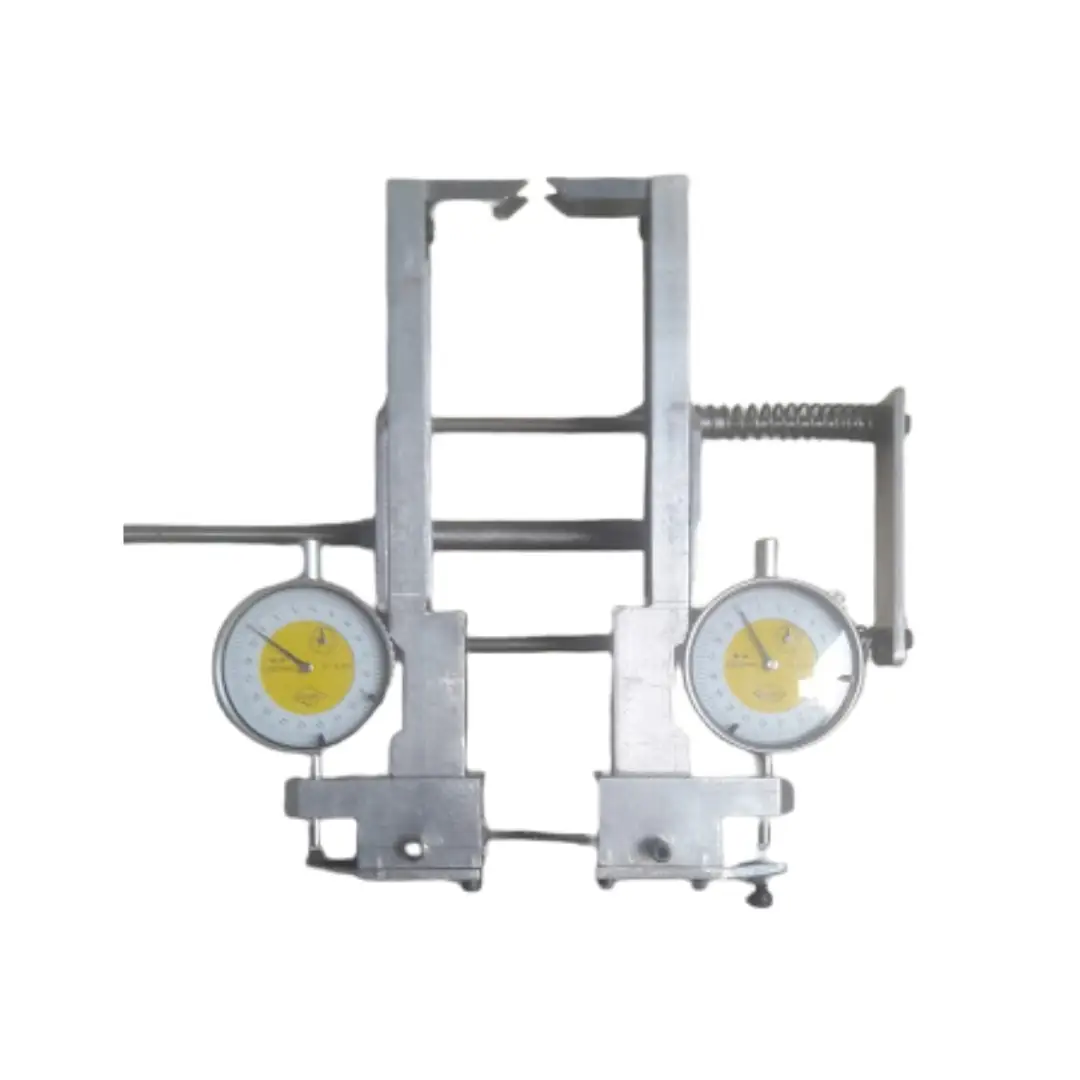
Couplers Extensometer
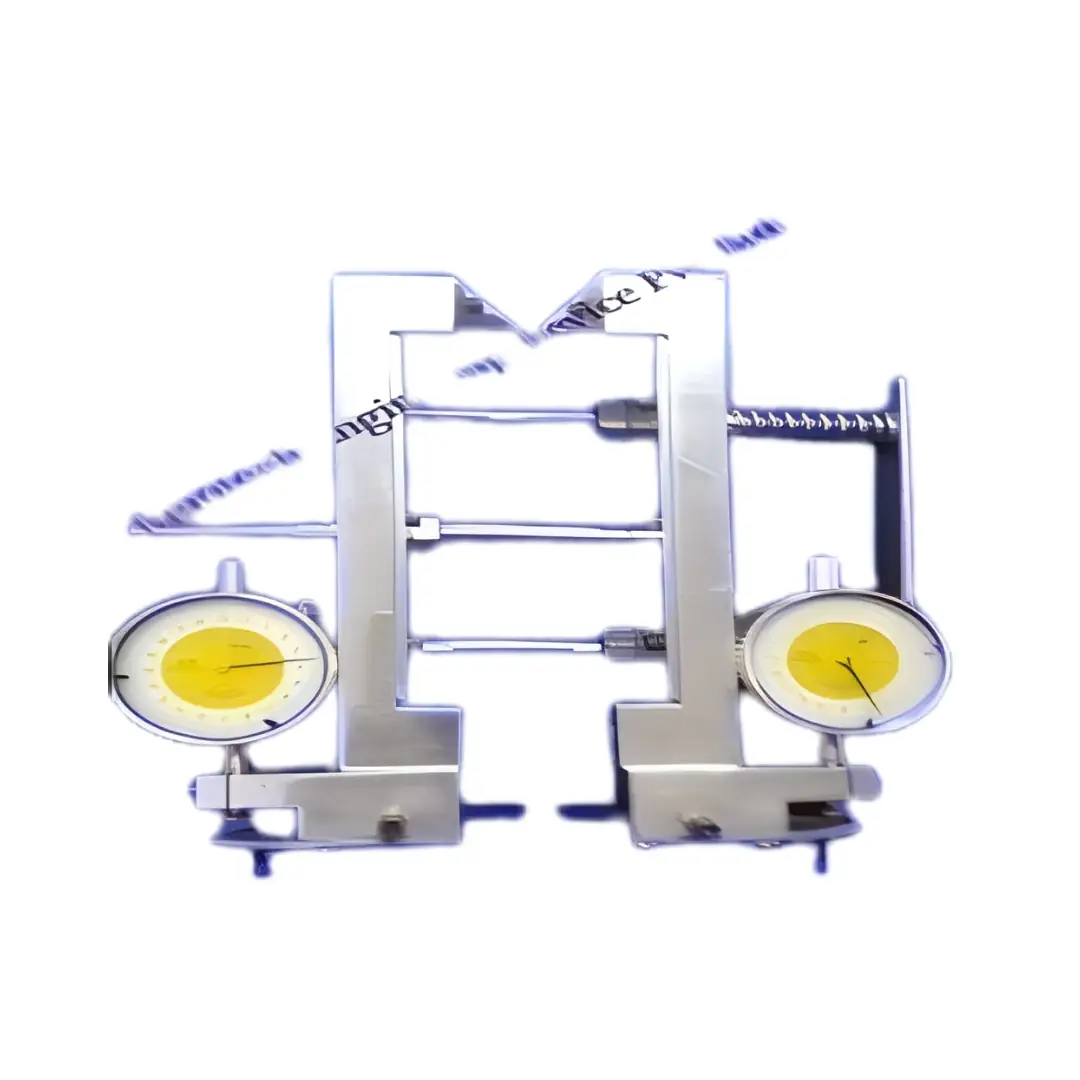
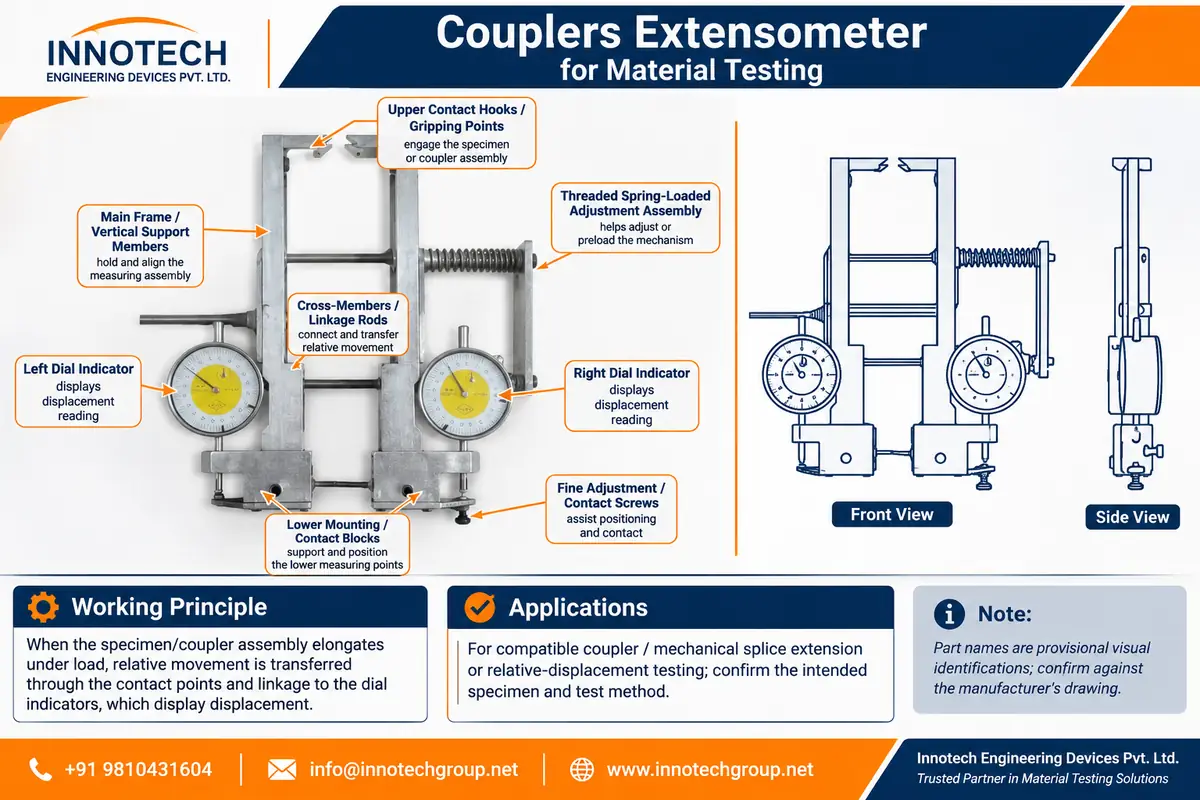
Couplers Extensometer
The Couplers Extensometer is a specialised measuring instrument intended for use in material testing applications where specimen extension or deformation needs to be evaluated. It can be considered for compatible testing machine setups based on the required application, specimen dimensions and measurement requirements. Suitable configuration should be confirmed before selection.
MODEL
ICE
OVERVIEW
Description
Couplers Extensometer for Material Testing
Accurate measurement of extension and deformation is important in material testing. During tensile and other mechanical tests, understanding how a specimen changes in length under an applied load helps engineers and quality-control teams evaluate material behaviour.
A Couplers Extensometer is a specialised extensometer product intended for applications involving extension measurement. The correct use and compatibility depend on the instrument's design, attachment arrangement and the type of specimen being tested.
Innotech Engineering Devices Private Limited manufactures and supplies testing machines and laboratory equipment from Bhiwadi, Rajasthan, India. We provide testing equipment solutions for industrial manufacturers, material testing laboratories and quality-control departments.
What Is an Extensometer?
An extensometer is a measuring instrument used to determine the change in length or extension of a test specimen during a mechanical testing process.
It is commonly associated with tensile testing, where a specimen is subjected to an increasing tensile load. The extensometer measures the extension over a defined measuring length, helping evaluate the deformation behaviour of the material.
Extensometers are used in material research, production quality control, testing laboratories and engineering applications where accurate extension measurements are required.
What Is a Couplers Extensometer?
The Couplers Extensometer is a specialised product in the extensometer category. It is intended for applications where extension measurement is required in connection with coupler-related testing.
The suitability of an extensometer depends on several factors, including the specimen type, measurement range, gauge length, attachment method and compatibility with the testing machine.
Before selecting a Couplers Extensometer, buyers should identify the exact test application and confirm that the instrument's design is suitable for the specimen and required measurement procedure.
Working Principle of an Extensometer
An extensometer measures the change in distance between two measurement points on a specimen.
In a typical mechanical testing arrangement:
1. The test specimen is prepared according to the selected test method.
2. The extensometer is positioned or attached at the specified measurement points.
3. The specimen is subjected to the required mechanical load using a compatible testing machine.
4. The extensometer detects the change in distance between its measurement points.
5. The extension measurement is recorded or transferred to a compatible measurement system, depending on the instrument design.
The exact operating procedure, attachment method and output system vary according to the type of extensometer.
Different Types of Extensometers
Different extensometers are available for different materials, testing methods and measurement requirements. The following are common categories in the material testing industry.
1. Mechanical Extensometer
A mechanical extensometer uses a mechanical measuring arrangement to detect changes in specimen length. It is used in applications where a suitable mechanical measurement system meets the testing requirements.
2. Digital Extensometer
A digital extensometer provides extension measurements through an electronic measuring and display arrangement. Depending on the model, readings may be displayed digitally or transferred to a compatible data acquisition system.
3. Clip-On Extensometer
A clip-on extensometer is attached directly to a test specimen using a suitable mounting arrangement. It is commonly used for measuring extension during tensile testing.
4. Contact Extensometer
A contact extensometer measures specimen deformation through physical contact with the specimen. Its design and measuring range depend on the intended testing application.
5. Non-Contact Extensometer
A non-contact extensometer measures specimen deformation without direct physical attachment. Optical or video-based measurement techniques may be used, depending on the system.
6. High-Temperature Extensometer
A high-temperature extensometer is designed for extension measurement in specialised testing environments where specimens are exposed to elevated temperatures. Its operating temperature and compatibility depend on the instrument specification.
Important: These are general extensometer categories. They are not all interchangeable, and the available features of the Couplers Extensometer should be confirmed from its technical design.
Applications of Extensometers
Extensometers are used in various mechanical testing applications where extension or deformation measurement is required.
Common application areas include:
- Tensile testing of metallic materials
- Material deformation measurement
- Mechanical testing laboratories
- Quality-control and inspection departments
- Research and development laboratories
- Testing of engineering materials
- Evaluation of specimen extension during compatible mechanical tests
- Specialised coupler-related testing, where supported by the instrument design
The exact application of the Couplers Extensometer should be selected according to its intended design and compatible testing arrangement.
Actual measurement performance depends on the instrument's design, calibration, installation and test conditions.
How to Select the Right Extensometer?
Before purchasing an extensometer, consider the following technical requirements:
| Selection Parameter |
What to Check |
| Application | Type of mechanical test to be performed |
| Specimen material | Metal, polymer or other test material |
| Measuring range | Required extension measurement range |
| Gauge length | Distance between measurement points |
| Accuracy | Required measurement accuracy |
| Resolution | Smallest measurable change |
| Attachment arrangement | How the instrument is poistioned on the specimen |
| Testing machine compatibility | Compatibility with the existing machine |
| Data output | Display, electronic output or software integration |
| Calibration | Calibration and verification requirements |
| Test standard | Applicable testing standard and procedure |
For a Couplers Extensometer, buyers should also share the coupler or specimen drawing, dimensions and required test details so that the instrument's suitability can be evaluated.
Extensometer Manufacturer and Supplier in India
Innotech Engineering Devices Private Limited is a manufacturer and supplier of testing machines and laboratory equipment based in Bhiwadi, Rajasthan, India.
We work with industrial manufacturers, engineering companies, material testing laboratories and quality-control teams looking for testing equipment solutions.
If you are looking for a Couplers Extensometer or another type of extensometer, share your application and technical requirements with our team. We can discuss the intended testing arrangement and suitable equipment requirements.
We serve customers across India, including Delhi NCR, Mumbai, Chennai, Kolkata, Bengaluru, Ahmedabad, Pune, Jaipur and other industrial locations.
Frequently Asked Questions About Extensometers
1. What is an extensometer?
An extensometer is a measuring instrument used to determine the change in length of a specimen during mechanical testing.
2. What is a Couplers Extensometer?
A Couplers Extensometer is a specialised extensometer product associated with coupler-related extension measurement applications. Its exact application and compatibility should be confirmed from the product design.
3. What are the different types of extensometers?
Common types include mechanical, digital, clip-on, contact, non-contact and high-temperature extensometers. The correct type depends on the material, testing method and measurement requirements.
4. What is an extensometer used for?
An extensometer is used to measure specimen extension or deformation during mechanical testing, particularly in applications such as tensile testing.
5. What is the difference between a mechanical and digital extensometer?
A mechanical extensometer uses a mechanical measuring arrangement, while a digital extensometer uses an electronic measurement and display arrangement. Actual features depend on the model.
6. Can an extensometer be used with a Universal Testing Machine?
Some extensometers are designed to work with compatible Universal Testing Machines. Compatibility depends on the instrument's mounting arrangement, measurement system and machine configuration.
7. How do I select the right extensometer?
Consider the specimen material, gauge length, measurement range, accuracy, resolution, attachment method, testing machine compatibility and applicable test procedure.
8. Where can I buy an extensometer in India?
You can contact Innotech Engineering Devices Private Limited in Bhiwadi, Rajasthan, for information about extensometers and testing equipment requirements.
9. Does Innotech supply testing equipment across India?
Yes. Innotech serves industrial customers and testing laboratories across India, including Delhi NCR, Mumbai, Chennai, Kolkata and other locations.
Contact Us for Extensometer Requirements
Looking for a Couplers Extensometer or another material testing instrument?
Contact Innotech Engineering Devices Private Limited to discuss your testing application, instrument requirements and product details.
Innotech Engineering Devices Private Limited
OEM Manufacturer of Testing Machines & Laboratory Equipment
H-307 RIICO Industrial Area Karoli, Tapukara, Bhiwadi, Rajasthan, India
Email: info@innotechgroup.net
Phone: +91 9810431604
Share your application details with our team to discuss a suitable testing equipment solution.
WHY IT WORKS
Key benefits
Extension measurement
Material evaluation
Material evaluation
Testing documentation:
Application flexibility
Testing consistency
USE CASE
Application range
BUILT IN
Features
Specialised design for extension measurement in compatible coupler testing applications.
Helps measure elongation of rebar coupler and splice assemblies during mechanical testing.
Suitable for use with a compatible Universal Testing Machine (UTM), subject to connection and mounting requirements.
Can be configured for relevant coupler and reinforcement bar dimensions, depending on the instrument design.
Supports measurement of specimen deformation during tensile testing.
Helps evaluate the extension behaviour of mechanical reinforcement connections.
Useful for quality-control and material testing laboratories.
Supports testing and evaluation of coupler assemblies under specified test procedures.
Designed to assist in obtaining consistent extension measurements when correctly installed and calibrated.