
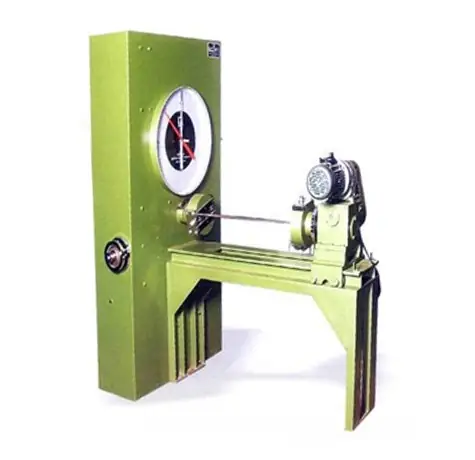
Computerized Torsion Testing Machine – Torque & Twist Tester
Computerized Torsion Testing Machine – Torque & Twist Tester
Innotech Engineering Devices Private Limited manufactures Computerized Torsion Testing Machines with customized torque capacities for testing the torsional behaviour of metal rods, shafts, wires and suitable engineering components. Designed for manufacturers, industrial laboratories, R&D centres and educational institutions, each machine can be engineered according to customer requirements for specimen dimensions, torque range, gripping arrangement, test speed and computerized measurement. OEM manufacturing in Bhiwadi, Rajasthan, India, with supply enquiries welcomed from across India.
MODEL
ICTTM
OVERVIEW
Description
Computerized Torsion Testing Machine Manufacturer in India – Customized Capacity
Innotech Engineering Devices Private Limited is an OEM manufacturer of Computerized Torsion Testing Machines and industrial material testing equipment in Bhiwadi, Rajasthan, India.
Our Computerized Torsion Testing Machine is designed for evaluating the torsional behaviour of suitable metal rods, shafts, wires, engineering materials and mechanical components under controlled twisting loads.
Unlike a machine offered with only one fixed torque capacity, Innotech provides customized torsion testing machine solutions based on the customer's application, specimen dimensions, required torque capacity, testing speed, measurement system and laboratory requirements.
We serve industrial manufacturers, engineering colleges, research laboratories, quality-control departments and testing facilities throughout India, particularly Delhi NCR, Haryana, Rajasthan, Uttar Pradesh, Punjab, Gujarat and other industrial regions.
What Is a Torsion Testing Machine?
A torsion testing machine is a mechanical testing apparatus used to study the behaviour of a material or component when subjected to a twisting moment, also known as torque.
During a torsion test, one end of the specimen is restrained while the other end is rotated or subjected to torque using a suitable loading mechanism.
The machine helps evaluate the relationship between applied torque and angular deformation.
Depending on the specimen, testing method and installed instrumentation, torsion testing may be used to investigate torsional stiffness, twisting resistance, yield behaviour and failure characteristics.
What Is a Computerized Torsion Testing Machine?
A Computerized Torsion Testing Machine combines a mechanical torsional loading arrangement with suitable electronic measurement, control and computer-based data acquisition.
Depending on the approved configuration, computerized functions may include:
- Torque measurement and indication
- Angle-of-twist measurement
- Digital test parameter display
- Torque versus angle-of-twist graphs
- Test data recording
- Test result storage
- Report generation
- Application-specific test programs
The final software and instrumentation features are determined by the customer's technical requirements.
Working Principle of the Torsion Testing Machine
The basic working principle involves applying torque to a specimen through a mechanical or motorized drive arrangement.
The specimen is positioned between suitable grips or holding fixtures.
One end is restrained, while the other is rotated according to the test procedure.
As the specimen twists, resistance develops against the applied torque.
A suitable measurement system determines the applied torque and angular displacement.
For computerized configurations, these measurements can be transmitted to a compatible controller or computer system for monitoring and analysis.
Basic Torsion Test Procedure
1. Select a suitable specimen according to the test method.
2. Measure and record specimen dimensions.
3. Install the specimen using appropriate grips.
4. Confirm alignment and secure the holding arrangement.
5. Set the required test parameters.
6. Apply torque at the prescribed loading or rotation rate.
7. Record torque and angular deformation using the supplied instrumentation.
8. Continue until the specified test endpoint.
9. Evaluate and document the test results.
The actual procedure depends on the specimen material, application and relevant testing standard.
Customized Torsion Testing Machine Capacity
Innotech manufactures torsion testing equipment according to the required torque capacity and application.
Customers may enquire about capacities such as:
- 50 Nm
- 100 Nm
- 200 Nm
- 500 Nm
- 1000 Nm
- 2000 Nm
- 3000 Nm
- 5000 Nm
- Higher or specialized capacities, subject to engineering feasibility
These values represent illustrative customer-requested capacity options, not a confirmed standard model range.
The machine structure, drive system, torque measurement arrangement, specimen grips and safety provisions must be engineered for the selected capacity.
Key Components of a Computerized Torsion Testing Machine
1. Main Machine Frame
The structural frame supports the loading mechanism and specimen-holding assemblies.
Its design depends on the required torque, machine configuration and specimen dimensions.
2. Torsional Loading Mechanism
A suitable drive mechanism applies controlled rotation or twisting torque.
Motor and transmission selection depends on the required speed, torque and duty cycle.
3. Specimen Grips and Fixtures
Fixtures securely hold the test specimen and transfer torque during testing.
Specialized gripping arrangements may be developed for different specimen geometries.
4. Torque Measurement System
An appropriate torque-measuring arrangement is used to determine applied torque.
The measurement range and accuracy depend on the selected instrumentation.
5. Angular Measurement System
Where required, an encoder or other suitable device measures angular displacement.
6. Computerized Control and Software
A computerized configuration can support monitoring, recording and analysis according to the supplied software functions.
Torsion Test Specimen Types
Different applications require different specimen geometries.
Typical examples include:
- Solid cylindrical rods
- Hollow shafts and tubes
- Metal wires
- Engineering shafts
- Suitable couplings
- Specially prepared material specimens
- Application-specific mechanical components
Specimen dimensions, gripping length and end geometry must be defined before finalizing the machine.
Torsion Testing Machine Applications
Metal and Alloy Testing
Torsion testing can help investigate twisting resistance and deformation behaviour in suitable metal specimens.
Automotive Component Testing
Applications may include selected shafts, drive components and other mechanical parts subjected to torsional loading.
Mechanical Engineering Laboratories
Engineering laboratories use torsion experiments to study torque, angular deformation and material behaviour.
Research and Development
Customized torsion equipment can support specialized research involving material and component behaviour.
Wire and Rod Testing
Suitable wire and rod specimens can be tested using appropriate grips and methods.
Industrial Quality Control
Torsion testing may be used to evaluate products against defined specifications and acceptance criteria.
Torsion Testing Equipment for Concrete
Concrete torsion testing is a specialized structural or material-testing application.
Unlike conventional metal-rod torsion testing, concrete beams and structural specimens may require large reaction frames, specialized loading mechanisms and dedicated instrumentation.
Innotech can discuss customized torsion testing equipment for concrete research projects subject to detailed engineering evaluation.
A standard horizontal rod torsion tester should not be assumed suitable for concrete testing.
Torsion Testing Machine vs Tensile Testing Machine
| Parameter |
Torsion Testing Machine |
Tensile Testing Machine |
| Main loading | Twisting torque | Axial tensile force |
| Primary deformation | Angular twist | Axial elongation |
| Typical measurement | Torque and angle | Force and extension |
| Common specimens | Rods, shafts and suitable components | Standard tensile specimens |
| Typical application | Torsional behaviour | Tensile strength and elongation |
Both machines are important in mechanical material testing, but they evaluate different loading conditions.
Torsion Testing Machine Price in India
The price of a Computerized Torsion Testing Machine depends on the required capacity and technical configuration.
Important pricing factors include:
- Maximum torque capacity
- Torque measurement accuracy
- Rotation speed and drive system
- Specimen diameter and length
- Grip and fixture design
- Computerized controller
- Data acquisition and software
- Machine structure and safety requirements
- Calibration and documentation
- Installation and commissioning scope
For a reliable quotation, customers should share their test standard, specimen details, torque requirements and desired measurement functions.
Why Choose Innotech as a Torsion Testing Machine Manufacturer in India?
Innotech Engineering Devices Private Limited manufactures industrial testing machines and laboratory equipment with a focus on application-specific engineering.
Our OEM approach allows customers to discuss their required torque capacity, specimen dimensions, fixtures, instrumentation and control requirements before machine design is finalized.
Located in Bhiwadi, Rajasthan, we welcome enquiries from manufacturers, laboratories, engineering institutions and research organizations across India.
Frequently Asked Questions
What is torsion?
Torsion is the twisting of a material or component caused by an applied torque.
What is the purpose of a torsion testing machine?
It is used to investigate how a specimen behaves under twisting load.
What is a computerized torsion testing machine?
It is a torsion testing system equipped with suitable electronic measurement and computer-based monitoring or analysis functions.
What capacities are available?
Innotech develops machine configurations according to customer requirements. The required capacity must be specified before technical evaluation.
What is the price of a torsion test machine in India?
Pricing depends on torque capacity, specimen dimensions, measurement accuracy, drive system, computerized functions and customization.
Can a torsion testing machine be customized?
Yes. Machine configuration can be discussed according to torque range, specimen geometry, grips, speed and measurement requirements, subject to technical feasibility.
What specimens are used for torsion testing?
Common specimens include suitable rods, shafts, wires and application-specific mechanical components.
Can the machine generate torque-angle graphs?
This can be included in a computerized configuration when the necessary instrumentation and software are specified.
What is the difference between torsion and tensile testing?
Torsion applies twisting torque, whereas tensile testing applies axial pulling force.
Is a torsion testing machine suitable for concrete?
Concrete torsion testing generally requires a specialized configuration. Suitability must be evaluated against the specimen and testing method.
Where can I buy a torsion testing machine in India?
Contact Innotech Engineering Devices Private Limited in Bhiwadi, Rajasthan, for customized torsion testing equipment enquiries.
Request a Customized Torsion Testing Machine Quotation
Looking for a Computerized Torsion Testing Machine Manufacturer in India?
Share your required torque capacity, specimen dimensions, testing standard and computerized measurement requirements with Innotech.
Innotech Engineering Devices Private Limited
OEM Manufacturer of Industrial Testing Machines & Laboratory Equipment
Factory: H-307, RIICO Industrial Area, Karoli, Tapukara, Bhiwadi – 301707, Rajasthan, India
Email: info@innotechgroup.net
Phone: +91 9810431604
WHY IT WORKS
Key benefits
Customized machine capacity instead of a fixed standard torque range.
Supports evaluation of torsional strength, stiffness and twisting behaviour.
Suitable for industrial material testing and engineering research.
Machine design can be adapted to specimen dimensions and testing requirements.
Computerized configurations can simplify test monitoring and result analysis.
Helps manufacturers evaluate suitable mechanical components.
Useful for engineering colleges, universities and research laboratories.
Supports application-specific fixture and instrumentation selection.
Direct technical discussion with an Indian OEM manufacturer.
Suitable for customers across India, including Delhi NCR and North India.
USE CASE
Application range
BUILT IN
Features
Customized torque capacity according to customer requirements.
Horizontal torsion testing arrangement.
Suitable for rods, shafts, wires and application-specific components.
Application-based specimen gripping fixtures.
Torque measurement system according to selected model.
Angle-of-twist measurement available in suitable configurations.
Computerized monitoring and data acquisition as specified.
Torque versus angle graph generation where included in software.
Customized test speed and drive configuration.
Special-purpose fixtures and attachments.
Industrial and educational laboratory applications.
OEM manufacturing and application-specific engineering in India.
SPEC
Specifications
Product
Computerized Torsion Testing Machine
Manufacturer
Innotech Engineering Devices Private Limited
Machine type
Horizontal torsion testing arrangement; other configurations subject to design
Torque capacity
Customized according to customer requirements
Torque range
As per selected model
Torque measurement
Suitable measurement system as per approved configuration
Torque accuracy
To be specified and verified for selected model
Angle-of-twist measurement
As per selected instrumentation
Angle resolution
To be confirmed
Rotation speed
As per application and drive design
Loading direction
Clockwise/anticlockwise, if specified and supported
Specimen type
Rods, shafts, wires and suitable components
Specimen diameter
Customized
Specimen length
Customized
Distance between grips
According to machine design
Specimen holding
Application-specific grips and fixtures
Drive system
Selected according to required torque and speed
Controller
According to approved model
Computer interface
Available in suitably configured computerized models
Software
As per approved scope of supply
Torque-angle graph
Available where specified in software scope
Data recording
As per instrumentation and software
Test report
As per supplied reporting functions
Safety provisions
According to risk assessment and approved design
Electrical supply
To be confirmed for selected machine
Overall dimensions
Depend on torque capacity and specimen size
Machine weight
Depend on model
Optional accessories
Customized fixtures and instrumentation
WATCH
Product videos