
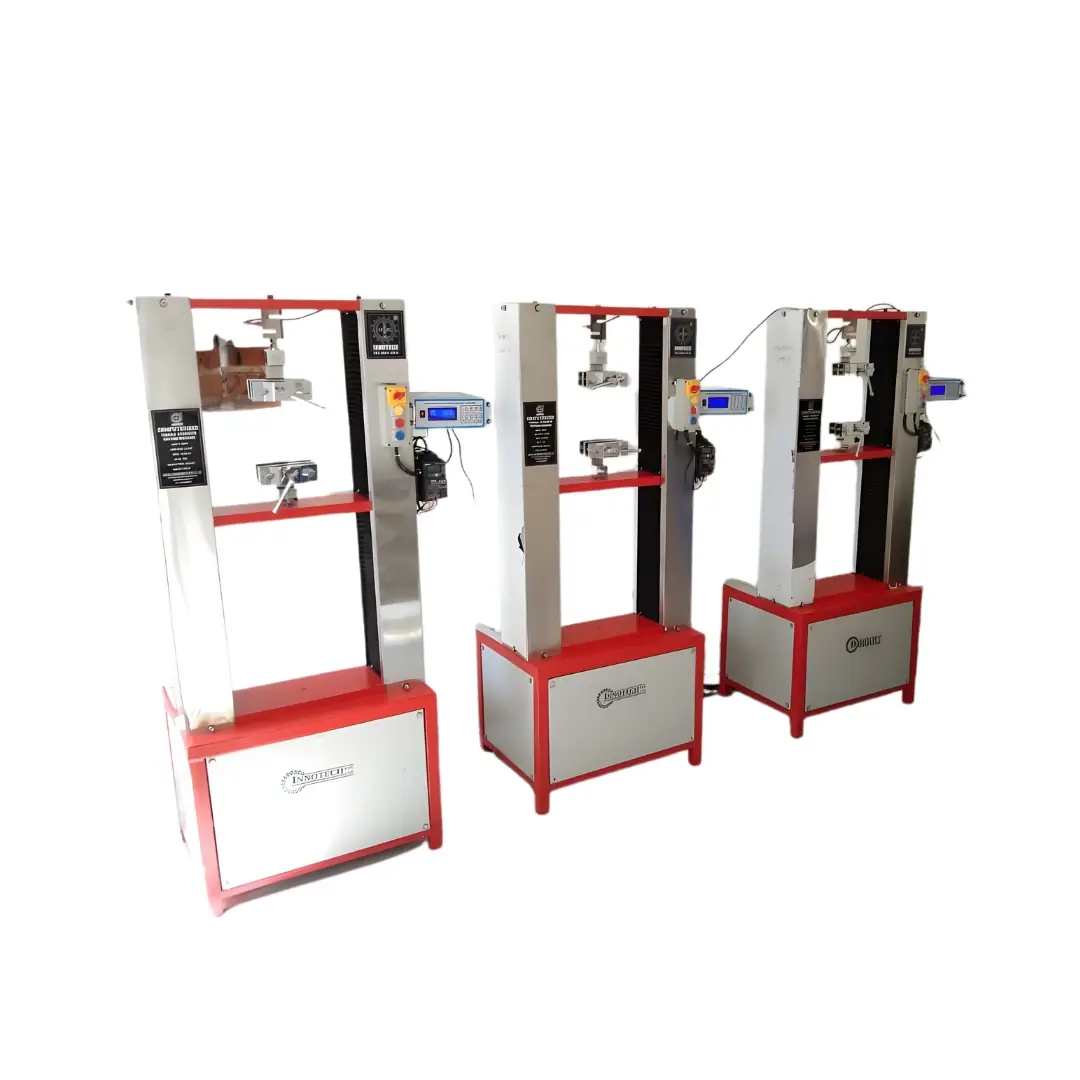
Computerized Servo-Controlled Tensile Strength Testing Machine
Computerized Servo-Controlled Tensile Strength Testing Machine
Innotech Engineering Devices Pvt. Ltd. an OEM testing machine manufacturer in Bhiwadi, Rajasthan, India, offers Computerized Servo-Controlled Tensile Strength Testing Machines for industrial material testing and quality-control laboratories. Our servo-controlled tensile testing systems combine controlled loading, electronic force measurement and computer-based test monitoring to evaluate tensile strength, breaking load, elongation and other supported mechanical properties. Configurations are available for metals, plastics, rubber, wires, cables, textiles and industrial components, with application-specific grips, load cells, extensometers and software options. Contact Innotech for customized technical specifications and quotations across India.
MODEL
ITST
OVERVIEW
Description
Computerized Servo-Controlled Tensile Testing Machine Manufacturer in Bhiwadi, India
Servo-Controlled Tensile Strength Testing Machine for Industrial Material Testing
Innotech Engineering Devices Private Limited is an OEM manufacturer of Computerized Servo-Controlled Tensile Testing Machines, Universal Testing Machines and customized material testing equipment in Bhiwadi, Rajasthan, India.
Our computerized servo-controlled tensile strength testing machine is developed for industrial manufacturers, quality-control laboratories, engineering companies and research institutions that require controlled tensile loading and computer-based analysis of material properties.
The machine can be configured to evaluate tensile strength, maximum force, breaking load, elongation and other mechanical properties of suitable specimens.
Depending on the selected machine design, grips and software, applications may include plastics, rubber, metals, wires, cables, films, textiles and manufactured components.
What Is a Computerized Servo-Controlled Tensile Testing Machine?
A Computerized Servo-Controlled Tensile Testing Machine uses a servo-driven loading system and electronic feedback to control the movement or applied loading conditions during a material test.
Unlike a basic digital tensile tester, a computerized servo-controlled machine can support programmable test parameters and computer-based measurement, analysis and reporting.
Depending on the selected configuration, the machine may include:
- AC servo motor and drive
- Precision electromechanical loading mechanism
- Electronic load cell
- Displacement feedback system
- Computerized controller
- Windows-compatible testing software
- Interchangeable tensile grips
- Optional extensometer
- Safety and travel-limit arrangements
The exact hardware and control modes depend on the approved machine configuration.
Servo Tensile Testing Machine Working Principle
A servo tensile testing machine applies a controlled tensile force to a specimen while measuring its response.
1. Specimen Preparation
Prepare the material specimen according to the required ASTM, ISO, IS or other test method.
2. Specimen Gripping
Secure the specimen between suitable grips. Proper alignment is essential to minimize unintended bending and slippage.
3. Test Parameter Selection
Configure the test speed, specimen dimensions and other supported parameters through the control system.
4. Servo-Controlled Loading
The servo-driven mechanism moves the crosshead or loading arrangement according to the selected test program.
5. Force and Displacement Measurement
The load cell measures force, while the displacement feedback system monitors the machine's movement.
6. Computerized Tensile Test Results
The software records supported measurements and can generate test graphs, calculations and reports according to the installed functions.
Computerized Tensile Testing Machine for Different Industries
Metal Tensile Testing Machine
Suitable configurations can be developed for metallic wires, strips, rods and machined specimens whose expected force remains within the selected machine capacity.
Relevant methods may include ASTM E8/E8M, ISO 6892-1 and IS 1608 (Part 1).
Plastic and Polymer Tensile Testing Machine
Plastics and polymers can be evaluated for tensile strength, breaking load and elongation using suitable grips, speeds and extensometer arrangements.
Relevant methods include ASTM D638 and ISO 527.
Rubber Tensile Testing Machine
Rubber and elastomer specimens may require high-extension travel, specialized grips and appropriate strain measurement.
Relevant methods include ASTM D412 and ISO 37.
Wire and Cable Tensile Testing Machine
Wires, cables and conductors can be tested using suitable gripping systems and force measurement ranges.
Film and Packaging Tensile Testing Machine
Thin films and flexible packaging materials may require lower-force load cells, suitable gripping surfaces and controlled test speeds.
Relevant methods may include ASTM D882.
Textile Tensile Testing Machine
Suitable fabrics, yarns and textile specimens can be evaluated with application-specific gripping arrangements.
Relevant methods include ASTM D5034, ASTM D5035 and ISO 13934-1.
Automotive and Industrial Component Testing
Compatible automotive parts, fasteners, joints and engineered assemblies may be tested using customized fixtures.
Tensile Testing Machine Software and Test Results
Computerized testing software helps operators monitor material behavior and maintain test records.
Depending on the supplied configuration, software functions may include:
- Real-time tensile load monitoring
- Load-displacement graphs
- Stress-strain graphs
- Maximum force measurement
- Breaking-load recording
- Tensile strength calculations
- Yield strength evaluation
- Percentage elongation
- Young's modulus calculation
- Test-method configuration
- Test report generation
- Data storage and export
Strain-dependent results require appropriate specimen measurement instrumentation and test methods.
Tensile Test Extensometer and Load Cell Selection
A tensile testing machine load cell measures the force applied to the specimen.
The load cell should be selected according to the expected testing force and verified measuring range.
For lower-force specimens, an appropriately rated load cell may provide a more suitable measurement range than a higher-capacity sensor.
A tensile test extensometer measures specimen deformation over a defined gauge length.
Contact, long-travel and non-contact extensometer options may be considered according to the material and required testing method.
Crosshead displacement should not automatically be treated as specimen strain.
Servo-Controlled Tensile Testing Machine vs Digital Tensile Tester
A digital tensile tester generally provides electronic force measurement and display functions.
A computerized servo-controlled tensile tester incorporates a servo-based loading system and computer-assisted test control or analysis.
A servo-controlled machine may be preferable when the application requires programmable movement, repeatable test conditions, controlled speed or more detailed data analysis.
However, the actual capabilities depend on the installed controller and software.
Tensile and Flexural Testing Machine Options
A properly configured universal testing machine may support tensile, compression, bending, flexural, peel or shear testing.
These functions require appropriate fixtures, force measurement ranges and control capabilities.
For example, a three-point flexural test requires a bending fixture and a defined support span.
The machine should not be described as supporting every test method unless those capabilities are included in the approved configuration.
ASTM, ISO and IS Standards for Servo Tensile Testing
Depending on the supplied configuration and verification, relevant standards may include:
- ASTM E8/E8M: Metallic tensile testing
- ISO 6892-1: Metallic tensile testing
- IS 1608 (Part 1): Metallic tensile testing
- ASTM D638: Plastic tensile testing
- ISO 527: Plastic tensile properties
- ASTM D412: Rubber tensile testing
- ISO 37: Rubber tensile stress-strain properties
- ASTM D882: Thin plastic sheeting tensile testing
- ASTM D5034 / D5035: Textile tensile testing
- ISO 13934-1: Textile fabric tensile testing
- ASTM E4: Force verification
- ISO 7500-1: Force-measuring system verification
- ISO 9513: Extensometer calibration
The applicable standards must be matched to the specimen, grips, instrumentation and verified machine performance.
Servo Tensile Testing Machine Manufacturer in Bhiwadi, Rajasthan
Innotech Engineering Devices Private Limited manufactures industrial testing machines and laboratory equipment at:
H-307, RIICO Industrial Area, Karoli, Tapukara, Bhiwadi – 301707, Rajasthan, India.
Our Bhiwadi manufacturing location enables us to serve industrial customers in Khushkhera, Tapukara, Neemrana, Alwar, Dharuhera, Bawal, Gurugram, Manesar, Faridabad, Noida, Greater Noida, Delhi NCR and other industrial regions.
We also accept enquiries from manufacturers, laboratories and engineering companies across India, including Maharashtra, Gujarat, Tamil Nadu, Karnataka and Telangana.
Computerized Servo Tensile Testing Machine Price in India
The price of a computerized servo-controlled tensile testing machine depends on:
- Maximum force capacity
- Servo motor and drive
- Loading frame and ball-screw mechanism
- Load-cell capacity and accuracy
- Crosshead speed and travel
- Grips and fixtures
- Extensometer requirements
- Software and reporting functions
- Calibration and documentation
- Installation and commissioning scope
For a suitable quotation, buyers should provide their specimen material, dimensions, expected force, testing standard and required test results.
Why Choose Innotech Engineering Devices?
Innotech offers OEM manufacturing and customized material testing solutions for industrial customers.
Our team can discuss suitable force capacity, loading arrangement, grips, load cells, software and extensometer requirements according to the application.
Whether you are looking for a Servo Tensile Testing Machine Manufacturer in Bhiwadi, Computerized Tensile Testing Machine Manufacturer in India, Tensile Strength Testing Machine Supplier in Rajasthan or a customized servo-controlled testing system, contact Innotech for technical consultation.
Request a Computerized Servo Tensile Testing Machine Quotation
Innotech Engineering Devices Private Limited
Factory: H-307, RIICO Industrial Area, Karoli, Tapukara, Bhiwadi – 301707, Rajasthan, India.
Phone: +91 9810431604
Email: info@innotechgroup.net
Send your testing requirements to receive a technical and commercial quotation.
Frequently Asked Question About Servo Controlled Tensile Testing Machine
What is a Computerized Servo-Controlled Tensile Testing Machine?
It is a material testing machine that uses servo-controlled loading and computerized measurement to evaluate the tensile behavior of suitable specimens.
Who manufactures Servo Tensile Testing Machines in Bhiwadi?
Innotech Engineering Devices Private Limited manufactures testing machines and laboratory equipment at H-307, RIICO Industrial Area, Karoli, Tapukara, Bhiwadi, Rajasthan, India.
Where can I buy a Computerized Tensile Testing Machine in India?
Industrial buyers can contact Innotech Engineering Devices for customized computerized tensile testing machine configurations and quotations.
What is the difference between a digital and servo-controlled tensile tester?
A digital tester primarily provides electronic measurement and display functions. A servo-controlled machine uses a controlled loading system and may support programmable test parameters and computerized analysis.
Can a Servo Tensile Testing Machine measure tensile strength and elongation?
Yes, when supplied with the necessary force and deformation measurement systems and suitable test software.
Can the machine calculate yield strength and Young's modulus?
These calculations require suitable strain measurement instrumentation, data acquisition and analysis capabilities.
Can it test rubber, plastics and metals?
Yes, compatible specimens can be tested when the selected machine has sufficient capacity, travel, suitable grips and the required measurement systems.
Can the machine perform tensile and flexural testing?
A suitable universal testing machine configuration may support tensile and flexural tests using the required fixtures and control functions.
What is the price of a Servo Tensile Testing Machine in India?
The price depends on force capacity, servo drive, frame, load cells, grips, extensometer, software, calibration and customization.
Does Innotech provide customized tensile testing machines?
Innotech offers application-specific testing machine configurations based on customer material, specimen dimensions, force range and required testing standards.
WHY IT WORKS
Key benefits
Servo-Controlled Loading: Supports controlled and programmable test movement.
Computerized Operation: Enables computer-assisted test monitoring and data handling.
Repeatable Testing Conditions: Helps maintain consistent test parameters.
Material Testing Versatility: Configurable for different specimens and industrial applications.
Digital Force Measurement: Electronic measurement of applied tensile force.
Load-Extension Analysis: Supports evaluation of material behavior.
Software-Based Reporting: Test graphs and reports where included in the software.
Customized Load Capacity: Machine selection according to the required force range.
Application-Specific Grips: Suitable fixtures can be selected for different materials.
Extensometer Options: Compatible measurement systems for strain-dependent tests.
Quality-Control Support: Useful for production inspection and material comparison.
Indian OEM Manufacturing: Direct consultation and customization from Innotech.
Local Manufacturing Presence: Based in Bhiwadi, Rajasthan, serving Delhi NCR and customers across India.
USE CASE
Application range
BUILT IN
Features
Computerized servo-controlled tensile testing arrangement.
Servo-driven electromechanical loading system on applicable configurations.
Controlled crosshead movement.
Electronic force measurement.
Programmable testing parameters.
Computer-based test monitoring.
Load-displacement measurement.
Real-time graph display where supported.
Maximum force and breaking-load measurement.
Tensile strength calculation with appropriate specimen data.
Yield strength and elastic modulus evaluation with suitable instrumentation.
Data storage and test report generation.
Interchangeable specimen grips.
Optional electronic extensometer.
Optional specialized grips and fixtures.
Application-specific load-cell selection.
Safety and travel-limit arrangements.
Customized machine capacity and testing requirements.
OEM manufacturing in Bhiwadi, Rajasthan, India.
SPEC
Specifications
Product
Computerized Servo-Controlled Tensile Strength Testing Machine
Machine Type
Computerized Servo-Controlled Tensile Tester
Loading System
Servo-controlled; configuration-specific
Drive Mechanism
Electromechanical on applicable models
Maximum Capacity
According to approved configuration
Force Measurement
Electronic load cell
Force Accuracy
To be confirmed for selected model
Testing Speed
To be confirmed
Crosshead Travel
To be confirmed
Control System
Computerized
Software
According to selected configuration
Extensometer
Optional / application-dependent
Tensile Grips
According to specimen
Optional Fixtures
Compression, bending, peel or other compatible fixtures
Electrical Supply
According to approved configuration
Calibration
According to agreed scope
Country of Origin
Bhiwadi, Rajasthan India
DIM
Dimensions
Overall Height
To be confirmed
Overall Width
To be confirmed
Overall Depth
To be confirmed
Effective Test Space
To be confirmed
Crosshead Travel
To be confirmed
Machine Weight
To be confirmed
Installation Requirements
As per approved layout
WATCH
Product videos