
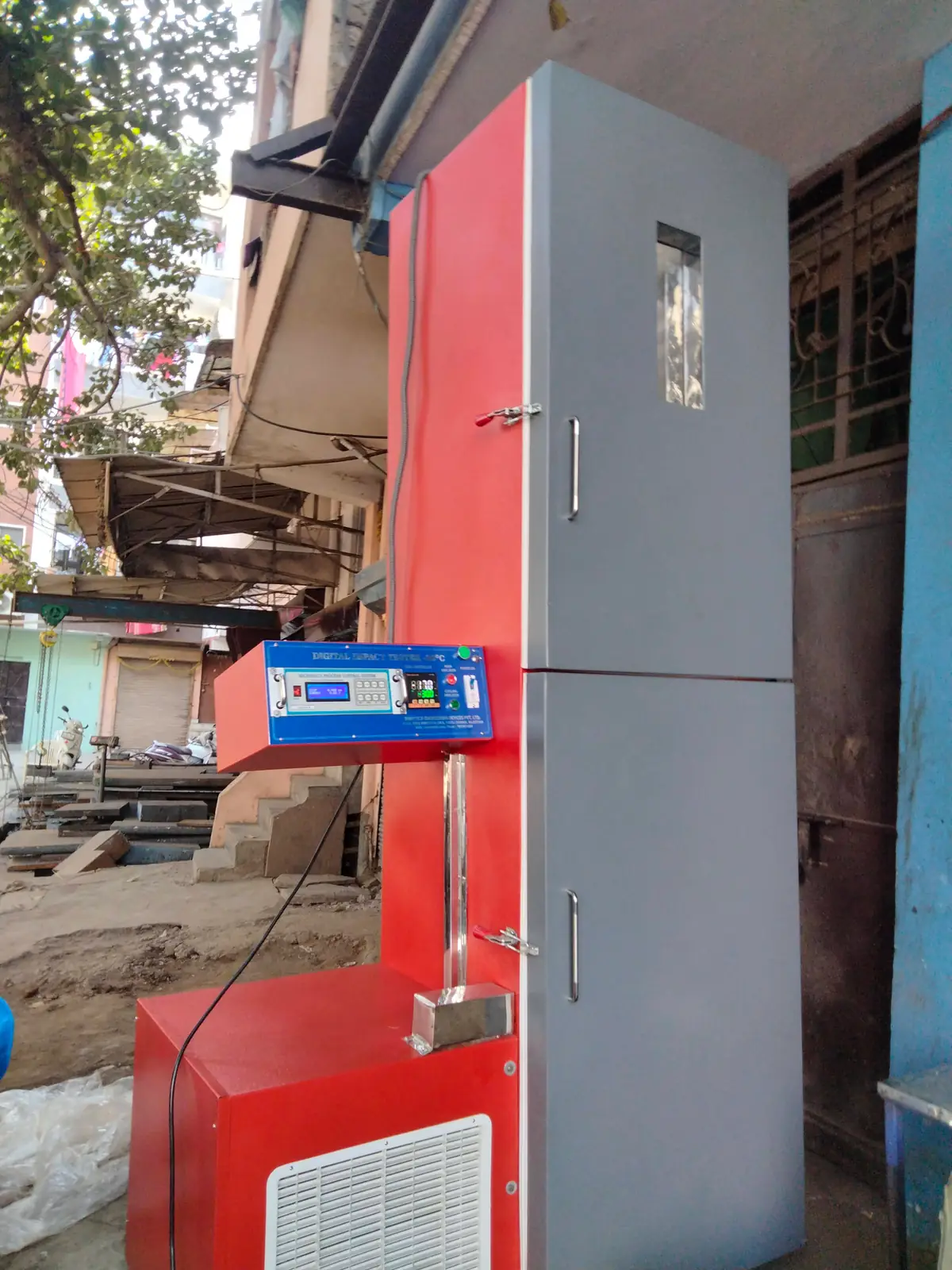
Computerized Low-Temperature Impact Testing Machine (−30°C)
Computerized Low-Temperature Impact Testing Machine (−30°C)
The Computerized Low-Temperature Impact Testing Machine (−30°C) is designed to evaluate the impact resistance and energy absorption of suitable material specimens under controlled low-temperature conditions. It helps laboratories and manufacturers assess material behaviour at temperatures down to −30°C, subject to the machine’s confirmed specifications. The appropriate configuration depends on the material type, impact test method, impact energy capacity, specimen dimensions and applicable testing standards. Contact us for technical details, configuration options and a quotation.
MODEL
I-CITM
OVERVIEW
Description
Computerized Low-Temperature Impact Testing Machine (−30°C) for Material Testing
Looking for a computerized low-temperature impact testing machine in India to evaluate material impact resistance at temperatures down to −30°C? This testing equipment is intended for applications where low-temperature conditions may influence a material's toughness, brittleness and response to sudden impact loading.
Low-temperature impact testing helps laboratories and manufacturers investigate how materials behave when subjected to a sudden force under specified temperature conditions. Depending on the material and test method, the results may help assess absorbed impact energy and compare the performance of material samples tested under consistent conditions.
The computerized configuration is intended for testing workflows that require electronic measurement or computer-based operation. The available measurement, control and reporting functions must be confirmed for the selected machine configuration.
What Is a Computerized Low-Temperature Impact Testing Machine?
A computerized low-temperature impact testing machine combines an impact testing arrangement with a system for conditioning specimens at a specified low temperature. The specimen is brought to the required test temperature and then subjected to an impact according to the selected test method.
The machine measures or calculates the relevant impact result using its configured measurement system. Depending on the test method and equipment, the result may include absorbed impact energy or another specified impact-related parameter.
The −30°C operating requirement is important for applications in which room-temperature testing alone may not represent the conditions under which the material will be used.
Before selecting a machine, confirm whether the intended application involves metallic materials, plastics or another material category. The required impact method, specimen preparation, testing accessories and applicable standards differ between applications.
Working Principle of a Low-Temperature Impact Testing Machine
The machine's working principle depends on the impact method and its mechanical configuration. A typical low-temperature impact test follows these stages.
Step 1: Prepare the specimen
Prepare the test specimen to the dimensions and condition required by the applicable standard. If the method requires a notch, ensure that its dimensions and geometry meet the specified requirements.
Step 2: Set the target temperature
Set the required conditioning temperature, such as −30°C, using the available temperature-control system. Allow the system to reach the required condition before preparing the test.
Step 3: Condition the specimen
Place the specimen in the specified low-temperature conditioning arrangement for the required period. Follow the test method's requirements for conditioning and transfer to the impact position.
Step 4: Position the specimen
Place the conditioned specimen in the correct supports or fixture. The specimen orientation, support spacing and impact location must match the selected test method.
Step 5: Apply the impact
The impact mechanism strikes the specimen according to the machine's test configuration. The specimen's response is measured using the installed impact measurement arrangement.
Step 6: Record and evaluate the result
Record the result and relevant test conditions. Depending on the method, the result may include absorbed impact energy or other specified information. Interpret the result according to the applicable standard and material requirements.
Operators should follow the machine manual, the relevant test procedure and all safety instructions.
Testing Standards and Compliance
The applicable testing standard depends on the material being tested and the impact method used.
For example, ASTM E23 and ISO 148-1 address Charpy pendulum impact testing of metallic materials. For plastics, standards such as ASTM D256, ISO 179 and ISO 180 cover specific impact-testing methods and specimen arrangements.
These standards are not interchangeable. Their suitability for this machine must be confirmed against the actual test method, specimen type and supplied configuration. Refer to the latest applicable edition and the requirements specified by your customer or laboratory.
How to Choose the Right Low-Temperature Impact Testing Machine
Before purchasing, consider the following factors:
- Material type: Identifyu whether you will test metals, plastics or another material.
- Impact test method: Confirm whether charpy, Izod or another method is required.
- Temperature requirement: Verify that the machine can reach and maintain the required test temperature.
- Impact energy capacity: Select a suitable range for the expected specimen behaviour.
- Specimen dimensions: Confirm the required specimen size, notch geometry and supports.
- Computerized functions: Check whether data storage, analysis, report generation and data export are included.
- Applicable standards: Confirm the exact standard and edition required for you testing.
- Calibration and verification: Ask about calibration documentation and the verification procedure.
- Safety adn installation: Review guarding, operating requirements, space, power supply and installation needs.
Sharing these details helps determine whether the proposed configuration is suitable for your application.
Computerized Low-Temperature Impact Testing Machine Price in India
The price of a computerized low-temperature impact testing machine in India depends on the impact energy capacity, temperature range, cooling system, computerized measurement arrangement, software, accessories and required test method.
The final cost may also depend on specimen fixtures, installation, calibration documentation and other requirements included in the commercial offer.
For an accurate quotation, provide the required test method, material type, impact energy range, target temperature, specimen dimensions and data-recording requirements.
Manufacturer and Supplier Enquiries in India
Customers looking for a computerized low-temperature impact testing machine can contact Innotech Engineering Devices Private Limited to discuss their technical requirements.
Enquiries are welcome from Bhiwadi, Rajasthan, Delhi NCR, Mumbai, Bengaluru, Kolkata and other locations across India. These are enquiry locations, not claims of separate offices in each city. Delivery, installation and support availability should be confirmed for the proposed machine.
Frequently Asked Questions
1. What is a computerized low-temperature impact testing machine used for?
It is used to evaluate the impact behaviour of suitable material specimens under specified low-temperature conditions. The exact test and reported result depend on the machine configuration and applicable standard.
2. What does −30°C mean for this machine?
It identifies the stated low-temperature requirement. Confirm the actual minimum operating temperature, temperature stability, uniformity and specimen-conditioning performance in the final technical specification.
3. Which materials can be tested?
Material compatibility depends on the impact method, specimen dimensions, test fixtures and applicable standard. Confirm whether the machine is configured for metals, plastics or another material category.
4. Does the machine support both Charpy and Izod testing?
This has not been confirmed from the product name alone. Ask the supplier to specify the supported test methods and the required fixtures for each method.
5. What does the computerized system do?
Depending on the supplied configuration, computerized functions may support electronic measurement, result display, data recording or analysis. Confirm which functions, software and computer hardware are included.
6. Which testing standards does the machine follow?
The applicable standards depend on the material and test method. Confirm the exact standards supported by the proposed configuration before ordering.
7. What affects the machine's price?
Price depends on impact energy capacity, temperature range, cooling and control systems, measurement arrangement, software, fixtures, accessories and installation requirements.
8. How can I request a quotation?
Share your material type, required impact test method, target temperature, impact energy range, specimen dimensions and applicable standard. These details help the supplier assess the appropriate configuration.
Request a Quotation
Looking for a Computerized Low-Temperature Impact Testing Machine (−30°C) for your laboratory or industrial testing application?
Contact us with your technical requirements to discuss the appropriate machine configuration, available features and quotation.
Email: info@innotechgroup.net
Phone: +91 9810431604
Address: H-307 (Corner), RIICO Industrial Area, Karoli, Tapukara, Bhiwadi, Rajasthan – 301707, India
Contact our team to discuss your low-temperature impact testing requirements and request a technical and commercial offer.
WHY IT WORKS
Key benefits
Low-temperature material evaluation: Helps assess impact behaviour under specified cold conditions.
Material comparison: Supports comparison of samples tested using the same procedure and conditions.
Quality-control support: Provides information that can be used alongside other material test results to assess product consistency.
Product development: Helps engineers investigate material performance and compare material selections.
Electronic result handling: Computerized functions, where included, can support result recording and review.
Application-specific testing: Helps laboratories select testing arrangements suited to their material and required impact method.
USE CASE
Application range
BUILT IN
Features
Low-Temperature Testing Capability
Computerized Testing Arrangement
Impact Resistance Evaluation
Controlled Specimen Conditioning
Application-Specific Configuration
SPEC
Specifications
Product name
Computerized Low-Temperature Impact Testing Machine
Intended test condition
Low-temperature impact testing
Stated temperature requirement
−30°C
Minimum operating temperature
To be confirmed
Maximum operating temperature
To be confirmed
Impact test method
To be confirmed
Material compatibility
To be confirmed
Maximum impact energy
To be confirmed in joules (J)
Impact measurement system
To be confirmed
Computerized control
As supplied in the confirmed configuration
Software and data recording
To be confirmed
Temperature control system
To be confirmed
Temperature stability and uniformity
To be confirmed
Specimen dimensions
According to the selected test method
Specimen conditioning arrangement
To be confirmed
Striker, supports and fixtures
According to the selected test method
Applicable testing standards
To be confirmed
Power supply
To be confirmed
Machine dimensions
To be confirmed
Machine weight
To be confirmed
Accessories
As specified in the quotation