
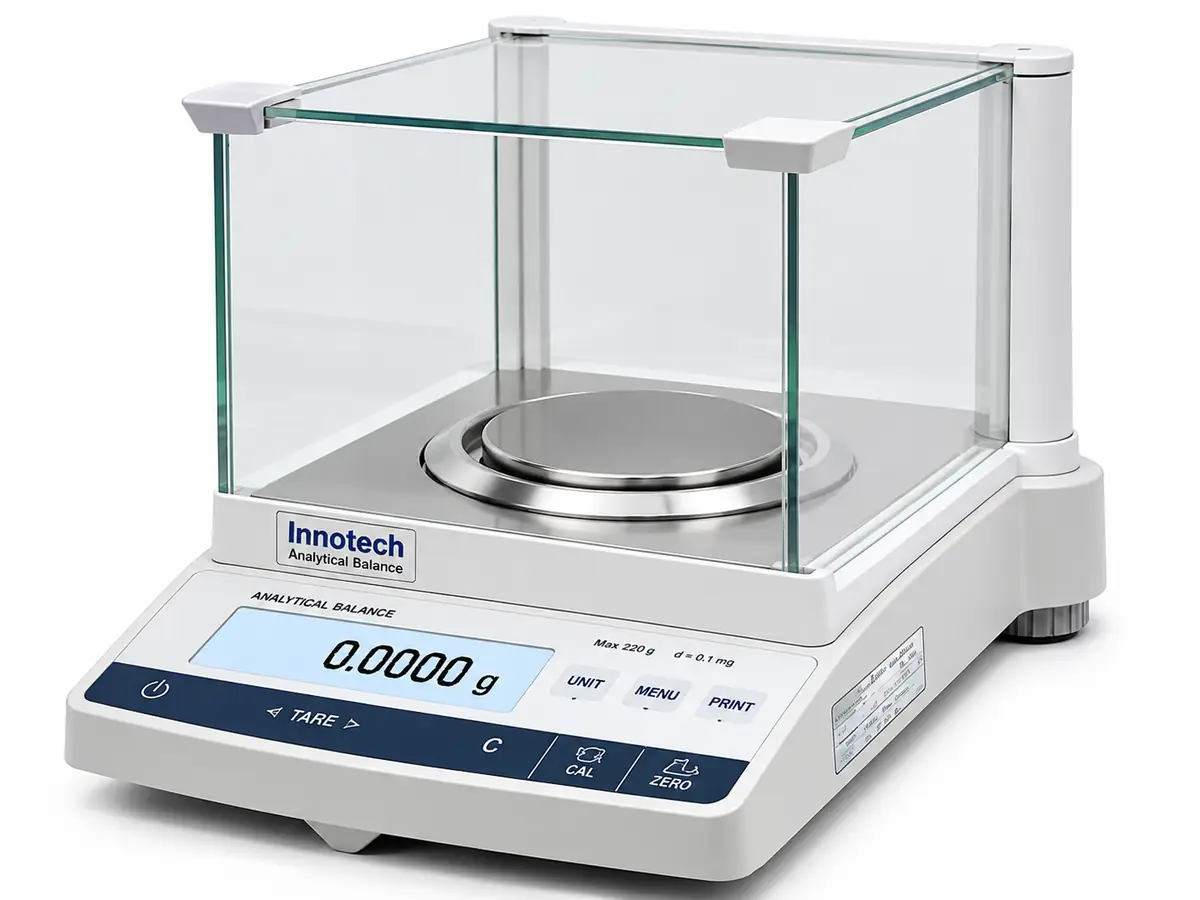
Analytical Balance
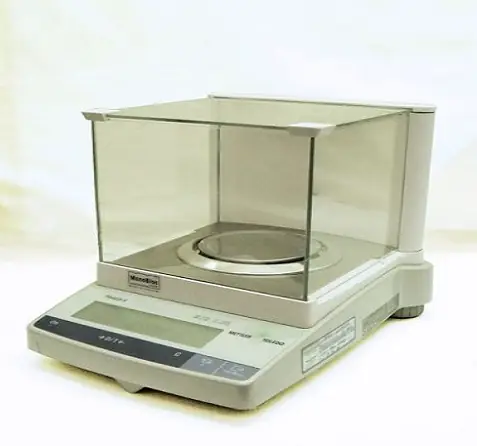
Analytical Balance
The Analytical Balance is a precision laboratory weighing instrument designed to measure small quantities of chemicals, powders, samples and other materials. Suitable for pharmaceutical, chemical, research and quality-control laboratories, it supports accurate weighing procedures with digital measurement, auto calibration and convenient data connectivity. Customized configurations are available according to customer application and laboratory requirements.
MODEL
IAB
OVERVIEW
Description
Analytical Balance Manufacturer in Bhiwadi, India
Analytical Balance for Laboratory Precision Weighing
An Analytical Balance is a precision weighing instrument used to measure the mass of small quantities of materials with high readability. It is an essential laboratory instrument for applications where accurate weighing is important for sample preparation, chemical analysis, formulation, quality control and research activities.
The Analytical Balance offered by Innotech Engineering Devices Private Limited is designed for laboratory and industrial weighing applications. The listed model features a weighing capacity of 220 g, readability of 0.1 mg, an LCD display, RS232 connectivity, auto calibration and overload protection.
An analytical weighing instrument helps laboratory professionals measure samples, chemicals, powders, raw materials and other substances during testing and production processes. It is useful in pharmaceutical laboratories, chemical industries, educational institutions, research centres, food testing laboratories and quality-control departments.
Innotech Engineering Devices Private Limited is an **Analytical Balance manufacturer and supplier in Bhiwadi, Rajasthan, India**, providing laboratory equipment and customized testing solutions according to customer requirements.
What Is an Analytical Balance?
An Analytical Balance is a sensitive electronic weighing instrument used to determine the mass of materials with fine readability, commonly expressed in milligrams (mg) or grams (g).
Unlike ordinary weighing scales, analytical balances are designed for laboratory applications where small variations in sample mass can affect test results, calculations and product formulations.
The balance uses an electronic weighing system to detect the load placed on its weighing pan and display the corresponding mass. A protective weighing chamber helps reduce the effect of air movement on the measurement.
Analytical balances are commonly used for weighing chemicals, laboratory reagents, powders, pharmaceutical ingredients, research samples and other materials requiring controlled weighing procedures.
Working Principle of Analytical Balance
An electronic analytical balance generally works using an electromagnetic force compensation or another precision electronic weighing mechanism, depending on its design.
The basic weighing procedure is:
- Place the analytical balance on a stable, level and vibration-free surface.
- Allow the instrument to stabilize and perform calibration or zero adjustment as required.
- Place a suitable weighing container or sample on the weighing pan.
- Use the tare function to subtract the container's mass when required.
- Add the material carefully and allow the reading to stabilize.
- Record the displayed mass in the selected unit.
- Remove the sample and clean the weighing area after completing the procedure.
Environmental conditions, sample handling, air currents, temperature changes and vibration can affect sensitive weighing measurements. Proper installation and good weighing practices are therefore important.
Why Is an Analytical Balance Used?
An analytical balance is used wherever accurate measurement of small material quantities is important for laboratory testing, product formulation or quality-control procedures.
1. Accurate Sample Weighing
It helps measure small quantities of chemicals, powders and other laboratory materials for analytical procedures.
2. Chemical Preparation
Laboratories use analytical balances to weigh reagents and prepare solutions with the required material quantities.
3. Pharmaceutical Formulation
It supports the weighing of ingredients and raw materials during suitable pharmaceutical laboratory procedures.
4. Quality Control
Manufacturing and testing laboratories use analytical balances to measure samples during incoming material inspection and quality checks.
5. Research and Development
Research laboratories use precision weighing instruments for experiments, sample preparation and material evaluation.
6. Measurement Repeatability
When used under controlled conditions and with proper calibration, an analytical balance supports consistent weighing procedures.
Advantages of Analytical Balance
- Fine readability: Helps measure small mass differences for laboratory applications.
- Digital measurement: Provides an electronic mass reading on the display.
- Fast weighing workflow: The listed model has a stabilization time of less than 1.5 seconds under specified conditions.
- Auto calibration: Supports calibration functionality according to the instrument's design.
- Tare function: Allows container mass to be excluded from the displayed net measurement, where provided.
- Laboratory suitability: Useful for chemical, pharmaceutical, research and quality-control applications.
- Data connectivity: The listed RS232 interface can support communication with compatible external equipment.
- Overload protection: Helps protect the weighing mechanism against excessive loading within the instrument's designed protection limits.
- Easy operation: Digital display and electronic weighing functions support routine laboratory use.
Industry Standards and Guidelines for Analytical Balance
Analytical balances are used in laboratories that follow defined weighing, calibration, measurement and quality-control procedures. The following international references are relevant to analytical weighing instruments and their use.
1. OIML R 76 – Non-Automatic Weighing Instruments
OIML R 76 specifies metrological and technical requirements and testing procedures for non-automatic weighing instruments subject to applicable legal metrological control.
It is relevant when evaluating weighing-instrument characteristics and applicable verification requirements.
2. EURAMET cg-18 – Calibration of Non-Automatic Weighing Instruments
EURAMET cg-18 provides guidance for the calibration of non-automatic weighing instruments. It covers calibration measurements, evaluation of results, measurement uncertainty and calibration documentation.
It is particularly relevant to laboratories that require traceable calibration of their weighing instruments.
3. USP General Chapter <41> – Balances
USP General Chapter <41> covers balances used for materials that must be accurately weighed in applicable pharmaceutical procedures. It addresses balance performance requirements, including repeatability and accuracy.
4. USP General Chapter <1251> – Weighing on an Analytical Balance
USP <1251> provides guidance on the use of analytical balances in laboratory weighing procedures. It discusses suitable weighing practices, balance operation and factors that can affect weighing performance.
5. ISO/IEC 17025 – Testing and Calibration Laboratory Competence
ISO/IEC 17025 specifies general requirements for the competence of testing and calibration laboratories. It is relevant to laboratories that operate analytical balances and maintain calibration, measurement traceability and quality procedures.
It is a laboratory competence standard, not a product manufacturing certification for an analytical balance.
6. ISO 9001 – Quality Management Systems
ISO 9001 specifies requirements for an organization's quality management system. It can be relevant to the manufacturer's quality processes but does not independently establish the measurement accuracy or calibration status of an analytical balance.
Important: The relevant standard depends on the application and intended use. Calibration, verification, traceability and compliance must be supported by appropriate records and documentation. Mentioning a standard on this page does not mean that every supplied balance is independently certified or calibrated to it.
Applications of Analytical Balance
Analytical balances are used across different laboratory and industrial sectors.
- Pharmaceutical raw material and formulation laboratories.
- Chemical testing and analytical laboratories.
- Research and development laboratories.
- Educational institutions and engineering colleges.
- Food testing and quality-control laboratories.
- Biotechnology and life science laboratories.
- Cosmetics and personal-care product development.
- Fertilizer and agrochemical laboratories.
- Polymer and plastic material testing laboratories.
- Paint, coating and pigment laboratories.
- Environmental testing laboratories.
- Manufacturing quality-control departments.
- Precious material and sample analysis laboratories, where the balance's capacity and readability are suitable.
How to Select the Right Analytical Balance
Selecting an analytical balance depends on the type of material, sample mass, weighing accuracy requirements and laboratory application.
Consider these factors before purchasing:
Weighing Capacity: Select a capacity that accommodates the maximum sample and container mass without exceeding the balance's permitted load.
Readability: Choose suitable readability according to the smallest mass difference that must be measured.
Repeatability and Linearity: Evaluate the balance's performance specifications against the measurement requirements of the application.
Calibration: Consider the calibration method, calibration records and availability of traceable calibration services.
Environmental Conditions: Check whether the installation area is protected from vibration, air currents, temperature fluctuations and other disturbances.
Connectivity: Consider RS232, USB or other data interfaces if readings need to be transferred to a computer or laboratory system.
Compliance Requirements: For pharmaceutical or accredited laboratory applications, review the applicable USP, ISO/IEC 17025 and calibration requirements.
Customized Analytical Balance Requirements
Different laboratories may have different weighing requirements depending on their materials, sample sizes, operating procedures and quality-control objectives.
Innotech Engineering Devices Private Limited discusses analytical balance requirements according to the customer's intended application.
The required capacity, readability, weighing pan arrangement, display, calibration options, connectivity, operating environment and accessories can be evaluated before finalizing the suitable model.
Technical specifications are not assumed to be identical for every customer requirement. The final configuration should be confirmed before ordering.
Why Choose Innotech Engineering Devices Private Limited?
Innotech Engineering Devices Private Limited provides testing machines, laboratory equipment and customized industrial testing solutions for customers across India.
Based in Bhiwadi, Rajasthan, the company serves manufacturing industries, laboratories, educational institutions and quality-control facilities.
Customers can discuss their analytical weighing requirements, including capacity, readability, calibration preferences, data connectivity and intended laboratory application, before selecting a suitable configuration.
Frequently Asked Questions
1. What is an analytical balance used for?
An analytical balance is used to measure small quantities of materials accurately in laboratories, research facilities, pharmaceutical applications and quality-control departments.
2. What is the difference between an analytical balance and a precision balance?
An analytical balance generally offers finer readability and is used for more sensitive laboratory weighing. A precision balance is commonly used for weighing applications that require a comparatively higher capacity or coarser readability. The suitable instrument depends on the measurement requirement.
3. What does 0.1 mg readability mean?
A readability of 0.1 mg means the balance displays mass increments of 0.1 milligrams. Readability is not the same as measurement accuracy or repeatability.
4. What is the purpose of auto calibration in an analytical balance?
Auto calibration helps the balance adjust its measurement response using its built-in calibration mechanism, where provided. The calibration procedure and verification requirements depend on the instrument design and application.
5. Why is an analytical balance provided with a protective chamber?
A protective chamber helps reduce the effect of air currents on sensitive weighing measurements and supports more stable readings.
6. Which standards are relevant to analytical balances?
Relevant references include OIML R 76, EURAMET cg-18, USP General Chapter <41> and USP General Chapter <1251>. ISO/IEC 17025 is relevant to the competence of testing and calibration laboratories.
7. Does ISO/IEC 17025 certify an analytical balance?
No. ISO/IEC 17025 specifies requirements for testing and calibration laboratory competence. It does not certify the balance as a product.
8. Can an analytical balance connect to a computer?
The listed model includes an RS232 interface. Connection to a computer or external device depends on compatible hardware, communication settings and any required software.
9. Can an analytical balance be customized?
The required capacity, readability, connectivity, calibration features and accessories can be discussed according to the customer's application and the available instrument configuration.
10. Where can I buy an analytical balance in India?
You can contact Innotech Engineering Devices Private Limited, Bhiwadi, Rajasthan, to discuss analytical balance requirements and suitable laboratory weighing solutions.
Request a Quotation for Analytical Balance
Looking for an Analytical Balance for your pharmaceutical, chemical, research or industrial laboratory?
Contact Innotech Engineering Devices Private Limited to discuss your weighing capacity, readability, calibration and connectivity requirements.
Company: Innotech Engineering Devices Private Limited
Email: info@innotechgroup.net
Phone: +91 9810431604
Location: H-307 RIICO Industrial Area Karoli, Tapukara, Bhiwadi, Rajasthan, India.
Contact our team for product details and a customized quotation.
WHY IT WORKS
Key benefits
High Readability
Consistent Weighing
Digital Measurement
Time-Saving Operation
Auto Calibration
Tare Function
Data Connectivity
Sample Preparation
Quality Control
Overload Protection
Laboratory Versatility
Customized Requirements
USE CASE
Application range
BUILT IN
Features
Digital electronic weighing system.
Listed maximum weighing capacity of 220 g.
Readability of 0.1 mg.
Listed linearity of 0.2 mg.
LCD display for mass indication.
RS232 communication interface.
Auto calibration feature.
Overload protection.
Stainless-steel material listed for the weighing platform.
Fast stabilization time as specified for the listed model.
SPEC
Specifications
Instrument Name
Analytical Balance
Weighing Capacity
220 g
Readability
0.1 mg
Linearity
0.2 mg
Stabilization Time
Less than 1.5 seconds
Display
LCD
Communication Interface
RS232
Calibration
Auto calibration
Overload Protection
Available
Weighing Pan Size
To be confirmed
Power Supply
To be confirmed
Dimensions
To be confirmed
Weight
To be confirmed