
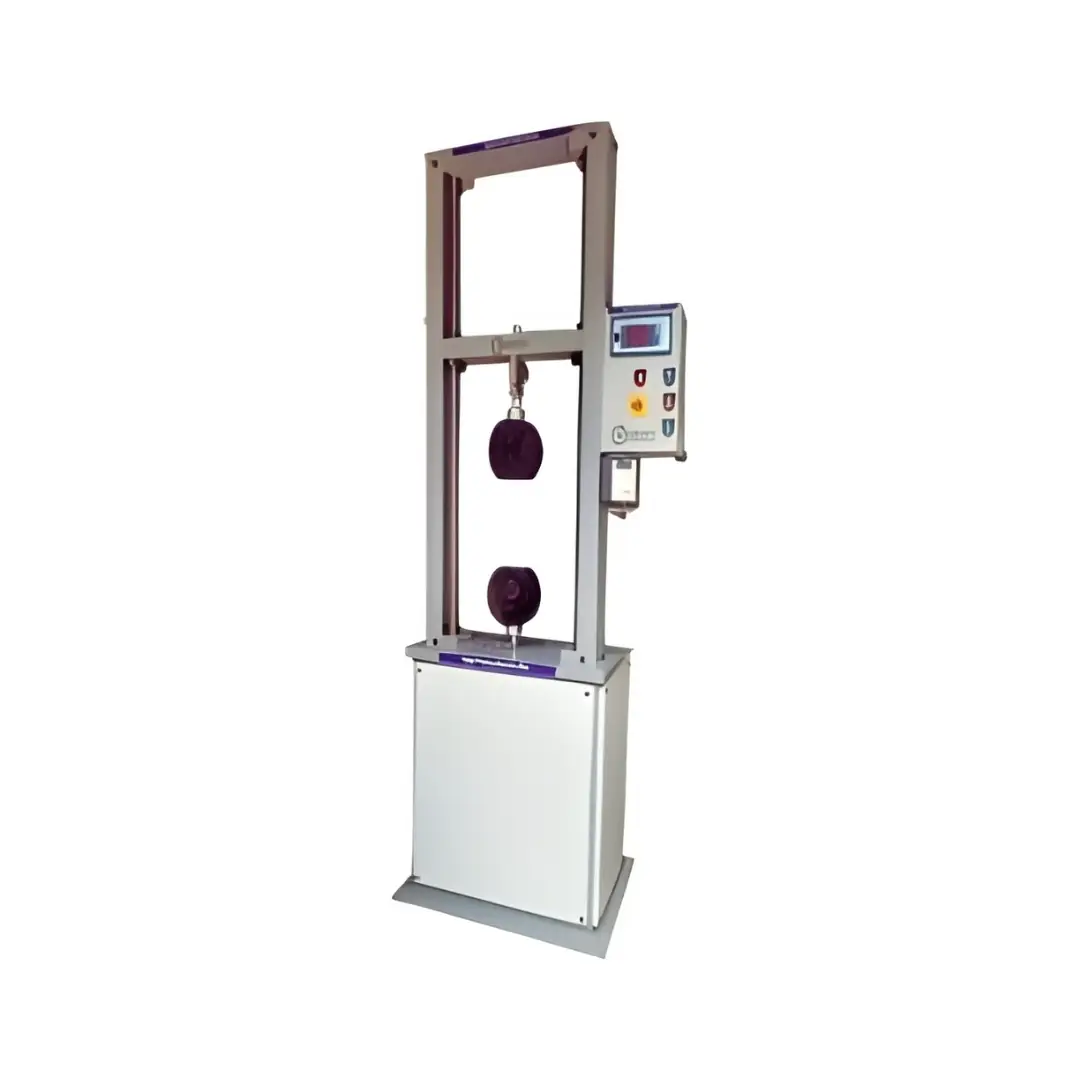
10 kN Tensile Testing Machine
10 kN Tensile Testing Machine
The Innotech 10 kN Tensile Testing Machine is designed for evaluating the tensile strength and mechanical performance of suitable material specimens. With a stated load capacity of 10 kN, ±1% accuracy, steel construction, and 220 V AC power supply, it can support material testing, quality control, and research applications. The machine configuration and gripping arrangements should be selected according to the material, specimen dimensions, and required test method.
MODEL
ITTM-10kN
OVERVIEW
Description
10 kN Tensile Testing Machine Manufacturer in India
Looking for a 10 kN tensile testing machine in India for material-strength testing, quality control, or laboratory applications? Innotech Engineering Devices Private Limited offers a steel tensile testing machine designed to evaluate the tensile behaviour and strength of suitable material specimens. With a specified load capacity of 10 kN, stated accuracy of ±1%, and a 220 V AC power supply, this machine is intended for industrial and laboratory material-testing applications.
The Innotech tensile testing machine can be considered for testing compatible metals, plastics, composites, and other suitable materials, depending on the machine configuration, gripping arrangements, specimen dimensions, and test procedure. It can support material evaluation, quality-control inspections, research, and development activities.
What Is a Tensile Testing Machine?
A tensile testing machine applies a pulling force to a specimen to evaluate how it responds under tension. Depending on the test setup and measurement system, tensile testing can provide information about maximum load, breaking load, elongation, and tensile strength.
Tensile testing helps manufacturers assess material quality, compare samples, investigate failures, and verify that materials meet defined product requirements. The test method and calculated results depend on the specimen dimensions, measurement capabilities, and applicable standard.
Working Principle of the Tensile Testing Machine
The working principle is based on applying a controlled tensile force to a prepared specimen and evaluating its response.
1. Specimen preparation: Prepare the material specimen according to the selected test procedure.
2. Specimen gripping: Secure the specimen using suitable grips or fixtures.
3. Test setup: Confirm the required load range, test procedure, and measurement arrangements.
4. Tensile loading: Apply a pulling force through the machine's loading mechanism.
5. Measurement: Measure the force and any required extension or displacement using the available measurement system.
6. Result evaluation: Analyse the recorded data to determine the properties supported by the test setup.
The actual operating procedure, control method, and available measurements should be confirmed for the supplied machine configuration.
Applications of a 10 kN Tensile Testing Machine
The machine may be suitable for applications involving:
- Tensile strength testing of compatible metal specimens
- Tensile testing of suitable plastic and polymer specimens
- Testing of compatible composite materials
- Material-strength evaluation
- Breaking-load testing, where supported by the configuration
- Quality control and incoming material inspection
- Production quality checks
- Research and development
- Material-testing laboratories
- Industrial inspection and testing
The suitability of the machine for a particular specimen depends on the test load, gripping requirements, specimen geometry, measurement range, and applicable test method.
Key Considerations When Selecting a Tensile Testing Machine
Before purchasing a tensile testing machine, consider the following:
- Load capacity: Confirm that the 10 kN capacity is suitable for the expected test force.
- Material type: Identify whether you will test metals, plastic, composites, or other materials.
- Specimen dimensions: Determine the specimen shape, thickness, width, and length.
- Gripping arrangement: Select suitable grips to secure the specimen and prevent unwanted slipping.
- Measurement requirements: Establish whether you need force, displacement, elongation, or extensometer measurements.
- Test speed and control: Confirm the required loading speed and control method for your applications.
- Testing standards: Identify the applicable ASTM, ISO, IS or other standard and confirm that the final machine configuration supports the required procedure.
- Reporting requirements: Confirm whether manual recording, digital measurement, computer-based data azquisition, or automated reports are required.
Tensile Testing Machine Price in India
The price of a tensile testing machine in India depends on its load capacity, frame design, control system, measurement accuracy, grips, extensometer, software, calibration, and customization requirements.
If your application requires special grips, additional measurement functions, customized fixtures, or computerised testing, share your requirements before requesting a quotation.
Why Choose Innotech Engineering Devices Private Limited?
- Testing equipment for industrial and laboratory applications
- Material-testing solutions for suitable specimens and test requirements
- Customized testing-machine requirements can be discussed
- Application-based guidance on machine selection and fixtures
- Technical consultation for load capacity and measurement needs
- Solutions for quality control, material evaluatin, and research
Frequently Asked Questions
1. What is the load capacity of this tensile testing machine?
load capacity of 10 kN.
2. What is the stated accuracy?
The listing specifies an accuracy of ±1%. Confirm the exact accuracy definition and measurement conditions in the final technical documentation.
3. Which materials can be tested?
The published listing refers to metals, plastics, and composites. Actual suitability depends on the specimen, grips, measurement system, and test method.
4. What is the power supply requirement?
The listed power supply is 220 V AC. Confirm the final electrical requirements before installation.
5. What is the price of a 10 kN tensile testing machine in India?
Request a current quotation to confirm the final price and supply scope. and the actual price will be based on its configuration.
6. Can the machine be customized?
Application-specific requirements can be discussed with Innotech. Any customized grips, software, control functions, or measurement options should be confirmed in the final technical specification.
Request a Quotation
Contact Innotech Engineering Devices Private Limited to discuss your tensile testing requirements and confirm a suitable machine configuration.
Innotech Engineering Devices Private Limited
Email: info@innotechgroup.net
Phone: +91 9810431604
Address: H-307 (Corner), RIICO Industrial Area, Karoli, Tapukara, Bhiwadi, Rajasthan – 301707.
WHY IT WORKS
Key benefits
10 kN specified load capacity
Compare material samples and production batches
Identify variations in material performance
Support incoming material inspection
Improve quality-control procedures
Investigate material failure
Stated accuracy of ±1%
220 V AC power supply
USE CASE
Application range
BUILT IN
Features
10 kN load capacity
Stated accuracy of ±1%
Steel construction
220 V AC power supply
Listed machine dimensions of 1500 × 600 × 400 mm
Listed weight of 150 kg
Intended for material-strength testing
- Suitable for quality-control and research applications
SPEC
Specifications
Construction material
Steel
Intended usage
Material-strength testing
Brand
IEDPL
DIM
Dimensions
Load Capacity
10 kN
Accuracy listed
±1%
Dimensions
1500 x 600 x 400 mm