

Abrasion Resistance Tester

TILE ABRASION TESTING MACHINE
Technical Specifications
| Feature | Specification / Option |
|---|---|
| Model Type | Single-head / Dual-head abrasion tester |
| Test Standard Compliance | ISO 10545-7, EN 14157, ASTM C1243, DIN standards |
| Number of Abrasive Heads | 1 or 2 heads |
| Turntable Diameter | ~300–400 mm (industry varies) |
| Speed Control | Variable speed (e.g., 50–150 rpm) |
| Load Weights | Calibrated weights (typically up to 1,000 g or more per head) |
| Abrasive Medium | Standard abrasive wheels/discs or sand/rubber pads |
| Test Cycle Timer | Digital timer, programmable up to several hours |
| Display | Digital/LED display for time, speed, and test status |
| Power Supply | 220–240 V AC, 50/60 Hz (or 110 V option) |
| Frame Material | Sturdy mild steel / powder-coated structure |
| Sample Size Accommodation | Large enough platform to hold standard tiles (e.g., up to 300 × 300 mm or larger) |
| Safety Features | Emergency stop, protective covers |
| Control Mode | Manual / semi-automatic / PLC touch screen (depending on model) |
| Data Output | Manual recording or digital export (optional) |
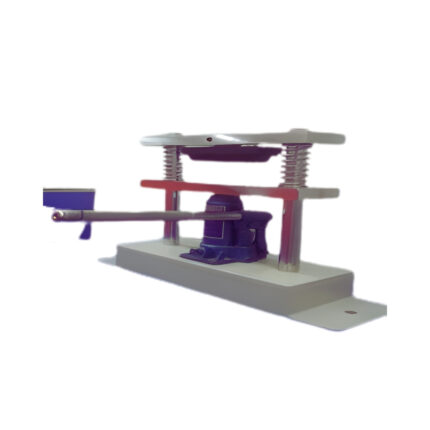

DIN ABRASION TESTER
Key Features
-
Conforms to DIN 53516 / ISO 4649 / ASTM D5963
-
Precision abrasive drum with uniform speed
-
Constant load application mechanism
-
Digital revolution counter
-
Sliding distance control
-
Specimen holder with angular adjustment
-
High accuracy and repeatability
-
Rugged, vibration-free construction
-
Easy specimen mounting and removal
Technical Specifications (Typical)
-
Drum Diameter: ~150 mm
-
Drum Speed: 40 ± 1 rpm
-
Abrasive Paper: Grit 60 (as per DIN)
-
Normal Load: 10 N
-
Sliding Distance: 40 m (standard)
-
Specimen Size: Ø16 mm × 6–15 mm thickness
-
Display: Digital / LCD
-
Power Supply: 220–240 V AC, 50 Hz
Applications
-
Rubber and elastomer industries
-
Tyre and automotive components
-
Conveyor belts and hoses
-
Footwear and sole materials
-
PU and polymer products
-
Quality control and R&D laboratories
Advantages
-
Reliable abrasion resistance evaluation
-
Standard-compliant testing
-
Consistent and repeatable results
-
Low maintenance
-
User-friendly operation