
Why Choose UTM Machine? Benefits, Applications and Importance of Universal Testing Machines
Jay Pal Singh
14 September 2026
Why Choose UTM Machine? Benefits, Applications and Importance of Universal Testing Machines
Material testing plays an important role in modern manufacturing, engineering, construction, automotive, aerospace, and research industries. Manufacturers need to understand how materials behave when subjected to different types of forces before they can be used safely and reliably in products and structures.
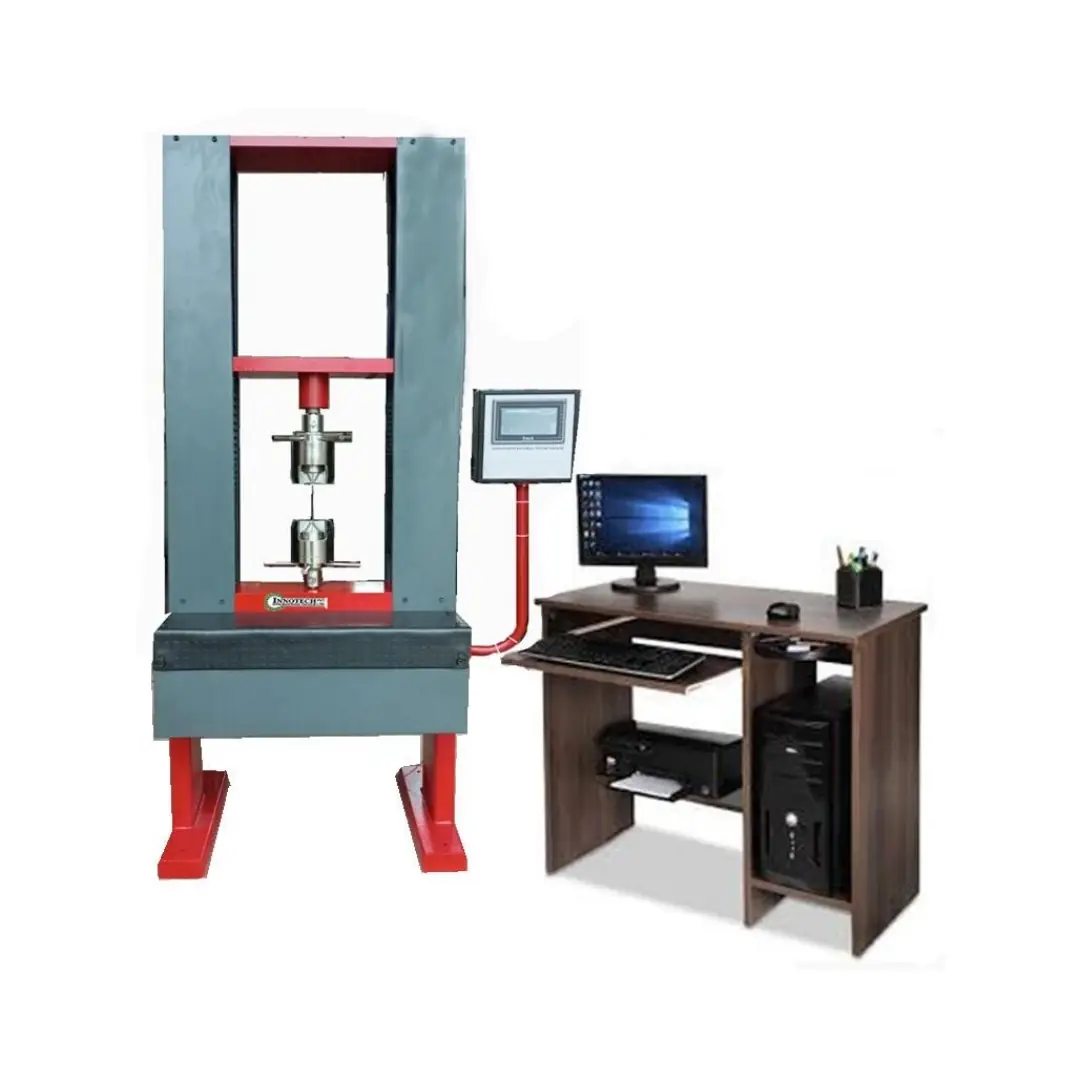
A Universal Testing Machine (UTM) is one of the most versatile and widely used machines for evaluating the mechanical properties of materials. It can perform different types of tests, including tensile testing, compression testing, load testing, elongation testing, and other mechanical tests depending on the machine configuration and available fixtures.
But why choose a UTM machine instead of using separate machines for different mechanical tests?
The answer lies in its versatility, accuracy, flexibility, efficiency, and ability to perform multiple material-testing applications using a single testing system.
In this article, we explain what a UTM machine is, how it works, its major benefits, applications, and why it is an important investment for modern testing laboratories and manufacturing facilities.
What Is a UTM Machine?
A Universal Testing Machine, commonly known as a UTM, is a mechanical testing machine used to determine the strength and mechanical behavior of materials and components when subjected to controlled forces.
The machine can apply a gradually increasing load to a test specimen while measuring parameters such as force, displacement, elongation, and deformation.
Depending on its configuration, a UTM can perform various tests by changing the grips, fixtures, load cells, and testing accessories.
Common tests performed using a UTM include:
- Tensile strength testing
- Compression testing
- Elongation testing
- Breaking load testing
- Yield strength testing
- Flexural testing
- Bending testing
- Load versus displacement testing
- Proof load testing
- Other application-specific mechanical tests
This flexibility makes the UTM an important piece of equipment for material testing laboratories, manufacturing companies, research organizations, and quality-control departments.
Why Choose a Universal Testing Machine?
The biggest advantage of a UTM is that it can perform multiple mechanical tests using one testing platform.
Instead of purchasing separate equipment for every type of mechanical test, a suitably configured UTM can accommodate different fixtures and accessories for different testing requirements.
1. Versatile Material Testing
A UTM can be configured for different types of mechanical tests depending on the material and application.
With suitable grips and fixtures, the same machine can be used for tensile, compression, bending, flexural, and other tests.
This makes a UTM particularly useful for laboratories that work with different materials or have changing testing requirements.
2. Tensile Strength Testing
One of the most common applications of a UTM is tensile testing.
During a tensile test, a specimen is held between suitable grips and subjected to an increasing pulling force until the material deforms or breaks.
The test can provide information such as:
- Maximum tensile load
- Breaking load
- Tensile strength
- Yield strength
- Elongation
- Displacement
- Load-extension characteristics
Tensile testing is widely used to evaluate metals, plastics, polymers, rubber, wires, cables, textiles, composites, and other suitable materials, depending on machine configuration.
3. Compression Testing
UTMs can also be configured for compression testing using suitable compression platens or fixtures.
Compression testing determines how a material behaves when subjected to a compressive force.
It is useful for materials and products where resistance to compression is an important performance characteristic.
Depending on the machine configuration, compression testing can be applied to materials such as plastics, rubber, construction-related materials, composites, and various engineering components.
4. Cost-Effective Testing Solution
For laboratories performing multiple types of mechanical tests, a UTM can provide a cost-effective alternative to purchasing multiple dedicated testing machines.
One machine can support different testing applications by using appropriate grips and fixtures.
This can help laboratories optimize:
- Equipment investment
- Laboratory space
- Maintenance requirements
- Operator training
- Testing workflows
The overall cost-effectiveness depends on the machine configuration and the range of tests required by the laboratory.
5. Improved Testing Efficiency
A modern digital UTM can provide controlled test speed, digital force measurement, displacement measurement, and convenient monitoring of test parameters.
Automated or software-controlled testing systems can further reduce manual intervention and improve testing workflow.
This is particularly useful for laboratories that perform a large number of tests and require consistent testing procedures.
6. Accurate and Repeatable Results
Accurate measurement is essential in material testing.
A properly configured and calibrated UTM provides controlled application of force and measurement of relevant test parameters. Consistent testing conditions can help laboratories obtain repeatable results when the same test procedure is followed.
Factors such as load-cell accuracy, machine alignment, grip selection, specimen preparation, calibration, test speed, and environmental conditions can all influence test results.
For this reason, proper machine selection, calibration, maintenance, and adherence to the applicable testing procedure are essential.
How Does a UTM Machine Work?
The working principle of a UTM is based on applying a controlled mechanical force to a specimen and measuring its response.
For a typical tensile test, the specimen is secured between two grips. The machine then moves one grip relative to the other while applying a controlled tensile force.
The load cell measures the force applied to the specimen, while the displacement or elongation measurement system records the corresponding movement.
The machine can then generate test data that may include load, displacement, elongation, and other calculated mechanical properties.
For compression testing, the specimen is placed between compression platens and subjected to a controlled compressive load.
The exact testing method depends on the material, specimen geometry, machine configuration, and applicable testing standard.
Key Benefits of a UTM Machine
A Universal Testing Machine offers several advantages for industrial and laboratory applications.
Multiple Testing Capabilities
A single UTM can support different mechanical tests when equipped with appropriate grips and fixtures.
Flexible Configuration
Load capacity, grips, fixtures, extensometers, software, and other accessories can be selected according to the intended application.
Digital Measurement
Digital measurement systems provide convenient monitoring of force and displacement and can simplify test-result recording.
Suitable for Different Materials
Depending on the configuration, UTMs can be used for metals, plastics, polymers, rubber, textiles, wires, cables, composites, and other suitable materials.
Supports Quality Control
UTMs help manufacturers verify material and product performance against internal specifications and applicable testing requirements.
Useful for Research and Development
Researchers can use UTMs to investigate material behavior, compare formulations, evaluate new materials, and develop new products.
Efficient Laboratory Utilization
A multi-purpose testing system can reduce the need for multiple dedicated machines where the required applications can be accommodated by one appropriately configured UTM.
Applications of UTM Machines
Universal Testing Machines are used across a wide range of industries and testing environments.
Automotive Industry
UTMs can be used for testing automotive materials and components such as metals, plastics, rubber components, wires, cables, and other suitable materials.
Testing helps manufacturers evaluate strength, deformation, elongation, and other mechanical properties.
Metal and Engineering Industry
Metal manufacturers and engineering companies use UTMs for tensile, compression, and other mechanical tests on metals and engineering materials.
Plastic and Polymer Industry
UTMs can be configured with appropriate grips and fixtures to evaluate the tensile and mechanical properties of plastic and polymer specimens.
Rubber Industry
Rubber products can require specific tensile and elongation testing arrangements. A suitably configured UTM can be used for such applications.
Wire and Cable Industry
Specialized grips can be used for tensile and breaking-load testing of wires and cables.
Textile Industry
Depending on the machine configuration and suitable grips, UTM systems can be used for tensile and strength-related testing of textile materials.
Packaging Industry
UTMs can support mechanical testing of packaging materials and components where tensile, compression, or related mechanical properties need to be evaluated.
Research and Development
Research laboratories use UTM machines to characterize materials and compare different formulations, manufacturing processes, and product designs.
UTM Machine for Quality Control
Quality control is one of the most important applications of a Universal Testing Machine.
Manufacturers can use UTM testing to verify incoming raw materials, monitor production quality, compare batches, and inspect finished products.
Regular mechanical testing can help identify variations in material properties and manufacturing processes.
For example, a manufacturer may compare the tensile strength and elongation of material from different production batches to determine whether the material consistently meets its specified requirements.
UTM Machine for Research and Development
In research and development, understanding material behavior is essential for developing new products and improving existing ones.
A UTM can help engineers and researchers compare materials and evaluate the effects of:
- Material composition
- Heat treatment
- Manufacturing processes
- Reinforcement
- Thickness
- Product design
- Processing conditions
- Environmental exposure
The resulting test data can support material selection, product development, and engineering decisions.
What Materials Can Be Tested Using a UTM?
The materials that can be tested depend on the machine's load capacity, grips, fixtures, test method, and configuration.
Common applications include:
- Metals
- Steel
- Aluminium
- Copper alloys
- Plastics
- Polymers
- Rubber
- Textiles
- Wires
- Cables
- Films
- Paper
- Composites
- Engineering materials
- Components and finished products
Not every UTM is suitable for every material. The machine should be selected according to the required test load, specimen dimensions, test speed, measurement range, and applicable testing standard.
How to Select the Right UTM Machine?
Choosing the correct Universal Testing Machine requires careful consideration of the intended testing applications.
Important factors include:
Load Capacity
Select a load capacity appropriate for the maximum expected test force. Choosing the correct load range helps ensure that the machine is suitable for the intended application.
Material Type
The material being tested determines the appropriate grips, fixtures, test method, and measurement requirements.
Test Type
Determine whether the laboratory requires tensile, compression, flexural, bending, or other mechanical testing capabilities.
Specimen Size
The dimensions of the test specimen influence the required test space, grip design, and machine configuration.
Testing Speed
Different materials and standards may require different test speeds. The machine should provide the required speed range for the intended testing procedure.
Measurement Requirements
Consider whether the application requires load measurement, displacement measurement, elongation measurement, extensometer measurement, or other parameters.
Software and Data Management
For laboratories performing frequent testing, digital software and data-recording capabilities can simplify test-result management and reporting.
Calibration and Standards
The machine should be appropriately calibrated and configured according to the applicable testing standards and laboratory requirements.
Importance of Proper Calibration
Even a high-quality testing machine needs regular calibration and verification to maintain reliable measurement performance.
Calibration helps verify the accuracy of measurement systems such as the load cell and displacement measurement system.
Laboratories should follow appropriate calibration schedules and testing procedures based on equipment usage, laboratory requirements, applicable standards, and quality-management systems.
Why Choose Innotech Engineering Devices Private Limited?
Innotech Engineering Devices Private Limited provides material testing and measuring equipment for industrial, laboratory, research, quality-control, and educational applications.
Our Universal Testing Machine solutions can be configured according to application requirements such as test load, material type, specimen dimensions, testing method, grips, fixtures, measurement systems, and data-management requirements.
A properly selected UTM can provide laboratories and manufacturers with a flexible platform for evaluating the mechanical performance of materials and components.
Conclusion
A Universal Testing Machine is a versatile and valuable investment for organizations that require reliable mechanical material testing. Its ability to perform different tests using suitable grips and fixtures makes it an efficient solution for laboratories and manufacturing facilities with multiple testing requirements.
From tensile strength and elongation testing to compression, bending, flexural, and other mechanical evaluations, a suitably configured UTM can support a broad range of applications.
For manufacturers, quality-control laboratories, engineering companies, research organizations, and educational institutions, choosing the right UTM machine can help improve testing efficiency, material evaluation, quality control, and product development.
Before purchasing a UTM, it is important to evaluate the required load capacity, material type, test method, specimen dimensions, measurement requirements, fixtures, software, calibration, and applicable testing standards.
For application-specific requirements, consult the technical team at Innotech Engineering Devices Private Limited to determine the appropriate UTM configuration for your testing needs.
Category: Material Testing & Universal Testing Machines
Tags: UTM Machine, Universal Testing Machine, Material Testing, Tensile Testing, Compression Testing, Mechanical Testing, Material Strength, Quality Control, Laboratory Testing, Industrial Testing, Testing Equipment, Engineering Testing, UTM Applications
Last Updated: 30 September 2026