
What Is a Torsion Testing Machine? Working Principle, Applications and Benefits
Jay Pal Singh
19 September 2026
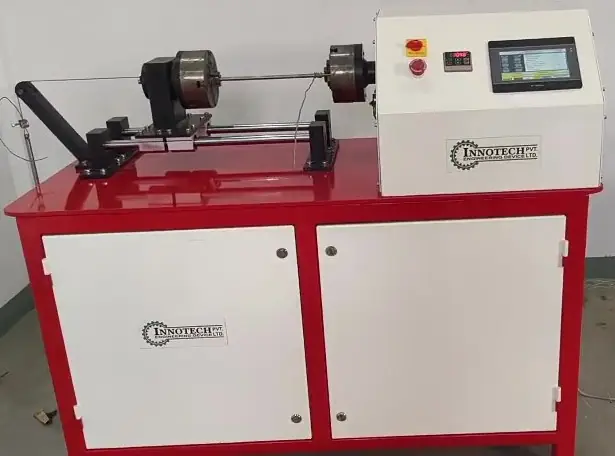
What Is a Torsion Testing Machine? Working Principle, Applications and Benefits
Torsion testing is an important mechanical testing method used to determine how a material or component behaves when subjected to a twisting force. A Torsion Testing Machine applies controlled torque to a test specimen and measures its response, helping engineers and laboratories evaluate torsional strength, torque resistance, angular deformation and other mechanical properties.
Torsion testing is particularly useful for components that experience twisting during actual service. Shafts, wires, rods, fasteners and other mechanical components may be subjected to torsional loads during operation, making torsion testing an important part of material and component evaluation.
Innotech Engineering Devices Private Limited manufactures testing equipment for material testing and laboratory applications, including computerised torsion testing solutions designed for controlled and repeatable torsional testing.
What Is a Torsion Testing Machine?
A torsion testing machine is a laboratory testing system designed to apply a controlled twisting force or torque to a specimen. During the test, the specimen is securely held between suitable fixtures while torque is applied in a controlled manner.
The machine measures the specimen's response to the applied torque. Depending on the machine configuration and test requirements, parameters such as torque, angular displacement and deformation can be monitored during the test.
The results can help engineers understand the torsional behaviour and performance of materials and components.
What Is Torsion Testing?
Torsion testing evaluates the behaviour of a material or component when it is subjected to twisting forces.
When torque is applied to a specimen, the material may undergo angular deformation. As the applied torque increases, the specimen's response can be observed and recorded.
Torsion testing can be used to study:
• Resistance to twisting
• Torsional strength
• Torque response
• Angular deformation
• Torsional stiffness
• Failure behaviour under torsional loading
• Mechanical performance of components
The exact parameters measured depend on the test method, specimen and configuration of the testing machine.
Working Principle of a Torsion Testing Machine
The basic working principle of a torsion testing machine is based on applying a controlled torque to a specimen and measuring its response.
The general testing process involves the following steps:
1. Specimen Preparation
The test specimen is prepared according to the required dimensions and test requirements. The specimen should be suitable for the selected test configuration.
2. Specimen Mounting
The specimen is securely mounted between the machine fixtures or grips. Proper alignment is important to ensure that the applied torsional load acts correctly on the specimen.
3. Application of Torque
The machine applies controlled rotational force to the specimen. The torque can be increased according to the selected testing requirements.
4. Measurement of Response
As torque is applied, the machine monitors the specimen's response. Depending on the machine configuration, torque and angular displacement can be measured and recorded.
5. Evaluation of Test Results
The recorded data can be analysed to understand the torsional behaviour of the specimen. The results may be used for quality control, product development, material comparison and engineering evaluation.
What Parameters Can Be Evaluated During Torsion Testing?
Torsion testing can provide information about several aspects of material and component performance.
Common parameters include:
• Applied torque
• Angular displacement
• Torsional deformation
• Torsional strength
• Torque resistance
• Torsional stiffness
• Failure torque
• Torque versus angular displacement behaviour
The actual parameters available depend on the testing machine, instrumentation and test configuration.
Important Features of a Torsion Testing Machine
A modern torsion testing machine may include several features designed to improve testing control, measurement and data recording.
Common features include:
• Controlled torsional loading
• Torque measurement
• Angular displacement measurement
• Secure specimen holding fixtures
• Controlled rotational movement
• Digital monitoring
• Computerised data acquisition
• Test data recording
• User-friendly operation
• Robust mechanical construction
• Repeatable testing performance
• Suitable controls for laboratory testing
The exact features and specifications vary according to the machine model and customer testing requirements.
What Materials Can Be Tested Using a Torsion Testing Machine?
Torsion testing can be applied to a wide range of engineering materials and components, depending on the machine capacity, fixtures and test configuration.
Typical applications may include:
• Metals
• Steel
• Alloys
• Wires
• Rods
• Shafts
• Fasteners
• Mechanical components
• Engineering materials
• Other suitable specimens requiring torsional evaluation
Before selecting a machine, the specimen dimensions, material type and expected torque range should be considered.
Applications of Torsion Testing Machines
Torsion testing machines are used across several industries where components or materials are exposed to twisting forces.
Automotive Industry
Torsion testing can be used for evaluating suitable automotive components and materials that experience rotational or twisting loads during operation.
It can support component development, quality control and performance evaluation.
Mechanical Engineering
Mechanical engineering applications may include the evaluation of shafts, rods, fasteners and other components where torsional behaviour is important.
Material Testing Laboratories
Material testing laboratories use torsion testing equipment for research, product development, comparative testing and mechanical property evaluation.
Manufacturing Industry
Manufacturers can use torsion testing to support quality control, incoming material inspection, production testing and product validation.
Research and Development
R&D laboratories can use torsional testing to compare materials, study component behaviour and develop products designed to withstand twisting forces.
Educational and Engineering Laboratories
Torsion testing machines can also be used in engineering and educational laboratories to demonstrate the relationship between torque and angular deformation.
Why Is Torsion Testing Important?
Many engineering components are exposed to twisting forces during their service life. A material may perform well under tensile or compressive loading but behave differently when subjected to torsional loading.
Torsion testing helps engineers evaluate performance under conditions involving twisting.
It can support:
• Material selection
• Product development
• Component design
• Quality control
• Failure investigation
• Performance comparison
• Research and development
• Production validation
• Laboratory testing
By understanding torsional behaviour, engineers can make informed decisions about the suitability of materials and components for applications involving rotational loads.
Computerised Torsion Testing Machine
A Computerised Torsion Testing Machine combines mechanical torsional loading with digital monitoring and data acquisition.
Computerised systems can make it easier to monitor test parameters and record test results during testing. Depending on the system configuration, test data can be viewed and analysed using connected software.
Potential advantages include:
• Digital test monitoring
• Torque data recording
• Angular displacement monitoring
• Computer-based data acquisition
• Improved test documentation
• Easier result analysis
• Repeatable testing
• Test report generation, depending on software configuration
Computerised torsion testing systems are particularly useful for laboratories and industries that require systematic recording and analysis of test results.
Benefits of Using a Torsion Testing Machine
A properly selected torsion testing machine can provide several benefits for laboratories and industrial testing applications.
Controlled Testing
The machine allows torsional loading to be applied in a controlled manner according to the test requirements.
Torque Measurement
The applied torque can be measured to evaluate the specimen's resistance to twisting.
Material Performance Evaluation
Torsion testing provides useful information about how materials behave under twisting loads.
Component Testing
Suitable components can be evaluated for their torsional performance before or during product development.
Repeatable Testing
Controlled test conditions can help laboratories achieve consistent testing procedures and comparable results.
Data Recording
Computerised systems can support digital recording and analysis of test data, depending on the machine configuration.
Torsion Testing Machine vs Torque Testing Machine
The terms torsion testing machine and torque testing machine can sometimes be used in similar contexts, but the intended application may differ.
A torsion testing machine is generally designed to evaluate the behaviour of a specimen or component under controlled twisting or torsional loading.
A torque testing machine may be focused primarily on measuring torque or evaluating the torque performance of a particular product or component.
The correct machine should therefore be selected based on the actual test objective, specimen type, torque range and required measurements.
How to Choose the Right Torsion Testing Machine?
Selecting a torsion testing machine requires consideration of the intended testing application and specimen requirements.
Important factors include:
Maximum Torque Capacity
Determine the maximum torque expected during testing. The machine should have a suitable capacity for the intended specimens.
Specimen Size
Consider specimen diameter, length, shape and mounting requirements.
Angular Displacement
Determine the expected range of angular deformation and the measurement resolution required.
Testing Speed
Consider the required rotational speed or rate of torsional loading for the intended test procedure.
Fixtures and Grips
Check whether suitable fixtures are available for securely holding the specimens to be tested.
Data Acquisition
For laboratories requiring digital records, consider computerised data acquisition and analysis capabilities.
Testing Environment
Consider whether the machine will be used in a research laboratory, production environment, educational laboratory or quality-control facility.
Future Testing Requirements
It is useful to consider potential future specimens and testing requirements when selecting machine capacity and configuration.
Torsion Testing Machine for Material Testing Laboratories
Material testing laboratories require testing systems that provide controlled test conditions, reliable measurements and repeatable operation.
A torsion testing machine can complement other mechanical testing equipment such as Universal Testing Machines, hardness testers, impact testing machines and flexural testing equipment.
Using different testing methods allows laboratories to evaluate different aspects of material and component performance.
Torsion Testing Machine Manufacturer in India
Innotech Engineering Devices Private Limited manufactures and supplies testing equipment for material testing laboratories and industrial testing applications.
Our Computerised Torsion Testing Machine is designed for controlled torsional testing of suitable materials and components. Machine configuration can be selected according to the intended application, testing requirements, specimen dimensions and measurement needs.
For laboratories, manufacturers, educational institutions and R&D facilities looking for torsion testing equipment in India, the machine can be configured according to the required testing application.
Frequently Asked Questions About Torsion Testing Machines
What is a torsion testing machine used for?
A torsion testing machine is used to evaluate the behaviour of materials and components when subjected to twisting forces. It can help measure parameters such as torque, angular deformation and torsional strength, depending on the machine configuration.
What is measured in a torsion test?
A torsion test can measure parameters such as applied torque and angular displacement. Other calculated or recorded parameters may include torsional deformation, stiffness and failure torque, depending on the test setup.
Which materials can be tested using a torsion testing machine?
Suitable metals, alloys, wires, rods, shafts, fasteners and other engineering materials or components can be tested, depending on the machine capacity, fixtures and test requirements.
What is the difference between torsion and tensile testing?
Tensile testing evaluates material behaviour under pulling or tensile force, while torsion testing evaluates behaviour under twisting or torque.
What is a computerised torsion testing machine?
A computerised torsion testing machine combines controlled torsional loading with digital monitoring and data acquisition. Depending on the configuration, it can record test parameters and assist with data analysis.
Why is torque important in torsion testing?
Torque represents the twisting moment applied to a specimen. Measuring torque helps determine how a material or component responds to torsional loading.
How do I select a torsion testing machine?
Selection should consider maximum torque, specimen dimensions, angular displacement, testing speed, fixture requirements, measurement accuracy, data acquisition needs and the intended testing application.
Where are torsion testing machines used?
Torsion testing machines are used in material testing laboratories, automotive and mechanical engineering industries, manufacturing, quality-control departments, R&D facilities and educational laboratories.
Conclusion
A Torsion Testing Machine is an important testing system for evaluating the behaviour of materials and components under twisting forces. By applying controlled torque and monitoring the resulting response, engineers and laboratories can study torsional strength, angular deformation, torque resistance and other relevant mechanical characteristics.
From automotive and mechanical engineering applications to material testing, manufacturing, quality control and research, torsion testing can provide valuable information for product development and performance evaluation.
For laboratories and industries looking for computerised torsion testing equipment, Innotech Engineering Devices Private Limited provides torsion testing solutions designed around the intended testing application and requirements.
For more information about Torsion Testing Equipment and Computerised Torsion Testing Machines, contact Innotech Engineering Devices Private Limited.
Website: www.innotechgroup.net
Email: info@innotechgroup.net
Phone: +91 98104 31604
Category: Torsion Testing Equipment
Tags: Torsion Testing Machine, Torsion Testing Equipment, Torsion Testing, Torsional Strength Testing, Torque Testing, Material Testing Machine, Computerised Testing Machine, Material Testing Equipment, Mechanical Testing, Laboratory Testing Equipment, torsion
Last Updated: 30 September 2026