
CTM Full Form: Compression Testing Machine, Working Principle, Uses & Applications
Jay Pal Singh
07 October 2026
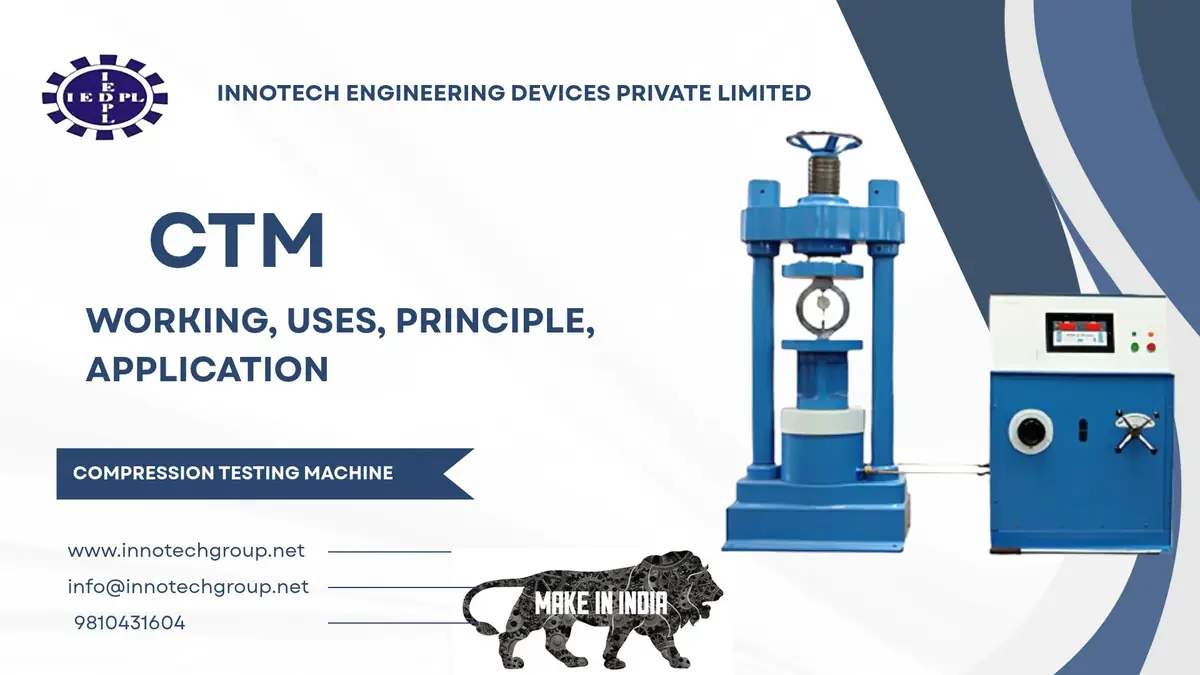
Digital Compression Testing Machine
CTM Full Form: Compression Testing Machine, Working Principle, Uses & Applications
When a material or product is subjected to a compressive load, it may deform, crack, buckle, crush, or eventually fail. Testing its ability to withstand this force is important for manufacturers, construction companies, laboratories, and quality-control departments.
CTM stands for Compression Testing Machine. A Compression Testing Machine is used to apply a controlled compressive force to a test specimen and measure the load at which the specimen reaches a specified condition or fails.
Compression testing is widely associated with materials such as concrete, bricks, blocks, cement products, metals, plastics, rubber, packaging materials, and other components.
In this guide, we will explain the CTM full form, meaning of compression testing, working principle, main components, compression test procedure, compressive strength calculation, applications, benefits, and factors to consider when selecting a Compression Testing Machine.
What Is the Full Form of CTM?
CTM stands for Compression Testing Machine.
A Compression Testing Machine is a material testing machine designed to apply compressive force to a specimen in a controlled manner. The specimen is placed between compression platens, and the machine gradually applies the required load.
The test can help determine how a material or component behaves when subjected to compression.
Depending on the material and testing method, the test may be used to determine:
- Mamimum compressive lead
- Compressive srength
- Failure load
- Deformation under load
- Compression behaviour
- Load-bearing capability
- Application specific performance characterstics
The exact measurement obtained depends on the test specimen, machine configuration, measurement system, and applicable testing procedure.
What Is a Compression Testing Machine?
A Compression Testing Machine is an equipment system used to evaluate the behaviour of a material or product under compressive loading.
During a test, the specimen is positioned between two compression plates. The machine applies force through the loading system while the applied load is measured.
When the specimen reaches its maximum load or specified test condition, the result can be recorded for quality assessment or further analysis.
Compression testing is particularly important where a product must withstand loads during construction, transportation, storage, assembly, handling, or normal use.
For example, construction materials may need to withstand structural loads, while packaging boxes may need to support the weight of products stacked above them.
How Does a Compression Testing Machine Work?
The working principle of a CTM is based on applying a controlled compressive force to a specimen.
The general working sequence is:
1. The test specimen is prepared according to the required test procedure.
2. The compression platens are checked and cleaned.
3. The specimen is positioned centrally between the platens.
4. The required test parameters are selected.
5. The machine starts applying compressive force.
6. The load increases in a controlled manner.
7. The load measurement system records the applied force.
8. The specimen begins to deform, crack, crush, or otherwise respond to the applied force.
9. The maximum load or specified test condition is recorded.
10. The test result is evaluated according to the applicable test method.
The actual loading speed, specimen preparation, test duration, and failure criteria depend on the material and relevant testing requirements.
Main Components of a Compression Testing Machine
A typical Compression Testing Machine may include several important components.
Loading Frame
The frame provides the structural support required to withstand the compressive force generated during testing.
Compression Platens
The upper and lower platens hold the specimen and transfer the compressive force to it.
Load Measurement System
A load cell, load sensor, pressure measurement system, or suitable force-measuring arrangement can be used to determine the applied load, depending on the machine design.
Hydraulic or Mechanical Loading System
The loading system generates the required compressive force. The exact arrangement depends on the machine capacity and application.
Control Panel
The control system allows the operator to start, stop, control, or monitor the testing process according to the machine configuration.
Display and Data Recording System
A digital display or computer-based system can be provided to show and record test parameters and results where required.
Safety Arrangement
Suitable safety provisions can be incorporated according to the machine design and intended testing application.
Compression Testing Machine Working Principle
The basic principle of compression testing is to measure how a specimen responds when a compressive force is applied.
Consider a specimen placed between two rigid compression platens. As the machine applies force, the specimen experiences compression.
Depending on the material, it may:
- Deform gradually
- Crack
- Crush
- Buckle
- Collapse
- Continue carrying load without immediate failure
The machine measures the applied load during the test. The maximum load reached can then be used with the specimen's cross-sectional area to determine compressive stress or compressive strength where the applicable test method uses this calculation.
Compressive Strength Calculation
One commonly used relationship for calculating compressive strength is:
Compressive Strength = Maximum Compressive Load ÷ Original Cross-Sectional Area
Where:
Maximum Compressive Load is the highest load sustained by the specimen during the relevant test.
Original Cross-Sectional Area is the area over which the compressive force is applied.
For example, if a specimen has a cross-sectional area of 2,500 mm² and reaches a maximum compressive load of 125,000 N:
Compressive Strength = 125,000 ÷ 2,500
Compressive Strength = 50 N/mm²
The actual calculation, specimen dimensions, units, loading rate, and reporting method should always follow the applicable test standard or test procedure.
Compression Test Procedure
A general compression testing procedure can include the following steps:
1. Prepare the Specimen
Prepare the test specimen according to the applicable testing method.
2. Measure the Specimen
Record the relevant dimensions required for the test and calculation.
3. Check the Machine
Ensure that the platens, loading system, measurement system, and other required components are ready for testing.
4. Position the Specimen
Place the specimen centrally between the compression platens.
Correct alignment is important because uneven loading can affect the test result.
5. Apply Compressive Load
Start the test and apply the required load in a controlled manner.
6. Monitor the Test
Observe the load and specimen behaviour during compression.
7. Record the Result
Record the maximum load or other parameters required by the selected test method.
8. Calculate and Report
Where applicable, calculate compressive strength and prepare the test report according to the required procedure.
What Materials Can Be Tested Using a CTM?
The exact material range depends on the machine configuration, fixtures, capacity, platen arrangement, and applicable test method.
Compression testing equipment can be configured for applications involving:
- Concrere
- Cement products
- Bricks
- Concrete blocks
- Tiles
- Metals
- Plastics
- Rubber
- Polymers
- Paper and board
- Corrugated packaging
- Boxes and cartons
- Industrial components
- Construction materials
- Other compression test specimens
A machine should be selected according to the actual specimen and testing requirement rather than only the material name.
Compression Testing Machine Applications
Compression testing is used across many industries because products often experience compressive forces during their service life.
Construction Industry
CTMs can be used for evaluating concrete specimens, blocks, bricks, cement-based products, and other construction materials where compressive performance is important.
Packaging Industry
Compression testing can be used to evaluate boxes, cartons, corrugated packaging, containers, paperboard, and other packaging products.
The test can help determine whether packaging can withstand stacking and handling conditions.
Plastic and Polymer Industry
Plastic components and polymer products may be tested to understand their behaviour under compressive loading.
Rubber Industry
Compression-related testing can help evaluate rubber products and components according to their specific application and test method.
Metal and Engineering Industry
Metal components and manufactured parts can be evaluated for their response to compressive loads.
Research and Development
Compression testing machines can also be used in laboratories for material development, product comparison, process improvement, and research work.
Why Is Compression Testing Important?
Compression testing provides useful information about how a material or product behaves under compressive force.
It can help manufacturers and laboratories to:
- Evaluate material strength
- Compare different materials
- Identify weak products
- Improce product design
- Support quality control
- Reduce product failures
- Improve manufacturing decisions
- Verify required performance
- Develop new materials and products
- Maintain consistent product quality
For manufacturers, compression testing can therefore become an important part of product development and quality assurance.
Compression Testing Machine Standards
Different materials and products may require different test methods and standards.
For example, packaging compression tests may be associated with standards such as **ASTM D642**, while other materials and products may require completely different procedures.
The applicable standard depends on:
- Material Type
- Product Type
- Specimen Dimensions
- Test Objective
- Loading conditions
- Required measurements
- Industry requirements
- End use application
Therefore, the machine configuration should be finalized according to the required test method rather than selecting a machine only by its maximum load capacity.
How to Select the Right Compression Testing Machine?
Before purchasing a CTM, manufacturers and laboratories should consider several factors.
Testing Capacity
Determine the maximum expected load and select a suitable machine capacity.
Specimen Size
The dimensions of the test specimen determine the required working space and platen arrangement.
Material Type
Different materials may require different fixtures, platens, loading arrangements, or testing procedures.
Test Speed
The required loading rate should be compatible with the selected test method.
Measurement System
Consider the required load measurement accuracy and display arrangement.
Automation
For repeated production testing, digital controls, automatic test sequences, data acquisition, or software may be useful.
Future Testing Requirements
If the machine will be used for multiple materials or products, discuss future applications before finalizing the configuration.
Benefits of Using a Compression Testing Machine
A properly configured CTM can provide several benefits:
- Controlled applicaiton of compressive force
- Measurement of maximum load
- Repeatable testing conditions
- Support for qulaity control processes
- Material comparison
- Product development support
- Reduced risk of product failure
- Improved production decisions
- Application specific testing configurations
- Optional digital data recording
Compression Testing Machine Manufacturer in Bhiwadi, Rajasthan
Innotech Engineering Devices Private Limited manufactures and supplies testing equipment for industrial and laboratory applications in Bhiwadi, Rajasthan.
Compression Testing Machines can be configured according to the customer's actual testing requirements rather than being limited to one standard arrangement.
Depending on the application, the machine can be designed according to:
- Required testing capacity
- Specimen dimensions
- Material type
- Compression platen requirements
- Loading System
- Load measurement system
- Test speed
- Control System
- Digital Display
- Data acquisition
- Software requirements
- Safety requirements
- Laboratory or production environment
Customers can share the material type, specimen size, required test load, test method, and intended application so that a suitable configuration can be discussed with the technical team.
Frequently Asked Questions About CTM
What is the full form of CTM?
CTM stands for Compression Testing Machine.
What is a Compression Testing Machine used for?
It is used to apply compressive force to a specimen and evaluate its load-bearing behaviour, maximum load, compressive strength, deformation, or other application-specific characteristics.
What is the working principle of CTM?
The specimen is placed between compression platens and a controlled compressive load is applied. The machine measures the applied force and the test continues until the required test condition or failure point is reached.
How is compressive strength calculated?
A commonly used calculation is:
Compressive Strength = Maximum Compressive Load ÷ Original Cross-Sectional Area
The actual calculation should follow the applicable testing standard.
Can a CTM test concrete?
Yes. Compression testing is commonly used for construction materials such as concrete and concrete products, provided the machine is configured appropriately for the required specimen and test method.
Can a Compression Testing Machine be customized?
Yes. The capacity, platen arrangement, working space, control system, measurement system, data acquisition and other features can be configured according to the application.
Where can I buy a Compression Testing Machine in India?
Manufacturers such as Innotech Engineering Devices Private Limited can provide application-specific Compression Testing Machines for industrial and laboratory testing requirements.
Consult an Expert for a Compression Testing Machine
Looking for a Compression Testing Machine for concrete, packaging, plastics, rubber, metals, or another material?
Instead of selecting a machine only from a standard capacity, share your specimen dimensions, material, required load, test method, and application with our technical team.
Innotech Engineering Devices Private Limited
H-307, RIICO Industrial Area, Karoli, Tapukara, Bhiwadi, Rajasthan
📞 +91 9810431604
📧 info@innotechgroup.net
🌐 www.innotechgroup.net
Consult an Expert for the right Compression Testing Machine configuration.
Category: Compression Testing Machines
Tags: CTM full form, CTM machine, compression testing machine, compression test machine, compression testing machine manufacturer, compression testing machine supplier, compression testing machine India, compression testing machine manufacturer India, compressi
Last Updated: 07 October 2026