
Universal Testing Machine Price in India
Jay Pal Singh
15 September 2026
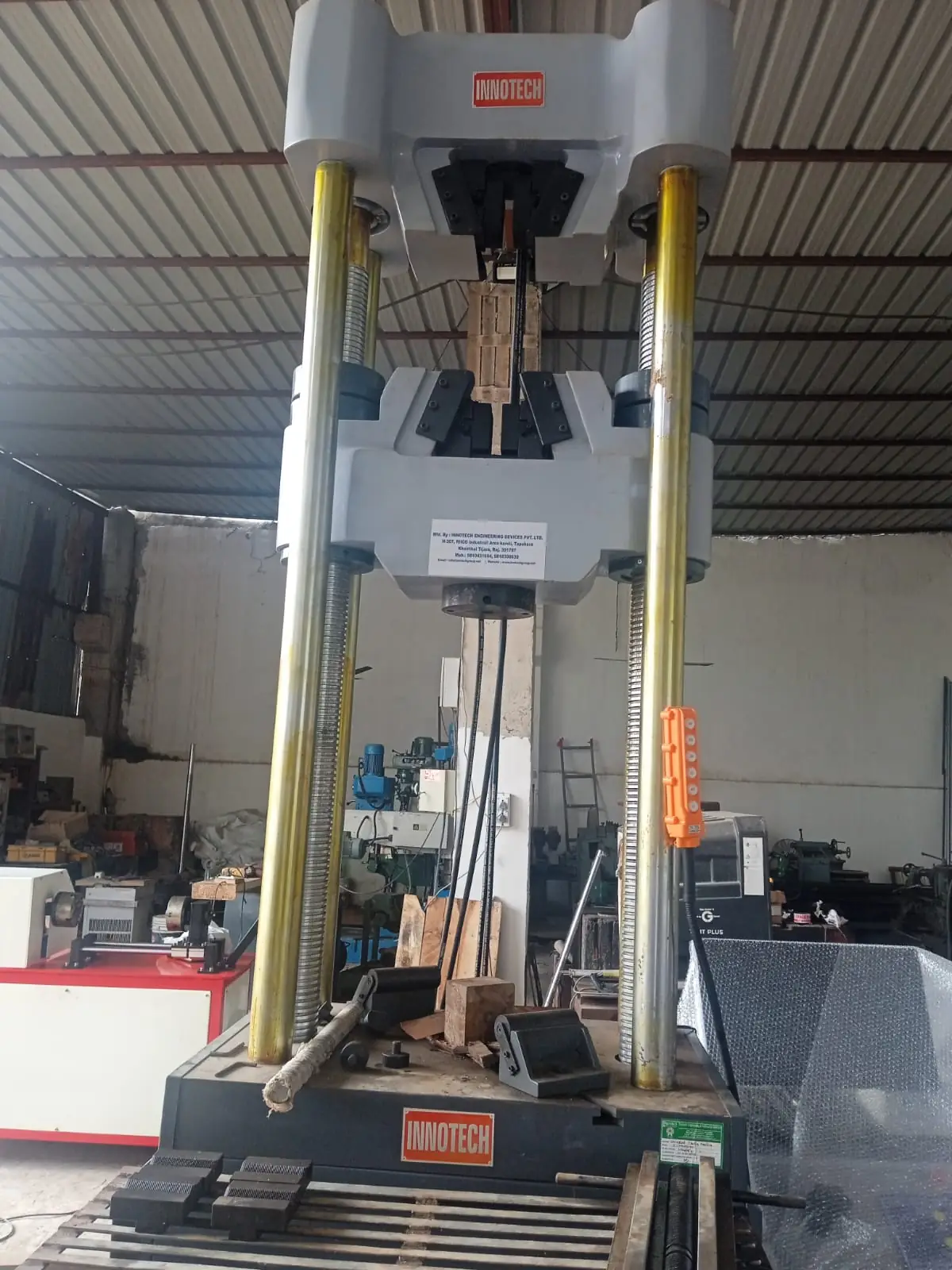
Universal Testing Machine in India: Price, Types, Applications & How to Choose the Right UTM
A Universal Testing Machine (UTM) is one of the most important pieces of equipment used for evaluating the mechanical properties of materials and components. It is widely used in manufacturing industries, material testing laboratories, research and development facilities, educational institutions and quality-control laboratories.
If you are searching for a universal testing machine in India, a universal tensile testing machine, a UTM manufacturer in India, or information about universal testing machine price, it is important to understand the machine's capacity, testing requirements, control system, accuracy, accessories and applicable testing standards before making a purchase.
Innotech Engineering Devices Private Limited manufactures and supplies material testing equipment for customers across India, with a particular focus on customers in North India. Our manufacturing facility is located at H-307, RIICO Industrial Area, Bhiwadi, Rajasthan, and our testing solutions are supplied for laboratory, industrial, research and quality-control applications.
What Is a Universal Testing Machine?
A Universal Testing Machine, commonly called a UTM, is a mechanical testing machine used to determine how a material or component behaves when subjected to controlled forces.
Depending on its configuration and accessories, a UTM can perform different types of mechanical tests, including:
• Tensile testing
• Compression testing
• Flexural testing
• Bending testing
• Elongation measurement
• Load and deformation testing
• Other application-specific mechanical tests
The name "universal" refers to the machine's ability to perform different mechanical tests using suitable fixtures, grips and accessories.
A UTM generally consists of a load frame, force-measuring system, drive or loading mechanism, grips or fixtures, control system and software or display system.
How Does a Universal Testing Machine Work?
During a typical tensile test, a specimen is securely held between the machine's grips. The machine applies a controlled tensile force while the force and specimen deformation are measured.
As the load increases, the material may undergo elastic deformation followed by plastic deformation and, eventually, failure depending on the material and test conditions.
The machine records relevant measurements such as force and displacement. When an extensometer is used, it can provide direct measurement of deformation over the specimen gauge length.
For compression or flexural testing, the appropriate fixtures are installed and the machine applies the required force according to the selected test procedure.
The exact test method, specimen dimensions, loading rate, measurement requirements and acceptance criteria depend on the applicable material specification or testing standard.
What Does a Universal Testing Machine Measure?
A UTM can be used to measure or determine different mechanical properties depending on the test setup.
Common measurements include:
• Tensile force
• Compressive force
• Extension
• Displacement
• Elongation
• Deformation
• Yield-related properties
• Ultimate tensile strength
• Breaking load
• Flexural performance
• Compression strength
The exact properties that can be reported depend on the material, specimen geometry, test method, machine configuration and applicable standard.
Universal Tensile Testing Machine
A universal tensile testing machine is a UTM configured primarily for tensile testing.
During tensile testing, the specimen is pulled under controlled conditions until the required test point or failure condition is reached. The machine records the applied force and associated deformation.
Tensile testing is widely used for metals, plastics, polymers, rubber, composites and other suitable materials.
A suitable extensometer may also be used when accurate measurement of specimen strain or elongation over the gauge length is required.
Universal Testing Machine Price in India
One of the most common searches made by buyers is “universal testing machine price”.
However, there is no single universal price for every UTM because the final cost depends on the machine's configuration and testing requirements.
Important factors affecting universal testing machine price in India include:
1. Testing Capacity
The required maximum load capacity is one of the primary factors affecting machine configuration and cost.
For example, a laboratory requiring a lower-capacity machine will have different requirements from an industrial laboratory testing high-strength metals or structural materials.
2. Machine Type
The cost can vary depending on whether the machine is:
• Mechanical
• Electronic
• Computerized
• Servo-controlled
• Electro-hydraulic
• Application-specific
3. Control System
Modern UTMs may include digital controls, computer-based testing software, programmable test speeds and automatic data acquisition.
4. Extensometer
If accurate strain or elongation measurement is required, an extensometer may be included in the configuration.
5. Grips and Fixtures
Different materials and tests require different grips and fixtures. Tensile grips, compression platens, bending fixtures and specialized attachments can affect the overall machine configuration.
6. Software and Data Acquisition
Advanced testing software can provide test setup, live graphs, result calculation, data storage and report generation.
7. Calibration and Verification Requirements
Testing laboratories may require calibration and verification according to applicable standards and laboratory procedures.
For example, ISO 7500-1:2018 specifies calibration and verification of the force-measuring system of static uniaxial tension/compression testing machines.
ASTM E4 also provides practices for force calibration and verification of static or quasi-static tension and compression testing machines.
Request a UTM Price in India
Because UTM configurations vary significantly, the most reliable way to obtain a price is to specify the required capacity, material, test type, specimen dimensions, applicable standard and accessories.
Innotech Engineering Devices Private Limited can provide a configuration and quotation according to the customer's testing requirements.
UTM Manufacturer in India
Choosing the right universal testing machine manufacturer in India is important because the machine is a long-term laboratory or industrial investment.
A manufacturer should be evaluated not only on the initial machine price but also on:
• Machine construction
• Force measurement accuracy
• Control system
• Testing software
• Available accessories
• Calibration support
• Installation
• Training
• After-sales service
• Spare parts availability
• Customization capability
For organizations purchasing testing equipment for long-term laboratory use, technical support and service capability can be just as important as the initial purchase price.
Universal Testing Machine Suppliers in India
Customers searching for universal testing machine suppliers in India should first identify the required application and machine configuration.
Important information to provide to a supplier includes:
• Required load capacity
• Material being tested
• Tensile, compression or flexural testing requirement
• Specimen dimensions
• Test speed
• Required measurement accuracy
• Extensometer requirement
• Required grips and fixtures
• Applicable testing standard
• Software requirements
• Installation location
Providing these details allows the supplier or manufacturer to recommend a more appropriate machine instead of offering a generic configuration.
Applications of Universal Testing Machines
Universal Testing Machines are used across many industries.
Metal Testing
UTMs are commonly used to evaluate metals and alloys through tensile, compression and bending-related mechanical tests.
Applications include:
• Steel
• Stainless steel
• Aluminium
• Copper
• Brass
• Metal sheets
• Bars
• Wires
• Engineering components
Plastics and Polymer Testing
UTMs can be configured for suitable plastic and polymer specimens to evaluate mechanical behavior under tensile, compression or flexural loading.
Rubber and Elastomer Testing
Suitable UTM configurations can be used for tensile strength, elongation and related mechanical testing of rubber and elastomeric materials.
Automotive Industry
UTMs are used in automotive laboratories and component manufacturing environments for evaluating materials and suitable components used in vehicles.
Construction and Building Materials
Depending on the configuration and fixtures, testing machines can be used for suitable construction and engineering materials.
Research & Development
Research laboratories use UTMs to compare materials, study mechanical behavior and develop new products or material formulations.
Educational Laboratories
UTMs are also used in engineering colleges, universities and technical institutions to demonstrate tensile, compression and other mechanical testing principles.
Why Choose a Servo-Controlled UTM?
A servo-controlled UTM provides controlled operation of the test process and can be configured for applications where precise control of loading, displacement or test speed is required.
Servo-controlled systems can be particularly useful for demanding laboratory and industrial applications where repeatable test conditions and automated test control are important.
The appropriate control system should be selected according to the required test method and application rather than simply choosing the most advanced configuration.
Mechanical UTM vs Electronic UTM vs Servo-Controlled UTM
The correct machine depends on the application.
Mechanical UTM
A mechanical UTM can be suitable for laboratories requiring a robust and relatively straightforward testing system.
Electronic UTM
An electronic UTM can provide digital measurement and convenient data display and is suitable for many routine material-testing applications.
Servo-Controlled UTM
A servo-controlled UTM provides more advanced control capabilities and can be suitable for applications requiring controlled and repeatable test conditions.
The best choice depends on required testing capacity, accuracy, automation, test standards and budget.
How to Select the Right Universal Testing Machine
Before purchasing a UTM, consider the following factors:
1. Define the Material
Identify whether you will test metal, plastic, rubber, polymer, composite or another material.
2. Define the Test
Determine whether you require:
• Tensile testing
• Compression testing
• Flexural testing
• Bending testing
• Elongation measurement
• Multiple test modes
3. Select the Required Capacity
Choose a suitable maximum load capacity based on the expected test loads.
4. Check Specimen Dimensions
The specimen size determines the required test space, grips and fixtures.
5. Consider an Extensometer
If strain or elongation needs to be measured directly over the specimen gauge length, an appropriate extensometer may be required.
6. Consider Software Requirements
Determine whether you need basic digital measurement or advanced computer-based testing and reporting.
7. Check Calibration Requirements
Make sure the machine configuration can support the calibration and verification requirements applicable to your laboratory and test procedure.
8. Consider Service Support
Select a manufacturer or supplier that can support installation, calibration, maintenance and technical service.
Importance of UTM Calibration
Calibration and verification are important for obtaining reliable force measurements.
ISO 7500-1:2018 addresses the calibration and verification of static uniaxial tension/compression testing machines and their force-measuring systems.
ASTM E4 likewise covers force calibration and verification practices for static or quasi-static tension and compression testing machines.
The applicable calibration procedure should always be selected according to the testing machine, laboratory requirements and relevant test standard.
UTM Manufacturer and Supplier in India
Innotech Engineering Devices Private Limited manufactures and supplies testing equipment for material testing, quality control, research and industrial applications.
Our Universal Testing Machines are designed for applications requiring controlled measurement of mechanical properties. We support customers across India, with a strong focus on North Indian industrial and laboratory markets.
Our manufacturing facility is located at:
H-307, RIICO Industrial Area, Bhiwadi, Rajasthan, India
Our team can assist customers in selecting a UTM based on:
• Material type
• Test application
• Required capacity
• Specimen dimensions
• Testing standard
• Grips and fixtures
• Extensometer requirements
• Software and automation
• Laboratory requirements
For more information about our testing equipment and solutions, visit www.innotechgroup.net.
Frequently Asked Questions About Universal Testing Machines
What is a Universal Testing Machine?
A Universal Testing Machine, or UTM, is a mechanical testing machine used to evaluate materials and components under controlled tensile, compression, bending or other suitable loading conditions.
What is a UTM used for?
A UTM is used for mechanical testing such as tensile, compression and flexural testing, depending on its configuration, fixtures and accessories.
What is a universal tensile testing machine?
A universal tensile testing machine is a UTM configured for tensile testing. It applies controlled tensile force to a specimen and measures force and deformation.
What is the price of a Universal Testing Machine in India?
The price depends on factors such as capacity, machine type, control system, accuracy, software, grips, fixtures, extensometer and other accessories. Therefore, a technical quotation based on the required configuration is more useful than a generic price.
Which Universal Testing Machine is best?
There is no single UTM that is best for every application. The correct machine depends on the material, test type, required capacity, specimen dimensions, applicable standard, accuracy and level of automation.
How do I choose a UTM manufacturer in India?
Consider the manufacturer's machine construction, testing capability, calibration support, software, accessories, installation, technical support and after-sales service in addition to the purchase price.
Can a UTM perform tensile and compression testing?
Yes. A suitably configured Universal Testing Machine can perform tensile and compression testing using the appropriate grips and fixtures.
Can a UTM test rubber and plastic?
Yes. With suitable grips, fixtures and test configurations, UTMs can be used for appropriate rubber, elastomer, plastic and polymer mechanical tests.
Is an extensometer required for tensile testing?
Not for every tensile test. An extensometer is used when direct measurement of deformation or strain over the specimen gauge length is required by the test method or application.
Why is UTM calibration important?
Calibration and verification help ensure that the machine's force-measuring system provides reliable measurements. Applicable requirements may include standards such as ISO 7500-1 or ASTM E4.
Where can I buy a Universal Testing Machine in India?
Universal Testing Machines are available from specialized testing-equipment manufacturers and suppliers across India. Buyers should select a supplier based on the required machine configuration, application, technical support and service capabilities.
Conclusion
A Universal Testing Machine is an essential testing system for laboratories and industries that need to evaluate the mechanical properties and performance of materials and components.
When choosing a universal testing machine in India, buyers should look beyond the initial universal testing machine price and consider machine capacity, accuracy, test requirements, fixtures, extensometers, software, calibration, installation and after-sales support.
Innotech Engineering Devices Private Limited provides Universal Testing Machines and other material testing equipment for customers across India, with a strong focus.
Our Industry at H-307, RIICO Industrial Area, Bhiwadi, Rajasthan supports our manufacturing and testing-equipment operations.
To discuss your testing requirement or request a UTM configuration and quotation, visit www.innotechgroup.net.
Category: Universal Testing Machine
Tags: Universal Testing Machine, UTM Machine, UTM Testing Machine, Universal Tensile Testing Machine, Universal Testing Machine India, Universal Testing Machine Suppliers, Universal Testing Machine Price, Tensile Testing Machine, Material Testing Machine, UTM M
Last Updated: 30 September 2026