
Torsion Testing Machine: Applications, Price Range, Specifications and Selection Guide
Jay Pal Singh
14 October 2026
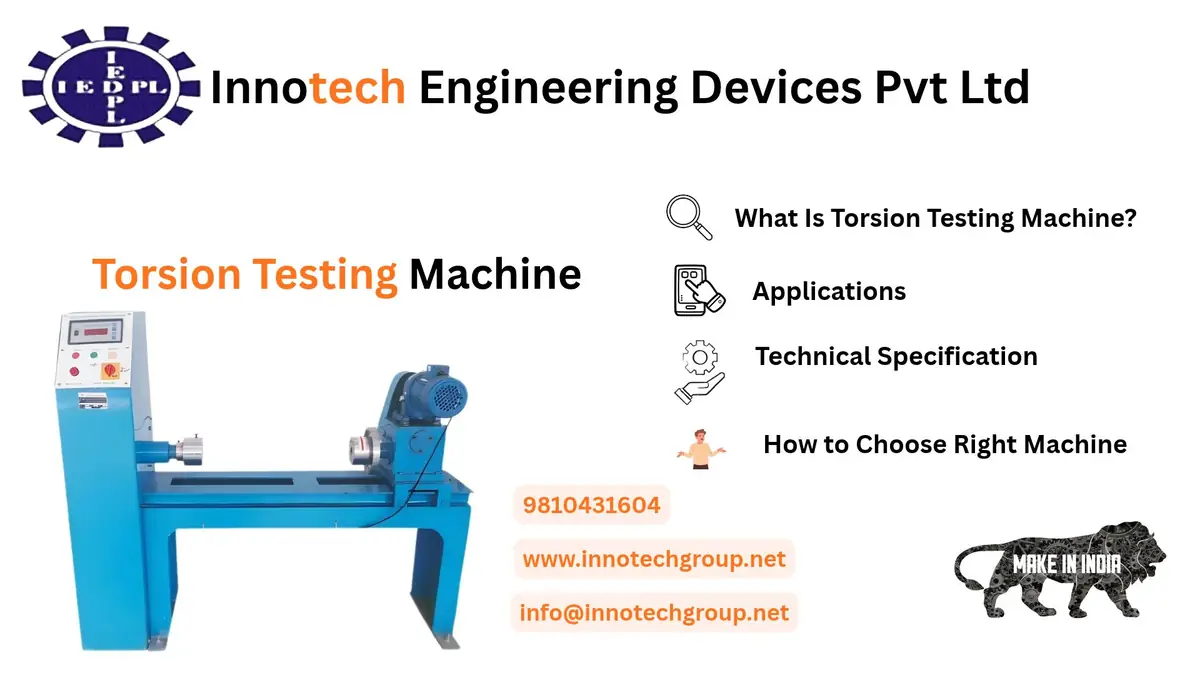
Torsion Testing Machine: Applications, Price Range, Specifications and Selection Guide
Materials and engineering components are often exposed to twisting forces during normal operation. Shafts rotate under torque, fasteners experience tightening forces, and automotive components may undergo repeated twisting during use. If a component cannot withstand these forces, it may deform, crack or fail.
A torsion testing machine helps manufacturers and laboratories understand how a material or component behaves under twisting loads. It measures parameters such as torque and angular displacement and can help determine torsional strength, stiffness and failure characteristics.
For Indian manufacturers, selecting the right torsion testing machine involves more than comparing prices. Torque capacity, specimen dimensions, gripping fixtures, test speed, measurement accuracy and the required test method all need to be considered.
This guide explains the working principle, applications, specifications and price factors to help buyers choose suitable torsion testing equipment.
What Is a Torsion Testing Machine?
A torsion testing machine is a testing system designed to apply a controlled twisting force to a specimen or component. During the test, one end of the specimen is held in a fixture while torque is applied through a rotating mechanism.
The machine measures the applied torque and, depending on its configuration, the angle of twist, rotational displacement and other test parameters.
The recorded results help engineers evaluate the specimen's response to torsional loading. Depending on the material and test method, the test may continue until a specified angle, torque limit, deformation level or failure point is reached.
Torsion testing can be used for metals, wires, shafts, fasteners, springs and selected engineering components when the machine and fixtures are suitable for the intended test.
How Does a Torsion Testing Machine Work?
The basic testing process involves the following steps.
Step 1: Specimen Preparation
Prepare the specimen according to the applicable test method. Its dimensions, material, surface condition and gauge length may need to be recorded before testing.
Step 2: Specimen Mounting
Secure the specimen between the machine's gripping fixtures. The grips must match the specimen geometry and hold it firmly without introducing unwanted damage or slippage.
Step 3: Applying Torque
The machine applies twisting force through a manual, motor-driven, electromechanical or other suitable drive arrangement.
The selected torque range and rotation speed depend on the specimen and testing procedure.
Step 4: Measuring Torque and Angular Displacement
The measurement system records the applied torque and may also measure angular displacement or angle of twist.
Depending on the machine configuration, the data can be displayed, recorded or exported for further analysis.
Step 5: Evaluating the Results
The results help determine how the specimen responds to twisting. Depending on the test method, the evaluation may include torsional strength, torsional stiffness, angle of twist, deformation or the torque at failure.
The applicable standard and test procedure determine which measurements and calculations are required.
Important Parameters Measured During Torsion Testing
Understanding the main test parameters helps buyers choose the right machine.
1. Torque
Torque is the twisting moment applied to the specimen. It is commonly expressed in newton-metres (N·m), newton-millimetres (N·mm) or other units depending on the application.
The machine's torque capacity must cover the expected testing range while maintaining suitable measurement performance.
2. Angular Displacement
Angular displacement describes how far the specimen or rotating fixture turns during the test. It may be measured in degrees or radians.
This measurement helps assess deformation under twisting loads.
3. Torsional Strength
Torsional strength describes the specimen's ability to withstand twisting before reaching a defined failure or limiting condition. The calculation depends on specimen geometry, material properties and the test method.
4. Torsional Stiffness
Torsional stiffness indicates how much torque is required to produce a given angular deformation. A stiffer specimen generally requires more torque for the same angle of twist under comparable conditions.
5. Torque-Angle Relationship
A torque-angle curve shows how applied torque changes as the specimen twists. It can help identify elastic behaviour, yielding, changes in stiffness and failure characteristics when supported by the test method.
Not every machine provides all these parameters automatically. Buyers should confirm the measurement sensors, software functions and reporting capabilities included in the proposed configuration.
Industrial Applications of Torsion Testing Machines
Torsion testing is relevant wherever products must resist twisting loads during manufacturing or use.
1. Metal and Engineering Industries
Torsion testing can evaluate metal rods, bars, wires, shafts and other components that experience twisting forces. It helps assess material behaviour and suitability for particular engineering applications.
2. Automotive Industry
Automotive manufacturers and component suppliers may use torsion testing for shafts, drive components, fasteners and selected mechanical parts.
The test arrangement depends on the component's function and the required acceptance criteria.
3. Fastener and Hardware Manufacturing
Screws, bolts and other fastening products may require torque-related testing to assess performance under tightening or torsional loading. The correct fixture and test method depend on the fastener type.
4. Wire and Cable Manufacturing
Selected wire products can be tested for their response to twisting, including resistance to twisting deformation or failure. The appropriate procedure depends on the wire material, diameter and relevant product specification.
5. Spring Manufacturing
Some spring designs require torsional evaluation. However, spring testing equipment must be selected according to the spring type, loading direction and test requirements. A conventional torsion testing machine is not automatically suitable for every spring test.
6. Research and Quality-Control Laboratories
Industrial laboratories, educational institutions and research facilities may use torsion testing to study material properties, compare samples, investigate failures and support product development.
The machine should be chosen according to the intended material, specimen geometry and required testing procedure.
How to Choose the Right Torsion Testing Machine
Before purchasing torsion testing equipment, review the following points with the supplier.
1. Required Torque Capacity
Start by identifying the expected torque range for the specimen. The selected capacity should cover the maximum expected load without compromising the required measurement performance.
Avoid choosing a machine solely because it has the highest available capacity. An unsuitable measurement range can reduce the usefulness of test results.
2. Specimen Type and Dimensions
Identify whether you need to test wires, rods, shafts, fasteners, springs or other components.
Provide the specimen diameter, length, shape, gripping area and any special mounting requirements. These details help determine the appropriate grips and fixtures.
3. Machine Type and Drive System
Torsion testing machines may use manual or motor-driven arrangements, with different control and measurement capabilities.
For repeatable laboratory testing, an electronically controlled system may be appropriate. More specialized applications may require programmable test sequences, automated data acquisition or customer-specific fixtures.
The suitable arrangement depends on the test method, expected workload and reporting needs.
4. Rotational Speed
The required rotation speed depends on the material, component and test procedure. Some tests require controlled, relatively slow twisting, while others specify different rotational conditions.
Confirm the required speed range before finalizing the machine.
5. Torque Measurement and Accuracy
Ask the supplier about the torque sensor, measurement range, stated accuracy, calibration arrangements and data acquisition system.
The required accuracy should be assessed against the applicable test method and the laboratory's quality requirements.
6. Angle Measurement
Determine whether the test requires angular displacement, angle of twist or additional deformation measurements. Check how the system measures and records these parameters.
7. Fixtures and Grips
Fixtures are essential for proper specimen alignment and secure mounting. Depending on the application, different gripping arrangements may be necessary.
If you need to test multiple specimen types, share the details of each one before requesting a quotation.
8. Software and Reporting
Some testing applications require live readings, torque-angle graphs, test reports, data storage or export functions.
Confirm which functions are included in the control software and whether the report format meets your internal documentation requirements.
9. Testing Standards
If the test must comply with a particular IS, ASTM, ISO or other standard, identify the exact standard and its edition.
The supplier should review the requirements before confirming machine suitability. Do not assume that a machine complies with a standard simply because it can apply torque.
Torsion Testing Machine Specifications: What Should You Check?
The following table lists the main parameters buyers should discuss when requesting a quotation. These are selection considerations, not confirmed specifications for a particular Innotech model.
| Parameter |
What to confirm |
| Machine Type | Manual, motor-driven or electronically controlled |
| Torque Capacity | Required maximum torque and working range |
| Torque Measurement | Sensor type, range and measurement accuracy |
| Angular displacement | Required measurement range and resolution |
| Rotational Speed | Required speed range and control |
| Specimen Dimensions | Diameter, length, shape and gripping area |
| Fixtures and Grips | Manual Controls, digital display or programmable controls |
| Control System | Manual controls, digital display or programmable controls |
| Software | Data recoding, graphing and reporting requirements |
| Test Method | Applicable standard or customer-defined procedure |
| Calibration | Required calibration documentation and arrangements |
| Customization | Special fixtures, dimensions or testing sequences |
The final technical specifications should be confirmed against the customer's test method and application.
Torsion Testing Machine Price in India: Key Cost Factors
The price of a torsion testing machine varies with its capacity, configuration and intended use. A general price figure without these details may not reflect the machine you actually require.
The main cost factors include:
Torque capacity: Higher torque requirements can affect the drive, frame and measurement system.
Drive and control system: Manual, motor-driven and programmable systems may differ in cost and capabilities.
Torque and angle measurement: Sensor requirements, measurement ranges and data acquisition functions influence the configuration.
Fixtures and gripping arrangements: Special fixtures for shafts, wires, fasteners or other components may require additional engineering.
Software and reporting: Automated graphs, data storage, calculations and customized reports can affect the overall price.
Customization: Non-standard dimensions, special test sequences and customer-specific arrangements can increase design and manufacturing requirements.
Calibration, installation and support: The cost may also depend on the agreed documentation, calibration services, installation, training and after-sales support.
How to Request an Accurate Quotation
For a relevant quotation, provide the supplier with:
- The material or component to be tested.
- The specimen drawing, dimensions or sample.
- The expected torque range.
- The required angel of twist and rotational speed.
- The applicable test standard, if any.
- The type of fixtures and grips required.
- The preferred control, software and reporting functions.
- Any calibration or documentation requirements.
Ask whether fixtures, software, installation, calibration and other accessories are included in the quoted price. Comparing quotations with the same scope of supply makes it easier to evaluate the actual investment.
Why Customer-Specific Configuration Matters
A torsion testing machine for thin wire is not necessarily suitable for testing a heavy shaft or a specially shaped fastener. The specimen, torque range and testing method can significantly change the machine requirements.
Customer-specific configuration helps ensure that the machine's capacity, fixtures, sensors and controls match the intended test. It can also reduce the risk of purchasing equipment that cannot accommodate the required specimen or generate the necessary measurements.
Before placing an order, confirm the technical requirements, expected workload, available space, electrical supply and required test documentation with the supplier.
Why Choose Innotech Engineering Devices Private Limited?
Innotech Engineering Devices Private Limited serves industrial customers looking for testing equipment based on their application and technical requirements.
When enquiring about a torsion testing machine, buyers should share their specimen details, required torque range, testing procedure and measurement requirements. This information helps establish the appropriate configuration and scope of supply for evaluation.
When selecting a testing equipment supplier, consider:
- Suitability for your intended testing application.
- Clear technical specifications and quotation details.
- Availability of suitable grips and fixtures.
- Measurement, software and reporting requirements.
- CAlibration documentation and agreed service support.
- Scope for application-specific customization
Looking for a torsion testing machine for your laboratory or production facility?
Contact Innotech Engineering Devices Private Limited to discuss your testing requirements and request further information.
- Location: Bhiwadi, Rajasthan, India
- Email: info@innotechgroup.net
- Phone: +91 9810431604
- Website: www.innotechgroup.net
Frequently Asked Questions
1. What is the price of a torsion testing machine in India?
The price depends on torque capacity, drive system, sensors, fixtures, software and customization. Share your testing requirements to obtain a relevant quotation.
2. What is the difference between a torque tester and a torsion testing machine?
A torque tester is a broad term for equipment that measures torque. A torsion testing machine is generally designed to apply controlled twisting to a specimen and evaluate its response, often by measuring torque and angular displacement. The exact functions depend on the equipment.
3. Which industries use torsion testing machines?
Common applications include metalworking, automotive components, fasteners, wire manufacturing, engineering laboratories and research. The required machine configuration varies by application.
4. Can one torsion testing machine test different materials?
A machine may accommodate multiple materials if its capacity, fixtures, measurement range and test procedure are suitable. Compatibility should be confirmed before testing different specimen types.
5. Which specifications are most important when buying a torsion testing machine?
Torque capacity, measurement accuracy, angular displacement, rotational speed, specimen dimensions, grips, control software and the applicable test standard are important selection factors.
6. What information is needed to get a quotation?
Provide the specimen drawing or sample, material, dimensions, expected torque range, test method, speed requirements and any special fixture or reporting requirements.
Conclusion
A torsion testing machine helps manufacturers and laboratories evaluate how materials and components respond to twisting forces. Selecting the correct equipment requires a clear understanding of torque capacity, specimen geometry, measurement accuracy, fixtures, control functions and the applicable test method.
For Indian industrial buyers, comparing machines on technical suitability and total scope of supply is more useful than comparing price alone.
Contact Innotech Engineering Devices Private Limited to discuss your torsion testing application and request information about a suitable machine configuration.
Category: Torsion Testing Equipment
Tags: torsion testing machine, torsion testing machine price, torsion testing machine manufacturer India, torsion testing equipment, torque testing machine, torsional strength testing, torsion tester supplier, torque measurement system, torsional rigidity test,
Last Updated: 14 October 2026