
Salt Spray Chamber Price in India: ASTM B117, Working, Applications & Buying Guide
Jay Pal Singh
15 September 2026
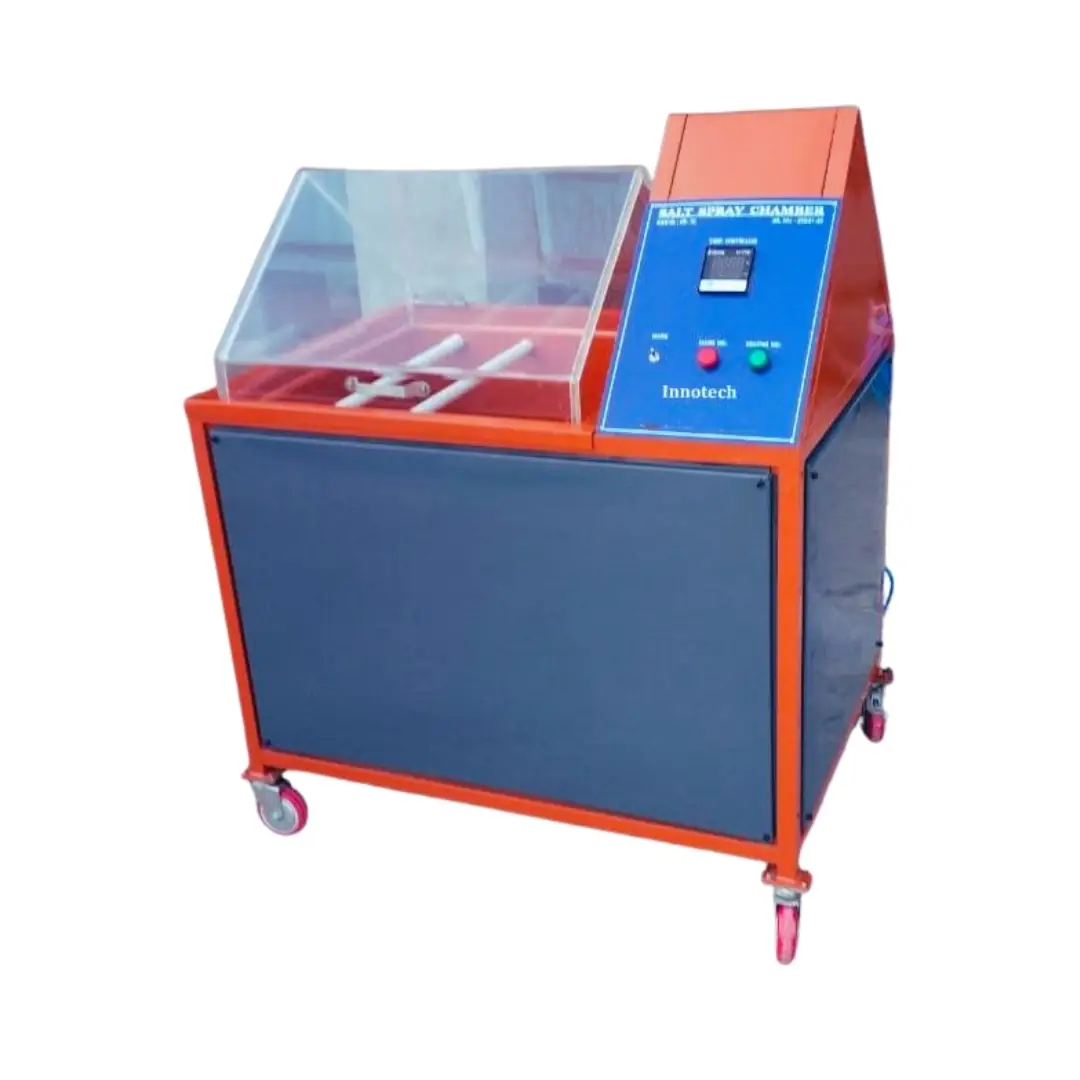
Salt Spray Chamber Price in India: ASTM B117, Working, Applications & Buying Guide
A salt spray chamber is an important corrosion testing machine used to evaluate the corrosion resistance of metals, coatings, paints, electroplated components, fasteners and other surface-treated products. Salt spray testing provides an accelerated and controlled environment in which test specimens are exposed to a salt fog for a specified period. The results help manufacturers and quality control laboratories understand how well a material or protective coating can withstand corrosive conditions.
In India, salt spray chambers are widely used by automotive manufacturers, metal industries, paint and coating companies, electroplating industries, electrical manufacturers, research laboratories and quality control departments. When purchasing this equipment, buyers usually compare the salt spray chamber price, chamber capacity, testing standards, control system, construction quality, automation and after-sales support.
This guide explains the salt spray chamber working principle, ASTM B117 testing, applications, types, price range in India, important selection factors and frequently asked questions.
What Is a Salt Spray Chamber?
A salt spray chamber, also known as a salt spray test chamber or salt fog chamber, is laboratory testing equipment used to perform accelerated corrosion testing. The machine produces a controlled salt fog inside a test chamber and exposes test specimens to that environment for a predetermined duration.
The purpose of the test is generally to evaluate the corrosion resistance of a material, coating, paint, plating or surface treatment. Instead of waiting for natural corrosion to occur over months or years, accelerated laboratory testing can provide useful comparative information within a controlled test environment.
Salt spray chambers are commonly used for testing painted metal parts, galvanized components, electroplated products, automotive components, fasteners, hardware, electrical components and other products where corrosion resistance is important.
What Does a Salt Spray Chamber Test?
A salt spray chamber can be used to evaluate the resistance of test specimens to a controlled corrosive salt environment.
Depending on the applicable testing method and product specification, testing may help evaluate:
• Corrosion resistance
• Rust formation
• Paint and coating performance
• Electroplating performance
• Surface treatment performance
• Protection provided by corrosion-resistant coatings
• Comparative performance of different materials or coatings
The exact evaluation method and acceptance criteria depend on the applicable standard, customer specification and type of product being tested.
Why Is Salt Spray Testing Important?
Corrosion can reduce the appearance, performance and service life of metal products and components. For manufacturers, detecting inadequate corrosion protection before a product reaches the market can help improve product quality and reduce failures.
Salt spray testing is particularly useful for comparing different coatings, finishes and surface treatments under controlled laboratory conditions.
For example, automotive components may be exposed to moisture, road salts and other environmental conditions during service. Testing can help manufacturers evaluate whether a protective coating or surface treatment provides the required level of corrosion resistance.
How Does a Salt Spray Chamber Work?
The working principle of a salt spray chamber is based on generating a fine salt fog inside a controlled test chamber.
A prepared salt solution is supplied to an atomizing system. Compressed air or another suitable mechanism helps convert the solution into a fine mist or fog. The fog is introduced into the test chamber where it settles on the exposed test specimens.
The chamber maintains controlled test conditions according to the applicable testing method. After the specified exposure period, the specimens are removed and inspected for signs of corrosion or coating deterioration.
Salt Solution and Salt Fog Generation
A salt solution is prepared according to the requirements of the applicable test standard. The solution is then atomized to create a fine corrosive fog.
The quality and consistency of salt fog generation are important because variations in the testing environment can affect test results.
Specimen Placement
Test specimens are positioned inside the chamber according to the applicable test method. Proper positioning helps ensure that the specimens receive appropriate exposure to the salt fog.
The number, size and orientation of specimens depend on the test requirements and chamber configuration.
Controlled Test Conditions
Temperature, salt solution concentration, fog collection and other conditions are controlled according to the relevant testing method.
The objective is to provide a repeatable testing environment so that results from different tests can be compared appropriately.
What Is ASTM B117 Salt Spray Testing?
ASTM B117 is a widely referenced standard for operating salt spray apparatus and conducting salt spray exposure testing. It specifies the apparatus and general operating conditions for producing a controlled salt fog environment.
A salt spray chamber designed for ASTM B117 testing should be configured to meet the applicable requirements of the standard. However, ASTM B117 should not automatically be treated as a direct prediction of real-world service life. Salt spray testing is primarily useful for controlled evaluation and comparison of corrosion resistance.
What Is ASTM B117?
ASTM B117 provides a standardized method for operating salt spray testing equipment. It is commonly referenced by manufacturers, laboratories and quality control departments when evaluating corrosion resistance.
The actual acceptance criteria for a product are normally defined by the relevant product standard, customer specification or coating specification.
ASTM B117 vs ISO 9227
ASTM B117 and ISO 9227 are both widely used references for salt spray/corrosion testing, but they are not identical standards.
The appropriate test method depends on the product, industry, customer requirement and applicable specification. Therefore, buyers should confirm the required standard before selecting a salt spray chamber.
Is ASTM B117 Suitable for Every Corrosion Test?
No. Salt spray testing is one type of accelerated corrosion test. Different products and applications may require different corrosion testing methods.
Before purchasing a chamber, manufacturers should identify the exact test standard and testing requirements applicable to their products.
Salt Spray Chamber Price in India
The salt spray chamber price in India depends on several factors, including chamber size, construction material, testing standard, control system, automation, specimen capacity, accessories and customization requirements.
As a general market indication, smaller laboratory salt spray chambers may start around ₹1 lakh to ₹2.5 lakh, while standard industrial models may commonly fall around ₹2 lakh to ₹5 lakh. Larger, advanced or customized corrosion testing systems can range from approximately ₹5 lakh to ₹10 lakh or more, depending on configuration.
These are indicative price ranges and should not be considered fixed prices. The actual quotation can vary significantly between models and manufacturers.
For example, a buyer requiring a larger chamber, advanced digital controls, automatic operation, additional monitoring, customized dimensions or specific testing requirements may receive a higher quotation than a buyer requiring a basic laboratory configuration.
For an accurate salt spray chamber price, it is best to provide the required chamber size, test standard, specimen dimensions, testing requirements and preferred control configuration to the manufacturer.
What Factors Affect Salt Spray Chamber Price?
Several factors influence the final price of a salt spray testing machine.
Chamber Capacity
Larger chambers generally cost more because they require more material, larger heating and fog-generation systems and greater manufacturing capacity.
Chamber Construction
The construction material and corrosion-resistant design of the chamber can influence both price and service life.
Control System
Basic control systems may be less expensive than advanced digital or programmable systems. Features such as digital displays, automatic controls, alarms and monitoring can affect the overall cost.
ASTM B117 or ISO 9227 Configuration
A chamber configured for particular testing standards may require specific components, controls or accessories, which can affect the final quotation.
Automation
Automatic operation can reduce manual intervention and make routine testing easier. Depending on the required level of automation, this can increase the equipment cost.
Chamber Size and Specimen Capacity
The size of the chamber and the quantity and dimensions of specimens that need to be tested are important factors when selecting the machine.
Customization
Customized dimensions, special fixtures, additional monitoring, data recording and other customer-specific requirements can affect the final price.
Types of Salt Spray Chambers
Salt spray testing equipment can be configured for different corrosion testing requirements.
Standard Salt Spray Test Chamber
A standard salt spray chamber is generally used for controlled salt fog exposure testing of metals, coatings and surface-treated products.
ASTM B117 Salt Spray Chamber
An ASTM B117 salt spray chamber is configured for testing according to the applicable requirements of ASTM B117.
ISO 9227 Salt Spray Chamber
Salt spray equipment can also be configured for testing based on applicable ISO 9227 requirements.
Neutral Salt Spray Chamber
Neutral salt spray testing is commonly used for evaluating corrosion resistance under a controlled neutral salt fog environment.
Acetic Acid Salt Spray Chamber
Acetic acid salt spray testing uses an acidic environment and may be required for specific materials, coatings or product specifications.
Copper-Accelerated Acetic Acid Salt Spray Chamber
Copper-accelerated acetic acid salt spray testing is a more aggressive corrosion testing method used for particular applications and specifications.
Cyclic Corrosion Testing Chamber
Cyclic corrosion testing uses changing environmental conditions rather than continuous salt fog exposure. It is a different testing approach and should not be confused with conventional salt spray testing.
What Is the Difference Between Salt Spray Testing and Corrosion Testing?
Salt spray testing is one specific method of accelerated corrosion testing, while corrosion testing is a much broader category.
Corrosion can be evaluated using different methods depending on the product and environmental conditions. Salt spray testing is particularly useful when a standardized and controlled salt fog exposure is required.
Therefore, a salt spray chamber should be selected based on the specific corrosion testing requirement rather than assuming that one test method is suitable for every product.
Applications of Salt Spray Chambers
Salt spray chambers are used across many industries where corrosion resistance is an important quality requirement.
Automotive Components
Automotive manufacturers and component suppliers can use salt spray testing to evaluate corrosion resistance of metal components, coated parts, fasteners, brackets and other components.
Metal Components
Metal manufacturers can use salt spray testing to compare corrosion resistance and surface protection of different materials and finishes.
Paint and Coatings
Paint and coating manufacturers use corrosion testing to evaluate the protective performance of coatings applied to metal substrates.
Electroplated Components
Electroplated parts can be tested to evaluate the corrosion resistance of the plating and surface treatment.
Fasteners and Hardware
Bolts, nuts, screws, brackets and other hardware can be evaluated for corrosion resistance where protective coatings or plating are used.
Electrical and Electronic Components
Certain electrical and electronic components with metallic surfaces may require corrosion resistance testing according to applicable product specifications.
Construction Products
Metal components used in construction and infrastructure applications can require corrosion resistance evaluation.
Marine and Coastal Applications
Products exposed to humid or salt-rich environments may require corrosion testing to assess the effectiveness of protective coatings and surface treatments.
Industries That Use Salt Spray Testing
Salt spray chambers are used in several industries, including:
• Automotive and auto components
• Metal manufacturing
• Paint and coatings
• Electroplating
• Electrical and electronics
• Hardware and fasteners
• Construction
• Aerospace and engineering
• Research and development
• Quality control laboratories
• Product testing laboratories
How Long Does a Salt Spray Test Take?
There is no single test duration that applies to every product.
The required exposure time depends on the applicable standard, material, coating system, product specification and customer requirement. A test may be conducted for a specified number of hours before the specimen is inspected for corrosion or coating deterioration.
The test duration should therefore be determined from the applicable product or testing specification rather than choosing an arbitrary number of hours.
What Is Tested in a Salt Spray Test?
Salt spray testing can be used to evaluate the corrosion resistance of materials and protective surface treatments.
Depending on the product specification, evaluation may include:
• Rust formation
• Corrosion development
• Coating degradation
• Blistering or other coating defects
• Surface deterioration
• Performance of electroplating
• Performance of protective finishes
The inspection method and acceptance criteria should always be based on the applicable product specification or testing standard.
How to Choose the Right Salt Spray Chamber?
Selecting the correct salt spray chamber requires more than comparing prices. The equipment should match the testing standard and the actual requirements of the laboratory or manufacturing facility.
Identify the Required Testing Standard
First determine whether your application requires ASTM B117, ISO 9227 or another specific testing method.
Select the Required Chamber Capacity
Consider the dimensions and number of test specimens that will normally be tested.
Check the Control System
Choose a control system that provides the required level of temperature control, monitoring and operation.
Consider Sample Size and Quantity
The internal chamber dimensions should be suitable for your specimens and testing workflow.
Check Chamber Construction
The chamber should be designed using suitable corrosion-resistant materials and construction methods for the intended testing environment.
Consider Automation and Data Recording
If your laboratory performs frequent testing, automation and data recording features may improve operational efficiency.
Check Installation and Service Support
Technical installation, maintenance, calibration support and after-sales service are important considerations when purchasing laboratory testing equipment.
Salt Spray Chamber Manufacturer in India
Choosing an experienced salt spray chamber manufacturer in India can make the purchasing process easier because the manufacturer can help select a suitable configuration based on the required testing method and application.
Innotech Engineering Devices Private Limited manufactures and supplies testing equipment for different industries and applications. The company provides testing solutions for manufacturers, laboratories, research organizations and quality control departments across India.
When selecting a salt spray chamber manufacturer, buyers should consider manufacturing experience, testing standards, customization capability, technical support, installation, calibration assistance and after-sales service rather than comparing only the initial machine price.
Why Choose Innotech Engineering Devices for Salt Spray Testing Equipment?
Innotech Engineering Devices focuses on manufacturing and supplying industrial and laboratory testing equipment for different material and product testing applications.
For salt spray testing requirements, the appropriate equipment configuration can be selected according to the required test standard, specimen dimensions, chamber capacity and application.
Customers should share their testing requirements with the manufacturer before requesting a quotation so that the recommended machine configuration matches the intended application.
Frequently Asked Questions About Salt Spray Chambers
What is a salt spray chamber?
A salt spray chamber is a corrosion testing machine that exposes test specimens to a controlled salt fog environment to evaluate corrosion resistance and the performance of protective coatings or surface treatments.
What is the price of a salt spray chamber in India?
The price can vary from approximately ₹1 lakh for smaller basic configurations to ₹5 lakh or more for standard and advanced systems. Large or customized chambers can cost ₹10 lakh or more depending on capacity and configuration.
What is an ASTM B117 salt spray chamber?
An ASTM B117 salt spray chamber is equipment configured to perform salt spray exposure testing according to the applicable requirements of ASTM B117.
What is the difference between ASTM B117 and ISO 9227?
ASTM B117 and ISO 9227 are different standards for salt spray/corrosion testing. The appropriate method depends on the product, industry and customer or regulatory requirement.
How does a salt spray test work?
A salt solution is atomized to generate a fine salt fog inside a controlled chamber. Test specimens are exposed to the fog for a specified period and subsequently inspected according to the applicable test requirements.
How long does a salt spray test take?
The duration depends on the applicable standard and product specification. There is no single test duration that applies to every material or coating.
What materials can be tested in a salt spray chamber?
Metals, coated metals, painted components, electroplated parts, fasteners and various surface-treated products can be tested depending on the applicable test method.
Can a salt spray chamber test painted components?
Yes. Salt spray testing is commonly used to evaluate the corrosion protection provided by paint and protective coating systems on metal substrates.
Can a salt spray chamber test electroplated parts?
Yes. Electroplated components can be evaluated for corrosion resistance according to the applicable testing requirements.
Which industries use salt spray testing?
Automotive, metal manufacturing, paint and coating, electroplating, electrical, electronics, construction, engineering and research laboratories are among the industries that use salt spray testing.
How do I choose a salt spray chamber?
Consider the required test standard, chamber capacity, specimen dimensions, construction, control system, automation, accessories, installation requirements and after-sales support.
What affects salt spray chamber price?
Chamber size, construction, control system, automation, testing standards, specimen capacity, accessories and customization can all affect the price.
Is salt spray testing the same as corrosion testing?
No. Salt spray testing is one type of accelerated corrosion testing. Corrosion testing includes several different test methods depending on the application.
What is a salt fog chamber?
A salt fog chamber is another common name for a salt spray chamber. It generates a controlled salt fog for corrosion exposure testing.
What is the difference between salt spray and salt fog testing
In most laboratory testing contexts, the terms salt spray and salt fog refer to the same general type of accelerated corrosion exposure. The exact test conditions depend on the applicable standard.
Which salt spray chamber is suitable for automotive components
The appropriate chamber depends on the automotive component, required test standard, specimen size and customer specification. ASTM B117 or another applicable corrosion testing method may be specified for particular components.
Do I need ASTM B117 or ISO 9227?
The required standard should be determined from your product specification, customer requirement or applicable industry standard. A testing equipment manufacturer can help configure the chamber once the required test method is known.
Can a salt spray chamber be customized?
Yes. Depending on the manufacturer and application, chamber dimensions, controls, fixtures, automation and other features may be customized.
Does a salt spray chamber require calibration?
The equipment should be maintained and verified according to the applicable requirements and laboratory quality system. Calibration or verification requirements depend on the equipment, test method and laboratory procedures.
Where can I buy a salt spray chamber in India?
Salt spray chambers can be purchased from specialized testing equipment manufacturers and suppliers in India. Before purchasing, compare the required test standard, machine configuration, technical support, warranty and after-sales service rather than price alone.
Conclusion
A salt spray chamber is an important testing machine for evaluating corrosion resistance and the performance of coatings, plating and surface treatments. It is widely used in automotive, metal, paint, electroplating, electrical, engineering and laboratory applications.
When comparing salt spray chamber prices in India, buyers should consider the chamber capacity, construction, testing standard, control system, automation, specimen requirements and after-sales support. A low initial price is not always the best choice if the equipment does not meet the required testing conditions.
If you are looking for a salt spray chamber manufacturer or supplier in India, share your required test standard, specimen dimensions, chamber capacity and application with Innotech Engineering Devices so the appropriate configuration can be recommended.
Category: Salt Spray Chamber, Salt Spray Test Chamber, Salt Spray Testing, ASTM B117, Corrosion Testing, Corrosion Test Chamber, Salt Fog Chamber, Corrosion Testing Equipment, Salt Spray Chamber Price, Salt Spray Chamber Manufacturer, Salt Spray Chamber India, Coat
Tags: Paint Testing Equipment
Last Updated: 30 September 2026