
Quality Assurance vs Quality Control: Difference & Importance
Jay Pal Singh
08 October 2026
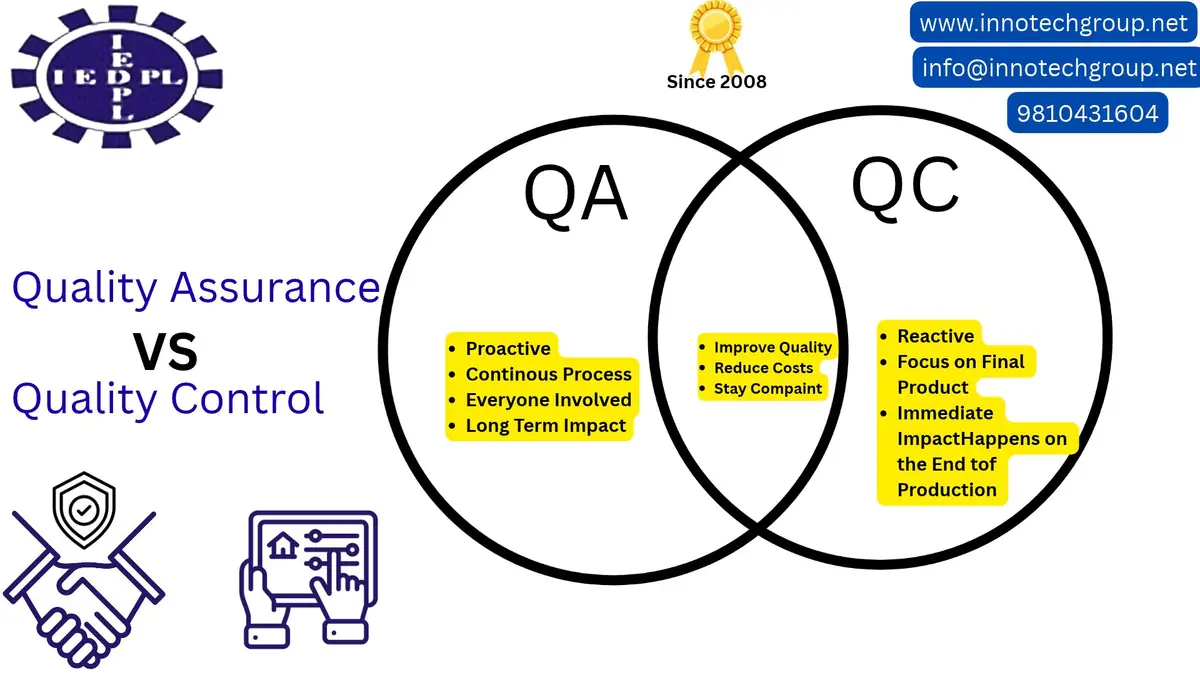
Quality Assurance vs Quality Control: Difference, Process and Importance
Quality is an important part of modern manufacturing. Whether a company produces automotive components, plastics, packaging, electrical products, metals or consumer goods, products must meet defined requirements before they reach customers.
Two important terms used in quality management are Quality Assurance (QA) and Quality Control (QC). Although they are closely connected, they have different purposes.
In simple terms, Quality Assurance focuses on preventing quality problems by improving processes, while Quality Control focuses on checking products and identifying problems through inspection and testing.
Understanding the difference between QA and QC helps manufacturers build better quality systems and make more effective use of testing equipment.
What Is Quality Assurance?
Quality Assurance is a planned approach used to make sure that manufacturing and other operational processes are capable of consistently producing the required quality.
QA focuses mainly on the process rather than only the finished product.
A quality assurance system may include:
• Defining quality requirements
• Developing standard operating procedures
• Training employees
• Establishing inspection and testing procedures
• Monitoring manufacturing processes
• Conducting internal audits
• Maintaining quality records
• Reviewing process performance
• Identifying opportunities for improvement
The main objective is to reduce the possibility of defects by controlling the process that produces the product.
What Is Quality Control?
Quality Control involves inspection, measurement and testing activities used to determine whether materials, components or finished products meet specified requirements.
QC focuses mainly on the product or test result.
Typical quality control activities include:
• Inspection of incoming materials
• Dimensional inspection
• Material testing
• In-process inspection
• Finished-product testing
• Sampling and batch inspection
• Recording test results
• Identifying non-conforming products
• Corrective action based on test findings
Testing equipment plays an important role in QC because many product properties cannot be evaluated accurately through visual inspection alone.
Quality Assurance vs Quality Control
The simplest way to understand the difference is:
QA asks: "Are we using the right process to produce consistent quality?"
QC asks: "Does this material or product meet the required specification?"
| Aspect |
Quality Assurance (QA) |
Quality Control (QC) |
| Main Focus | Process | Product / Material |
| Main Objective | PRevent Quality problems | Detect quality problems |
| Approach | Preventive | Inspection and testing focused |
| Main activities | Procedures, training, audits, process improvements | Inspection, measurement and testing |
| Timing | Throughtout the process | During incoming, in-process and final inspection |
| Responsibility | Involves the wider organization | Usually involves quality/testing personnel |
| Example | Establishing a standard manufacturing procedure | Testing the finished componen against requirements |
QA and QC should not be treated as competing systems. They work together as parts of an effective quality management approach.
How Does the Quality Assurance Process Work?
A typical QA process begins before manufacturing starts.
1. Define Quality Requirements
The manufacturer first identifies customer requirements, product specifications, applicable procedures and other quality requirements.
2. Establish Standard Processes
Production and inspection procedures are documented so that employees have a consistent method of carrying out their work.
3. Train Employees
Employees need appropriate knowledge and training to follow established processes correctly.
4. Monitor Processes
Manufacturing processes are monitored to identify variations or conditions that could affect product quality.
5. Audit and Improve
Process records, internal audits and quality data can be reviewed to identify weaknesses and opportunities for improvement.
This makes QA a continuous activity rather than a single inspection performed at the end of production.
How Does the Quality Control Process Work?
QC generally involves checking materials and products at different stages.
Incoming Material Inspection
Raw materials and purchased components can be inspected before they enter production.
Depending on the material, checks may include dimensions, hardness, strength, appearance, weight or other required properties.
In-Process Inspection
Products can be inspected during manufacturing to identify problems before additional processing increases waste or cost.
Final Product Testing
Finished products may undergo physical, mechanical, dimensional, environmental or functional testing before release.
Recording Results
Test results should be recorded so that quality teams can determine whether the product meets the applicable requirements and maintain appropriate traceability.
Role of Testing Equipment in Quality Control
Many quality characteristics require controlled measurement or testing.
For example:
• Universal Testing Machines can be used for suitable tensile, compression or related mechanical testing applications.
• Hardness Testing Machines can evaluate hardness characteristics of suitable materials.
• Compression Testing Machines can determine compressive performance for applicable materials and products.
• Impact Testing Machines can be used to evaluate impact properties.
• Humidity and Temperature Chambers can expose products to controlled environmental conditions.
• Hot Air Ovens can provide controlled heating conditions for suitable laboratory applications.
• Salt Spray Chambers can be used for applicable corrosion and coating evaluation.
• Flexural Testing Machines can be used for suitable bending and flexural strength evaluations.
The correct equipment depends on the material, product, test method and required specification.
Quality Assurance in a Testing Laboratory
A laboratory must produce reliable and repeatable results because manufacturing and quality decisions may depend on those results.
Laboratory QA can include:
• Documented test procedures
• Equipment calibration and verification
• Controlled test conditions
• Trained personnel
• Proper sample identification
• Test result records
• Equipment maintenance
• Internal reviews and audits
• Control of laboratory documentation
The laboratory should use appropriate procedures and equipment for the specific tests being performed.
Quality Control in a Testing Laboratory
QC in a laboratory is closely associated with the actual testing and evaluation of samples.
For example, a laboratory may perform:
Mechanical Testing
Testing may include tensile, compression, flexural, hardness, impact or other mechanical properties depending on the material.
Environmental Testing
Products can be evaluated under controlled temperature, humidity, corrosion or other environmental conditions when required.
Dimensional and Physical Testing
Measurements such as thickness, dimensions, weight and other physical characteristics may form part of product quality evaluation.
Material Evaluation
Materials can be tested to determine whether their properties meet the required specification before being used in production.
Why Are QA and QC Important in Manufacturing?
A properly organized QA and QC system can provide several benefits:
• Reduces the occurrence of quality problems
• Helps identify defects at an earlier stage
• Improves manufacturing consistency
• Reduces material waste and rework
• Supports product reliability
• Helps maintain customer requirements
• Provides useful quality data
• Supports continuous improvement
• Helps organizations meet applicable requirements
The exact benefits depend on how the quality system is implemented and how effectively production and testing data are used.
QA and QC in Different Industries
QA and QC are relevant across many manufacturing sectors.
Automotive Industry
Automotive manufacturers and component suppliers use quality systems and testing processes to evaluate materials, components and assemblies.
Plastic and Polymer Industry
Plastic products can require testing for mechanical, thermal, dimensional and environmental properties.
Metal Industry
Metal products may require hardness, tensile, compression, impact or other material evaluations depending on the application.
Packaging Industry
Packaging manufacturers may evaluate strength, compression, bursting, thickness, friction and other properties depending on the packaging type.
Electrical and Electronics Industry
Electrical and electronic products may require mechanical, environmental and reliability testing to evaluate their performance under specified conditions.
QA vs QC: Which One Is More Important?
QA and QC should not be viewed as alternatives.
QA helps create a controlled process, while QC provides evidence about the quality of materials and products.
A strong quality system needs both. If a company only inspects finished products, recurring process problems may continue. On the other hand, having documented processes without effective inspection and testing may allow problems to go undetected.
Combining process control with appropriate inspection and testing provides a more complete approach to quality management.
How Testing Equipment Supports Quality Improvement
Testing equipment provides measurable information that can help quality teams make decisions.
For example, if repeated compression tests show that a material is consistently below the required performance level, the manufacturer can investigate the relevant material or production process.
Similarly, environmental testing may reveal that a component requires improved protection, while hardness or tensile testing may identify changes in material properties.
The value of testing is therefore not limited to accepting or rejecting a product. Test results can also provide useful information for process improvement and product development.
How to Select Testing Equipment for QC Applications
Before purchasing testing equipment, manufacturers should consider:
• Material or product being tested
• Property that needs to be measured
• Required test capacity
• Specimen dimensions
• Test frequency
• Required measurement system
• Applicable test procedure
• Required accuracy and repeatability
• Data recording requirements
• Laboratory or production environment
• Future testing requirements
The equipment should be selected based on the actual testing application rather than simply choosing the highest-capacity machine.
Frequently Asked Questions
What is the difference between QA and QC?
QA focuses on controlling and improving processes to help prevent quality problems, while QC focuses on inspection and testing to identify whether materials or products meet requirements.
Is QA better than QC?
Neither is a replacement for the other. QA and QC perform different but complementary functions within a quality management system.
Is testing part of Quality Control?
Yes. Inspection, measurement and product testing are important activities within many QC processes.
Why is testing equipment important for QC?
Testing equipment provides measurable information about material and product properties, helping quality teams determine whether specified requirements are being met.
Can QA and QC be used in a laboratory?
Yes. QA can establish controlled laboratory procedures, while QC activities can include sample testing, equipment checks, result monitoring and documentation.
Which industries use QA and QC?
Almost every manufacturing and product-development industry can use QA and QC, including automotive, plastics, metals, electronics, packaging, pharmaceuticals, rubber and material testing.
Conclusion
Quality Assurance and Quality Control have the same broad objective—supporting consistent product quality—but they approach that objective differently.
QA focuses on the process and prevention, while QC focuses on inspection, measurement and testing.
For manufacturers, the two systems work best together. Well-defined processes establish the foundation for consistent production, while reliable inspection and testing provide measurable evidence of product performance.
Appropriate testing equipment can therefore become an important part of the QC process, helping manufacturers evaluate materials and products and use test results to support better quality decisions.
Consult an Expert
Innotech Engineering Devices Private Limited manufactures and supplies laboratory and industrial testing equipment for material testing, environmental testing and quality control applications.
For assistance in selecting a suitable testing machine for your application:
Phone: +91 9810431604
Email: info@innotechgroup.net
Website: www.innotechgroup.net
Category: Quality Control & Testing
Tags: Quality Assurance, Quality Control, QA vs QC, Quality Assurance Process, Quality Control Process, Quality Management, Laboratory Quality Control, Laboratory Testing, Manufacturing Quality, Quality Testing, Testing Equipment, Material Testing, Product Qual
Last Updated: 08 October 2026