
Plastic Processing and Injection Molding Machines: Applications, Price Factors and How to Choose the Right Machine
Jay Pal Singh
14 October 2026
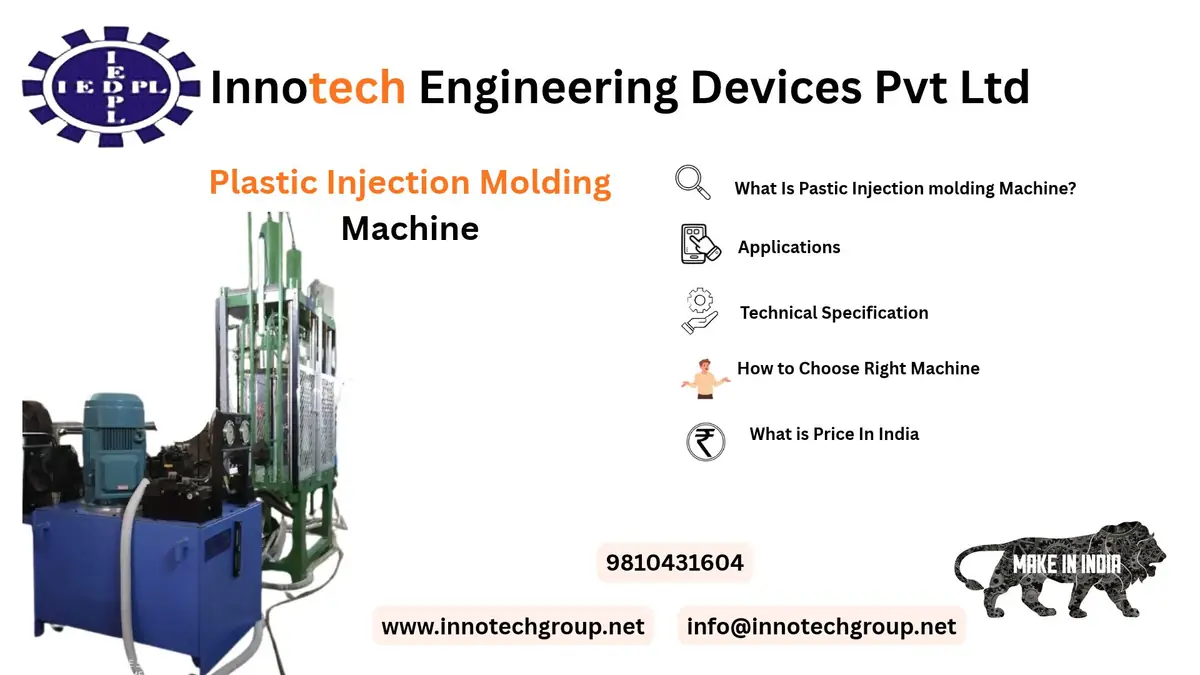
Plastic Processing and Injection Molding Machines: Applications, Price Factors and How to Choose the Right Machine
Plastic products are used in almost every industry, including automotive manufacturing, electrical equipment, packaging, household products, medical accessories and industrial components. To manufacture these products efficiently, companies need suitable plastic processing machinery that matches their product design, production requirements and material.
An injection molding machine is one of the commonly used machines for producing plastic components in large quantities. However, the right equipment depends on more than just the machine price. Buyers must also consider the mould, clamping force, injection capacity, automation, production speed and required product quality.
In this guide, we explain the different types of plastic processing equipment, how injection molding works, where these machines are used and what Indian manufacturers should consider before purchasing a machine.
What Are Plastic Processing and Injection Molding Machines?
Plastic processing machines are industrial machines used to convert plastic raw materials into finished or semi-finished products. Depending on the manufacturing process, these machines may heat, melt, shape, compress or form plastic material.
Injection molding machines manufacture plastic components by injecting molten plastic into a mould. After the material cools and solidifies, the mould opens and the finished component is removed.
The process is suitable for producing repeatable plastic parts in medium or high production volumes, provided the machine and mould are correctly selected.
Types of Plastic Processing Equipment
Different products require different manufacturing processes. Common types of plastic processing equipment include:
1. Plastic Injection Molding Machine
An injection molding machine melts plastic granules and injects the molten material into a mould cavity. Once the material cools, the mould opens and the part is removed.
Typical applications: Plastic caps, electrical housings, connectors, automotive components, containers and household product parts.
2. Plastic Extrusion Machine
An extrusion machine pushes melted plastic through a shaped opening called a die. The material comes out as a continuous profile and is cooled or processed further.
Typical applications: Plastic pipes, sheets, films, profiles and cable insulation.
3. Blow Molding Machine
Blow molding is used to manufacture hollow plastic products. Air expands heated plastic inside a mould to create the required shape.
Typical applications: Bottles, containers, cans and selected hollow industrial products.
4. Compression Molding Equipment
Compression molding uses heat and pressure to shape material inside a mould. The process is commonly associated with thermosetting plastics and certain composite materials.
Typical applications: Selected electrical components, molded covers, industrial parts and composite products.
5. Other Plastic Processing Equipment
Depending on the manufacturing requirement, a facility may also need granulators, dryers, material mixers, mould temperature controllers, cooling systems, conveyors and automated part-removal equipment.
These supporting systems can affect production efficiency, product consistency and overall operating costs.
How Does the Injection Molding Process Work?
The injection molding process generally follows these steps:
Step 1: Material preparation
Plastic granules of the selected grade are prepared according to the material supplier's processing recommendations. Drying may be required for moisture-sensitive materials.
Step 2: Heating and melting
The plastic granules enter the injection unit, where heat and screw movement help melt and prepare the material for injection.
Step 3: Injection into the mould
The machine injects the molten plastic into the mould cavity under controlled conditions. The required pressure and injection settings depend on the material, component design and mould.
Step 4: Cooling and solidification
The plastic cools inside the mould and takes the shape of the cavity. Cooling time depends on factors such as wall thickness, material and mould temperature.
Step 5: Mould opening and part removal
The mould opens, and the component is removed manually or through an automated system.
Step 6: Inspection and repeat production
The component is checked for defects and dimensional requirements. The cycle repeats to produce additional parts.
A properly selected machine, suitable mould and controlled processing conditions help manufacturers achieve consistent output and reduce avoidable rejections.
Industrial Applications of Injection Molding Machines
Injection molding equipment is used across many manufacturing sectors.
- Automotive Industry: Clips, covers, housings, knobs and selected interior components.
- Electrical And Electronics: Switch housings, connectors, enclosures and insulation components.
- Packaging Industry: Caps, closures, containers and packaging accessories.
- Household Products: Storage items, handles, kitchen accessories and consumer product components.
- Industrial Manufacturing: Machine covers, protective components, fittings and custom-designed plastic parts.
- Medical and Laboratory Products: Selected trays, housings and accessories, subject to appropriate material, cleanliness and regulatory requirements.
- Agriculture: Selected irrigation fittings, clips, connectors and plastic accessories.
The suitable machine and mould depend on the actual product geometry, material, dimensional tolerances and production target.
Which Plastic Materials Can Be Processed?
Material selection is an important part of machine planning. Common injection molding materials include:
- Polypropylene (PP)
- Polyethylene (PE), including suitable grades of HDPC and LDPE
- Acrylonitrile Butadience Styrene (ABS)
- Polycarbonate (PC)
- Polyamide (PA or nylon)
- Polystyrene (PS)
- Polyoxymethylene (POM)
Not every machine or mould is suitable for every material. Processing temperature, melt flow behaviour, shrinkage, moisture sensitivity and material-specific requirements should be reviewed before finalizing the configuration.
How to Choose the Right Injection Molding Machine
Before requesting a quotation, prepare basic information about the component and your production needs.
1. Product Size and Weight
Consider the component's overall dimensions, wall thickness, weight and shape. These details help determine the required injection capacity and mould arrangement.
2. Clamping Force
Clamping force keeps the mould closed while plastic is injected. The required force depends on factors such as projected part area, cavity pressure, mould design and the number of cavities.
A machine with insufficient clamping force may experience mould separation or flash. Excessive capacity can also increase investment and operating costs unnecessarily.
3. Injection Unit and Shot Capacity
The injection unit must deliver enough material to fill the mould and its runner system. The required shot size depends on the total shot weight and the selected material.
The machine should not be selected only by comparing advertised shot capacity. Confirm suitability using the actual part, mould and material.
4. Mould Dimensions and Compatibility
Check the mould's length, width, height, mounting arrangement and opening requirements. Tie-bar spacing, platen dimensions, mould thickness and ejector arrangements must also be considered where applicable.
The mould is a critical part of the investment and may need to be quoted separately.
5. Production Volume
Estimate the number of components required per shift, day or month. Production volume helps determine the appropriate machine type, cycle-time target, cavity count and level of automation.
6. Material and Product Quality
Consider the plastic grade, surface finish, dimensional tolerances, strength and appearance requirements. The control system and processing capability should support the required repeatability.
7. Automation and Supporting Equipment
Manual loading and part removal may suit some applications. Higher-volume operations may benefit from robotic part removal, automatic material feeding, temperature control, conveyors and other auxiliary equipment.
Evaluate the additional investment against expected production benefits.
Injection Molding Machine Price in India: What Affects the Cost?
There is no single price that applies to every injection molding machine. The investment depends on the machine configuration, production requirements and included accessories.
| Cost Factor |
Why it matters |
| Clamping Force | Affects machine size and capacity |
| Injection unit | Determines material delivery capability and configuration |
| Machine type and drive system | Influences operating characteristics and investment |
| Mould Design | Depends on part geometry, cavities, material and finish |
| Automation | Robots, feeders and handling systems add to the total cost |
| Control system | Depends on monitoring, programming and process-control requirements |
| Auxiliary Equipment | Dryers, chillers, loaders and temperature controllers may be additional |
| Customization | Special dimensions, tooling or process requirementss can affect cost |
| Installation and service | Depends on the agreed scope of supply and support |
How to Get an Accurate Machine Quotation
For a meaningful quotation, share the component drawing or sample, material grade, component weight, target production quantity, mould details and any automation requirements.
Ask the supplier to clarify whether the quotation includes the mould, auxiliary equipment, installation, commissioning, training, taxes and transportation.
Rather than relying on an unverified online price, compare quotations based on equivalent machine capacity and scope of supply.
Why Is Customer-Specific Machine Configuration Important?
Two plastic products can require very different manufacturing arrangements, even when they use similar materials. A small electrical connector and a large industrial cover may need different injection capacities, clamping forces, mould dimensions and handling systems.
Customer-specific configuration helps align the machine with the actual manufacturing requirement. It can also help avoid paying for unnecessary capacity or selecting equipment that cannot meet the intended output.
Before finalizing a machine, confirm the intended application, product dimensions, material, mould, output target, available factory space and utilities. The final technical configuration should be agreed upon with the supplier.
Why Choose Innotech Engineering Devices Private Limited?
Innotech Engineering Devices Private Limited works with industrial customers looking for testing and manufacturing equipment based on their application requirements.
For enquiries related to plastic processing and injection molding machinery, buyers should communicate their component specifications, production target, material and mould requirements so that the appropriate equipment and scope of supply can be discussed.
When evaluating a supplier, consider technical suitability, clarity of specifications, customization options, documentation, service support and the complete cost of ownership—not only the initial purchase price.
Planning to purchase plastic processing or injection molding equipment?
Contact Innotech Engineering Devices Private Limited to discuss your application and equipment requirements.
- **Location:** Bhiwadi, Rajasthan, India
- **Email:** info@innotechgroup.net
- **Phone:** +91 9810431604
- **Website:** www.innotechgroup.net
Frequently Asked Questions
1. What is the price of an injection molding machine in India?
The price depends on clamping force, injection capacity, machine type, mould, control system, automation and supporting equipment. Share your application details to obtain a relevant quotation.
2. Which injection molding machine is suitable for small plastic components?
The correct machine depends on component weight, dimensions, material, mould size, cavity count and production target. A smaller component does not automatically mean the smallest machine will be suitable.
3. Is the mould included with an injection molding machine?
Not necessarily. Moulds and auxiliary equipment may be quoted separately or included as part of a complete production solution. Confirm the scope before ordering.
4. Can an injection molding machine process different plastic materials?
Some machines can process different compatible materials, but the required temperature range, screw configuration, material handling and mould conditions must be checked for each application.
5. What information should I provide for a quotation?
Provide the product drawing or sample, material grade, component weight, required quantity, mould details, dimensional requirements and preferred automation level.
Conclusion
Selecting a plastic processing or injection molding machine requires a clear understanding of the product, material, mould and production target. By evaluating clamping force, injection capacity, automation, auxiliary equipment and total investment together, Indian manufacturers can make a more informed purchasing decision.
Contact Innotech Engineering Devices Private Limited to discuss your equipment requirements and request further information for your application.
Category: Plastic Processing & Injection Molding Machines
Tags: plastic processing machine, injection molding machine, plastic injection molding machine India, plastic molding equipment, plastic manufacturing machinery, injection molding machine price, plastic machine supplier India, plastic parts manufacturing, plast
Last Updated: 14 October 2026