


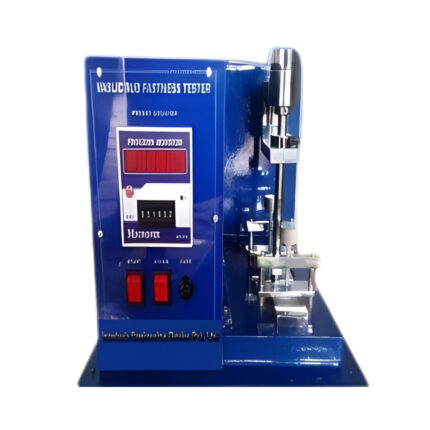
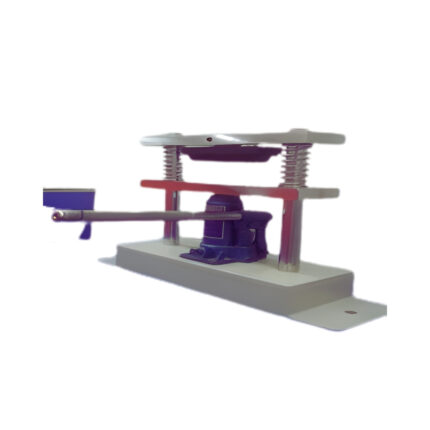
SERVO CONTROLLED UTM
📊 Typical Technical Parameters
(Specifications vary by model & capacity: 100 kN–2000 kN or more)
| Parameter | Typical Range / Value |
|---|---|
| Load Capacity | 100 kN, 200 kN, 400 kN, 600 kN, 1000 kN, 2000 kN etc. |
| Load Accuracy | ±1 % or better |
| Test Speed | 0.001 to 500 mm/min (configurable) |
| Position Resolution | 0.01 mm or better |
| Control Modes | Load, strain/elongation, displacement, hold |
| Measurement Feedback | Load cell, encoder/extensometer |
| Data Output | Real-time graph, exportable results |
A Servo Controlled Universal Testing Machine (UTM) is a precision material testing system used for mechanical testing of materials — such as metals, plastics, composites, rubber, textiles, and more — under controlled loading conditions. It integrates servo technology with hydraulic or electromechanical actuation to enable automated, closed-loop control of force and displacement, resulting in highly accurate, repeatable test results across a wide range of applications.
Commonly used tests include:
-
Tensile (pull)
-
Compression (push)
-
Bending / Flexural
-
Shear / Peel / Tear
-
Stress–strain evaluation
These tests help determine mechanical properties such as ultimate strength, yield strength, modulus of elasticity, ductility, toughness, and more.
⚙️ Key Technical Features & Specifications
🔹 Servo Control System
-
Uses a servo hydraulic or servo electromechanical drive to precisely control load and crosshead motion in a closed-loop feedback system.
-
Supports load rate control, elongation/strain rate control, and load hold modes for programmable testing.
🔹 Load & Displacement Measurement
-
Load measurement via high-accuracy load cell.
-
Displacement/elongation via encoder or extensometer feedback with high resolution.
-
Position and speed can be controlled with tight accuracy (often ±0.5 % or better).
🔹 Test Speed & Range
-
Infinitely variable test speed from very slow (0.001 mm/min) to faster rates (hundreds of mm/min).
-
Wide test space and crosshead adjustment to accommodate diverse specimen sizes.
🔹 Controller & Software
-
Computerized control with touchscreen or PC interface for test setup, real-time graphing, data analysis, and reporting.
-
Software often provides stress–strain plots, statistical data, and test templates.
🔹 Accessories & Extensions
-
Grips for round, flat, threaded, or specialty specimens.
-
Extensometers, bending fixtures, compression platens, shearing anvils, and environmental chambers.
🛠️ How it Works (High-Level)
-
Specimen mounting: The test sample (e.g., metal bar, plastic strip) is clamped between upper and lower grips.
-
Control setup: Operator selects test mode (load or strain control) and test parameters via controller/software.
-
Servo actuation: The servo system adjusts hydraulic or motorized crosshead motion based on real-time feedback from sensors.
-
Data capture: Load and deformation are continuously recorded and used to compute mechanical properties.
-
Output: Results like stress–strain curves, peak load, yield strength, and elongation at break are generated.
🧪 Applications
Industrial & Lab Testing
-
Quality control in manufacturing
-
Research & development
-
Material certification laboratories
-
Educational institutions
-
Construction and civil engineering testing facilities
Related products

LOAD TESTING MACHINE
Technical Specifications
-
Load Capacity Range: 50 kN to 5000 kN (customizable)
-
Type: Hydraulic / Electro-Mechanical
-
Control Mode: Manual / Semi-Automatic / Computerized
-
Load Measurement: Digital Load Cell / Pressure Sensor
-
Accuracy: ±1% or better
-
Display: Digital indicator / Computer software display
-
Resolution: High resolution load reading
-
Loading Rate Control: Adjustable
-
Frame Construction: Heavy-duty steel frame
-
Power Supply: 220V / 415V AC
-
Hydraulic System: Motorized hydraulic power pack
-
Data Output: USB / RS232 / Software-based reporting (computerized models)
-
Safety Features: Overload protection, emergency stop
-
Test Modes: Compression / Tension / Flexural (depending on model)
-
Standards Compliance: IS / ASTM / BS / EN standards (model dependent)

TILE ABRASION TESTING MACHINE
Technical Specifications
| Feature | Specification / Option |
|---|---|
| Model Type | Single-head / Dual-head abrasion tester |
| Test Standard Compliance | ISO 10545-7, EN 14157, ASTM C1243, DIN standards |
| Number of Abrasive Heads | 1 or 2 heads |
| Turntable Diameter | ~300–400 mm (industry varies) |
| Speed Control | Variable speed (e.g., 50–150 rpm) |
| Load Weights | Calibrated weights (typically up to 1,000 g or more per head) |
| Abrasive Medium | Standard abrasive wheels/discs or sand/rubber pads |
| Test Cycle Timer | Digital timer, programmable up to several hours |
| Display | Digital/LED display for time, speed, and test status |
| Power Supply | 220–240 V AC, 50/60 Hz (or 110 V option) |
| Frame Material | Sturdy mild steel / powder-coated structure |
| Sample Size Accommodation | Large enough platform to hold standard tiles (e.g., up to 300 × 300 mm or larger) |
| Safety Features | Emergency stop, protective covers |
| Control Mode | Manual / semi-automatic / PLC touch screen (depending on model) |
| Data Output | Manual recording or digital export (optional) |

MARTINDALE ABRASION TESTER
Technical Specifications
-
Test Method: Martindale Abrasion & Pilling Method
-
Motion: Lissajous figure (multi-directional rubbing)
-
Number of Test Stations: 4 / 6 / 8 / 9 / 12 / 16 stations (optional)
-
Specimen Diameter: 38 mm or 140 mm (as per standard)
-
Abrasive Medium: Standard wool fabric / sandpaper
-
Applied Pressure:
-
9 kPa (Light fabrics)
-
12 kPa (Workwear, upholstery)
-
-
Counter Range: 0 – 99,999 cycles (digital presettable)
-
Drive System: Precision motor with gearbox
-
Control System: Microprocessor / Digital controller
-
Display: LCD / LED digital display
-
Auto Stop: Yes, at preset cycles
-
Power Supply: 220–240 V AC, 50 Hz
-
Standards Compliance:
-
ISO 12947
-
ASTM D4966
-
BS 3424
-
EN 530
-
GB/T 21196
-
Applications
-
Abrasion resistance testing of woven & knitted fabrics
-
Pilling resistance evaluation
-
Upholstery and automotive textile testing
-
Carpet and floor covering testing
-
Quality control and R&D
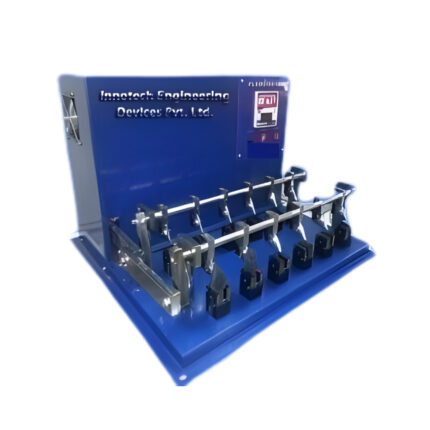
FLEXO- METER
Technical Specifications
-
Measuring Principle: Cantilever bending method
-
Test Parameter: Bending length / Stiffness
-
Specimen Width: Typically 25 mm (as per standards)
-
Specimen Length: Adjustable
-
Measurement Range: Suitable for low to high stiffness materials
-
Scale Type: Direct reading scale / Graduated scale
-
Accuracy: High precision with repeatable results
-
Operation: Manual / Semi-automatic (model dependent)
-
Construction: Rigid metal body with corrosion-resistant finish
-
Clamping System: Precision specimen holder for accurate positioning
-
Standards Compliance:
-
ISO 2493
-
TAPPI T489
-
BS 3748
-
Applications
-
Paper & Paperboard testing
-
Packaging material evaluation
-
Carton & corrugated box testing
-
Printing & publishing industry
-
Quality control & R&D laboratories
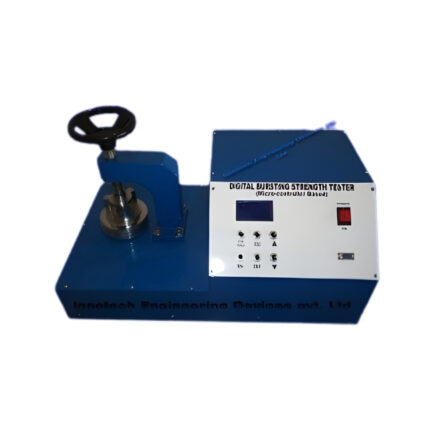
DIGITAL BURSTING STRENGTH TESTER
Technical Specifications
-
Measurement Range: 0–100 kg/cm² / 0–1000 kPa (customizable)
-
Display: High-resolution digital LCD / LED display
-
Accuracy: ±1% of full scale
-
Pressure System: Hydraulic pressure with rubber diaphragm
-
Clamping Method: Manual / Pneumatic clamping (optional)
-
Specimen Diameter: As per standard (e.g., 30.5 mm / 50 mm)
-
Pressure Application Rate: Adjustable, as per standard requirements
-
Control System: Microprocessor-based digital controller
-
Peak Hold Function: Yes (maximum burst value capture)
-
Units Displayed: kg/cm², kPa, PSI (selectable)
-
Power Supply: 220–240 V AC, 50 Hz
-
Standards Compliance:
-
IS: 1060
-
TAPPI T403
-
ISO 2758 / ISO 2759
-
ASTM D3786 / ASTM D3787
-
-
Optional Features:
-
Computer interface (RS-232 / USB)
-
Bursting index calculation
-
Data storage & printer output
-

VIBRATING TABLE
Key Features
-
Heavy-duty fabricated steel construction
-
Adjustable vibration frequency and amplitude
-
Uniform vibration across table surface
-
Low noise and energy-efficient operation
-
Anti-vibration mounts for floor protection
-
Manual / digital / PLC control options
-
Maintenance-free vibrator motor
-
Custom table size and load capacity available
Applications
-
Concrete cube and block compaction
-
Precast concrete products
-
Foundry sand compaction
-
Laboratory material testing
-
Pharmaceutical and chemical compaction
-
Packaging and container settling
-
Soil and aggregate testing
Technical Specifications (Typical)
-
Table Size: Customizable
-
Load Capacity: 50 kg to 2000 kg (or higher)
-
Vibration Frequency: 0–6000 vibrations/min
-
Amplitude: Adjustable
-
Motor Type: Unbalanced / Electromagnetic
-
Power Supply: 230V / 415V, 50 Hz
-
Control: Manual / Digital / PLC
-
Mounting: Spring or rubber isolation

CTM WITH PACE CONTROL
Key Features
-
Pace Control System – Maintains constant loading rate
-
Microprocessor / PLC Based Control
-
Closed-Loop Servo Control
-
Digital Load & Extension Measurement
-
High Accuracy Load Cell (±1% or better)
-
Automatic Load Holding & Unloading
-
Overload Protection
-
Emergency Stop Switch
-
Data Acquisition Software (PC Based)
-
Real-Time Load vs Elongation Graph
-
USB / Ethernet Interface
Technical Specifications (Typical)
-
Capacity: 100 kN, 200 kN, 300 kN (customizable)
-
Pace Rate: Programmable (kN/sec or mm/min)
-
Load Resolution: 1/10000 of capacity
-
Crosshead Speed: Variable with pace control
-
Power Supply: 230V AC, 50 Hz
-
Frame Type: Rigid 2-Column / 4-Column Structure
Pace Control Description
-
Automatically controls rate of loading during tensile test
-
Conforms to IS, ASTM, ISO, BS standards
-
Ensures uniform stress application on specimen
-
Ideal for concrete, steel, rebar, wire, fasteners testing
Applications
-
Tensile testing of metal rods, bars, wires
-
Testing of rebars as per IS 1786
-
Quality control laboratories
-
R&D and material testing labs
-
Educational institutions
-
Construction & infrastructure projects
Standards Compliance
-
IS 1828
-
ASTM E8 / E9
-
ISO 6892
-
BS Standards

Environmental Test Chamber
Features of Humidity/Conditioning Test Chambers Deluxe Model
- Alarm system with buzz sound at the test end process
- Temperature sensing through PT-100 sensor
- Highly accurate test results under uniform temperatures and humidity levels in the chamber
- Digital Control for Humidity and Temperature
- High Grade-imported puff insulation
- Maximum Thermal Efficiency by insulation means.
- SSR based heaters
- Digital Preset timer with LED Display
- In-built Auto tuning function
- Water Level Indicator
- Equipped with rapid air circulation German imported fan for uniform and homogenous heating, cooling, humidity, de-humidity
- inside the chamber
- Inbuilt Calibration feature with reference to master PID controller
- Setting to RTD PT-100 sensor through advanced PID controller
- Auto stop feature to stop the machine at a set time
- Time totalizer to calculate the no. of Hours run by the instrument
- Reservoir water tank auto refilling (Float value arrangement)
Technical specifications
- Capacity: 150 litres
- Display: LED (Digital)
- Accuracy: Temp. ± 2ºC / Humidity ± 5%
- Least Count/Resolution Temp / Humidity: 0.1ºC / 1%
- Power: 15A, 220V , Single phase, 50 Hz
- Temperature Range: 15ºC to 60ºC
- Humidity Range: upto to 95% RH
- Timer: 999Hr (Changeable to Min. as per request)
- Water Level Low: Alarm output
- No. of Sample racks: 2
- Handle: Yes
- Wet Heater: 1 Kw, 1 no.
- Dry Heater: 500 Watt, 1 no.
- Temperature Sensor: 1 (PT-100)
- Humidity Sensor: 1 (RH)
- Movement Castor: Wheels
- Material: Stainless Steel (Inner & outer body)
- Finish: Stainless Steel combination finish for corrosion resistant
- Dimensions: Inner : 455 x 455 x 710 mm & Outer : 660 x 930 x 1515 mm
Reviews
There are no reviews yet.